
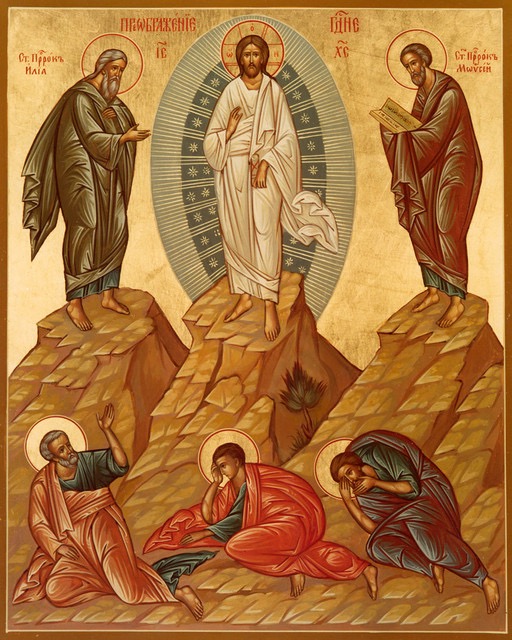
Why are we so uncomfortable with silence?, Mark 9:2-9

Turn in your Bible to Mark 9:2-9. It literally falls in the very center of Mark’s Story and serves as a continental divide of sorts for the gospel. The first half of Mark laid out who Jesus was and described the works he did: He preached; he taught; and he healed.  He demonstrated authority over the courses of nature and unexplainable demonic influences. The first half of Mark’s gospel leads us to this point in today’s passage: The revelation of the glory of God in Jesus.  The second half of Mark’s gospel describes how well the world understood and responded to this revelation of Jesus’ true identity. As we approach the season of Lent, we will have forty days to wade into the Story of how the religious, political, and economic systems rejected this revealed identity. We will also have the opportunity to reflect on how each of us responds to this frank, revealed identity as well.

In the chapter leading up to today’s reading, some pretty exciting things have happened that point to the fact the disciples were still not really “getting it” when it came to Jesus.  Peter has told Jesus that he is the Christ of God, which is all well and good, but when Jesus began describing what that really entailed, Peter flinched (Mk 8:30-33). Jesus’ understanding of what it means to be the Christ of God did not align with Peter’s triumphalist view. Jesus even sternly told Peter, “You’re acting like the Evil One; get behind me.”

So, this morning, we hear Jesus call three of his disciples to join him on an outing. This is how Mark the author tries to get us to pay attention to what’s coming up in the Story. He’s using specificity to get our attention; you see, Peter, James, and John have accompanied Jesus before on these special trips like the time they were invited to the bedside healing of a twelve-year-old girl in Mark 4.  Later in Mark’s Story, we will see Jesus invite this group again to stay with him while he prays alone in the Garden of Gethsemane. Peter, James, and John were the first line of Jesus’ spiritual support system[1]. These were his proverbial soul brothers who knew him better than anyone!  Well, at least they thought they did. Listen closely to this compact and rich encounter. Listen to the Word of the Lord!

Mark 9:2-9

Six days later, Jesus took with him Peter and James and John, and led them up a high mountain apart, by themselves. And he was transfigured before them, and his clothes became dazzling white, such as no oneon earth could bleach them. And there appeared to them Elijah with Moses, who were talking with Jesus. Then Peter said to Jesus, “Rabbi, it is good for us to be here; let us make three dwellings, one for you, one for Moses, and one for Elijah.” He did not know what to say, for they were terrified. Then a cloud overshadowed them, and from the cloud there came a voice, “This is my Son, the Beloved; listen to him!” Suddenly when they looked around, they saw no one with them anymore, but only Jesus.

As they were coming down the mountain, he ordered them to tell no one about what they had seen, until after the Son of Man had risen from the dead.[2]

So, let’s unpack our text. For a person acquainted with the Jewish spiritual stories, you would immediately hear all types of Old Testament allusions in our text.  You have the great prophets mentioned and you have earnest disciples encountering God on a high mountain. There is a familiarity to this Story. We should know where it’s headed and be able to call out the punchline before the Story is even finished! Like a simple math equation, Great OT Prophets plus a High Mountain plus a Select Few People equals an epiphany, a revelation! We know that God shows up at these times!  God speaks through burning flames in bushes and clouded and misted mountaintops. God reveals Godself on the top of mountains through wind, earthquakes, booming voices, and sometimes just through gentle whispers like with Elijah.

Friends, this is now the second time God speaks in Mark’s Story.  The first time was at Jesus’ baptism when a voice from heaven said, “You are my son, the beloved.”[3] The second time is today but this time God lets others hear the declaration as well: This is my Son, the beloved. Listen to him!

I don’t know about you, but in my imagination, I can hear a tone of annoyance in God’s voice. Think about it: Peter, James, and John are specifically invited to the mountain whereupon they witness the mystical, spiritual revelation of Jesus talking with Moses and Elijah! Not only was Jesus talking with them, but this was the moment when the soul brothers got a glimpse of his heavenly glory and the pure essence of who Jesus is! This Jesus of Nazareth is the Christ of God!  What an ecstatic spiritual moment and experience for these three disciples!  What a privilege it is to be there, to hear conversations only angels can hear! What a magical, luminous moment!

And then Peter starts talking.

He interrupts the Divine board meeting; I wouldn’t blame God a bit for being annoyed with Peter.

Dear Peter. Once again, he opens his mouth and sticks his foot in it. Once again, he is presented with an opportunity to fully see Jesus for who Jesus is and misses the point. I’m grateful Peter is so loved and is close to Jesus because that gives me hope! We are all like Peter! We miss the point of who God is and what the Lord is doing in our lives as well! Peter is us!

If we’re honest, we don’t fully get it either.  We like Peter want to turn our encounter with the glorified Christ into a personal moment on the mountaintop. We like Peter fail to see that Jesus is not on the same plane as Moses and Elijah; Jesus is not another prophet but is the very Presence and essence of the Divine I Am! Like Peter, we have an encounter with the Living God, and we also get uncomfortable at God’s awesome Presence and feel we have to do or say something.

God’s reply, “This is my Son, the Beloved. Can you hush up and just listen to him!” Maybe God is trying to tell us, “Don’t just do something but simply sit there and be still for him! Listen to what Jesus, the Beloved, has to say!”

In fairness to Peter, he does what we all typically do. We like to fill space and silence with empty words. We are uncomfortable with silence. We have this need to fill it. Like a father to a teenage son who is trying to instill a life lesson at a poignant time, God is telling Peter, “Won’t you just hush up and pay attention!” Peter’s busyness gets in the way of his ability to see who Jesus really is. Instead of just being consumed in the moment, taking it in, seeing how Jesus is similar but oh-so-very different from Moses and Elijah, Peter disrupts the moment. As soon as Peter opened his mouth, the glorified encounter was over.

We don’t like silence. We get uncomfortable in silence. Silence can feel overwhelming, almost heavy. So, we open our mouths and say something silly to fill the empty space and void. For example, I was standing with a couple whose child recently died of cancer, and someone very well-meaning (just like Peter, by the way), dared to come up to the parents and say, “I guess God needed him more than you do right now.” What! Instead of sitting in that holy moment and experiencing the pain and discomfort along with the parents, we open our mouths and say words that tear down. We mask our own fear and discomfort by saying something that’s just plain uncaring.

Beloved, as we begin the change of season from Epiphany to Lent, we are invited into prayerful, thoughtful, silent, and contemplative reflection on what happens to Jesus in the second half of Mark’s Story leading to persecution, arrest, and crucifixion.  It’s a time we are invited into the space where can experience the fullness of Christ’s glory and just sit with him. We are invited to be still and simply marinate in his transfigured Presence soaking up what the Spirit is trying to teach each one of us in our own place. But we have to be still.  We have to learn to be comfortable in the silent and sometimes uncomfortable Presence of God.

Over the time I have served with you, you may have picked up on a tradition I have at the beginning of every worship service. I invite us to be still and listen!  “Shhhh!” I say, “The Spirit of God is in this place.”  Have you wondered why I do that? It’s to call us back to the Mount of Transfiguration where we like Peter, James, and John surround ourselves with Prophets and stories from old and can sit in the Presence of God…if only we would be quiet and listen!  Amen.

© 2024 by Patrick H. Wrisley, 8 West Notre Dame Street, Glens Falls, NY 12801. Sermon manuscripts are available for the edification of members and friends of First Presbyterian Church of Glens Falls, NY, and may not be altered, re-purposed, published, or preached without permission. All rights reserved.


[1] See Mark 14:32 ff.

[2] New Revised Standard Version (NRSV). New Revised Standard Version Bible, copyright © 1989 the Division of Christian Education of the National Council of the Churches of Christ in the United States of America. Used by permission. All rights reserved.

[3] Mark 1:9-11.

Posted in Sermon | Tagged , , , , , , , , , , , | Leave a comment

The Real GOAT, Isaiah 40:21-31

Photo by Pixabay on Pexels.com

One of the most important people in any indigenous culture is the storyteller. These are the men and women who remind, preserve, and pass down vital knowledge of the community, its history, and its cultural traditions to future generations. In essence, our stories shape who we are and our identity.

 It is not uncommon for the spiritual leader, the shaman, to be the primary storyteller for the community because faith and religion are the fabric of any community’s makeup. Both the ancient Hebrews and the early Christian church were steeped in telling the stories about the patriarchs, Moses, the Judges, and the kings. The early Church kept orally sharing the stories about Jesus until they were finally begun to be written down some forty years after he died. One of my jobs as your pastor is to tell the stories of our faith but also to remind you of the stories of our faith. This morning’s scripture is a story to help us remember.

I like the word ‘remember’ because at its essence, when we remember we are literally re-membering, re-ligamenting, re-connecting to stories and events in our past. When we remember, we begin to realize where we have been and apply that knowledge to where we are now. Frankly, there’s safety and comfort in the practice of remembering. This is what Isaiah the prophet is doing in our reading this morning.

Turn to Isaiah 40. It’s helpful to realize that the large biblical book of Isaiah can be split up into three smaller sections which were written for a couple of hundred years. Chapters 1 to 39 were written to the people in the southern kingdom of Judah and warned them about the impending doom and Babylonian captivity. Chapters 55 until its conclusion are written to those Jews who were going back to Jerusalem and Palestine and were imploring them to live lives of justice and mercy as a people of God. Chapters 40 to 54 are written to the Jews who had been in captivity for a generation or more and are words that God still cares for them and is going to bring them back home. This is where today’s reading comes from.

 Written some 650-some-odd years before Jesus, the Jews who heard these words were second-generation exiles and had parents and grandparents who were the ones originally forced-marched out of Palestine. They were not treated as severely as the Hebrews were with Moses under Pharaoh’s captivity in Egypt, but a generation of Jewish people were languishing in a country far from home. Throughout this generational exile, the people began to take on some of the characteristics of their captors; they did business the way the locals did, and they began to worship the idols of this strange new world. The more they adapted to their culture in Babylon, the more they began to lose their Jewish identity as God’s chosen people. You see, they forgot what home was and looked like. Verse 21 begins our section with four rhetorical questions asked in staccato fashion and the answer to all four questions is an emphatic “yes!” Hear the Word of the Lord.

Isaiah 40:21-31

21 Have you not known? (YES!) Have you not heard? (YES!)
   Has it not been told you from the beginning? (YES!)
   Have you not understood from the foundations of the earth? (YES!)
22 It is he who sits above the circle of the earth,
   and its inhabitants are like grasshoppers;
who stretches out the heavens like a curtain,
   and spreads them like a tent to live in;
23 who brings princes to naught,
   and makes the rulers of the earth as nothing. 
24 Scarcely are they planted, scarcely sown,
   scarcely has their stem taken root in the earth,
when he blows upon them, and they wither,
   and the tempest carries them off like stubble. 
25 To whom then will you compare me,
   or who is my equal? says the Holy One.
26 Lift up your eyes on high and see:
   Who created these?
He who brings out their host and numbers them,
   calling them all by name;
because he is great in strength,
   mighty in power,
   not one is missing. 
27 Why do you say, O Jacob,
   and speak, O Israel,
‘My way is hidden from the Lord,
   and my right is disregarded by my God’?
28 Have you not known? (YES!) Have you not heard? (YES!)
The Lord is the everlasting God,
   the Creator of the ends of the earth.
He does not faint or grow weary;
   his understanding is unsearchable.
29 He gives power to the faint,
   and strengthens the powerless.
30 Even youths will faint and be weary,
   and the young will fall exhausted;
31 but those who wait for the Lord shall renew their strength,
   they shall mount up with wings like eagles,
they shall run and not be weary,
   they shall walk and not faint.[1]

My momma was a 5’2” whirling Scots Irish stick of dynamite and ruled the house. She had a parental technique whereby if my brothers, sister, or I failed to get up in time to get to school, she would get a cold washcloth and slap it on our face; not only did it wake us up, but the dripping water forced us to get out of bed to dry off! Today’s text is Isaiah’s wet washcloth to the face of the exiled Jews. It’s his way of telling them, “Wake up and remember who you are! Remember Whose you are! Remember who God is!”

Methodist biblical scholar and pastor Richard Puckett reminds us that a person or community’s faith begins with memory and when memory fails, the faith community becomes threatened. He writes, “The crisis of the Babylonian exile has caused the people to forget their own story, the story of God’s attentiveness and dependability, the story of God’s love for Israel. Because they have forgotten, they are questioning the presence and power of this God. But those who remember their history and believe in the God who fulfills promises will be able to receive new strength and life from their relationship with this God.”[2]

Isaiah the prophet and storyteller is attempting to wake the people up from complacency and help them to dream again. He’s reminding them of the God who called them into a community in the first place. Isaiah is calling them out for muttering under their breath and living their lives as though their ways were hidden from the Lord and that he has forgotten them. He’s reminding them to remember the God who called them as a people – the same God who created everything around them – is the One and Only God who will renew their strength and lift them up on eagle’s wings! He’s imploring the exiles to remember who the real GOAT is!

You know what a GOAT is, don’t you? Simone Biles is a GOAT. Tom Brady is a GOAT. Michael Jordan is a GOAT. In sports nomenclature, a GOAT stands for the Greatest of All Time. There is no other gymnast better than Biles. There is no other quarterback like Brady. No basketball star can fly through the air and do what Jordan did. And, my dear exiles in Babylon, there is no other God as great as the Lord God who created the heavens and earth and understands the unsearchable wisdom of all things. God is the ultimate Greatest of All Time.

In our officer’s training, we’ve been looking at the one cornerstone belief Presbyterians cling to is that God is THE GOAT. God is sovereign. In other words, no matter what happens or fails to happen in this life, we cannot out god God. When things are going well, God’s in control. When the wheels of our lives feel like they are coming off, God is in control.

When you fail to get the promotion – God is still in control.     

When you fail the class – God is still in control.

When you hear of a diagnosis – God is still in control.

When you are given the news you have a limited time to live – God is still in control.

When the wheels of our life are coming off, they cannot out god God. A failed promotion cannot out god God. A failed exam cannot out god God. A horrible diagnosis cannot out god God. Even death cannot out god God!

Intuitively, we probably all believe that. Practically, most of us probably forget it. This is why we are called to re-member, and re-connect with who God is and what God has already done in our lives.

I’m going to let you in on a little secret. I want to share with you how you can have a sense of spiritual peace in the midst of any and all of life’s hardships and difficulties. I promise that the more you apply this secret in your life, the more spiritually at peace and steadfast you will become. People will look at you and marvel at the depth of your faith. So, here’s the secret.

Gratitude. Simple gratitude. The cultivation of gratitude is the key to spiritual peace and well-being. Why? There is an axiomatic relationship between gratitude and remembering. The more consistently grateful we are, the more we remember God’s sovereign Presence in our lives even when we feel like we’re exiled in Babylon. When we remember with gratitude how God has consistently been with us in the past, we shall be confident amid life’s swirling waves that God is with us in the present. It’s in this grateful remembering that the sovereign Lord gives power to the faint, increases the strength of our feeble souls, and we will be lifted up as on eagle’s wings.

Our homework today is to begin cultivating the habit of waking up in the morning and going to sleep at night offering God gratitude for the way God has shown up in your life. Beloved, I promise, that the more you do this, the more spiritually at peace and settled you will become.

In the Name of the One who is, was, and is yet to come. Amen. Let us pray…

© 2024 Patrick H. Wrisley. Sermon manuscripts are available for the edification of members and friends of First Presbyterian Church of Glens Falls, 8 West Notre Dame Street, Glens Falls, NY 12801, and may not be reproduced or repurposed without permission from the author. All rights reserved.


[1]New Revised Standard Version Bible, copyright © 1989 National Council of the Churches of Christ in the United States of America. Used by permission. All rights reserved worldwide. http://nrsvbibles.org.

[2] An article by Richard A. Puckett in Feasting on the Word: Year B, Volume 1: Advent through Transfiguration (Feasting on the Word: Year B volume) by David L. Bartlett, Barbara Brown Taylor https://a.co/2GZ0yKd.

Posted in Sermon | Tagged , , , , , , , , , , , , , , , | Leave a comment

Fishing, Mark 1:21-28

                       A message on how to read the Bible.

Photo by Tima Miroshnichenko on Pexels.com

Turn in your Bible to Mark 1. Last week, Jesus was introduced in the Story as coming to herald the in-breaking of the reign of God which required people to do two things. First, they were to repent which meant they were asked to change their long-held assumptions about how they looked, thought, related, and experienced God in their life. Jesus called them to look at their faith from a refreshingly new perspective that God was not “way out there” but that the presence of God was right here in the midst of them; indeed, that is how we defined “gospel” — God is with us now. Second, Jesus told them to believe the Good News; in other words, the people were to actually live their lives in such a way and relate to their neighbors as though they were walking side-by-side with the very Presence of God next to them. In the process, Jesus called four fishermen to follow him and that he would teach them a new type of fishing, namely, how to fish for people. This brings us to our biblical passage this morning where Jesus begins to show and teach the four fishermen how to do just that very thing. Slide your finger down to verse 21 and hear the Word of the Lord.

 21They went to Capernaum; and when the sabbath came, he entered the synagogue and taught. 22They were astounded at his teaching, for he taught them as one having authority, and not as the scribes. 23Just then there was in their synagogue a man with an unclean spirit, 24and he cried out, “What have you to do with us, Jesus of Nazareth? Have you come to destroy us? I know who you are, the Holy One of God.” 25But Jesus rebuked him, saying, “Be silent, and come out of him!” 26And the unclean spirit, convulsing him and crying with a loud voice, came out of him.27They were all amazed, and they kept on asking one another, “What is this? A new teaching—with authority! He commands even the unclean spirits, and they obey him.” 28At once his fame began to spread throughout the surrounding region of Galilee.[1]

Our passage this morning provides us three truths on how to fish for people so let me knock those out really quick because they are obvious. I want to spend most of our time on the third one.

Truth 1: Jesus taught with authority. He felt his faith and relationship with God passionately. To put it in modern parlance, he believed in what he was selling! He was all in! He taught out of his shared and lived experience. You can remember your teachers over the years. You can remember the ones who were passionate about what they were teaching and made the material come alive. They were not just reading and regurgitating the textbook; they took the material and applied it to real life.  Jesus was such a teacher.  He taught from the scriptures and then made them come alive, and as we heard today, he then applied it to some unsuspecting, unclean-spirit-filled man who came to the synagogue that morning.

Truth 2 for fishing for people: He took what was commonplace and normal and reframed it in a new way. Jesus wasn’t making up new scripture for the people to learn; Jesus was taking the words of the well-known Torah and was making them come alive. We do not know the scripture Jesus was teaching from that day, but we do know what he said about it pushed some buttons. Jesus framed the old words of the prophets about God in such a way that evil personified among the people became agitated. This rabbi wasn’t like Charlie Brown’s teacher who groaned on “wah-wah-wah-wah-wah-wah-wah.” Jesus took what was well-known and framed it in such a way that it caused a reaction. His words kept people leaning forward in the pews wondering, “What’s he going to say next?!” And this leads us to truth number 3 in fishing for people.

Truth 3: Good fishermen and women know where to drop the line and hook. They know how weather affects the fish. They know how certain water conditions will affect fish behavior. They know the bait the fish like to nibble on in each of those conditions. She knows where to drop the Beaded Glo Bug Egg Fly or the Tungsten Jig Squirmy Wormy in the water to catch the trout of her dreams! That’s why fishing Luddites like me need a fishing guide to show me where and when to drop the hook.

In the brief time left, I want to help you learn how when, and where to drop the line in the water “to catch” larger fish in your faith. Before any of us can go fishing for other people, we are to learn how to read the water on our own. As an old crusty fisherman myself, I’ve been on the lake many years and I want to help you learn to read the water and conditions, so you’ll know where to drop your line. The lake I want to teach you on is not Lake George but right here, the Bible in your lap; let’s spend our few remaining moments in learning to begin reading the water of our scripture. Like Jesus, I want to reframe and de-mystify reading the Bible. Here we go!

Like anything we read in literature, we first begin to learn about a text by noting the basics of the story as it’s presented. For example, where do the events take place? Who are the characters in the story or action? Who speaks? Who remains silent? What is the action? How is the scene described? What time of day is it? Is there conflict or not? Who causes it? Just noting these basic items will help us as we read any story to grasp its deeper meaning. And so it is in our own fishing hole called scripture.

Today, our Story takes place in Capernaum, a fishing village on the northern side of the Sea of Galilee some 65 miles northeast of Jerusalem as the crow flies. We also note that all this takes place in a synagogue, a community hub where the Jewish people gather to socialize, celebrate worship, and learn. Mark informs us that all this is taking place on a Saturday which is the Jewish Sabbath day.

Who is gathered there?  We note Jesus and the four fishermen Peter, Andrew, James, and John are there. Jesus was also recognized as one of the local boys from nearby Nazareth. Also, there are the common run-of-the-mill folks of the town celebrating the Jewish Sabbath – men, women, children, the Rabbi, and of course, the scribes – the men who unpacked what the Torah – the Jewish Law really meant. Who else is present? Did you catch him? It’s the broken man, the impure man among the supposedly pure people, the man with an unclean spirit. Finally, Jesus is identified as the Holy One of God.

What’s happening in the text from a 40,000-foot perspective? Let’s look at the verbs used in the story; what action is taking place? Jesus is moving about and traveling. He taught in the synagogue with people he was familiar with, i.e. fellow Jews. We read how people were astounded by the teaching. The word in the ancient language Mark uses literally means what we say today: They were literally “blown away.”[2] He is rebuking and casting out. The man was convulsing and crying out. Commands are issued. Jesus’ fame was spreading.

Who was speaking and who was silent? What was said? Jesus spoke.

The unclean/impure spirit spoke. The congregation was murmuring among themselves. Who was silent? The fishermen Peter, Andrew, James, and John were all silent, as were the religious officials in whose synagogue Jesus was teaching. I wonder why?

Let’s hit the pause button a moment and apply this is us. What is this describing? Us! It describes a group of ordinary people who have come to gather on their holy day to socialize, celebrate worship, and learn. This group is describing us! Here we are some 60-some miles from the state capital on the southern edge of a lake in Warren County, New York. We are just regular, old folks living out our lives – men, women, children, a pastor, and leaders of the local church. And surprise, in case you weren’t aware of it, there are some of us in this room who are broken, too! There are some of us here who have unclean spirits as well – there lies in us the unclean spirit that separates genuine, normal relationships with those around us. We see others as “them” and they think they are against us. We see others through the lenses of hate, anger, jealousy, or even lust. With subtle hubris, there are those among us who even look at others as “those” people who are the real problem in the community.  We hear a southern preacher who is trying to get these old words to come alive for you as they are reframed in how you read your scriptures.

Beloved, before we can go fish for people, we need to learn how to fish for ourselves to gain our own sustenance. Our scriptures are every bit more beautiful than the Queen of American Lakes, Lake George. As your pastor a la fishing guide, I want us to learn to read the Bible so we can see, hear, and experience it come alive for us today in our dystopian 21st century world.

This is why I am asking you to join me on a Lenten 40-day journey into the wilderness that begins March 14th. I want us to be reading, discussing, and questioning together the daily lectionary readings for the forty days leading up to Easter. Then, when we gather together on Easter morning and shout, “He is Risen!” It will have a deeper significance and meaning for us. Beloved, let’s go fishing together!

In the Name of the One who is, was, and is yet to come. So be it.

© 2024 Patrick H. Wrisley. Sermon manuscripts are available for the edification of members and friends of First Presbyterian Church of Glens Falls, 8 West Notre Dame Street, Glens Falls, NY 12801, and may not be reproduced or repurposed without permission from the author. All rights reserved.


[1] New Revised Standard Version Bible, copyright © 1989 National Council of the Churches of Christ in the United States of America. Used by permission. All rights reserved worldwide. http://nrsvbibles.org.


[2] In Greek, the word is ekplesso, a verb that means to strike out, expel by a blow, drive or blow away.

Posted in Sermon | Tagged , , , , , , , , , , , , , , , | Leave a comment

The Gospel Defined, Mark 1:14-20

Mars Hill, Athens, Greece

A sermon delivered by Patrick H. Wrisley, D.Min., on January 21, 2024

We are beginning to wade into the Gospel of Mark for a season and before beginning, I want to give it some context. Mark is one of the earliest Gospel accounts there is and is often thought to be the foundation for Matthew and Luke. It’s the shortest of the four gospel accounts and it moves along at a very fast pace. Mark was a good editor and uses an economy of words to tell the Story. Mark the author was also a good writer and uses the basics of good storytelling to tell his Story. If you are one of those who say, “I really don’t know the Bible too well,” and want a way to start reading it for the new year, I offer Mark as a great place to begin.

Turn in scripture to Mark 1:14-20. In the first thirteen verses of his Story, Jesus and his cousin John have been introduced and then Jesus was baptized. In the seven verses for today, we begin to hear the definition of the Gospel, i.e., good news, and who some of the main characters are in Jesus’ ministry. Hear the Word of the Lord.

Mark 1:14-20

14Now after John was arrested, Jesus came to Galilee, proclaiming the good news of God, 15and saying, “The time is fulfilled, and the kingdom of God has come near; repent, and believe in the good news.” 16As Jesus passed along the Sea of Galilee, he saw Simon and his brother Andrew casting a net into the sea—for they were fishermen. 17And Jesus said to them, “Follow me and I will make you fish for people.” 18And immediately they left their nets and followed him. 19As he went a little farther, he saw James son of Zebedee and his brother John, who were in their boat mending the nets. 20Immediately he called them; and they left their father Zebedee in the boat with the hired men and followed him.[1]

There are so many different trails we could take in unpacking our few verses this morning – what’s it mean to be called, what is required to follow Jesus, what’s it mean to be fishers of people — this text is packed with things to talk about. This morning, I want us to focus on verses 14 and 15 which provides the reason why the four fishermen dropped their nets and followed Jesus in the first place. These two verses provide us the definition of what the gospel really is and then clarifies what it means to embrace it.

The first thing we note is that the good news Jesus was proclaiming was bad news for some others. The Story’s tone strikes an ominous note as it begins, “After John was arrested.” John the Baptizer was setting the stage for Jesus to introduce the coming reign of God and already his words were causing a kerfuffle and rankled the establishment. With just four words, “After John was arrested,” Mark is letting the reader know up front that this Jesus is going to ruffle feathers and stir things up. He’s giving us a hint of things to come. As we define what the gospel is, we note the good news is that God’s way of doing things and living is close at hand, but God’s proximity is going to make some people uncomfortable. So as we define what the gospel is, we learn that the good news creates change because God has come near. God’s presence is close at hand!

Don’t you find it ironic that creating a shift from what’s perceived as normal causes conflict? This is what change does and one of the most profound places where change is resisted is in the church itself! In business, in education, in medicine, change and adaptation is necessary for growth to occur but when you talk of change or adaptation in the church context, “Whoa! Back that truck up! We’ve never done it that way before! We can’t change or adapt because…Mrs. Prettypenny donated that and we can’t move it.” Lawd. Friends, good news creates shifts and causes one to reevaluate what they think is important.

The four fishermen dropped their nets and followed Jesus because his good news that God is at hand made them want to do things differently. “I don’t know what this fishing for people is all about but let’s go find out!” The gospel, the good news, is that God is nearby. We learn God’s proximity makes some people excited and some others anxious and troubled, hence John is in jail. The ripple effects of God’s presence creates change and movement so what is the specific movement Jesus is calling for?

Before I get to that, I simply want to say pastors and preachers in this country have done a poor job outlining the two needed movements we are to make now that the presence of God is close at hand. I want us to see if we can reframe and reclaim the intent Jesus was really getting at when he speaks about these two following items.

First, Jesus is calling us to repent. We hear the word repent and our minds go to shouting preachers and organists playing Just as I Am a hundred times until someone can’t stand it anymore and walks down the aisle! We hear the word repent and we take as an indictment of who we are and of what we have done or didn’t do. Like Pavlov’s dogs, we hear ‘repent’ and we immediately feel this need to grovel. Let’s take a moment and reframe what repent really means.

In its original language, repent means to turn around, to think differently, to reconsider a position, or to amend one’s view of a situation. Nowhere does it imply groveling in unworthiness like Smeagol in the Lord of the Rings Trilogy. Jesus’ call to repent is an invitation to stop and look at life, people, the world, things around us, in a new way from a new perspective. It’s an invitation for us to make adjustments, amendments to the way we live so we can best take advantage of our new way of seeing. And once again, what are we to see? God’s presence nearby. Repenting is like changing seats at a ballgame so you can better see the action; in this case, we are adjusting ourselves from an old vantage point and way of seeing and are changing our seats to see God, others, and the world from a different perspective. Let’s reframe repentance in this way. There’s no groveling as seen from this perspective; rather, repentance spurs excitement because we will encounter God and life in totally new and fresh ways.

But Jesus isn’t just calling us to change our point of view, he is calling us to believe and act like God and in such a way that the world is living as though the reign of God was close at hand. Sadly, we have done to the word ‘believe’ what we have done to the word repentance – we have narrowed its meaning.

For many Western Christians, we hold to the notion that to believe something means that we mentally assent to its truth.[2] In the early church, they understood belief in four different ways and assenting to a propositional truth is only one of them. To believe in God, in Jesus, was a matter of the head and intellect. One either agrees to the proposition that Jesus is the Son of God or disagrees that he is. Modern Christianity has boiled it down to you either assent to the Jesus Story or you are a dissenter of the Jesus Story. We have made it all black and white, this or that. Thank God there are three other ancient understandings of what belief is for us to embrace.[3]

The second understanding of belief is known as fiducia, that is the word we get our word fiduciary, trust. Faith and belief is understood as a radical trust in the nearby Presence of God and that regardless of the world throws at you, God has got you firmly in God’s grasp. As the late theologian, Marcus Borg notes, the opposite of trust is not disbelief but is mistrust. Trust and mistrust are heart issues, not head ones.

The third understanding of belief is fidelitas, or fidelity. Belief is an unwavering faithfulness, an unwavering fidelity to centering our life around God and God’s nearby presence. The opposite of having fidelity and faithfulness to God is what? Infidelity. In other words, it’s called adultery because we are committing ourselves to something other than the Lord.

The fourth and final way of believing in the ancient church was visio, Latin for ‘vision.’ In this instance, believing is determined by how we see the world and how we see God. Do we see them as hostile and threatening or do we see God and life as full or hopefulness, beauty, and grace? Second, do we look at the world with indifference or with the eyes that the world is redeemable and demands we take care of it and one another. As Borg writes, “How we see reality matters, for how we see “what is” profoundly affects how we experience and live our lives” in response to it.[4]

So, Church, the gospel, the good news is that God is Present where we are. That Presence will make some folks very happy and make others very uncomfortable and Jesus reminds us we are to respond to that Presence with repentance and belief. As we have learned this morning, repentance and belief are so much richer than the church has made them to be. So, I leave you with these questions to chew on while you’re eating Sunday dinner.

Identify what you’re turning from as you re-turn towards God and is there a cost for doing so? If it’s gospel, it will cost you something.

When you say you believe in God, what do you really mean by that? Is it mostly from the head as belief or disbelief or is it from the heart, as trust or mistrust, fidelity or infidelity, or do you see the world hopefully or woefully?

In the Name of the One who is, was, and is to come. So be it. Pray with me.

© 2024 Patrick H. Wrisley. Sermon manuscripts are available for the edification of members and friends of First Presbyterian Church of Glens Falls, 8 West Notre Dame Street, Glens Falls, NY 12801 and may not be reproduced or repurposed without permission from the author. All rights reserved.


[1] New Revised Standard Version Bible, copyright © 1989 National Council of the Churches of Christ in the United States of America. Used by permission. All rights reserved worldwide. See http://nrsvbibles.org.

[2] In Latin, this is assensus.

[3] Marcus Borg, The Heart of Christianity. Rediscovering a Life of Faith (New York: HaperCollins Publishers, 2004), see Chapter Three: The Way of the Heart.

[4] Ibid., 36.

Posted in Sermon | Tagged , , , , , , , , , , , , , , , , , , | Leave a comment

Now the Lord Came and Stood Calling as Before, 1 Samuel 3:1-10

Once upon a time, there was a woman who dearly loved her husband and so truly wanted to give him a child. Try as they may, she was unable to conceive. She and her husband were good people and loved their God and so on a retreat to a holy place, she implored God to give her a child. A religious official at that holy place was observing this woman’s behavior while she was in prayer and assumed she was just babbling away to herself; he even accused her of being drunk at worship! He called her out on it and she assured the official she was simply a heartbroken woman who was imploring God to give her a child. The religious official felt deeply for her and blessed her saying, “The Lord give you the desire of your heart.”

Sure enough, God heard this woman’s prayer and she conceived. In due time, she gave birth to a little boy and was so grateful for him she dedicated him to God. She took the little boy back to the religious official who gave her the blessing and gave him up for the service of God. The momma’s name is Hannah, the religious official is named Eli, and the little boy’s name is Samuel. Turn in your Bible to 1 Samuel 3:1-10. Listen to the Word of the Lord!

1 Samuel 3:1-10

3.1 Now the boy Samuel was ministering to the Lord under Eli. The word of the Lord was rare in those days; visions were not widespread. 2At that time Eli, whose eyesight had begun to grow dim so that he could not see, was lying down in his room; 3the lamp of God had not yet gone out, and Samuel was lying down in the temple of the Lord, where the ark of God was. 4Then the Lord called, “Samuel! Samuel!” and he said, “Here I am!” 5and ran to Eli, and said, “Here I am, for you called me.” But he said, “I did not call; lie down again.” So he went and lay down. 6The Lord called again, “Samuel!” Samuel got up and went to Eli, and said, “Here I am, for you called me.” But he said, “I did not call, my son; lie down again.” 7Now Samuel did not yet know the Lord, and the word of the Lord had not yet been revealed to him. 8The Lord called Samuel again, a third time. And he got up and went to Eli, and said, “Here I am, for you called me.” Then Eli perceived that the Lord was calling the boy. 9Therefore Eli said to Samuel, “Go, lie down; and if he calls you, you shall say, ‘Speak, Lord, for your servant is listening.’” So Samuel went and lay down in his place. 10Now the Lord came and stood there, calling as before, “Samuel! Samuel!” And Samuel said, “Speak, for your servant is listening.”

This text coincides with this church’s tradition of setting apart men and women for leadership in our church every second Sunday in January. On the second Sunday in January, we purposefully set apart those individuals we believe God has chosen to lead us and serve us as ruling elders and deacons. Just as the little boy Samuel heard the call of God speaking his name to serve, so these men and women have heard God speak to them calling them into ordained service.

Ordained service. What does that mean? When a person is ordained, he or she is simply set apart for a particular work for God in service to the people of the church. It’s not something they do for themselves; on the contrary, ordination is something that is done to them. The men and women we are going to ordain and install this morning are not more special than any of us gathered this morning. They are not more religious, righteous, or ready to serve in the capacity of elder or deacon than you are but what sets them apart is they, like Samuel, have been called by God to serve. What can we learn about this mysterious thing we name “a call” from our story with Samuel today? At the very least, we can learn three facts about calls to ministry from our text.

To begin with, a call to ordained service is insistent and will not stop until you acknowledge you are hearing it and do something about it. Samuel was just a child and we read how the word of the Lord was rare in those days. But there in the depth and dark of night, he kept hearing his name, “Samuel!” God kept calling him until he finally was able to hear the call for what it was.

It’s a lesson to those of you who have been approached year after year by our Congregational Nominating Committee charged to discern the calls of new elders and deacons. Oftentimes, a person will appear to the nominating folks who would be a perfect fit for the position of elder and deacon but when asked, will say, “You know, it’s not a good time right now. Maybe next year?” Well, next year rolls around and they are asked again, “We would love for you to serve in this capacity because you’re gifted,” and once again they hear in response, “You know, now is not a good time; can you ask me next year?” And on and on it goes.

Friends, the reality is, calls to ministry and service are inconvenient. They never come at a great time, but we also know, when a person is called, those calls are insistently consistent just like it was for the boy Samuel. God kept trying until Samuel was able to figure it out.

The second fact about calls to service and ministry is that it requires someone else to properly hear if the call is authentic or not. Samuel kept hearing his name being spoken and he was not sure who was speaking. He needed Eli. Samuel needed Eli to affirm and confirm that the voice he was hearing was of God. It was only after Samuel got the direction and advice from another that he was he able to discern his call from God.

In Presbyterian speak, we would say that this is the process of testing the call. I may think God is calling me into ministry but unless it’s repeatedly checked, balanced, and affirmed by others, my desire to serve may be a result of my own ego and desire for power. Samuel tested his call with Eli. Those we ordain and install this morning have had their call tested with interviews and with the confirmation of this faith community voting that you agree and affirm their calling.

Third, calls to ministry and service some to those we least expect to receive them. Samuel was a little boy; who would have thought? One of the things I hear every year in elder and deacon training is, “I’m not worthy to be an elder or deacon.” I hear, “I’m not qualified to be a leader in the church.” And to those answers I hear routinely, I say, “You’re absolutely right! None of us is worthy of the task; just ask Peter who denied knowing Jesus at the worst possible time. Just ask the Apostle Paul after he ordered the deacon Stephen to be put to death for believing Jesus if he felt worthy.” Beloved, the fact is none of us are worthy save for God’s patient and loving grace. All members of the church are gifted by God in some way to serve the community and there may very well be those times when God will grab your attention in what may the most inconvenient point in your life and have someone tell you, “You are called to serve.”

“Who? Me”

“Yes, you goofball. God needs you.”

This morning, we are going to set apart for service some men and women who heard God’s voice, have had it affirmed by others, and who are willing to use the gifts and graces God has given them for the benefit of this community and the Church as a whole. Thanks be to God!

In the name of the one who is, was, and is yet to come. Amen.

© 2024 Patrick H. Wrisley. Sermon manuscripts are available for the edification of members and friends of First Presbyterian Church of Glens Falls, 8 West Notre Dame Street, Glens Falls, NY 12801 and may not be reproduced or repurposed without permission from the author. All rights reserved.

Posted in Sermon | Tagged , , , , , , , , , | Leave a comment