The Way Down is the Way Up

A sermon delivered on March 17, 2024, the Fifth Sunday of Lent, Year B

We have transported ahead in John’s Story to chapter 12. Jesus has come to the Passover festival and the Pharisees, the local religious leaders, see Jesus as a threat and are grousing, “Look, the world has gone after him.”  This is right where we pick up in the Story.  Listen to the Word of the Lord.

John 12:20-33

 20Now among those who went up to worship at the festival were some Greeks. 21They came to Philip, who was from Bethsaida in Galilee, and said to him, “Sir, we wish to see Jesus.” 22Philip went and told Andrew; then Andrew and Philip went and told Jesus. 23Jesus answered them, “The hour has come for the Son of Man to be glorified. 24Very truly, I tell you, unless a grain of wheat falls into the earth and dies, it remains just a single grain; but if it dies, it bears much fruit. 25Those who love their life lose it, and those who hate their life in this world will keep it for eternal life. 26Whoever serves me must follow me, and where I am, there will my servant be also. Whoever serves me, the Father will honor.

27“Now my soul is troubled. And what should I say—‘Father, save me from this hour’? No, it is for this reason that I have come to this hour. 28Father, glorify your name.” Then a voice came from heaven, “I have glorified it, and I will glorify it again.” 29The crowd standing there heard it and said that it was thunder. Others said, “An angel has spoken to him.” 30Jesus answered, “This voice has come for your sake, not for mine. 31Now is the judgment of this world; now the ruler of this world will be driven out. 32And I, when I am lifted up from the earth, will draw all people to myself.” 33He said this to indicate the kind of death he was to die.[1]

So, where do we place ourselves in today’s Story? We are the Greeks.  The Greeks represent everyone who is not a Jew but are still looking for the Messiah as well. Their request was a simple one; they told Philip, “Sir, we wish to see Jesus.”  Why they wanted to see Jesus is never really discovered nor is it revealed if they even got to see him. You see, John uses the characters of the Greeks in his Story to push us deeper into the narrative; John uses them as literary foils.

Jesus, it seems, as with most people of notoriety, was surrounded by an entourage of sorts.  This group develops layers around the special person and in their minds, they are protecting the VIP from unnecessary badgering from people they do not know. You know, the hoi polloi like you and me This is the vibe I am feeling from reading the Story.  Philip is out on the outer edges and gets stopped by the Greeks.  He then goes a little bit deeper into the circle of influence gets Andrew and discusses the Greeks’ request.  Then, both of them go and find Jesus and share the Greeks’ request.  The text never says whether the Greeks saw Jesus or not, but it does go on to outline Jesus’ response to them.

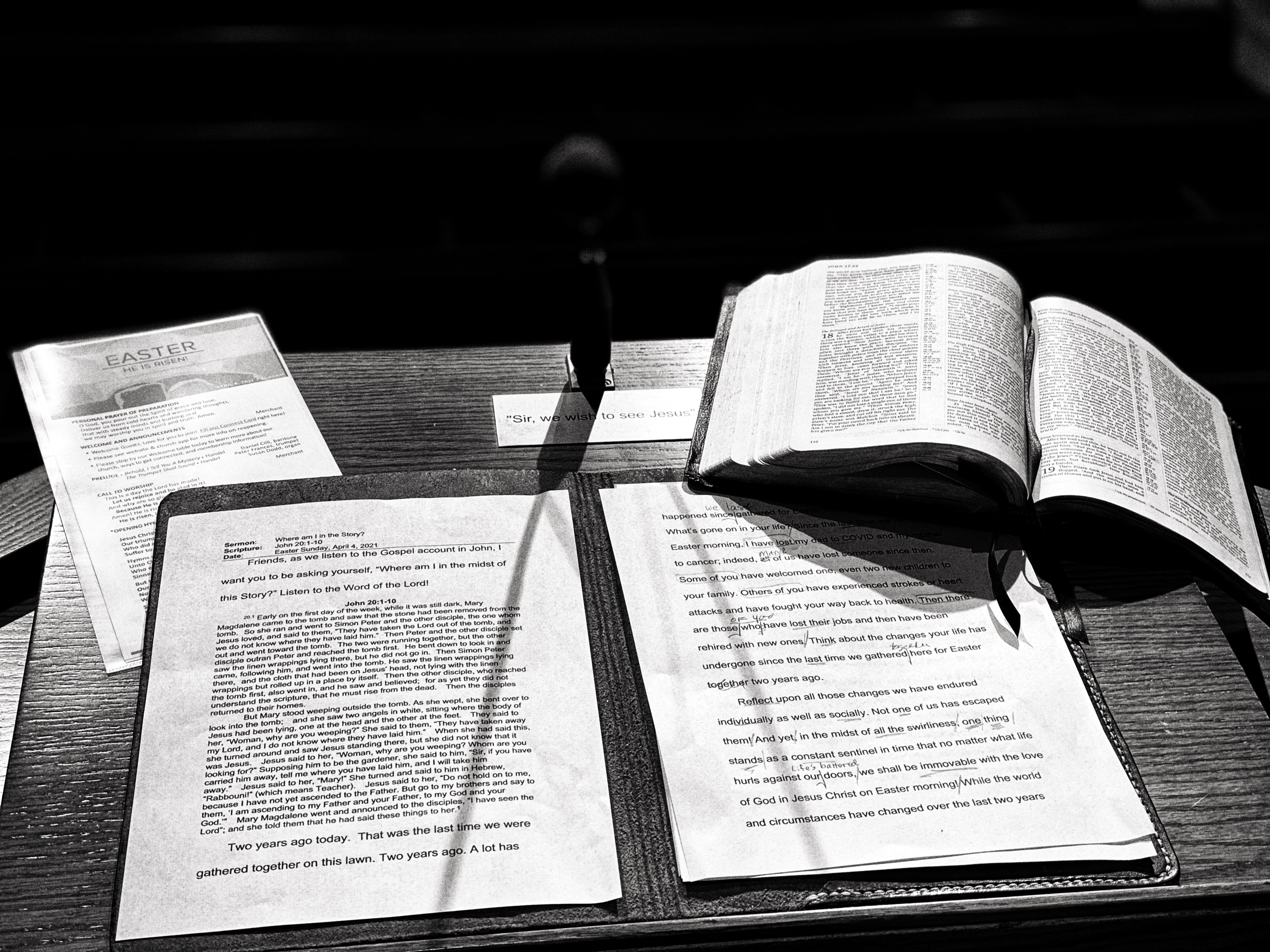
I’ve always been puzzled by this text.  As a preacher who has been in a lot of pulpits over the years, it is not uncommon to be sitting in the preacher’s chair behind the pulpit and see a little plaque stuck on the back of the pulpit that says, “Sir, we wish to see Jesus.” I’ve always wondered why that was there. Why is that a message directed to me, the preacher?  For so long I thought, “Well duh, I’m supposed to tell them about Jesus!” but I never made the connection between the Greeks’ question and Jesus’ reply.

“Patrick, we wish to see Jesus.”  Well of course you would, who wouldn’t! And after all those years is puzzling over this apparent non-sequitur, it finally hit me what this text is all about. These words are written on the backside of pulpits to remind us, Preachers, that it’s easy to tell people about Jesus; it’s entirely something different to help people understand and count the cost of what it takes to do so. As I have said, we never learn if Jesus saw the Greeks or not; all we know is the response Jesus gave to the disciples articulated what is required of the Greeks, or anyone else for that matter, to see him.

Sir, we wish to see Jesus.  The Lord answers, “I tell you, unless a grain of wheat falls into the earth and dies, it remains a single grain; but if it dies, it bears much fruit.”

Sir, we wish to see Jesus.  The Lord answers, “Those who love their life lose it, and those who hate their life in this world will keep it for eternal life.”

Sir, we wish to see Jesus.  The Lord answers, “Whoever serves me must follow me, and where I am, there will my servant be also. Whoever serves me, the Father will honor.”

This morning, our biblical Story is outlining the cost of what it means to follow Jesus and call ourselves “a disciple.” Jesus is giving us a lesson on the price we are to pay to call ourselves, “Christian.” Jesus is telling Andrew and Philip that the price of admission to seeing and experiencing Jesus is that we will need to die to ourselves and to the world’s expectations and values. When we come and see Jesus, we are called to empty ourselves to be filled with God. In other words, beloved, the way down is the way up. 

Priest/author/mystic Richard Rohr writes, “The soul has many secrets.  They are only revealed to those who want them and are never completely forced upon us. One of the best-kept secrets, and yet hidden in plain sight, is that the way up is the way down.  Or, if you prefer, the way down is the way up.”[2] The way down is where we join Jesus in the pains of this world. The way down is where we see how broken our value system is. The way down is when we finally realize we are making a pluperfect mess of God’s creation. The way down is when we recognize how we politically and economically justify injustice to the least of these in our world. Friends, it is only when we realize how bereft we are on the way down that we can be lifted back up to fully see and experience Jesus in his Easter radiance. But it takes sacrifice.

We must die to ourselves to sprout new life.

We must give up our life and identity to find a new identity in the family of God.

We must serve, not ourselves, but Jesus, and follow him wherever he goes.  In other words, my beloved…

We have to go through the pain of Good Friday before we can rise up in Easter life and joy!

We have to hit rock bottom with our use of drink and drugs before we can climb back out to healthy sobriety.

We have to go down on our knees to clean the latrines before we can rise up and lead a regiment. 

We have to be stripped of pride before we can put on true honor.

A cook has to make a lot of glop before they can become a Master Chef.

The caterpillar has to die in order to come back to life as a butterfly!

The bread has to be broken before it can be given and shared with others.

So, you and I want to see Jesus? Have we calculated all that it takes to do so?  Next week is Palm Sunday, beloved. Passion Week is following on its heels and it’s an invitation for us to go down and embrace the pain and sacrifice Jesus embraced. We still have a lot to pray and think about before Easter comes; namely, are we able to do it?  In the Name of the One who is, was, and is yet to come. Amen.  

© 2024 Patrick H. Wrisley. Sermon manuscripts are available for the edification of members and friends of the First Presbyterian Church of Glens Falls, 8 West Notre Dame Street, Glens Falls, New York 12801 and may not be altered, re-purposed, published, or preached without permission.  All rights reserved.


[1] The New Revised Standard Version, 1989, from the World Council of Churches.

[2] Richard Rohr, Falling Upward. A Spirituality for the Two Halves of Life (San Francisco: Jossey-Bass, 2011), xviii.

Posted in Sermon | Tagged , , , , , , , , , | Leave a comment

Patio Time, John 3:14-21

From The Chosen

In just two chapters, John’s densely packed gospel has already revealed four vital facts about Jesus. To begin with, we’ve learned Jesus’ true origins as the Eternal Word from the beginning of time.[1] It has shown us how Jesus calls together a community of ordinary people to follow him and makes them disciples.[2]  It highlights Jesus as an incredibly gracious Messiah as he turned water into 180 gallons of wine.[3] Fourth, we learned last week his destiny as he cleared the Temple and gave us a glimpse of what he came to do with a reference to his resurrection.[4] Now as we move into chapter three, John reveals to us the “why” of Jesus.

Turn in your Bible to John 3:14-21. Our Story today is part of an extended conversation between Jesus and a Jewish religious scholar named Nicodemus. At the beginning of chapter 3, Nicodemus has come over one evening and is engaging Jesus in some thoughtful conversation about what it means to be born spiritually, and amid their visit, Jesus outlines the “why” – the purpose of his coming.  Listen to the Word of the Lord:

John 3:14-21

 14 And just as Moses lifted up the serpent in the wilderness, so must the Son of Man be lifted up, 15 that whoever believes in him may have eternal life.

16 “For God so loved the world that he gave his only Son, so that everyone who believes in him may not perish but may have eternal life.

17 “Indeed, God did not send the Son into the world to condemn the world, but in order that the world might be saved through him. 18 Those who believe in him are not condemned; but those who do not believe are condemned already, because they have not believed in the name of the only Son of God. 19 And this is the judgment, that the light has come into the world, and people loved darkness rather than light because their deeds were evil. 20 For all who do evil hate the light and do not come to the light, so that their deeds may not be exposed. 21 But those who do what is true come to the light, so that it may be clearly seen that their deeds have been done in God.”[5]

Ever since I was a teenager, I have longed and loved for the ability to get away with someone and sit around a campfire. After football season was over, my buddy Dave and I would load up his used car and go camping in the north Georgia mountains. We would often sit under the cold dark night sky listening to a fire crackle; sometimes we talked but oftentimes we would sit in silence and listen to the dreams God was instilling in our adolescent hearts. Sitting alone in the dark in the mountains can be a scary thing but the fire creates a circle of light that feels secure. The glow of the light creates a place of refuge and safety where the world falls away and you are suspended in time at that moment feeling the fire’s warmth as the wood crackles breaking the night’s silence. Your world shrinks to only the size of the circle of light holding at bay the shadows of the forest.  All the pressures of high school, working, wondering if my old high school flame, Marian Chan, was going to dump me or not, or trying to figure out what I was supposed to be when I grew up; all of these issues seemed to melt away during those moments. It’s been over fifty years and I still travel back to those campfires in my mind.

Throughout my life and spiritual walk, I have sought to recreate those moments with those I love. A portion of my days has always included time just sitting with those I care about and being with one another. I don’t sit around campfires anymore, but I’ve discovered a lit candle flickering on the table while on the patio works just fine.

Patio time. Through the years my days have developed a rhythm of devotion and prayer in the morning and patio time in the evening. Patio times are those moments when Kelly and I would sit outside and simply be together. We shared what was most upon our hearts. Sitting in the patio’s candlelight over the years, we have strategized on how to raise our daughters and have worked out things in our marriage. We have shared our fears of illness and death and what we want this life to be. My daughters, Lauren and Kate, shared patio time with me as they grew up. The older they became, we would sit on the patio by candlelight and talk about their day, their dreams, and their boyfriends. Oftentimes, we would just sit together – a daddy and his girl – enjoying the presence of the other before they each would leave home and go to college.

Over the years, I have also had special patio time with members of my churches. We sit and chat, sometimes enjoy a good cigar, and around the lit candle on the table, you share with me your hopes, your dreams, your joys, and your fears. The light’s glow creates a space of safety and comfort, and you can just simply be your true self.  Patio time.

We have in our text today a snapshot of Jesus’ version of patio time. Nicodemus, a ruler and noted rabbi of the Jews comes to Jesus and wants to visit around the fire. Some take the fact that Nicodemus coming to Jesus at night points to his fear of being found out by the other Pharisees. Maybe. I like to think that perhaps Nicodemus knows, that like you and me, that at the end of a busy day, one just needs someplace, someone safe with whom you can your let hair down. Nicodemus was wise enough to know that to truly understand his spiritual life and faith in God, he would need time to pull away from the day’s bustle and have a private conversation with Jesus.

Nicodemus shows up three more times in John’s gospel.  He shows up in chapter seven where he sticks up for Jesus as others are trying to arrest him. He later shows up when Jesus gets arrested and then he appears in chapter 19 when he and a fellow Pharisee, Joseph of Arimathea ask Pilate for Jesus’ dead body to properly bury him.  Nicodemus is introduced in our patio time story this morning and we see the depth of his discipleship grow deeper in each of his other gospel appearances. He moves from asking about faith and belief to dynamically living out that faith and belief by publicly defending Jesus and honoring him with a decent burial.

Nicodemus, like many of us, comes to Jesus as a person who already has faith in God. He already has an active spiritual life! But something was lacking. The Spirit in Nicodemus was needling him to delve deeper and move beyond the letter of the Torah and seek its larger Truth.  Something in him wants to move beyond his first-level thinking and go deeper. First-level thinking is when you and I take for fact what we see directly in front of us at face value. What’s needed is second-level thinking where we push beyond what we think we see and know and actively question to experience Truth at a more profound level.[6]  Nicodemus, his first-level thinking was taking Jesus literally when he said he must be born again. Jesus was pushing him towards second-level, more critical, and broad thinking when he reinterprets what he said to mean spiritual rebirth. Second-level thinking opens up the aperture of our willingness and desire to learn and experience more.

Jesus says, “A person must be born again” and Nicodemus asks, “What do you mean? How is that possible?” Jesus replies “Just like Moses lifted the serpent up in the wilderness to heal the people, so the Son of Man must be lifted up so that those who see and believe will have eternal life” (3:15).  And it’s at this point Jesus reveals his purpose and the “why” of his life and coming:

16 “For God so loved the world that he gave his only Son so that everyone who believes in him may not perish but may have eternal life. 17 “Indeed, God did not send the Son into the world to condemn the world, but in order that the world might be saved through him. 

During his patio time that evening, Jesus reinterprets God’s intentions for his Jewish rabbi friend. He’s reminding Nicodemus that God so loves the entire cosmos that everyone who believes in him will have eternal life, not just the children of Abraham, but any and all people, even those nasty Gentiles; indeed, the Son of God does not condemn the world but is willing to die to save it.

Jesus is pushing Nicodemus to grow beyond first-level thinking whereupon Jewish spirituality is simply following the jot and tittle of the Law; Jesus is pushing Nicodemus to a deeper, more thoughtful, critical, and active life of discipleship in living out the Law with others. He’s reminding him that the essence of the Law is to learn how to love God and neighbor – whoever that neighbor happens to be. Lest we forget, believing is a verb and not a noun. Believing is about living out one’s faith in ever-deepening, penetrating ways. Believing is not signing onto a bunch of propositions like following the Ten Commandments; no, believing is living the active loving life Jesus emulated. Jesus took Nicodemus where he was on the patio and gave him both the room and the tools to grow deeper, grow more mature, in his spiritual life.

Beloved, as we journey to the Cross together, I encourage you to engage in some patio time with someone you know and trust and invite the Spirit of Jesus to join you. In the intimacy of your fire or candle’s glow, plumb with one another how you both can deepen your understanding of the Lord. Are you still a first-level thinking disciple or are you letting Spirit guide you to places you never dreamed you would go? In this patio time, just like Nicodemus, assess what you think you believe and know as true and let Jesus expand and challenge your thinking of what you think “you know” about God. Go find your patios my beloved and Jesus will meet you there! Amen.

© 2024 Patrick H. Wrisley, Pastor, First Presbyterian Church of Glens Falls, 8 West Notre Dame Street, Glens Falls, NY 12801.  Sermon manuscripts are available for the edification of members and friends of First Presbyterian Church, Fort Lauderdale, Florida, and may not be altered, re-purposed, published, or preached without permission. All rights reserved.


[1] John 1.1-28.

[2] John 1:29-51.

[3] John 2:1-11.

[4] John 2:12-23.

[5] New Revised Standard Version (NRSV). New Revised Standard Version Bible, copyright © 1989 the Division of Christian Education of the National Council of the Churches of Christ in the United States of America. Used by permission. All rights reserved.

[6] See Farnam Street and read at https://fs.blog/2016/04/second-order-thinking/.

Posted in Sermon | Tagged , , , , , , , , , , , , | Leave a comment

Flipping Tables, John 2:13-22

This morning, we are looking at flipping tables. Today, flipping tables can mean a few things. On one hand, you’re at a busy restaurant like the Silo on a Saturday morning and are waiting for the busboy to clean up the table of the folks who just left so you can have a seat. The busboy is trying to flip the table for a new guest. On the other hand, flipping tables can also mean getting a room ready. In a few weeks when we have our St. Patrick’s Day goodies after church on the 17th, we will need to help the deacons flip the room and get it ready for the preschool gym class the next morning.

John chapter two serves as the book’s overture for what he is going to unpack throughout the rest of the Story. The scripture immediately preceding ours in this chapter is Jesus turning ordinary water into wine at a wedding in the village of Cana. John does not call this a miracle but rather a sign pointing to who Jesus is and the power he has. Our Story today points to what Jesus is ultimately going to do;[i] without actually using the word, Jesus speaks of his upcoming passion and Easter. Listen to the Word of the Lord!

John 2:13-22

13-14 When the Passover Feast, celebrated each spring by the Jews, was about to take place, Jesus traveled up to Jerusalem. He found the Temple teeming with people selling cattle and sheep and doves. The loan sharks were also there in full strength.

15-17 Jesus put together a whip out of strips of leather and chased them out of the Temple, stampeding the sheep and cattle, upending the tables of the loan sharks, spilling coins left and right. He told the dove merchants, “Get your things out of here! Stop turning my Father’s house into a shopping mall!” That’s when his disciples remembered the Scripture, “Zeal for your house consumes me.”

18-19 But the Jews were upset. They asked, “What credentials can you present to justify this?” Jesus answered, “Tear down this Temple and in three days I’ll put it back together.”

20-22 They were indignant: “It took forty-six years to build this Temple, and you’re going to rebuild it in three days?” But Jesus was talking about his body as the Temple. Later, after he was raised from the dead, his disciples remembered he had said this. They then put two and two together and believed both what was written in Scripture and what Jesus had said.[i]

The Jewish Passover was approaching on the calendar. The Passover is the yearly festival that faithful Jews celebrate to mark their release from slavery from the Egyptians; it’s a time they remember how God led them through the wilderness to the Promised Land. Passover is all about liberation, freedom, and bright hopes for the future. Passover was the time faithful Jews looked out for the new messiah to come and deliver them from their current pain and turmoil under the rule of an oppressive Empire.[iii] The Passover was a festival all Jews had to observe, and they came from all over the ancient world to celebrate it in Jerusalem. The city was packed with people, animals, soldiers, vendors, religious officials, and sightseers, and there was a carnival atmosphere.

The center of the celebration was the Temple itself where the people would come and make their sacrifices and offerings to God. In what is known as the Court of Gentiles, animal vendors would set up shop selling lambs, doves, and other animals for sacrifice by the Levitical priests for the multitude of people’s sins, their thanksgivings, and other spiritual obligations.  Since it drew people from all over the ancient world, you would also see these tables like you see at international airports where you exchange your American dollar for British pounds. The money taken at the Temple for Jewish sacrifices could not be impure, dirty money from Rome or Persia; rather, it had to be exchanged for local untainted, purified Jewish funds.  The sale of animals and the exchange of money was not the problem for Jesus; it was where all the buying, selling, and exchanging was taking place: It occurred in a set-aside place of worship for those seeking God.

The Court of the Gentiles was included in the Temple architecture to welcome uncircumcised God-fearers into a place of worship. It was designed for those Gentiles who believed in the one God but who were not ethnically Jewish.  So here was a place that was set aside for a group of people seeking to worship and find a God they did not yet fully know but whose worship location had been taken over for a marketplace. It was a literal regentrification of a divine worship space! 

Jesus was torqued. God’s house was turned into a marketplace, an emporium, a spiritual Walmart at Christmastime of sorts. A place set aside for spiritual seekers to come in contact with God was displaced for carnival’s expediency. The “in group” could care less about those trying to learn about the holy worship of the Divine. The proverbial rams with all the power were butting out the sheep, the lost ones, with an inferior worship experience. No longer was the Temple about encountering God; the Temple had become a place where transactional business took place.  It was symbolic of how the Holy was usurped by the secular. And Jesus was fuming. 

His response? He started flipping tables and swooshing the animals out with a makeshift whip. Jesus was upset! As scholar Dale Bruner reminds us, Jesus’ anger is provoked by the people’s and religious leaders’ spiritual obtuseness through their mixing of the sacred with the profane. His flipping of tables was his dramatic act of trying to restore the honor of God within the confines of God’s house! And the people did not understand or get it.[iv]

Confronted by put-out vendors and religious officials who demanded to know what he is doing, Jesus simply replied, “Destroy this temple, and in three days I will raise it up” (2.29). What the crowd and disciples did not know then but we as his disciples should know now is that Jesus is telling them that the Temple no longer will be the center of their spiritual orbit in encountering God; he is telling them that he will be the One people will come to encounter God. This was Jesus’ battle cry for a new order in the world, in worship, and in the soul.

So, Jesus implies that he is now the new epicenter of a person’s worship! Later in John’s Story we hear Jesus say, “Abide in me as I abide in you” (15.4), and we learn that we are called to worship and serve the Lord who now resides, not in a Temple of Stone, but within our hearts of flesh. The Lord in my heart, your heart, all of our hearts joined together called Church become the location for the Beloved of God and is called to be made holy and set apart. God moves His Presence from a singular place in Palestine to a corporate place in his disciple’s hearts and souls. God in Jesus is dwelling in you and me and through this and other churches! Wow!  Think about that fact for a moment!

So, Church, what does Jesus find when he enters the Temple of the Holy Father now residing in each of our hearts and in the heart of the American church?  What does Jesus discover as he enters our heart’s door leading to the Holy? What tables will he discover that are set up and getting in the way?

Perhaps you’ve thrown up within your heart a table of bitterness you have towards those who disagree with you. Maybe it’s the table of veiled prejudice and bigotry expressed through casual words or remarks. Maybe it’s the table of spiritual hubris because you feel you know better than that person, that elder or deacon, that pastor, that ministry team on how things should be done, and you let everyone know how right you really are and how wrong they are.  Then again, I’ve seen people put up barricading tables in their hearts and are oblivious to the spiritual drift in their walk with Jesus and they are not really honoring God anymore. These are the tables of indifference to prayer, indifference to personal spiritual nurture through learning, or neglect of personal and corporate worship. Furthermore, what tables have we set up in the church that prevent the new to the faith or those searching for faith from getting to know the Lord? All of us are invited to reflect upon whether the behaviors we display or withhold are tables thrown up as barriers to others who are earnestly seeking God.

Friends, the Good News is that Lent is a time for us to invite our Lord to come in and do a spiritual assessment of our lives. The Spirit’s assessment is not to shame us, guilt us, or damn us; the Spirit simply wants to show us where we can tighten up our faith here so there will not be expressed doubt over there. This is what our forty days in the wilderness are all about. In the Name of the One who is, was, and is yet to come. So be it. © 2024 Patrick H. Wrisley, Pastor, First Presbyterian Church of Glens Falls 8 West Notre Dame Street, Glens Falls, NY 12801. Sermon manuscripts are available for the edification of members and friends of First Presbyterian Church, Glens Falls, New York, and may not be altered, re-purposed, published, or preached without permiss


[i] The Message (MSG), Copyright © 1993, 2002, 2018 by Eugene H. Peterson. The NRSV reads: 13 The Passover of the Jews was near, and Jesus went up to Jerusalem. 14 In the temple he found people selling cattle, sheep, and doves, and the money changers seated at their tables. 15 Making a whip of cords, he drove all of them out of the temple, both the sheep and the cattle. He also poured out the coins of the money changers and overturned their tables. 16 He told those who were selling the doves, “Take these things out of here! Stop making my Father’s house a marketplace!” 17 His disciples remembered that it was written, “Zeal for your house will consume me.” 18 The Jews then said to him, “What sign can you show us for doing this?” 19 Jesus answered them, “Destroy this temple, and in three days I will raise it up.” 20 The Jews then said, “This temple has been under construction for forty-six years, and will you raise it up in three days?” 21 But he was speaking of the temple of his body. 22 After he was raised from the dead, his disciples remembered that he had said this; and they believed the scripture and the word that Jesus had spoken.

[ii] Frederick Dale Bruner, The Gospel of John. A Commentary (Grand Rapids: William B. Eerdmans’s Publishing Company, 2012), 141.

[iii] Diane Chen, Connections: Year B, Volume 2: Lent through Pentecost (Connections: A Lectionary Commentary for Preaching and Worship) by Joel B Green https://a.co/1CkURzk.

[iv] Bruner, 143-144.

Posted in Sermon | Tagged , , , , , , , , , , , , | Leave a comment

A Cross is More than Something to Slip into Your Pocket, Mark 8:31-38, Lent 2, Year B

Turn in your Bible to Mark 8.31-38. We find that Jesus and his companions have traveled roughly 30 miles north from Capernaum to the town of Caesarea Philippi – a town that would be considered to be as pagan as it gets.  It was a pilgrimage destination for Romans and Greeks who would go there to worship the Greek God Pan.  While strolling about the city dedicated to this Greek god, Jesus asks his disciples who people in general thought he was. Some said John the Baptist, others said, Elijah, or perhaps one of the great prophets. Peter true to form, a guy who doesn’t have an unspoken thought, blurts out, “You’re the Christ!” 

Looking good Peter!  It looks like he’s getting it, doesn’t it?  And this is where we pick up.

Mark 8.31-38

Then he began to teach them that the Son of Man must undergo great suffering, and be rejected by the elders, the chief priests, and the scribes, and be killed, and after three days rise again. He said all this quite openly. And Peter took him aside and began to rebuke him. But turning and looking at his disciples, he rebuked Peter and said, “Get behind me, Satan! For you are setting your mind not on divine things but on human things.” He called the crowd with his disciples, and said to them, “If any want to become my followers, let them deny themselves and take up their cross and follow me. For those who want to save their life will lose it, and those who lose their life for my sake, and for the sake of the gospel, will save it. For what will it profit them to gain the whole world and forfeit their life? Indeed, what can they give in return for their life? Those who are ashamed of me and of my words in this adulterous and sinful generation, of them the Son of Man will also be ashamed when he comes in the glory of his Father with the holy angels.”[1]

Our text has Jesus going from preaching to meddling. It contains some of the hardest sayings we have from our Lord.  First, there is Jesus who tells Peter, the one person who finally articulated out loud who Jesus is, to shut his mouth and get behind him! Peter thought he saw Jesus for who Jesus really was, but he missed the point. Jesus had to verbally slap him up the side of his head and say, “Peter, you sound like the evil one confusing the way the world does things and the way God works.

Second, however, our text has one of the most well-known and most difficult sayings of Jesus; it’s not really a saying so much as that of an imperative of Jesus to all disciples. We discover that Jesus is not waxing eloquently on the ideals of a spiritual life; Jesus is drawing a line in the sand and says, “If you are going to follow me, you’ve got to do one thing and once you cross it, there’s no going back!” Like when Hernando Cortez back in the 1,500’s landed in what is today, Mexico, he told his soldiers to burn their boats because there was no turning back This is what it means to pick up our cross.

Friends, what is the one thing he is requiring of you and me?  It’s the command to pick up our own cross and follow him. This one requirement moves our faith from simply believing in Jesus to believing Jesus.

In Tacoma, Washington, I had a member of the church I pastored who helped found the church decades earlier by turning a Sunday school in an old tomato shed on the side of a hill into a church of 1,000 strong. Mel was always trying to get people to see Jesus and come to church and if he ever met you, he would come up and introduce himself and then press this tiny little pocket cross into your hand. He would remind you that God loves you and there are a group of people at the church who want to be the physical arms of God and love you, too!  And though I cherish the little cross he gave me years ago, it got me to thinking.

Too often, when we think of carrying our cross, we oftentimes think it’s the size of a cross that easily slips into our pockets. We think to ourselves, “I’ll carry it along with me if I remember to pull it out of the bowl where I keep my car keys as I leave in the morning.” I’m not sure this is what Jesus is talking about when he tells us to be cross-bearers. Jesus is not asking us to slip convenient crosses into our pockets, he is telling us in the imperative to pick up the full weight of Christ-Followership and imitate the way he actually lived.  But let’s pause and reflect for a moment: If we’re honest, we’ll admit we are not always certain about what cross-bearing actually is.

Many of us have heard the expression, “Oh, I’ve got my cross to bear.”  It’s usually said by someone when he or she is going through a hard time or an illness.  Recovering from a car accident is painful and it’s your cross to bear. Going through a long and uncomfortable medical treatment is seen as bearing the pain of the burden of a cross. Yes, God can and does speak through difficult experiences like those, but my friends, those are not the crosses Jesus is talking about. You see, the cross Jesus is talking about is the cross we each to have to consciously and willingly pick up. “A cross” is not something passive that happens to us; it is something we choose to deliberately grab hold of and lift.  So, what is Jesus talking about?

In the first century, the cross represented death. It was used by the State to publicly humiliate the offender in front of the people he or she lived with for the sole purpose of instilling fear and obedience to the State. The offenders would be stripped and forced to carry their own instruments of execution to a prominent public spot so people could not help but see the gruesome spectacle. Death on a cross was caused by exposure and asphyxiation and normally lasted several days. So, is Jesus telling Peter, telling you and me, we must become martyrs for the Christian cause? No, although some in history have had to take that path. What is Jesus asking us to do?

In Paul’s letter to the Colossians church, he says that we are to take off our “old self” with its pre-Christian practices and worldview and put on our “new self”, the new life in Christ, which is being renewed to become the image, literally a living icon of the Creator God! Though it may not necessarily mean literal death for most of us, it is a death nonetheless. As German pastor/professor/ethicist Dietrich Bonhoeffer in chapter two of his seminal book, The Cost of Discipleship, wrote, “When Jesus calls a man [sic], he bids him to come and die.”

What is Jesus asking us to do exactly?  He’s asking you and me, he’s asking us a church, to put to death our current ways of relating and responding to the world as the rest of the world currently does. It means putting to death any old assumptions and prejudices we have.  It means putting to death the notion that our money, possessions, or 401K’s are actually ours. He is telling us we must shatter the notion God is wrapped up in the flag or of any one political party so that we, like Peter, don’t become the Satan, the deceiver in the world, and muddy up what it means to live in healthy, Christocentric Christ-Followership. It means we put to death any sense of entitlement we think we are owed or deserve. It means to put to death our overcharged sense of self-importance. It means standing buck naked before the Living God totally exposed and vulnerable relying on God’s sovereign love and grace alone.

Now, if we are honest with ourselves, we must admit that our discipleship in following the Lord and imitating Jesus is oftentimes more guided by convenience as opposed to sacrifice. So, let’s make it real:  When was the last time you and I really sacrificed anything for Christ besides inconvenience?

Let me provide you a very rough, literal reading of verses 34 and 35.  Jesus says,

If anyone comes after me and wants to continue the work I’m doing, then he or she must cut off all relationship to the old way of living and forget he or she even lived that way.  Then, a person must pick up a cross moment-by-moment and come along behind me.  For whoever wants to make his or her life whole and complete must utterly destroy the old way of living, but whoever wants to destroy their old way of living for me and for the good news will be made whole and complete!

Yes, that’s pretty radical.

The question before us is this: Does our life reflect that we are putting to death our old way of life and are being clothed with the majesty of our Lord? Are we like Peter telling Jesus to conform to the world as we know and experience it or are we willing to cut all ties with worldly ways and follow and live like Christ? 

Dr. Wiley Stephens, the Methodist preacher who married Kelly and me over 40 years ago preached in a sermon, “I have a question for you. God invested his Son’s life for you. Has your life, has the life of this church, made any interest on that investment?”[2] Cross-bearing earns interest on Christ’s investment. Do each of our lives, the life of First Pres, add accumulated interest and dividends on the principal Jesus died to give us? If not, we are carrying our crosses conveniently in our pockets

So, beloved, what must you, what must I let go of and put down to pick up the cross and make our lives whole and complete in Christ? As we make our way through the season of Lent plodding towards Easter, I want Jesus’ words to get inside our heads and doggedly gnaw on us. Let us hear his words as questions to each of us: Patrick, how have you denied yourself, picked up your cross, and followed me? How have you lost your life for my sake and for the proclamation of the gospel? You see, these aren’t questions we will be asked at the Pearly Gates one day; they are questions Jesus is asking you and me today. Let us pray…

© 2024 Patrick H. Wrisley. Sermon manuscripts are available for the edification of members and friends of First Presbyterian Church of Glens Falls, 8 West Notre Dame Street, Glens Falls, New York, and may not be altered, re-purposed, published, or preached without permission.  All rights reserved.


[1] The New Revised Standard Version, copyright 1989, 1995 by the Division of Christian Education of the National Council of the Churches of Christ in the United States of America. Used by permission. All rights reserved.

[2] The Rev. Dr. Wiley Stephens, Dunwoody Methodist Church, Dunwoody, Georgia. Read the Fine Print, Mark 8.27-38, 15th Sunday after Pentecost (Proper 19), September 14, 2003.  Accessed on 2/29/12 at http://day1.org/498-read_the_fine_print.  I modified Dr. Stephen’s last sentence to fit the context at FPC.

Posted in Sermon | Tagged , , , , , , , , , , , , , , , , , | Leave a comment

The Full Wilderness Experience, Mark 1:9-15

Turn in your Bible to Mark 1.9-15. In today’s Story, three vital incidents happen that shape Jesus’ identity, character, and purpose in his life, i.e. His baptism, his temptation in the wilderness, and his mission to proclaim the Good News.  Interestingly, Mark has these same three issues appear again later in his Story where the religious authorities question Jesus’ identity in Mark 11, when Jesus is once again tempted three times by Caiaphas, Pilate, and the soldiers at the Cross, and when the resurrected Jesus tells the women to go and proclaim to the others what they have experienced.[1]  

Mark wants us to notice these three themes because they are three movements and themes in each of our lives, too. We each have to wrestle with our identity, our character, and our purpose in life. Listen to Mark 1:9-15 and hear the Word of the Lord!

Mark 1:9-15

In those days Jesus came from Nazareth of Galilee and was baptized by John in the Jordan. And just as he was coming up out of the water, he saw the heavens torn apart and the Spirit descending like a dove on him. And a voice came from heaven, “You are my Son, the Beloved; with you I am well pleased.” And the Spirit immediately drove him out into the wilderness. He was in the wilderness forty days, tempted by Satan; and he was with the wild beasts, and the angels waited on him.

Now after John was arrested, Jesus came to Galilee, proclaiming the good news of God, and saying, “The time is fulfilled, and the kingdom of God has come near; repent, and believe in the good news.”[2]

This morning, we are going to focus on verses 12 and 13 which have been often called Jesus’ temptation story; specifically, we are going to zero in on the wilderness and its impact on forming one’s personal spiritual character.

The wilderness played a large part in Jewish spiritual formation.  When God liberates the people from Pharaoh’s cruel hand, God leads them through the wilderness for not 5, 10, but 40 years – an entire generation! Along the way, they complained to God, they fought with God, they disobeyed God but through all their ups and downs, they learned something about themselves and most importantly, they learned something about God’s character.

They learned God is the creator and they are the created.  They learned that God is holy and separate from the rest of the world and that God was calling them to be the same. They learned God has set limits and boundaries in our relationships to help us keep our focus on the Lord while honoring and loving our neighbor as well.  For the ancient Hebrews, the wilderness was the often uncomfortable but ever-so-necessary University of Hard Knocks that shaped them into a people before they claimed the land of Promise.

The Patriarch Jacob went into the wilderness and learned something about God as well as himself.  The wilderness humbled Jacob and he began to see the jerk he was acting like in the family.

The Prophet Elijah escaped into the wilderness hiding for his life, totally despondent because he felt God had set him up in his confrontation with Ahab and Jezebel.

And then today, we see Jesus going into the wilderness. Actually, Jesus was driven out by the Holy Spirit into the wilderness as this was the one place where he, like his ancestors Jacob, Moses, and Elijah before him, would have to go and develop his character and learn about God and others in ways he had not before. It was the place where he had to confront his doubts, confront the very face of evil, and then lean into the angels of God to tend to him in ways he may not have known he needed at the time. It was the place where Jesus learned the difference between knowing his Bible, i.e. the Torah and living it out in real life. The wilderness taught him about his Father as well as his relationship with the people of Israel at the time and why he was sent to us.

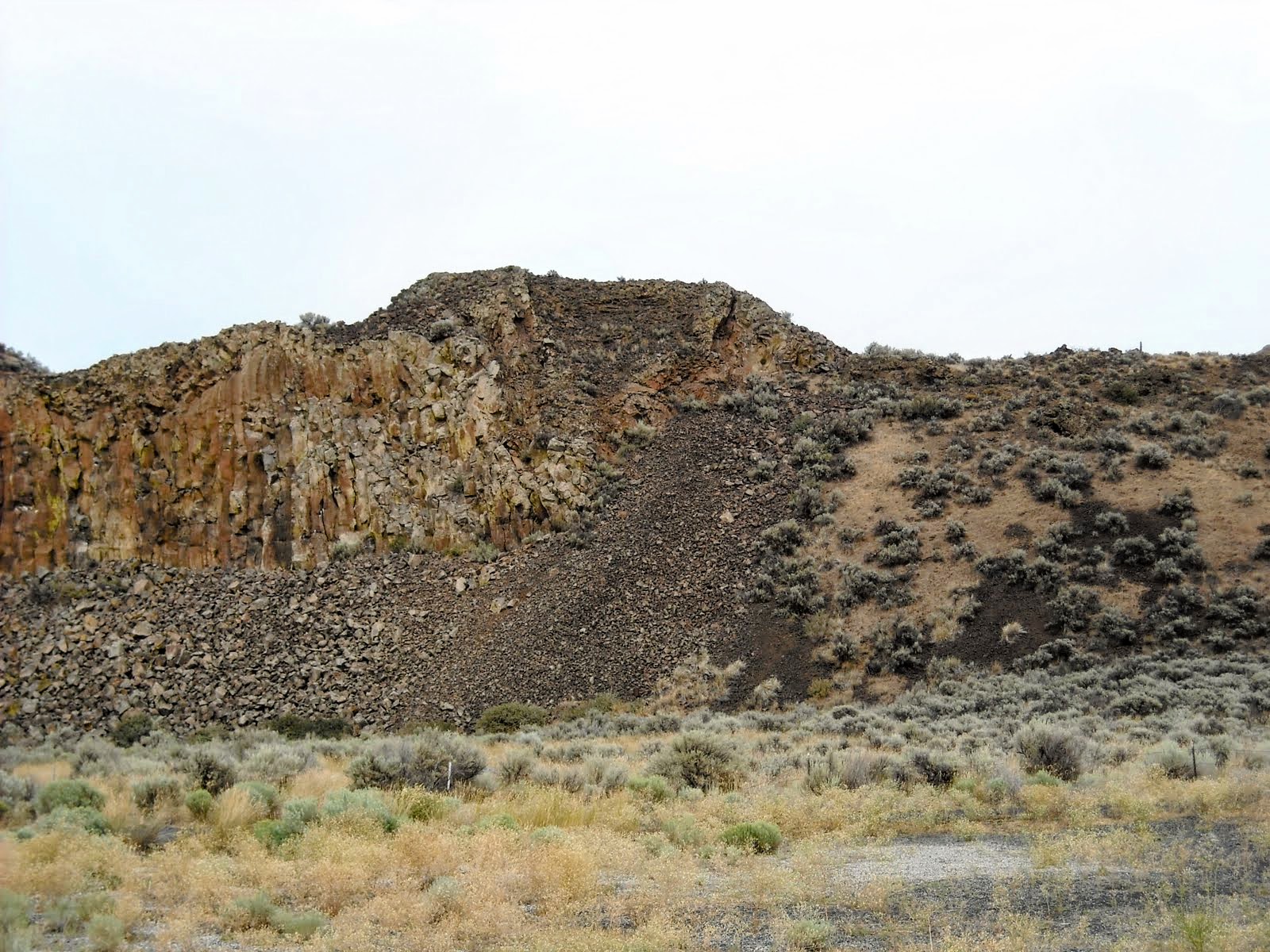
The wilderness of Judea is a hot, rocky, rugged place. It is an unforgiving environment that will make or break you. There is a road today that runs from Bethlehem down some twenty-five miles towards Jericho called the “Fire Road” because it’s so hot and unforgiving. I’ve also seen this type of wilderness in the high deserts of Washington and Oregon as well as in the Badlands of South Dakota.

The wilderness is the place where the limits of our faith and understanding of God are tested and tried.  The wilderness is the place where we discover if we will fall into the temptations before us or if will we rely on the beloved angels to minister to our character and keep us God-focused instead of moment-focused. The wilderness is that place that is difficult and we are forced to confront what we ultimately believe about life, our neighbor, and most importantly, our God.  

Consequently, the wilderness may not always be a physical place for you and me.  The wilderness may be the endurance of a painful divorce or a betrayal in a loving relationship.  The wilderness may be for some of us a period of depression when all we see and experience around us is an ever-decreasing hole of light and warmth as we are swallowed into cold darkness. The wilderness may be a diagnosis of cancer or disease that pushes the limits of one’s faith and trust in God to the edge.

Now let me clarify, divorce, a disease, or illness are not to be confused with the wilderness itself; a divorce, a life struggle, or an illness or disease is simply how we are driven out into the wilderness’ stark reality. So, what are redemptive life-sustaining, and spirit-enhancing lessons we can gain from being in the wilderness?

First and foremost, God has not left us alone in the wilderness.  Unlike Elvis, God has not left the building!  God is present with us amid the wilderness times whether we are aware of that special holy Presence or not. Jesus was in the wilderness, but he was not alone! Yes, evil was there to tempt and try him but so was God’s presence in the angels who tended to his needs. Jesus could choose to be open to the Presence of God or not; the choice was his.

The second lesson we can learn is that the place of wilderness is neither good nor bad per se; rather, it’s what we do and ascribe to what happens in the wilderness that dictates its “goodness” or “badness.”  For Jesus, the wilderness was always ‘just out there’ for every Palestinian. When placed in the wilderness, Jesus had to learn how to respond to the pains, trials, temptations, and doubts. Jesus had a choice. He could choose to respond by remaining grounded in his Father and responding out of his Father’s character, or Jesus could choose to take the easy way of temptation to reap short-term benefits in exchange for long-term, spiritual costs. The wilderness did not tempt Jesus; Satan tempted Jesus. The wilderness is where Jesus had to figure out how to respond to the voice of evil.

So, for you and me, the lay-off, the divorce, the illness, the accident, or whatever the crisis is in our life are simply the vehicles that drive us to the wilderness whereupon we each have to choose how we will navigate our faithful response. It’s the place where we quit focusing on the life circumstances that brought us to the wilderness (e.g. cancer, illness, divorce, etc.) and begin learning how to rely on God in those circumstances. The wilderness is an existential place each of us is delivered to where we are left to face a panoply of choices on how we will consciously choose to live life. It’s the place where we wonder about our existence as well as about God’s place in our lives; the wilderness is the place where we wrestle with God like Jacob at Bethel and deal with hard questions.

This Lent, the Holy Spirit is driving each of us into the wilderness. Do not be afraid to go there, beloved. It is the place where you and I can grow deeper and closer to God and to one another.  Don’t be afraid to go there because…remember, we do not go into the wilderness alone!  God and his angels are already waiting for you and for me! Amen.

© 2024 Patrick H. Wrisley. Sermon manuscripts are available for the edification of members and friends of First Presbyterian Church, Glens Falls, and may not be altered, re-purposed, published or preached without permission.   All rights reserved.


[1] See Mark 11:27, Mark 14:53-15:15 and Mark 15:16-32.

[2] New Revised Standard Version (NRSV). New Revised Standard Version Bible, copyright © 1989 the Division of Christian Education of the National Council of the Churches of Christ in the United States of America. Used by permission. All rights reserved.

Posted in Sermon | Tagged , , , , , , , , , , , , , , , | Leave a comment