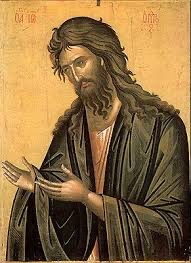
John the Baptist: Good News and Advent Preparations, Luke 3:1-6

A sermon delivered by Rev. Dr. Patrick H. Wrisley on December 8, 2024.

This morning, we are introduced to Jesus’ cousin, John the Baptist. Jesus’ aunt Elizabeth follows in the steps of great biblical heroines like Sarah and Hannah who could not conceive a child. Gabriel has visited Jesus’ Uncle Zechariah and tells him that though his wife is considered well past child-bearing years, she will give birth to a son and they were to name him John. Furthermore, the angel Gabriel made it clear John would be held in the service of the Lord from the day he was born. Elizabeth and Zechariah were obedient to the angel’s instructions.

John grew up and many believe he joined a devout group of people who lived in a desolate area high above the banks of the Jordan River near the Dead Sea in an area called Qumran. This is the community made famous by the discovery of biblical scrolls by a shepherd boy back in the 1940s. It was a religious community that set itself apart and away from civilization because they wanted to focus on spiritual purity as they awaited the Messiah’s return. John’s community in Qumran was about getting prepared for God’s coming and John was calling people into that preparation mindset.

Listen to the text; hear the Word of God.

Luke 3:1-6

3.1In the fifteenth year of the reign of Emperor Tiberius, when Pontius Pilate was governor of Judea, and Herod was ruler of Galilee, and his brother Philip rulerof the region of Ituraea and Trachonitis, and Lysanias rulerof Abilene, during the high priesthood of Annas and Caiaphas, the word of God came to John son of Zechariah in the wilderness. He went into all the region around the Jordan, proclaiming a baptism of repentance for the forgiveness of sins, as it is written in the book of the words of the prophet Isaiah (40.3),

“The voice of one crying out in the wilderness:
‘Prepare the way of the Lord,
    make his paths straight.
Every valley shall be filled,
    and every mountain and hill shall be made low,
and the crooked shall be made straight,
    and the rough ways made smooth;
and all flesh shall see the salvation of God.’”[1]

When people today hear about John the Baptist, all types of images are conjured up in our imagination. We imagine he is a wild, unkempt-looking man. He wears next to nothing and yells at those who dare to listen to him. He seems like a grumpy religious fundamentalist. He focuses on scaring people into heaven with talk of fire and brimstone. Sadly, today’s text does not paint that type of picture of him at all and neither does is it have him proclaiming a dour, bad news message. The people of the first century would hear John’s words and hear good news, exciting news, that Messiah was coming.

This is the essence of what the Bible calls “good news.” The God of eternity is piercing into our concept of historical time and is coming in the person of the Messiah. When John quotes Isaiah 40, every Jew would know that it was about God declaring that the time of exile was over. The declaration ended warfare against Israel and Jerusalem. The words from Isaiah were quoting a liberation song the Jews had learned in their hearts that when the call to prepare the way of the Lord was given, their King, Messiah and Deliverer was close at hand and preparations needed to be made. Their Lord, they sang, is coming to restore the relationship with the people of Israel! The Messiah is going to set all things right once more. This was grand good news! John is calling them to go about preparations to help facilitate this Messiah’s welcome.

Luke begins his Gospel not with some once-upon-a-time there was this guy who came. No, Luke has Messiah coming into a very precise time-bound historical moment. He does it with great specificity. It would be as though he began chapter three with, “When Joe Biden and Kamala Harris were President and Vice-President of the United States and Donald Trump was President-elect. Kathy Hochul was governor of New York. Chuck Schumer and Kirsten Gillibrand were Senators. Francis was Pope to the Catholic Church. Robert Trawick was the General Presbyter for Albany Presbytery. A country preacher from Chestertown began to say, “Get ready, God’s moving back into the neighborhood!”

Luke places Jesus’ coming smack in the middle of our human history. John’s tone is excited and is resounding Good News to his Jewish audience.

Well, for most of his audience. Some did not like the idea of preparing for the Messiah’s return. You see, that would mean they would have to live differently. Some religious leaders were a little wary of this Messiah coming back. The Messiah’s presence means they will have to start relating to people in a different way. The religious leaders liked the social pecking order and prestige of their positions in the community as they had positions of power. The Romans did not care about the Jewish power structure if it did not interfere with Rome’s goals. Messiah would demand the religious leaders to toe the line he demands. No, the Jewish religious and social power structure, even under Roman rule, was only responsible to the High Priest. Messiah trumps the high priest in the power structure. Just like in churches across America, god-forbid someone come in and change up the status quo because, “We’ve never done it that way before.”

Yet, this is what John is declaring. All flesh will see the salvation, the healing wholeness, of the Lord God. Everything is scrutinized from the Messiah’s point of view from the political, economic, and cultural social structure. The norms of justice and ethics and how people treat and relate with each other is important to the Messiah. Messiah is coming home to restore, reimagine, and revitalize the relationship with His people. John’s message today is one of getting ready to be reintroduced to the Messiah. Our preparations are to get our relationship with the Lord in order so that we can welcome him into our home. This, beloved, was the highest priority that people who heard John’s words made. The season of Advent is our making it our highest priority in our world, community, church, and home as well.

Isn’t this what this whole Christmas thing is about? Isn’t it about God coming and restoring a new relationship with all Creation? Isn’t it about God coming to restore relationships with all people? Isn’t it about a divine reboot of an unjust political, economic, and religious environment and reshaping the ethics and ethos of a culture? Advent preparation involves embracing John’s declaration of the Good News. We must agree to be the agents of transformation in our community. As we were reminded last week, the Church is imperfect. Yet, she is the visible expression of Jesus in the world. She is the vehicle of change and grace for ushering in Messiah’s coming. And that, beloved, requires all of us to turn away from the old ways of religion, politics, and economics. It requires us to reject the power of the culture and begin afresh.

John’s words to us this morning ask us to reflect upon our Advent and Christmas preparations. This reflection involves both our faith community called First Presbyterian Church and our personal homes and lives. Are the preparations geared towards celebrating the Messiah’s arrival, or are they preparations for an enjoyable holiday? An enjoyable holiday is not a bad thing at all, but it is not the necessary one thing John is talking about; let’s remember our word ‘holiday’ is a derivative of ‘holy days.’ John’s call from the wilderness reminds us to reflect upon our own preparations. We must prepare for the Good News Messiah during these holy days. And all of God’s people said, “Amen.”

© 2024 Patrick H. Wrisley, D.Min. Sermon manuscripts are available for the edification of members and friends of First Presbyterian Church Glens Falls, 8 West Notre Dame Street, Glens Falls, NY 12801. They cannot be altered, re-purposed, published, or preached without permission. All rights reserved.


[1] The New Revised Standard Version, copyright 1989, 1995 by the Division of Christian Education of the National Council of the Churches of Christ in the United States of America. Used by permission. All rights reserved.

Posted in Sermon | Tagged , , , , , , , , , | Leave a comment

Preparing for Advent: The Four Stones of Preparation, Jeremiah 33:14-16

A Sermon delivered by Rev. Dr. Patrick H. Wrisley on December 1, 2024.

We begin the new Christian year this morning and it is a time of year of thoughtful preparation. Madison Avenue would have us think it is about preparing for the delightful day of gift-giving we call Christmas, but it is so much more than that. It is true that Christmas is about the great unwrapping. Yet, it is not about the gifts left under the tree. This season, we get the nursery ready. We prepare to swaddle the gift of the child called, Jesus. Advent is the time of slow, thought-full dawdling our way to Christmas.

The word ‘advent’ derives from the Latin advenire,[1] to come. It is a time for us to remember who is coming so as to best prepare for their arrival. For those who make up the Church, it forces us to choose whose arrival we are preparing for. Are we preparing for a fat, jolly elf? Or are we preparing for the child in the manger? Whose arrival we prepare for will decide how we spend the next four weeks leading up to Christmas.

Thursday morning, I sat with my granddaughter watching the Macy’s Thanksgiving Day Parade. Aside from feeling sorry for those high school kids in their soaking wet band costumes and tights, it was nothing but a non-stop commercial hawking wares, shows, or upcoming movies from Disney. Even poor old Al Roker wandering about in the rain looked like a walking mannequin for L.L. Bean with his rubber hunting duck shoes, waxed canvass rain jacket, and fedora. It was a brutal reminder for me how culture has co-opted a season of spiritual preparation and gratitude and has transformed it into one of consumeristic largesse. This is why Advent doesn’t begin with the Macy’s parade or Black Friday deals. It begins on its own day – the Lord’s Day.

Advent is the time of preparing for God’s arrival. To quote author Stephen Covey, the first Sunday of Advent is a day we begin with the end in mind. The church mothers and fathers have an intentional purpose for us. They want us to look at the second advent first. This refers to the second coming of God on the first Sunday of our preparation for Christmas. Why do we do this?

As we start our walk to Christmas Day, we begin by taking our bearing of where we are going. For the Church, that bearing, that pole star, is the fulfillment of time when our Lord will come again in glorious love. At that time, all balance is restored, and we are reunited with God and those we love in heaven. We start with the second Advent first. It reminds us that amid this swirly, chaotic world, God has the ultimate last Word. 

On a practical level, starting the Christian year and Advent with reflections on the second coming of Christ gives proper focus. It helps us put the rest of our life in perspective. Are we frenetically preparing to open presents on Christmas morning? Or are we preparing for meeting The Presence of the Holy on Christmas morning? Both have very distinct ways of preparing for their arrival. Advent is a time for us to figure out for which or for whom we are preparing for exactly. Our morning’s text from Jeremiah is a powerful waypoint showing us the direction to go.

Turn in your Bible to Jeremiah 33:14-16. Jeremiah wrote about 550 years before Christ’s birth. He was known as the weeping prophet. Many of his prophecies were perceived as gloom and doom. Let’s be clear about who and what a prophet is. When we hear of a prophet, we tend to think of someone who foretells future events that will happen. In Jeremiah’s case, he warned the people in the southern kingdom of Judah that unless they get their act together, they will be forcibly taken away by a foreign army and Jerusalem will be destroyed. But a prophet just does not tell of future events, a prophet is a truth-teller. A prophet is someone who calls it the way they see it whether it is something the people want to hear or not. Jeremiah fit both of these roles. He told the people the truth that there are consequences for their blatant disregard for God, and as we see in today’s text, Jeremiah also foretells a time of peace in the future. Our text comes from what has been called “The little book of comfort” amid a larger book of roaring complaints. Listen for the Word of the Lord.[2]

Jeremiah 33:14-16

14The days are surely coming, says the Lord, when I will fulfill the promise I made to the house of Israel and the house of Judah. 15In those days and at that time I will cause a righteous Branch to spring up for David; and he shall execute justice and righteousness in the land. 16In those days Judah will be saved and Jerusalem will live in safety. And this is the name by which it will be called: “The Lord is our righteousness.”[3]

Here we have the Good News declared: Even though the people have forgotten God, God has not forgotten them. He remembers His promises to them. This was during a time when the northern kingdom of Israel had already been sacked and taken into exile. The southern kingdom of Judah was preparing to be invaded. Jeremiah speaks a word of hope into a hopeless situation. God will raise a righteous branch from David’s family. He will restore Israel and Judah into a unified nation once more. Although they cannot see through the fog of war and turmoil now, their deliverer is coming. He is a descendant of King David. The Messiah is on His way.

God has Jeremiah remind the people of the promises God once made to Abraham, Isaac, Jacob, and to King David. God made a covenant to be with his chosen people until the end and will never leave or forsake them. The nation of Israel under King David was later split into two nations. Foreign powers ultimately destroyed it. Yet, God will make a way through in the end. This is a vision of the future which lifts forlorn faces upwards from seeing political betrayal and violence in the moment. It points to a restorative, just future where God’s ultimate power and purposes will abound. As one commentator says, it directs us towards a future adorned and blessed by God. It diverts our focus from “the clamoring demands of a paralyzed present.” [4]

Well, this all sounds wonderful, doesn’t it? Yet, it begs the question: So, what? What does this have to do with you, me, and the Church in the midst of this dystopian society we live in? The coming of the Lord’s righteous Branch is a reminder that we are not to be so heavenly minded we are no earthly good! We have work to do! We have preparations to make, and I do not mean shopping or baking, either. You see, beloved, we are not just preparing for LBJ’s birth, or as we say down South, Little Baby Jesus; we are preparing for the Righteous Branch of David’s return.

The great Reformer of the last century, Karl Barth, wrote, “The earthly-historical existence of Jesus Christ himself” is the church today.[5] Jesus has left a guaranteed deposit until his return in and through you and me – the Church. The Church prepares for the Righteous Branch’s arrival. It does this by creating paths of steadfast love and faithfulness. This is as Psalm 25 directs. Psalm 25 reminds us the Lord’s way, the Lord’s paths, are paved with the four stones of truth, mercy, humility, and graceful love. 

Until Christ comes again, our job is to establish these cornerstones. We must cultivate truth, mercy, humility, and love right where we live today. Whereas Jeremiah tells us “the what” of Advent, Psalm 25 tells us “the how” of our preparations. This, Church, is how we prepare in Advent. We speak Truth to power. We demonstrate mercy to those who do not deserve it. We live humbly and practice playing second-fiddle to one another. And we love, deeply, passionately all those secret angels we meet in the faces of people we bump into every day.

There is no more beautiful and living reminder of this than this meal placed before us. In this meal, we are reminded that Jesus is the Way, the Life, and the Truth. In this meal we are shown mercy. In this meal we learn true humility and sacrifice. In this meal, God proves his passionate love for us. Let us eat, get nourished and then get to work. We have preparing that needs to be done! Amen. 

© December 1, 2024, by Patrick H. Wrisley. Sermon manuscripts are available for the edification of members and friends of First Presbyterian Church of Glens Falls, NY. They shall not be altered, re-purposed, published, or preached without permission. All rights reserved.


[1] See https://www.merriam-webster.com/dictionary/Advent.

[2] Connections: A Lectionary Commentary for Preaching and Worship: Year C, Volume 1, Advent through Epiphany. See https://a.co/8NiUuFg/

[3] The New Revised Standard Version, copyright 1989, 1995 by the Division of Christian Education of the National Council of the Churches of Christ in the United States of America. Used by permission. All rights reserved.

[4] Connections: A Lectionary Commentary for Preaching and Worship: Year C, Volume 1, Advent through Epiphany
https://a.co/2yZPgH3

[5] Connections: A Lectionary Commentary for Preaching and Worship: Year C, Volume 1, Advent through Epiphany.  See https://a.co/iK1W0ca.

Posted in Sermon | Tagged , , , , , , , , , , , | Leave a comment

The Clash of Empires: Jesus vs. Today’s Truthiness, John 18:33-38

A Sermon delivered by Rev. Dr. Patrick H. Wrisley on Sunday, November 24, 2024

Today is Christ the King Sunday, the final Sunday on the church’s liturgical calendar year. For Christians, this is our “New Year’s Eve” as we wind down the year and peek into the new year with the dawning of Advent next Sunday morning. This liturgical day was established in 1925 by Pope Pius XI, who in the context of growing nationalism and secularism in the shadow of a bloody WWI, wanted to remind people our ultimate allegiance is to Jesus Christ and the reign of God. Pope Pius wanted to impress upon the church a critical message. If people and nations reject the reign of God among us, there cannot be lasting peace in our world.[1]

Yes, the world did and does need this reminder but sadly the people in the pews are not listening. Just seven years after Christ the King Sunday was established, the Nazi party took over the Reichstag. This happened in a wave of authoritarian right-wing zealotry. Nazism arose for several reasons. It was a reaction to the political, economic, and social changes that occurred under the Weimar Republic in the 1920s. It arose from a deep sense of nationalism after their defeat in WWI and their opposition to communism as well as the fact Germany was forced to pay reparations to the international community after the First World War.[2] Hitler and the Nazis summarily replaced the Reich of Jesus Christ with the Reich, i.e., the empire, the realm, the kingdom of Hitler and the Nazis.

With the history of the last one hundred years as our guide, we need to reclaim the vital importance of Christ the King Sunday. As members of Christ’s church, we must remember our allegiance is first to God in Christ. This comes before any cultural or political order. And it is in our scripture text this morning we see the seismic clash between the empire and the church. Lest we forget, the words Caesar, Fuhrer, and Lord all mean the same thing. Christ the King Sunday forces us to acknowledge which lord we are going to follow. The deal for you and me is that we have to pick one and only one. Do we choose the side of Empire or do we choose the realm of Christ and the church?

We have left Mark’s gospel and find ourselves in the Passion narratives in John’s Story. Jesus has thus far been betrayed, arrested, beaten, and is now getting paraded about in an atmosphere of carnival. He has stood before the Jewish religious Empire and was found guilty of blasphemy and now he is before Caesar’s Roman Empire to be tried for sedition. We pick with Jesus and Pontus Pilate facing off in Pilate’s headquarters. Listen to the Word of God.

John 18:33-38

33Then Pilate entered the headquarters again, summoned Jesus, and asked him, “Are you the King of the Jews?” 34Jesus answered, “Do you ask this on your own, or did others tell you about me?” 35Pilate replied, “I am not a Jew, am I? Your own nation and the chief priests have handed you over to me. What have you done?” 36Jesus answered, “My kingdom is not from this world. If my kingdom were from this world, my followers would be fighting to keep me from being handed over to the Jews. But as it is, my kingdom is not from here.” 37Pilate asked him, “So you are a king?” Jesus answered, “You say that I am a king. For this I was born, and for this I came into the world, to testify to the truth. Everyone who belongs to the truth listens to my voice.” 38Pilate asked him, “What is truth?” 

I love this text. Although Jesus has already gone through a tough night, he still has grit. He is salty and direct towards Pilate and his questions. He is keeping his sense of self all the way to the end of his earthly life. Pilate thought he would deal with a frightened itinerant preacher from Galilee. But he faced a gentle man with nerves of steel. This man would not be intimidated by someone with assumed power. The lectionary compilers cut verse 38 from the reading this morning for some reason. I chose to add it back because people in our country have a hard time understanding this issue.

Pilate’s question, I believe, was one he was asking of himself and not of Jesus. Jesus got inside of his head and Pilate in the atmosphere of carnival asks a self-reflective question to himself while directing it at Jesus.

What is truth?

What is truth? It is a very poignant question for us. This is relevant. The last local and national political cycle has been full of what Late Show host, Stephen Colbert, calls “truthiness.” It is a word he coined in the 2006 election, and it even earned a place in the Merriam-Webster’s dictionary. Truthiness is defined as, “A truthful or seemingly truthful quality that is claimed for something not because of supporting facts or evidence but because of a gut feeling that it is true or a desire for it to be true.[3]

You are enjoying your holiday get-togethers, and you start quaffing down all those lemon bars and apple pies. In your mind, you tell yourself, “These are fruits and fruits are good for you, so I think I’ll have another.” That is Truthiness.

At a cocktail or dinner party, you hear someone say, “There is no climate crisis. The Earth has warmed up and cooled all through history.” That is Truthiness.

FOX News and CNN – all Truthiness.

It seems people in our country have lost their appetite for honesty; it does not seem to matter anymore. If facts do not fit my agenda, I will manipulate the facts just enough to make them plausibly correct…in my mind at least. Truth has been relegated to how we feel or by what opinion we have or share. Who needs facts when we know in our gut what is right?

When the first Europeans landed on this continent, they encountered the Native American Indians who looked different from them and us, so they were portrayed as “red savages.” Since we are Christians, we have this notion of Manifest Destiny on our side to take their land because we got this feeling God told us it was really ours. Truthiness.

The Bible mentions people owning slaves in both the Old and New Testaments. Therefore, some believe it is fine for them to own slaves and treat them like chattel. People were convinced, “We white folk are superior.” This is how many in our country felt and it caused civil war. It was all based on Truthiness.

One commentator writes, “In intellectual terms, we tend to think of truth in terms of reliability and dependableness. In religious terms, it expands beyond this to an unwavering conformity with God’s will so that we think in terms of reality and understanding.” [4] Another says, “We want simple answers that bring less stress and less reflection, ignoring the reality of nuance and inconsistency common to human existence. We want the truth that convinces us. We do not want the truth that convicts us. We seek the truth that affirms us. We avoid the truth that challenges us. We want a truth in our own image, not in the image of God.”[5]

And there you go. Insert the dropped mic.

Christ the King Sunday is a cold washcloth in the face to wake us up. It reminds us that Jesus Christ is the Truth. He points to the Truth and shows each of us how to live in and with the Truth. When Truth is robbed of its personal ethics and responsibility, it becomes Truthiness. Like love, truth is easier spoken about than lived out. Truth demands risk and a cost. Truth is inconvenient and difficult. Truth is not always popular. Truth can be controversial. Truth is ethical and requires an anchor to something solid, dependable, and universal. For people of God, that rock and anchor is Jesus Christ and the way he lived and loved.

Beloved, today is the day we remember our allegiance is to the reign of Christ. It is not the reign of party affiliation, consumerism, Christian Nationalism, or any other -ism. I close with words from the members of the Confessing Synod of the German Evangelical Church. They wrote these words during Hitler’s attempt to make the Church in Germany an arm of the Nazi government. This group of brave Protestant pastors and theologians wrote a declaration on what the church believed and how it should act during those tumultuous times. It is called the Declaration of Barmen. You see, during the 1930’s, many Germans collapsed their Christian faith, their national identity, and military aspirations and rolled it all together into one big package. The Declaration of Barmen stood against that and declared what in the eyes of the Church what truth is. Beginning with scripture, it goes on to make a daring proclamation.

“I am the Way, the Truth, and the Life; no one comes to the Father, but by me.” (John 14:6). “Truly, truly, I say to you, he who does not enter the sheepfold by the door but climbs in by another way, that man is a thief and a robber. … I am the door; if anyone enters by me, he will be saved.” (John 10:1, 9.) Jesus Christ, as he is attested for us in Holy Scripture, is the one Word of God which we have to hear and which we have to trust and obey in life and in death. We reject the false doctrine, as though the church could and would have to acknowledge as a source of its proclamation, apart from and besides this one Word of God, still other events and powers, figures, and truths, as God’s revelation.”[6]

Joshua declared to the Israelites, “Choose this day whom you will serve.” He continued, “As for me and my house, we will serve the Lord!”[7] 

Church, today is a day we choose whom we shall serve. Shall you choose the Empire of politics, business, and culture, or, shall you choose the reign of Christ our King?

© November 24, 2024, by Patrick H. Wrisley. Sermon manuscripts are available for the edification of members and friends of First Presbyterian Church of Glens Falls, NY, and not be altered, re-purposed, published, or preached without permission. All rights reserved.


[1] Green, Joel B.; Long, Thomas G.; Powery, Luke A.; Rigby, Cynthia L.; Sharp, Carolyn J. Connections: Year B, Volume 3: Season after Pentecost (Connections: A Lectionary Commentary for Preaching and Worship) (p. 494). Presbyterian Publishing Corporation. Kindle Edition. 

[2] See https://encyclopedia.ushmm.org/content/en/article/the-german-churches-and-the-nazi-state, accessed 11/23/24.

[3] See https://www.merriam-webster.com/dictionary/truthiness#:~:text=truth·%E2%80%8Bi·%E2%80%8Bness,for%20it%20to%20be%20true.

[4] Feasting on the Word: Year B, Volume 4: Season after Pentecost 2 (Propers 17-Reign of Christ) (Feasting on the Word: Year B volume) by David L. Bartlett, Barbara Brown Taylor https://a.co/3LVuF11.

[5] Connections: Year B, Volume 3: Season after Pentecost (Connections: A Lectionary Commentary for Preaching and Worship) by Joel B. Green, Thomas G. Long, et al. See https://a.co/3hBOo40.

[6] The Book of Confessions of the Presbyterian Church U.S.A., The Declaration of Barmen, 8.10-8.12.

[7] See Joshua 24:15.

Posted in Sermon | Tagged , , , , , , , , , , , , | Leave a comment

Watching the Tide, Mark 13,1-8

https://www.northcoastnews.com/wp-content/uploads/2017/08/8001227_web1_Truck-in-surf-WEB.jpg

A Sermon delivered by Rev. Dr. Patrick H. Wrisley on November 17, 2024

Turn in your Bible to Mark 13 as we will be reading the first eight verses. As a writer, Mark has us come literally full circle from where we began in chapter 1. Chapter 1 introduces us to Jesus who has come to proclaim the good news of God declaring the Kingdom of God has come near. We are then introduced to the very first disciples Jesus called, his inner circle. Simon Peter, Andrew, James and his brother John. As a stylistic choice, Mark has Jesus pull these four aside again. He gives them some inside information. These four appeared at the very beginning of his Story. Now, Mark assembles the Fab 4 again just before the Story’s climax. This literary technique does two things. On one hand, it signals a major shift in the Story.  Mark is inviting you and me into the inner circle. He wants us to hear something very important.

Hear the Word of the Lord from Mark 13:1-8.

Mark 13:1-8

13.1 As he came out of the temple, one of his disciples said to him, “Look, Teacher, what large stones and what large buildings!” 2Then Jesus asked him, “Do you see these great buildings? Not one stone will be left here upon another; all will be thrown down.”

3When he was sitting on the Mount of Olives opposite the temple, Peter, James, John, and Andrew asked him privately, 4“Tell us, when will this be, and what will be the sign that all these things are about to be accomplished?” 5Then Jesus began to say to them, “Beware that no one leads you astray. 6Many will come in my name and say, ‘I am he!’ and they will lead many astray. 7When you hear of wars and rumors of wars, do not be alarmed; this must take place, but the end is still to come. 8For nation will rise against nation, and kingdom against kingdom; there will be earthquakes in various places; there will be famines. This is but the beginning of the birth pangs.[1]

Do you remember the first time you went to New York City? I remember going as a young boy of seven or so with my cousin John and was simply overwhelmed with the size of everything. The buildings were huge, people were everywhere. The very air had electricity in it – you feel the city. Then there was the original Yankee Stadium, the very house that Ruth built. What a day for a boy.

Today we find the disciples in Jerusalem a few days before the Jewish celebration of Passover. The city is thronging with pilgrims and vendors have set up shops everywhere to take advantage of the influx of consumers. Rich, poor, young and old, singles, families, sheep, goats, birds – it was a carnival atmosphere. Jesus’ twelve disciples, we must remember, were simple country boys from sticks of northern Galilee. They are overwhelmed with the onslaught of the sights and sounds they encountered.

Jesus has been spending time in the Temple grounds teaching and verbally sparring with the entrenched religious establishment who have made the decision they have had enough of Jesus and his teachings.  Already, the plot has been hatched on how to arrest and kill him once the festival of Passover was through (Mk 14:1-2). 

Walking eastward out of the Temple, the disciples marvel at all they see. Look at the stones! Look at these huge buildings! The great Herodian Temple contained some of the largest stones in the ancient world. The average size ran from 2 to 5 feet tall and 10 to 15 feet long. The master corner stone measures some 11 feet high. It stretches over 44 feet long. Experts estimate it weighs between 400 to 570 tons.[2]

Jesus and the disciples would have left the temple heading down into a valley just below the Temple grounds called the Kidron Valley. They immediately start climbing through an ancient Jewish cemetery as they hiked up the the Mount of Olives. We don’t know if they stopped in the Garden of Gethsemane or continued all the way up the hill. But when they sat down, they looked west. The entire Jerusalem skyline came into view. The sun would have been lowering in the western sky and all the white limestone would have simply glowed.

We can see them sweating from their climb as the sun hit their faces while they were having this moment. It’s here Peter, Andrew, James, and John want to pick back up the conversation they were having when they left the Temple.

“Jesus, you said the Temple would be destroyed. Tell us when all this is going to happen. What sign should we look for when it will take place?” This marks the beginning of what people call Mark’s little apocalypse. It’s the last teaching Jesus shares with his leadership team before he gets arrested. Mark spends the entirety of chapter 13 on it so he obviously wants us to sit up and take note.

But of what?

Jesus was taking this intimate moment with his closest friends to remind them all things are transient and change is inevitable. This change starts imperceptibly. It grows with time. Leaders will emerge who claim to have all the right answers. The disciples will be tempted to follow them. He tells them as the changes occur, there will be civil unrest, natural disasters, and war. Then he tells them something crucial. It almost gets lost in the narrative because of all this apocalyptic talk about the end of time. Jesus tells them, “Don’t be afraid or alarmed.”

Do not be frightened. In its original language, the word means wailing or crying out loud. Jesus is telling his friends, “Keep your eyes on me – don’t look right, left, up or down. Keep focused on me. I’ve got this. Don’t fall for substitutes or artificial quick fixes to problems; keep your focus on me.”

Jesus’ words to Peter, Andrew, James and John are important for us to hear today. We live in a swirly time that for many feels very apocalyptic and out of control. The US is on the verge of being entangled in world destabilizing wars with Russia and the Middle East. There is grief over the direction of our nation and the future of our democracy. Our politicians have yet learned how to play nice in the sandbox together in Albany and in Washington. Pronounced ecological disasters are occurring the world over from rising sea levels, severity of storms, or drought. As Bob Dylan rightly sung years ago, “The times, they are a changin’!”

And what are we asked to remember? Do not be frightened. Jesus reminds us, “I got this.”

Friends, it is so easy to get wrapped up in the bad news and what ifs of our world. It’s easy to be buoyed along by naysayers and doomsayers. It’s easy to become complacent. We can mistakenly believe that what I personally do or do not do makes no difference. But we must remember, life’s not always easy!

Just as we are marching through the season of autumn heading to the season of winter, so too our world is moving into a season of lower case ‘a’ apocalypse. We have come to think of the apocalypse in terms of the end of the world. I want us to reframe what it means for us as a season of change and reorienting.  An apocalypse forces people to look at life in new ways. It also changes how they relate with each other. These are situations they never thought they would face before. It’s up to us how we navigate these changes.

Some will take up arms and vitriol.

Some will pretend nothing is going on and keep to themselves.

Some will lean and live into their faith in God and will keep their eyes straight ahead, full of hope and grit, knowing that God’s got all of this. The problem with apocalypses is that they are disorienting. We can lose our mark and way. They have this ability to fill us with fear about all the what-ifs and might-can-happens. When that occurs, we get stuck and miss living the full life of abundance that Jesus promises that is available to us now. We live our lives responding to problems instead of living into the the new possibilities opening in front of us. We cling to old ways while failing to imagine new potentials.

There was a news blip I saw yesterday about New Smyrna Beach, Florida north of Cape Canaveral. All along the Volusia County coastline, the beaches are open to drive on during the day. Interestingly, the Daytona 500 race originally took place on the beach of Daytona Beach Shores!  Locals know if you’re going to be driving on the beach, you had better be aware of the tide charts. Well, apparently Bubba in his 4×4 quad cab Dodge Ram didn’t think he needed to do that. The picture said it all: It was growing dark and the waves were lapping over his floorboards. What a waste of a good truck.

Jesus reminds us to take time to watch the tides. Don’t be frightened by the changes coming but let us keep our wits and stay focused. Change is inevitable but he wants us along with James, John, Andrew and Peter to know, “Hey, I’ve got this.”

© November 17, 2024, by Patrick H. Wrisley. Sermon manuscripts are available for the edification of members and friends of First Presbyterian Church of Glens Falls, NY. These manuscripts shall not be altered, re-purposed, published, or preached without permission. All rights reserved.


[1] The New Revised Standard Version.

[2] Accessed on Chat GPT, 11/15/2024.

Posted in Sermon | Tagged , , , , , , , , , , , , , , | Leave a comment

Faith Over Fear: Lessons from Elijah and the Widow, 1 Kings 17:8-16

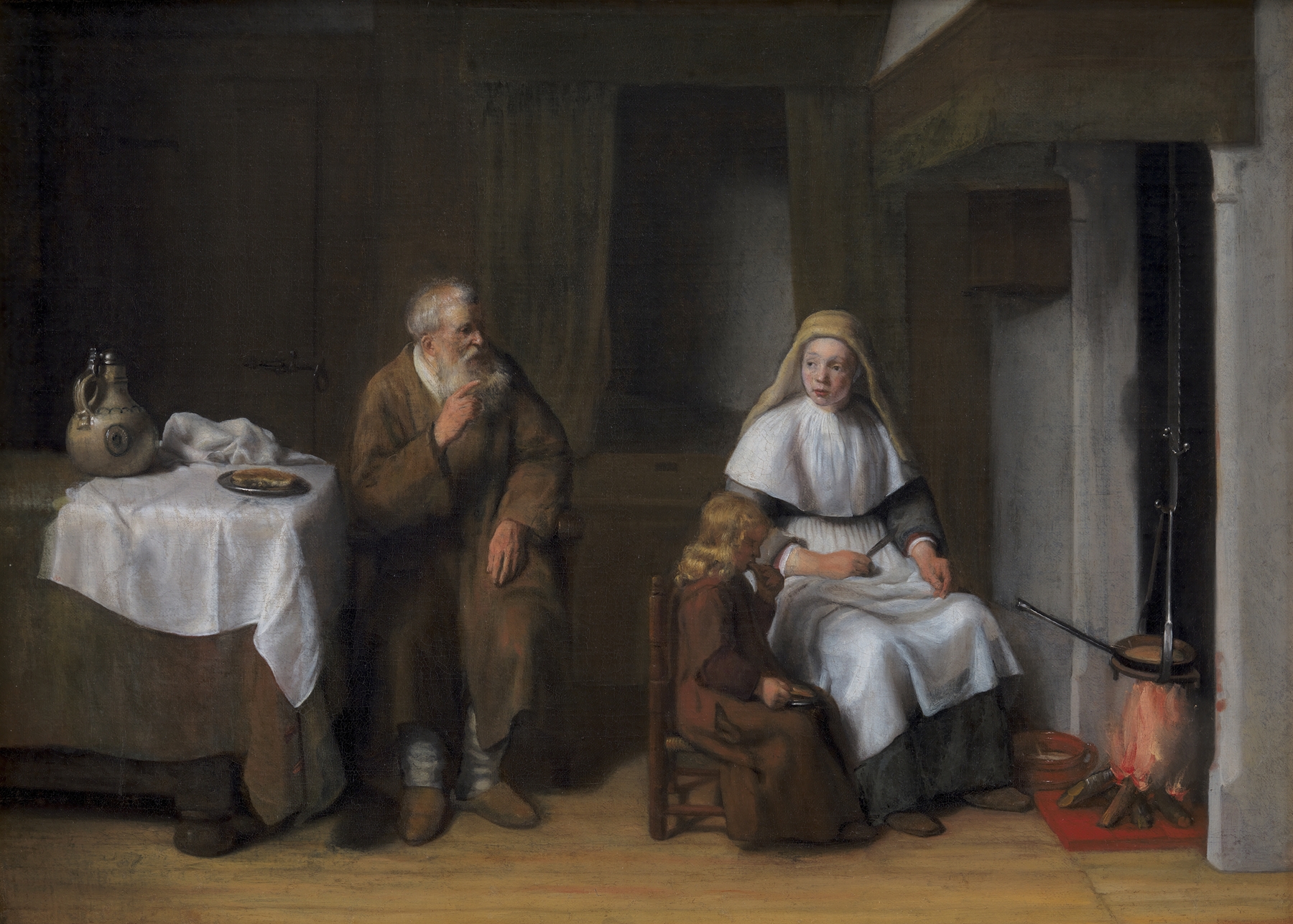
by Abraham van Dijck

A sermon delivered by the Rev. Patrick H. Wrisley, D.Min. on November 10, 2024.

Have you looked at your calendar lately? Just a couple of Sundays are standing in the way of our country’s coma-inducing tryptophan-laced day of turkey and football! I am still trying to wrap my head around the fact that it is “this” time of year already. When I lived in Florida for all those years, I missed the changing colors of autumn. I also missed the smell of oak smoke coming out of people’s wood stoves. There is a circadian rhythm of seeing the leaves change and the temperatures modulating downward where there is literal frost on the pumpkins.

In Florida, there was no rhythm at all; it was hot one day and then hotter the next. In the town of Celebration I lived in near Disney, they would shoot fall-colored biodegradable paper maple leaves out of cannons loaded on the streetlights in downtown to let residents know fall had arrived. During the Christmas season, they would use similar machines to blow Mr. Bubble into the air so it looked like it was snowing every hour on the hour during the evenings. I had to find a better way to connect with the seasonal changes. I wanted another alternative instead of using paper leaves and Mr. Bubble.

It was during this time in my life I learned how to use the calendar. Not the Gregorian calendar we use to plan our year but the church’s liturgical calendar. I learned to mark time by the seasons of the church year. Beginning with Advent and moving through Christmas, we move from the birth of Jesus to Epiphany where he is introduced to the world. Then we move into Lent and prepare for Holy Week and Easter whereupon we celebrate the new life the Christ gives us. Jesus’ Easter becomes our Christmas where we are reborn anew. Moving our way through the season of Easter we have Trinity Sunday and Pentecost and then we move into this long boring season of what is called Ordinary Time. Lasting from early June to the end of November, Ordinary Time is when those of us in the church are growing and maturing our faith in ever-deepening levels. At least, that’s the idea of it. Now we have three Sundays left. Two Sundays from now is the culmination of the Christian year when we celebrate Christ the King. Christ the King Sunday reminds us that at the culmination of earthly time, Jesus will come again and take us all home. But that is next Sunday. We still have today.

Today is an ordinary Sunday on the liturgical calendar but those who put the lectionary together did something pretty slick to get us ready for next Sunday. They intentionally have the Church struggle with texts that help us get ready to meet the King. Our first reading juxtaposed a well-dressed community leader who loved the attention his wealth brought him with an elderly widow who was giving all she had to a corrupt religious system. She did so out of her love and trust of God even though she knew her two mites would mean nothing to the budget. And then we have another widow story from I Kings.

Let me place our story in context. King David has long since died and the kingdom of Israel has been split in two. Northern Israel became known as Israel and its capital was in Samaria. The southern kingdom lodged in Jerusalem was referred to as Judah. Israel and Judah had their own kings and often those kings did not get along and the further they got away from the lineage of King David, the more corrupt they became. The kings became ruthless, power-hungry, and totally ignored the Lord God who delivered them from slavery in Egypt.

Friends, this morning’s two widows gave what they had. They are giving us living lessons on how we are to prepare for the Christian year’s culmination when we celebrate Christ our King.  They show us what faith over fear looks like. They show us the cost needed to trust. They show us how to humbly bow and offer our entire lives before the coming King, the Christ of God. God add understanding to our hearing of this Word in each of our lives. Amen.

Today we meet the great prophet Elijah who recently was railing against the northern country of Israel’s king Ahab and queen Jezebel. Ahab was Jewish and he married a foreign Gentile princess from Sidonia known for its purple clothe, good wine, and olive oil. The country of Sidon was northwest of Israel hugging the Mediterranean coast. When Ahab married the princess, he imported her cultural ways and her religious beliefs as well. Her spiritual roots were planted with Baal worship, the ancient god of fertility and harvest. The prophet Elijah confronted them both and warned of a drought that was coming that would last for several years. He exits the scene and today we find Elijah sitting at the head of a dried-up spring because of the drought. Hear the Word of the Lord.

1 Kings 17:8-16

8Then the word of the Lord came to him, saying, 9“Go now to Zarephath, which belongs to Sidon, and live there; for I have commanded a widow there to feed you.” 10So he set out and went to Zarephath. When he came to the gate of the town, a widow was there gathering sticks; he called to her and said, “Bring me a little water in a vessel, so that I may drink.” 11As she was going to bring it, he called to her and said, “Bring me a morsel of bread in your hand.” 12But she said, “As the Lord your God lives, I have nothing baked, only a handful of meal in a jar, and a little oil in a jug; I am now gathering a couple of sticks, so that I may go home and prepare it for myself and my son, that we may eat it, and die.”13Elijah said to her, “Do not be afraid; go and do as you have said; but first make me a little cake of it and bring it to me, and afterwards make something for yourself and your son. 14For thus says the Lord the God of Israel: The jar of meal will not be emptied and the jug of oil will not fail until the day that the Lord sends rain on the earth.” 15She went and did as Elijah said, so that she as well as he and her household ate for many days. 16The jar of meal was not emptied, neither did the jug of oil fail, according to the word of the Lord that he spoke by Elijah.[1]

What do you know, here is another widow. Not only is she a widow but she is a non-Jewish widow at that who lives in wicked queen Jezebel’s old neighborhood. Jezebel’s god, Baal, has not done a decent job bringing rich harvests to his people because they were experiencing drought as well. The widow is a mother of an only son and she is gathering sticks to build a small fire for their final meal before they die. Jezebel’s daddy, the king of Sidon has let his people down and so has their god, Baal. There was famine in the land and the country known for its oil and wine not produce any. And up walks this scraggly foreign, Jewish prophet who asks this woman, the most vulnerable person in any ancient society, to do the unimaginable: You want me to take what little I have and first make you lunch at the risk of not having enough for me and my son?! Did Elijah know what he was asking of her?

Just like the widow in Mark who put all that she had to live on into the Temple’s coffers, here is another widow asked to do the same. While the widow in the Temple made the choice to freely give what she had knowing it was all there was, Elijah asked this widow of Zarephath to sacrifice all she had left to live on for God’s greater purposes. How could Elijah be so cold and ask her that? Does Elijah think he is all that special and care less for this mother and child? Not at all.

You see, Elijah knew something the widow did not. If we pay attention to the little detail in verse nine it becomes clear God tells him, “I have commanded a widow in Zarephath to feed you.” Elijah knew God was up to something; the woman did not. Elijah trusted God to do what God promised to do through the life of this unsuspecting widow who had no idea of the divine drama she was caught up in. Elijah did know and that let Elijah be bold in his asking. Now the widow is confronted with a decision: Is she as bold as Elijah is in her replying?

The widow really did not know all that was going on about her. She is wrapped up in her own crisis of survival to be aware of some foreign God’s presence and action in her life. She was facing starvation. God was about to pour into her life provision, and she was not aware of it. The key here is that the prophet who is aware of God’s promise made God’s promise of provision known to her. She saw death. Elijah saw life. She saw hopelessness. Elijah saw abundance. She saw no way out. Elijah saw the way ahead but it would cost the widow something. It would cost her everything she had.

This widow demonstrated unimaginable faith in at least two different ways in this story. First, she put trust in Elijah’s words. Second, she placed trust in Elijah’s God who was working in and through her life in ways she was unaware. She had to overcome her fear. The result: The Lord gave her and her family each day their daily bread.

This widow is a model for us, too. We also choose between faith over fear when we are given a dire diagnosis. We choose between faith over fear when we are told our services are no longer needed at our jobs. We choose between faith over fear in the face of an election where your candidate did not win.2 Both our widows in our Stories this morning are heroines in that they highlight and show us it is possible for faith in God to overcome the fear our current lives hurl at us. They are heroines because in the face where there is nothing left to lose, they risked it all trusting God would come through. They gave all they had. As a result, so did God.

© November 10, 2024, by Patrick H. Wrisley. Sermon manuscripts are available for the edification of members and friends of First Presbyterian Church of Glens Falls, NY, and not be altered, re-purposed, published, or preached without permission. All rights reserved.


[1] The New Revised Standard Version, copyright 1989, 1995 by the Division of Christian Education of the National Council of the Churches of Christ in the United States of America. Used by permission. All rights reserved.
[2] JARED E. ALCÁNTARA, Connections: Year B, Volume 3: Season after Pentecost (Connections: A Lectionary Commentary for Preaching and Worship) by Joel B. Green, Thomas G. Long, et al. https://a.co/cRqjcnz.

Posted in Sermon | Tagged , , , , , , , , , , , , , , , , , , | Leave a comment