A sermon delivered by the Rev. Patrick H. Wrisley, D.Min. on November 10, 2024.
Have you looked at your calendar lately? Just a couple of Sundays are standing in the way of our country’s coma-inducing tryptophan-laced day of turkey and football! I am still trying to wrap my head around the fact that it is “this” time of year already. When I lived in Florida for all those years, I missed the changing colors of autumn. I also missed the smell of oak smoke coming out of people’s wood stoves. There is a circadian rhythm of seeing the leaves change and the temperatures modulating downward where there is literal frost on the pumpkins.
In Florida, there was no rhythm at all; it was hot one day and then hotter the next. In the town of Celebration I lived in near Disney, they would shoot fall-colored biodegradable paper maple leaves out of cannons loaded on the streetlights in downtown to let residents know fall had arrived. During the Christmas season, they would use similar machines to blow Mr. Bubble into the air so it looked like it was snowing every hour on the hour during the evenings. I had to find a better way to connect with the seasonal changes. I wanted another alternative instead of using paper leaves and Mr. Bubble.
It was during this time in my life I learned how to use the calendar. Not the Gregorian calendar we use to plan our year but the church’s liturgical calendar. I learned to mark time by the seasons of the church year. Beginning with Advent and moving through Christmas, we move from the birth of Jesus to Epiphany where he is introduced to the world. Then we move into Lent and prepare for Holy Week and Easter whereupon we celebrate the new life the Christ gives us. Jesus’ Easter becomes our Christmas where we are reborn anew. Moving our way through the season of Easter we have Trinity Sunday and Pentecost and then we move into this long boring season of what is called Ordinary Time. Lasting from early June to the end of November, Ordinary Time is when those of us in the church are growing and maturing our faith in ever-deepening levels. At least, that’s the idea of it. Now we have three Sundays left. Two Sundays from now is the culmination of the Christian year when we celebrate Christ the King. Christ the King Sunday reminds us that at the culmination of earthly time, Jesus will come again and take us all home. But that is next Sunday. We still have today.
Today is an ordinary Sunday on the liturgical calendar but those who put the lectionary together did something pretty slick to get us ready for next Sunday. They intentionally have the Church struggle with texts that help us get ready to meet the King. Our first reading juxtaposed a well-dressed community leader who loved the attention his wealth brought him with an elderly widow who was giving all she had to a corrupt religious system. She did so out of her love and trust of God even though she knew her two mites would mean nothing to the budget. And then we have another widow story from I Kings.
Let me place our story in context. King David has long since died and the kingdom of Israel has been split in two. Northern Israel became known as Israel and its capital was in Samaria. The southern kingdom lodged in Jerusalem was referred to as Judah. Israel and Judah had their own kings and often those kings did not get along and the further they got away from the lineage of King David, the more corrupt they became. The kings became ruthless, power-hungry, and totally ignored the Lord God who delivered them from slavery in Egypt.
Friends, this morning’s two widows gave what they had. They are giving us living lessons on how we are to prepare for the Christian year’s culmination when we celebrate Christ our King. They show us what faith over fear looks like. They show us the cost needed to trust. They show us how to humbly bow and offer our entire lives before the coming King, the Christ of God. God add understanding to our hearing of this Word in each of our lives. Amen.
Today we meet the great prophet Elijah who recently was railing against the northern country of Israel’s king Ahab and queen Jezebel. Ahab was Jewish and he married a foreign Gentile princess from Sidonia known for its purple clothe, good wine, and olive oil. The country of Sidon was northwest of Israel hugging the Mediterranean coast. When Ahab married the princess, he imported her cultural ways and her religious beliefs as well. Her spiritual roots were planted with Baal worship, the ancient god of fertility and harvest. The prophet Elijah confronted them both and warned of a drought that was coming that would last for several years. He exits the scene and today we find Elijah sitting at the head of a dried-up spring because of the drought. Hear the Word of the Lord.
1 Kings 17:8-16
8Then the word of the Lord came to him, saying, 9“Go now to Zarephath, which belongs to Sidon, and live there; for I have commanded a widow there to feed you.” 10So he set out and went to Zarephath. When he came to the gate of the town, a widow was there gathering sticks; he called to her and said, “Bring me a little water in a vessel, so that I may drink.” 11As she was going to bring it, he called to her and said, “Bring me a morsel of bread in your hand.” 12But she said, “As the Lord your God lives, I have nothing baked, only a handful of meal in a jar, and a little oil in a jug; I am now gathering a couple of sticks, so that I may go home and prepare it for myself and my son, that we may eat it, and die.”13Elijah said to her, “Do not be afraid; go and do as you have said; but first make me a little cake of it and bring it to me, and afterwards make something for yourself and your son. 14For thus says the Lord the God of Israel: The jar of meal will not be emptied and the jug of oil will not fail until the day that the Lord sends rain on the earth.” 15She went and did as Elijah said, so that she as well as he and her household ate for many days. 16The jar of meal was not emptied, neither did the jug of oil fail, according to the word of the Lord that he spoke by Elijah.[1]
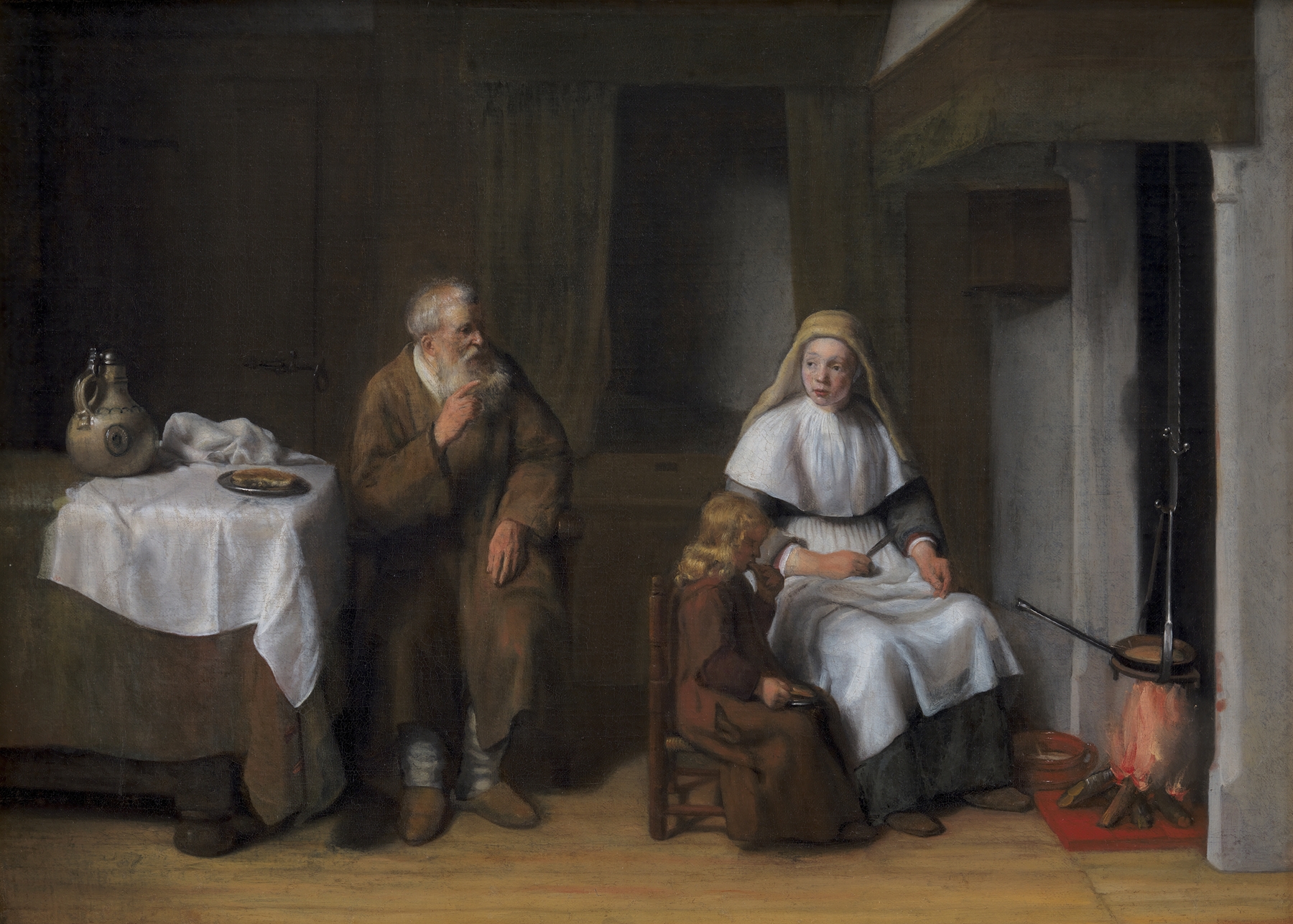
What do you know, here is another widow. Not only is she a widow but she is a non-Jewish widow at that who lives in wicked queen Jezebel’s old neighborhood. Jezebel’s god, Baal, has not done a decent job bringing rich harvests to his people because they were experiencing drought as well. The widow is a mother of an only son and she is gathering sticks to build a small fire for their final meal before they die. Jezebel’s daddy, the king of Sidon has let his people down and so has their god, Baal. There was famine in the land and the country known for its oil and wine not produce any. And up walks this scraggly foreign, Jewish prophet who asks this woman, the most vulnerable person in any ancient society, to do the unimaginable: You want me to take what little I have and first make you lunch at the risk of not having enough for me and my son?! Did Elijah know what he was asking of her?
Just like the widow in Mark who put all that she had to live on into the Temple’s coffers, here is another widow asked to do the same. While the widow in the Temple made the choice to freely give what she had knowing it was all there was, Elijah asked this widow of Zarephath to sacrifice all she had left to live on for God’s greater purposes. How could Elijah be so cold and ask her that? Does Elijah think he is all that special and care less for this mother and child? Not at all.
You see, Elijah knew something the widow did not. If we pay attention to the little detail in verse nine it becomes clear God tells him, “I have commanded a widow in Zarephath to feed you.” Elijah knew God was up to something; the woman did not. Elijah trusted God to do what God promised to do through the life of this unsuspecting widow who had no idea of the divine drama she was caught up in. Elijah did know and that let Elijah be bold in his asking. Now the widow is confronted with a decision: Is she as bold as Elijah is in her replying?
The widow really did not know all that was going on about her. She is wrapped up in her own crisis of survival to be aware of some foreign God’s presence and action in her life. She was facing starvation. God was about to pour into her life provision, and she was not aware of it. The key here is that the prophet who is aware of God’s promise made God’s promise of provision known to her. She saw death. Elijah saw life. She saw hopelessness. Elijah saw abundance. She saw no way out. Elijah saw the way ahead but it would cost the widow something. It would cost her everything she had.
This widow demonstrated unimaginable faith in at least two different ways in this story. First, she put trust in Elijah’s words. Second, she placed trust in Elijah’s God who was working in and through her life in ways she was unaware. She had to overcome her fear. The result: The Lord gave her and her family each day their daily bread.
This widow is a model for us, too. We also choose between faith over fear when we are given a dire diagnosis. We choose between faith over fear when we are told our services are no longer needed at our jobs. We choose between faith over fear in the face of an election where your candidate did not win.2 Both our widows in our Stories this morning are heroines in that they highlight and show us it is possible for faith in God to overcome the fear our current lives hurl at us. They are heroines because in the face where there is nothing left to lose, they risked it all trusting God would come through. They gave all they had. As a result, so did God.
© November 10, 2024, by Patrick H. Wrisley. Sermon manuscripts are available for the edification of members and friends of First Presbyterian Church of Glens Falls, NY, and not be altered, re-purposed, published, or preached without permission. All rights reserved.
[1] The New Revised Standard Version, copyright 1989, 1995 by the Division of Christian Education of the National Council of the Churches of Christ in the United States of America. Used by permission. All rights reserved.
[2] JARED E. ALCÁNTARA, Connections: Year B, Volume 3: Season after Pentecost (Connections: A Lectionary Commentary for Preaching and Worship) by Joel B. Green, Thomas G. Long, et al. https://a.co/cRqjcnz.


