Into the Wilderness: Tested, Strengthened, and Led by the Spirit, Luke 4:1-13

A sermon delivered on March 9, 2025 by the Rev. Dr. Patrick H. Wrisley.

It has taken three chapters for Luke to build up to today’s debut of Jesus’ ministry. All the birth narratives are behind us, as are Jesus’ baptism and family genealogy. The first three chapters have duly announced the coming Messiah, and now, in Chapter 4, he is launched.

Our text comes from Luke 4:1-13 and is often referred to as “the temptations of Jesus.” Jesus is returning from the relatively lush Jordan River valley, and as he heads up the long dirt road, the Spirit of Baptism compels him to go bushwhacking; in other words, the Spirit has Jesus leave the obvious road and head off into the wilderness. The wilderness in Judea is not like the verdant landscapes of the Adirondacks; think instead of the wastelands of the Black Hills of South Dakota. Imagine the red, rocky Martian landscapes the Curiosity Rover sends back from the Red Planet. We are talking remote, rough, wild, and exposed. This is where the Spirit leads Jesus. Listen to the Word of the Lord from Luke 4:1-13:

Luke 4:1-13

4.1  Jesus, full of the Holy Spirit, returned from the Jordan and was led by the Spirit in the wilderness, 2 where for forty days he was tempted by the devil. He ate nothing at all during those days, and when they were over, he was famished. 3 The devil said to him, “If you are the Son of God, command this stone to become a loaf of bread.” 4 Jesus answered him, “It is written, ‘One does not live by bread alone.’” 5 Then the devil led him up and showed him in an instant all the kingdoms of the world. 6 And the devil said to him, “To you I will give their glory and all this authority; for it has been given over to me, and I give it to anyone I please. 7 If you, then, will worship me, it will all be yours.” 8 Jesus answered him, “It is written, ‘Worship the Lord your God,  and serve only him.’” 9 Then the devil c] took him to Jerusalem, and placed him on the pinnacle of the temple, saying to him, “If you are the Son of God, throw yourself down from here, 10 for it is written, ‘He will command his angels concerning you, to protect you,’ 11 and  ‘On their hands they will bear you up,  so that you will not dash your foot against a stone.’” 12 Jesus answered him, “It is said, ‘Do not put the Lord your God to the test.’” 13 When the devil had finished every test, he departed from him until an opportune time.[1]

The first thing Jesus did before he began his formal ministry was to undergo a test of faith and demonstrate obedience; in a sense, the wilderness was his spiritual proving ground. Our Native American sisters and brothers would call this Jesus’ Vision Quest. In a person’s vision quest, they become totally exposed and vulnerable to themselves, and the deep essence of their character is laid bare[2]. If he was going to inaugurate a new kingdom, he had to demonstrate to his Heavenly Father that he was up to the task. Jesus was confronted with the same temptations and struggles we face each day, yet for him, the stakes were even higher. Like you and me, Jesus wrestled with the competing voices in his head that presented him with choices to make. The late Catholic priest and author Henri Nouwen spoke about these temptations in his book, In the Name of Jesus: Reflections on Christian Leadership.2 Nouwen believes Jesus was given three tests to determine the depth of his spiritual integrity:

  • The temptation to turn stones into loaves of bread was the temptation to be relevant.
  • The temptation to forsake God in exchange for ruling the world was the temptation to seek power.
  • The temptation to throw himself from the Temple’s pinnacle was the temptation to be spectacular.

Nouwen is absolutely correct in pointing out that people, particularly leaders, must fend off these temptations to be relevant, powerful, and spectacular. As Luke’s story unfolds, we will see Jesus confront earthly leaders who succumbed to these very same temptations to be relevant, powerful, and spectacular — whether Roman officials or religious authorities of his day, from Pilate to Caiaphas – and each failed where Jesus triumphed. It was imperative for Jesus to get this right before beginning his ministry. 

The wilderness has always been a crucial place in the lives of God’s people. Ironically, it’s often in the most desolate, seemingly god-forsaken places that the light of God shines most brightly.

  • It was while wandering in the wilderness that Abraham and Sarah were given the promise of a great nation.
  • It was in the isolated wilderness that Jacob wrestled with God and saw angels ascending and descending from heaven.
  • It was only after the Hebrews left the safety of Egypt and entered the inhospitable desert that they truly learned about God, sin, trust, and obedience. Their wilderness journey shaped their identity as God’s chosen people.

This is why Jesus had to go into the wilderness. God shapes his people in the wilderness! This was a time for Jesus to demonstrate his spiritual competence indicating he was wholly devoted to God’s will.

Friends, this past Wednesday, we began the season of Lent—the forty-day spiritual training ground where we, just like Jesus, enter the wilderness to examine our spiritual fitness and competence. Lent is an invitation to step away from our comforts, to face the elements of uncertainty and temptation, and to become vulnerable before God. But remember: Jesus did not go into the wilderness alone—he was led by the Holy Spirit. The evil one may try to convince us that we are abandoned, but our story reminds us otherwise. The Spirit led Jesus there and did not abandon him. And that same Spirit leads and stays with us, too.

The poet and mystic Thomas Merton once wrote, “The desert becomes a paradise when it is accepted as a desert. The desert can never be anything more than a desert if we are trying to escape. But,” Merton says, “once we fully accept it for what it is, it becomes a paradise.” In other words, even in the midst of our spiritual deserts and wilderness experiences, God’s presence is already there waiting for us.

For those of you who don’t know, I suffer from chemical depression induced by PTSD. I personally know what emotional and spiritual wilderness feels like. But I also know that the wilderness is the best university of the Holy Spirit. There was a time when in the depth of my pain, at the moment I felt most abandoned by God, the Spirit revealed something beautiful. I realized that in my suffering, I could feel the very tears of God—tears that our Heavenly Father cried when Jesus was tried, beaten, and crucified. And in that moment, my emotional and spiritual desert was transformed into a place of sacred encounter, a reminder that God dwells even in the midst of my of my perceived total abandonment.

My dear church, Lent is the time to let the Spirit lead you into the wilderness, where your spiritual roots can be both stressed and strengthened. The wilderness has much to teach us—if we accept it for what it is: a place to walk with God. A place to affirm what Jesus himself affirmed:

  • That God will meet our needs.
  • That there is no God but the Lord Most Holy.
  • That we do not need to test God but instead trust in his presence, even when the path feels dark and uncertain.

Are you willing to step off the routine path this Lent and enter the wilderness to learn, to discover, and to grow closer to God? If so, take heart—you are not going alone! And you do not go unprepared — the power and sustenance of this meal can and will sustain you! Let us come to the Table of the Lord! Amen.

© 2025 Patrick H. Wrisley, Pastor, First Presbyterian Church of Glens Falls, NY 12801. Sermon manuscripts are available for the edification of members and friends of First Presbyterian Church of Glens Falls, New York and may not be altered, re-purposed, published or preached without permission. All rights reserved.


[1] New Revised Standard Version (NRSV). New Revised Standard Version Bible, copyright © 1989 the Division of Christian Education of the National Council of the Churches of Christ in the United States of America. Used by permission. All rights reserved.

2 See Steven Charleston’s The Four Vision Quests of Jesus, chapter six, The Wilderness. See https://www.amazon.com/dp/0819231738?ref=ppx_yo2ov_dt_b_fed_asin_title.

3 Please see availability on Amazon https://www.amazon.com/Name-Jesus-Reflections-Christian-Leadership/dp/0824512596/ref=sr_1_1?keywords=In+the+Name+of+Jesus%3A+Reflections+on+Christian+Leadership&qid=1552417411&s=gateway&sr=8-1.

4This quote was written in a notebook.  I cannot attest from which of Merton’s works this came from to accurately cite it.

 

Posted in Sermon | Tagged , , , , , , , , , , , , , | Leave a comment

Our Spiritual Investment Strategy, Matthew 6:1-6, 16-21

A sermon delivered by the Rev. Dr. Patrick H. Wrisley on Ash Wednesday, March 5, 2025

Matthew 6:1-6, 16-21

6.1“Beware of practicing your piety before others in order to be seen by them; for then you have no reward from your Father in heaven. 2“So whenever you give alms, do not sound a trumpet before you, as the hypocrites do in the synagogues and in the streets, so that they may be praised by others. Truly I tell you, they have received their reward. 3But when you give alms, do not let your left hand know what your right hand is doing, 4so that your alms may be done in secret; and your Father who sees in secret will reward you.

5“And whenever you pray, do not be like the hypocrites; for they love to stand and pray in the synagogues and at the street corners, so that they may be seen by others. Truly I tell you, they have received their reward.6But whenever you pray, go into your room and shut the door and pray to your Father who is in secret; and your Father who sees in secret will reward you.

16“And whenever you fast, do not look dismal, like the hypocrites, for they disfigure their faces so as to show others that they are fasting. Truly I tell you, they have received their reward. 17But when you fast, put oil on your head and wash your face, 18so that your fasting may be seen not by others but by your Father who is in secret; and your Father who sees in secret will reward you.

19“Do not store up for yourselves treasures on earth, where moth and rust consume and where thieves break in and steal; 20but store up for yourselves treasures in heaven, where neither moth nor rust consumes and where thieves do not break in and steal. 21For where your treasure is, there your heart will be also.[1]

                  I am very fortunate in that my father and mother-in-law left me a little something I was able to put towards retirement. It’s not a lot and its value lies more in the fact they thought enough of Kelly and me to give it as opposed to the modest value it carries. But it’s all I have, and I want to be shrewd with what resources I do have. So, tomorrow I have an appointment with my Fidelity guy to see what I need to do with what little I have that seems to be getting slammed since tariffs were imposed. For me, this is a season for the reevaluation of investments.

For us, this Ash Wednesday service is analogous to a conference call into our Spiritual Fidelity Office. Ash Wednesday marks the beginning of the forty-day season of Lent when we are asked as followers of Christ to reevaluate how we are investing our spiritual capital.  Jesus’ words from the Sermon on the Mount provide us with a loose metric we can use as we make our way through this Lenten season together to best determine how we are investing in the treasury of heaven.  Our text lists four points of reference for us as we look at our spiritual investment in our relationship with God.

Metric One: We are to take stock of our personal piety.  Piety refers to a person’s natural, non-forced outward expression of his or hers deep sense of religious devotion, reverence, or fidelity toward God. Jesus is warning against a forced, unnatural expressions of a person’s fidelity toward God as he talks about blowing trumpets to get people’s attention as you are making your offering or piling on verbose prayers so others can see how “religious” we are.  A person’s natural, unforced expression of their piety emerges from the simple but devoted way we live our lives as disciples of Jesus. The widow who quietly places her mite in the Temple’s offering coffers demonstrates her life as a loyal follower of God. The sinner who is on his knees asking God for forgiveness in contrast to the robed and verbally flatulent Pharisee waxing on and on is another example of a natural display of piety. The question for you and me is how our simple faith and devotion to Jesus is displayed to those we encounter. Is it even noticeable?

Metric Two: Giving – Does what we spend our money on reflect our core spiritual values? Does our giving reflect we are investing in the work of Ministry through Christ’s Body, the Church? Does that $20.00 bill feel heavier going into the offering plate at church than it does splurging for a night out at Park and Elm? Lent is the time we get a feel for how heavy or how light our money feels as we give it away. Like the Ring of Power in J.R.R. Tolkien’s Lord of the Rings that gets heavier and heavier when the wearer tries to get rid of it, so often our giving gets the same way. Like the Ring, we want to hold onto our Precious. Lent is a good time to evaluate our lives of stewardship and our relationship with “stuff.”

Metric Three: Prayer. Lent is a time to take a long look at our prayer lives. I describe prayer as the intentional cessation of busyness for the purpose of listening and being present with God.  You’ll note I did not say it was our conversing with God; conversing with God is not a problem with most people who get in a bind and shoot a flare up for God’s help. The biggest issue for most of our prayer lives is that we fail to take time to simply sit and be present with and to God. I would suggest honing our prayer skills by simply remaining silent as we listen for the Spirit of Life trying to speak with us.

Metric Four: Fasting. Jesus is telling us today that those who fast and make a miserable spectacle of it are totally missing the point. Our fasting does not draw attention to ourselves; it directs our attention to and hunger for God. For our purposes, I would like us to understand fasting as those particular spiritual disciplines we each practice to firm up the foundation and core support for our faith. Instead of ceasing to eat or deprive ourselves of certain things, maybe we take up the discipline of daily reading of scripture. Perhaps it’s intentionally rising before you normally do and consciously spend ten minutes sitting in God’s presence. Maybe the way shore up our spiritual foundation is to make the effort to intentionally serve those who are poor, hungry, or destitute one day a week throughout these forty days. Our fasting is our spiritual work of orienting ourselves to God through the service to God and others. 

Piety. Giving. Prayer. Fasting and spiritual disciplines. I lift up these four metrics for us to consider as we evaluate how we are investing in our spiritual life and capital. The Holy Spirit walk with us as we seek to invest our lives wisely. Amen. 

© 2025 Patrick H. Wrisley, Pastor, First Presbyterian Church of Glens Falls, NY 12801. Sermon manuscripts are available for the edification of members and friends of First Presbyterian Church of Glens Falls, New York and may not be altered, re-purposed, published or preached without permission. All rights reserved.


[1] New Revised Standard Version (NRSV). New Revised Standard Version Bible, copyright © 1989 the Division of Christian Education of the National Council of the Churches of Christ in the United States of America. Used by permission. All rights reserved.

Posted in Sermon | Tagged , , , , , , , , , , , , , | Leave a comment

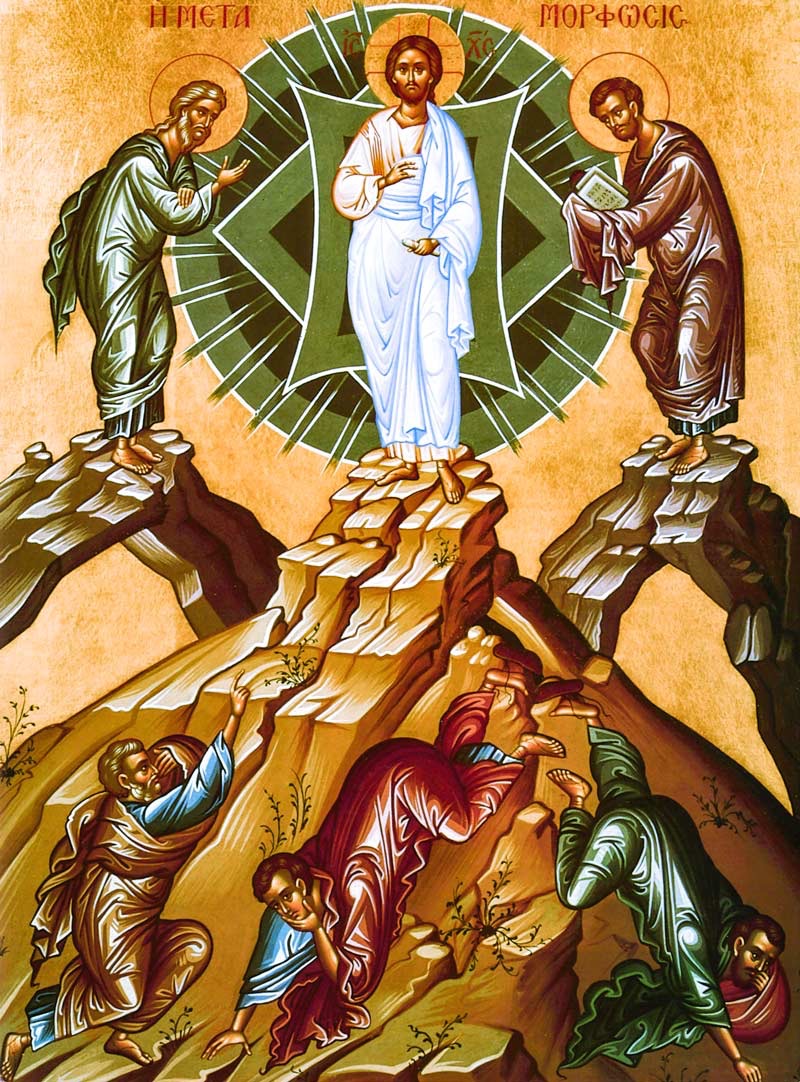
The Metamorphosis, Luke 9:28-36

A sermon delivered Sunday, March 2, 2025by the Rev. Dr. Patrick H. Wrisley

Turn in your Bibles to Luke 9:28-36. The very first line of our text says, “Now about eight days after these sayings, Jesus took…” As careful readers, our first task is to go back and understand which sayings Luke is referring to.               

Just about a week earlier in story time, Jesus miraculously fed 5,000 people with only a few loaves of bread and some fish; indeed, they gathered up twelve baskets of leftovers to boot! Following this, Jesus withdrew to a lonely place for a time of prayer and reflection with his disciples. In this quiet moment, he asked them, “Who do people say that I am?” The disciples answered, “Some say Elijah, others one of the great prophets of old.” Then Jesus pressed further and asked them the one question all of us must respond to: But who do YOU say that I am? Peter, ever eager to be the one who gets the right answer, boldly declared, “You are the Christ, the Messiah of God!”  We are excited for Peter because he finally got something right but Jesus sternly tells them not to share this fact.

It makes us wonder, “Why the secrecy?” If Jesus had wanted to remain hidden, he had not done a very good job—his miracles and teachings had already drawn massive crowds. It’s not that Jesus wanted to remain hidden but rather his identity wasn’t to be fully revealed quit yet. Why?  First, the disciples’ understanding of the Messiah was incomplete. They expected a conqueror who would overthrow Israel’s oppressors and Jesus’ mission was radically different from that. Second, Jesus likely wanted to avoid stirring up the crowds with their incorrect understanding of what Messiah meant. If the masses heard the word Messiah, they would attempt to force Jesus into a role he was not meant to fulfill. Jesus’ identity and mission were determined by God and were totally different from human expectations.

Eight days before our passage today, Jesus also shared difficult news: following him would not be a path of power and glory, but one of sacrifice and suffering. “Whoever wants to follow me must deny themselves, take up their cross daily, and follow me” (Luke 9:23). The Messiah they expected was not the Messiah they were given. The true Christ would lay down his life, and his followers were called to do the same. This is the backdrop for today’s text—the Transfiguration.

Luke 9:28-36

28Now about eight days after these sayings Jesus took with him Peter and John and James, and went up on the mountain to pray. 29And while he was praying, the appearance of his face changed, and his clothes became dazzling white. 30Suddenly they saw two men, Moses and Elijah, talking to him. 31They appeared in glory and were speaking of his departure, which he was about to accomplish at Jerusalem. 32Now Peter and his companions were weighed down with sleep; but since they had stayed awake, they saw his glory and the two men who stood with him. 33Just as they were leaving him, Peter said to Jesus, “Master, it is good for us to be here; let us make three dwellings, one for you, one for Moses, and one for Elijah” —not knowing what he said. 34While he was saying this, a cloud came and overshadowed them; and they were terrified as they entered the cloud. 35Then from the cloud came a voice that said, “This is my Son, my Chosen; listen to him!” 36When the voice had spoken, Jesus was found alone. And they kept silent and in those days told no one any of the things they had seen.

Today, we commemorate Transfiguration Sunday. This is the moment in the gospel narrative when God unmistakably reveals Jesus’ true identity—not just to Jesus, as at his baptism, but now to the disciples. In Luke 3:22, at Jesus’ baptism, God declared privately to him, “You are my beloved Son; with you, I am well pleased.” But here, on the mountaintop, God’s voice is heard by all present, marking a turning point: from this moment on, Jesus sets his face toward Jerusalem and his impending sacrifice. It literally goes all down hill from this point forward.

Our scene this morning is meant to conjure up echoes and flashbacks of key Old Testament moments. Moses met God on Mount Sinai in the burning bush. Elijah encountered God while hiding in a cave on top of Mount Horeb. Now, once again, the Almighty is revealed on the mountain top but not through a bush or a whirlwind but in Jesus. We read, “they appeared in glory” which is to say the radiance and purity of God’s character was on full display. 

It’s tempting to follow in Peter’s steps and get caught up in this amazing spectacle. We can easily get wrapped up in the event and totally miss what the event is pointing to. The transfiguration is not just revealing Jesus’ true identity for revelation’s sake. Jesus’ Transfiguration is all about a declaration of a new world order. Did you notice what the three were talking about? They were talking about Jesus’ departure, or as it says in the original language, his exodus. And what happened during the Hebrew Exodus in our Old Testament? The people were liberated and moved from bondage to freedom! And this is exactly what Jesus was about to do on a cosmic scale!  

Peter, though well-meaning, totally misunderstands. He sees Jesus on par with Moses and Elijah—great leaders of Israel’s past. But God corrects him: This is my Son, my Chosen; listen to him! Jesus is not just another prophet; he is the fulfillment of the Law and the Prophets. His mission is not to establish just another earthly kingdom but is leading humanity to a new life and freedom through his exodus!  

Peter and the disciples are witnessing more than just Jesus’ transfiguration—they are being called to undergo their own. Their understanding of Messiah must be transformed. No longer are they to cling to the idea of a warrior king who will conquer Rome. Instead, they must embrace a Messiah who conquers sin, suffering, and injustice—not with a sword, but with grace, love, and self-sacrifice. Jesus’ earlier injunction that they must deny themselves, daily pick up their cross and follow him takes on greater import and meaning to them.

This transformation is neither quick nor easy. Franz Kafka’s novel The Metamorphosis provides an interesting parallel. The main character, Gregor Samsa, upon undergoing his shocking transformation, laments, “I cannot make you understand. I cannot make anyone understand what is happening inside me. I cannot even explain it to myself.” Change—true transformation—is difficult and often painful. For Peter and the disciples, understanding the Cross took time. They struggled, stumbled, and at times failed. But over time, they were transfigured from fearful, uncertain followers into bold witnesses who turned the world upside down for Christ leading others to freedom.

Jesus lived into his transfiguration. So did the disciples. And on this Transfiguration Sunday we are asked to do the same.

As we prepare to enter the season of Lent, we are invited into our own transformation to reflect God’s glory in our ordinary lives. This Wednesday, we will gather for Ash Wednesday, marking a time of confession, reflection, and renewal. This is the beginning of our forty-day journey—a journey of surrender, of allowing our old, limited understandings of Jesus, the Church, and discipleship to be burned away so that we might embrace the fullness of God’s calling.

The Transfiguration is not just about Jesus’ change—it is about ours. Just as Jesus’ identity was fully revealed, we are invited to discover our new identity as we follow in Jesus’ steps. We are invited to discover who we truly are in him. We are invited to ponder how we each reflect God’s glory where we live, work, and play. Just as the disciples were challenged to expand their understanding of what it means to live in God’s kingdom, we are called to let go of old assumptions and embrace the radical, transformative love of Christ.

Beloved, as we get ready to journey with Jesus to the Cross, may we step forward in faith with him. May we listen to Jesus on the way. And may we allow ourselves to be transfigured into the image of our Savior. What spiritual metamorphosis do you wish to see in yourself? Let’s think about these things. Amen.

© 2025 Patrick H. Wrisley, Pastor, First Presbyterian Church of Glens Falls, NY 12801. Sermon manuscripts are available for the edification of members and friends of First Presbyterian Church of Glens Falls, New York and shall not be altered, re-purposed, published or preached without permission. All rights reserved.

Posted in Sermon | Tagged , , , , , , , , , , , , , , , | Leave a comment

The Hard Work of Forgiveness, Luke 6:27-38

A sermon delivered on February 23, 2025 by the Rev. Dr. Patrick H. Wrisley

This morning, we pick up where we left off last week. Jesus and his disciples have climbed a mountain for a time of prayer, and it is there that Jesus selects his twelve apostles. When they descend to a level place, they are met by a growing crowd eager to hear Jesus and be healed by him. Jesus begins what is known as his Sermon on the Plain, which offers a distinct perspective on discipleship compared to his Sermon on the Mount in Matthew’s Gospel. In Luke, Jesus calls his followers beyond simply having correct doctrine and believing “the right things;” he demands that they actively live out their faith in daily life. In other words, Jesus tells his followers—and us—that what separates true disciples from the world is not just spiritual insight but the way we embody those insights in our relationships and values.

Our passage from Luke complements our reading from Genesis 45 about Joseph. Jesus’ words call us to live into our God-given identity of being radical forgivers, and Joseph demonstrates this principle in his response to the very brothers who betrayed him. Despite being left for dead in a desert pit, Joseph extends grace instead of vengeance. This is what Jesus is calling us to. Listen to Luke 6:27-38: 

Luke 6:27-38

27 “But I say to you that listen, Love your enemies, do good to those who hate you, 28 bless those who curse you, pray for those who abuse you. 29 If anyone strikes you on the cheek, offer the other also; and from anyone who takes away your coat do not withhold even your shirt. 30 Give to everyone who begs from you; and if anyone takes away your goods, do not ask for them again. 31 Do to others as you would have them do to you.

32 “If you love those who love you, what credit is that to you? For even sinners love those who love them. 33 If you do good to those who do good to you, what credit is that to you? For even sinners do the same. 34 If you lend to those from whom you hope to receive, what credit is that to you? Even sinners lend to sinners, to receive as much again. 35 But love your enemies, do good, and lend, expecting nothing in return. Your reward will be great, and you will be children of the Most High; for he is kind to the ungrateful and the wicked. 36 Be merciful, just as your Father is merciful.

37 “Do not judge, and you will not be judged; do not condemn, and you will not be condemned. Forgive, and you will be forgiven; 38 give, and it will be given to you. A good measure, pressed down, shaken together, running over, will be put into your lap; for the measure you give will be the measure you get back.”[1]

Dr. Vaughn Crowe-Tipton, Associate Professor of Religion at Furman University, notes that many congregations respond to this passage much like children react to cooked spinach on their dinner plate. No matter how much we explain its value, few are eager to dive in.[2] Indeed, just as Jesus’ words last week could be hard to hear, today’s message is hard to swallow. It demands that we act in ways that feel counterintuitive, even impossible. Yet, when we try—when we make the effort—we begin to reflect the same love that God has shown to us, even toward those we consider enemies.

This morning, we’re going to learn our lives reflect a Christ-filled life through the hard work of forgiveness. The first thing we learn is that forgiveness costs us something.

Forgiving someone is hard to do. One sign that we are loving our enemies is that we don’t forgive only when it feels good—we forgive even when it hurts. Jesus says, “Love your enemies, do good to those who hate you.” He reiterates this in verse 35: “But love your enemies, do good and lend, expecting nothing in return.” Really, Jesus?

Jesus is not talking about minor annoyances like someone cutting us off in traffic or taking the last donut in the breakroom. He is calling us to release deep-seated anger toward those who have truly harmed us. That’s not easy. How do we forgive someone who betrayed our trust? How do we love someone who has caused us real pain? Jesus is not asking us to tolerate injustice but to reclaim our power through forgiveness. When we forgive, we refuse to let past wounds define us.

Think about someone who has hurt you deeply. When they inflicted you with that wound, they immediately took up space in your head, living there rent-free, as you replay the pain or offense over and over. Our lack of being able to forgive and let go begins to fester inside us. It slowly morphs into anger, resentment, or even depression. But hear this: forgiving is not forgetting. Forgiveness is making a choice to release the burden and move forward. When we forgive, we say: “I will not let this define me any longer. You no longer have control over my heart and mind. I release you.” In doing so, we mimic to others the same grace God extends to us.

A second thing we learn about the hard work of forgiveness is that it redefines the law of reciprocity. You know the ancient law of reciprocity; it’s the ancient principle of “an eye for an eye” that was meant to keep retaliation in check, ensuring fairness. But fairness is not the same as forgiveness. If someone kills my cow, I might kill one of theirs—but I will never forget the loss and now we’re both out of a cow! When you and I harbor the notion of “getting even”, we are still holding on to the hurt. The hard work of forgiveness means we must reject the world’s definition of justice.

Jesus calls us to something radically different. Jesus has the audacity to tell us, “Do good to those who hate you. Bless those who curse you. Pray for those who abuse you.” He challenges us to release our grip on revenge and embrace mercy. The human tendency is to respond with retaliation. We want to get even. And this is where it gets hard because Jesus wants us to do the counterintuitive act of not hitting back. It’s not that we don’t want to hit back or get even, but Jesus suggests we are to respond with non-anxious grace. Jesus is asking us to judge others not by our own flawed standards but through the lens God’s divine mercy. When we forgive, we receive God’s forgiveness in return — “A good measure, pressed down, shaken together, running over.” When we release bitterness, God pours his abundant grace into our laps.

The third lesson the hard work of forgiveness teaches us that forgiveness opens the doors to new possibilities. Let’s be honest: there may be those who have significantly hurt you or me but and are no longer living nor nearby for us to forgive them personally. Perhaps the hurt was too much to say, “I forgive you” while they were alive; their very presence triggered something in you and for self-preservation’s sake you had to stay away. This is where we need to remember the basics of our Christian faith: The last word does not end in death but resurrection. The old must die before the new can grow. Transformation is what our faith is all about.

 True, forgiveness does not always result in reconciliation—but it always paves the way for new beginnings. The word Luke uses for forgiveness literally means to set something free, to give it liberty. It’s not a passive letting go but an intentional sending something away. Forgiveness is consciously choosing to liberate ourselves from whatever pain or angst we may have towards another person or entity. The power of forgiveness is not contingent on the one who has hurt me or has caused me pain. The power of forgiveness derives from my own willingness to let the hurt go and send it away. This is agape love: the selfless love that seeks the best for others, even when they don’t deserve it. Isn’t this what Jesus did for us? Isn’t your life different because Christ has forgiven you?

Luke 6:35-36 is challenging: “The Most High is kind to the ungrateful and the wicked. Be merciful, just as your Father is merciful.”Dr. Melinda Quivik reminds us that those who have received God’s mercy counter evil by extending mercy to others, expecting nothing in return. When we forgive, we make a new kind of relationship possible—whether with others or simply within our own hearts.[3] Reconciliation with God gives us new life. Reconciliation with others can heal old wounds.

Church, who has hurt you—emotionally, physically, financially, or spiritually? Have you released them? Do you still carry the weight of the heavy stick of retribution you believe needs to be loosed on them or have you chosen to put it down; it’s lighter way to live, you know. Likewise, who have you wronged? Have you humbled yourself to seek their forgiveness?

Jesus calls us to love our enemies, to extend mercy as God has extended mercy to us. I know, easier said than done. But forgiveness is a process and it’s life-giving to the one who extends it. This is what sets us apart as followers of Christ compared to the rest of the culture. This is how we show the world that we belong to the Nazarene.  Amen.

Copyright February 23, 2025. All rights reserved by Patrick H. Wrisley, Pastor, First Presbyterian Church, 8 West Notre Dame Street, Glens Falls, NY 12801. No part of this sermon may be copied, preached, or used without express permission from the author.


[1] New Revised Standard Version (NRSV). New Revised Standard Version Bible, copyright © 1989 the Division of Christian Education of the National Council of the Churches of Christ in the United States of America. Used by permission. All rights reserved.

[2] See Feasting on the Word: Year C, Volume 1: Advent through Transfiguration by David L. Bartlett, Barbara Brown Taylor. https://a.co/2aab4rh

[3] Feasting on the Gospels–Luke, Volume 1: A Feasting on the Word Commentary by Cynthia A. Jarvis, E. Elizabeth Johnson. See https://a.co/cQDKp1Q. Words in parenthesis are mine to give clarity in the rhetorical setting. Dr. Quivik uses the word “reality.”

Posted in Sermon | Tagged , , , , , , , , , , , , , | Leave a comment

A Gentle Wake-Up Call, Luke 6:17-28

A sermon delivered by the Rev. Dr. Patrick H. Wrisley on February 23, 2025.

Growing up in North Georgia gave me ample opportunity to wander through the woods and mountains. Over the years, I developed a deep affinity for the rugged Appalachians of Georgia, Tennessee, and western North Carolina. I loved them most when they were quiet—when the tourists were gone, the skies were overcast, and winter had stripped the trees bare, revealing the raw, untamed landscape of the Blue Ridge.

The Blue Ridge and Smoky Mountains became my sanctuary. They were where I went to find myself, to wrestle with life’s questions, to listen for something deeper. In my early years, I drifted away from the church and found myself drawn instead to the wilderness. God felt bigger there — larger than the walls of a sanctuary. The pastor of my childhood church was a nice enough man, but he seemed too polished, too perfect, too put together. My life, at the time, was anything but. I needed something wilder, something less refined—something real.

The southern Appalachian Mountains became a vast, untamed cathedral where I encountered a God who could not be confined to pulpits and pews. As I grew older, I learned that the Cherokee had a name for the Smoky Mountains—the Thundering Mountains. It was there, they believed, that the Great Spirit dwelled. If you wanted to be stripped of yourself, to come face to face with something holy, you wandered into the Thundering Mountains.

It was in that great cathedral, the Thundering Mountains, that God met me and, in time, led me back to the church—though with a larger vision of what the church could be and what a pastor should look like.

Perhaps that’s why I’ve always resonated with Jesus. He, too, sought the mountains. He, too, needed to get away, to be shaped by solitude, prayer, and even struggle. But Jesus also knew that, as life-giving as the wilderness could be, he couldn’t stay there. Eventually, he had to come back down. This is where we pick up the story today.

Jesus has retreated to the hill country to get away form the crowds as well as to personally choose the twelve Apostles. After retreating into the hills to pray and call the Twelve, Jesus comes down with his newly minted Apostles and wades right into the crowd, stepping into the mess and need of real life. People have traveled from Jerusalem in the south, from the west from the Mediterranean Sea, and from everywhere else in between. Here’s how Luke tells it:

Luke 6:17-26

He came down with them and stood on a level place, with a great crowd of his disciples and a great multitude of people from all Judea, Jerusalem, and the coast of Tyre and Sidon. They had come to hear him and to be healed of their diseases; and those who were troubled with unclean spirits were cured. And all in the crowd were trying to touch him, for power came out from him and healed all of them.

Then he looked up at his disciples and said:

‘Blessed are you who are poor, for yours is the kingdom of God.

Blessed are you who are hungry now, for you will be filled.

Blessed are you who weep now, for you will laugh.

Blessed are you when people hate you, and when they exclude you, revile you, and defame you on account of the Son of Man. Rejoice in that day and leap for joy, for surely your reward is great in heaven; for that is what their ancestors did to the prophets.

But woe to you who are rich, for you have received your consolation.

Woe to you who are full now, for you will be hungry.

Woe to you who are laughing now,  for you will mourn and weep.

Woe to you when all speak well of you, for that is what their ancestors did to the false prophets.

Our scripture this morning starts rather nondescriptly, “He came down with them and stood on a level place.” At first glance, that might seem like an insignificant detail, but it speaks volumes about who Jesus is and how he teaches.

In Matthew’s Gospel, we get The Sermon on the Mount — where Jesus ascends a mountain, sits down, and speaks as a rabbi would, his words flowing down to the crowd below. But in Luke’s Gospel, it’s different. In Luke, Jesus comes down from the mountain. He doesn’t preach from above—he stands amongthe people, moving in and out of the crowd, healing, touching, ministering. And when Jesus speaks, he isn’t offering abstract blessings for some distant future. He’s speaking directly to the people in front of him, in the present moment.

Blessed are you who are poor.

Blessed are you who are hungry now.

Blessed are you who weep now.

Luke’s Jesus doesn’t spiritualize these blessings the way Matthew does. In Matthew, Jesus says, “Blessed are the poor in spirit” and “Blessed are those who hunger for righteousness.” But in Luke, there’s no qualifying phrase. No softening of the message. The poor are blessed. The hungry are blessed. The grieving are blessed. Right now.

And then, just when the crowd might have been feeling encouraged, Jesus turns up the heat. Because Luke’s Jesus doesn’t just give us blessings—he also gives us woes.

Woe to you who are rich now.

Woe to you who are full now.

Woe to you who laugh now.

Woe to you when people speak well of you.

This is where Jesus stops preaching and starts meddling.

Now, let’s be clear—Jesus isn’t saying that wealth, fullness, joy, or a good reputation are bad things. What he is saying is that God’s kingdom doesn’t function the way the world does. For example, in Jesus’ time, wealth and food stability would be a sign of God’s blessing. People ran on the notion that those who have much are blessed and those who have little are cursed and forgotten by God. In our Story, Jesus flips that thinking upside down on its head.

The Sermon on the Plain is a wake-up call. I remember growing up with my brothers and sisters and our mom devised a way to get us out of bed after the alarm went off. She would walk into the bathroom, grab a washcloth and saturate it with cold water. She would stand over us and let that one cold drip hit our face and we knew we were confronted with a choice. We could ignore her or feel the full force of a wet washcloth getting rubbed all over our face. My mom’s wash cloth was a wake-up call we all remember too well. The Sermon on the plain is a gentle wake-up call for those of us trying to figure out how to live a Christ-honoring life in this dystopian world of ours today. 

Luke’s message today is a gentle reminder that the family of God includes both the rich and the poor, the hungry and the satisfied, the grieving and the joyful, the outcast and the well-liked. And those of us who find ourselves on the comfortable side of the equation have a responsibility, too. Like Jesus, we are to step down from our safe places and stand among the hurting, the hungry, and the broken just as Jesus did.

Jesus came down from the mountain and steps onto the plain.

And he calls us to do the same, and like momma, is giving us a wake-up call. Instead of bestowing woes upon us, let us reframe them as wake-up calls. Wake-up, beloved!

Wake up, those who are rich—because your comfort can make you blind to the suffering around you.

Wake up, those who are full—because your satisfaction can make you forget those who hunger.

Wake up, those who laugh—because there is mourning in the world that needs your compassion.

Wake up, those with good reputations—because following Jesus will sometimes mean losing the approval of others.

Wake up. Come down from the mountain and come stand where Jesus stands – from among the people. Why? Because that is where the kingdom of God is found. Amen.

© 2025 February 16. Patrick H. Wrisley, Pastor, First Presbyterian Church of Glens Falls, NY 12801. Sermon manuscripts are available for the edification of members and friends of First Presbyterian Church of Glens Falls, New York and may not be altered, re-purposed, published or preached without permission. All rights reserved.

Posted in Sermon | Tagged , , , , | Leave a comment