Easter Eyes, Luke 24:1-12

An Easter Sermon delivered April 20, 2025 by the Rev. Dr. Patrick H. Wrisley

Luke 24:1-12 (NRSV)

24But on the first day of the week, at early dawn, they came to the tomb, taking the spices that they had prepared. 2They found the stone rolled away from the tomb, 3but when they went in, they did not find the body. 4While they were perplexed about this, suddenly two men in dazzling clothes stood beside them. 5The women were terrified and bowed their faces to the ground, but the men said to them, “Why do you look for the living among the dead? He is not here, but has risen.6Remember how he told you, while he was still in Galilee, 7that the Son of Man must be handed over to sinners, and be crucified, and on the third day rise again.” 8Then they remembered his words, 9and returning from the tomb, they told all this to the eleven and to all the rest. 10Now it was Mary Magdalene, Joanna, Mary the mother of James, and the other women with them who told this to the apostles. 11But these words seemed to them an idle tale, and they did not believe them. 12But Peter got up and ran to the tomb; stooping and looking in, he saw the linen cloths by themselves; then he went home, amazed at what had happened.

This Easter, I find myself paying closer attention to what Easter is really means. Frankly, it’s been a tough, lugubrious Lenten journey with the never-ending winter and all the turmoil that’s churning out of Washington, DC impacting global affairs. 

Beloved, Easter opens the door for the people of God to see the world, each other, and God differently. Easter is God’s holy ophthalmological procedure—one that reshapes our vision, so we see the world anew, our very lives, with clarity, hope, and transformation.

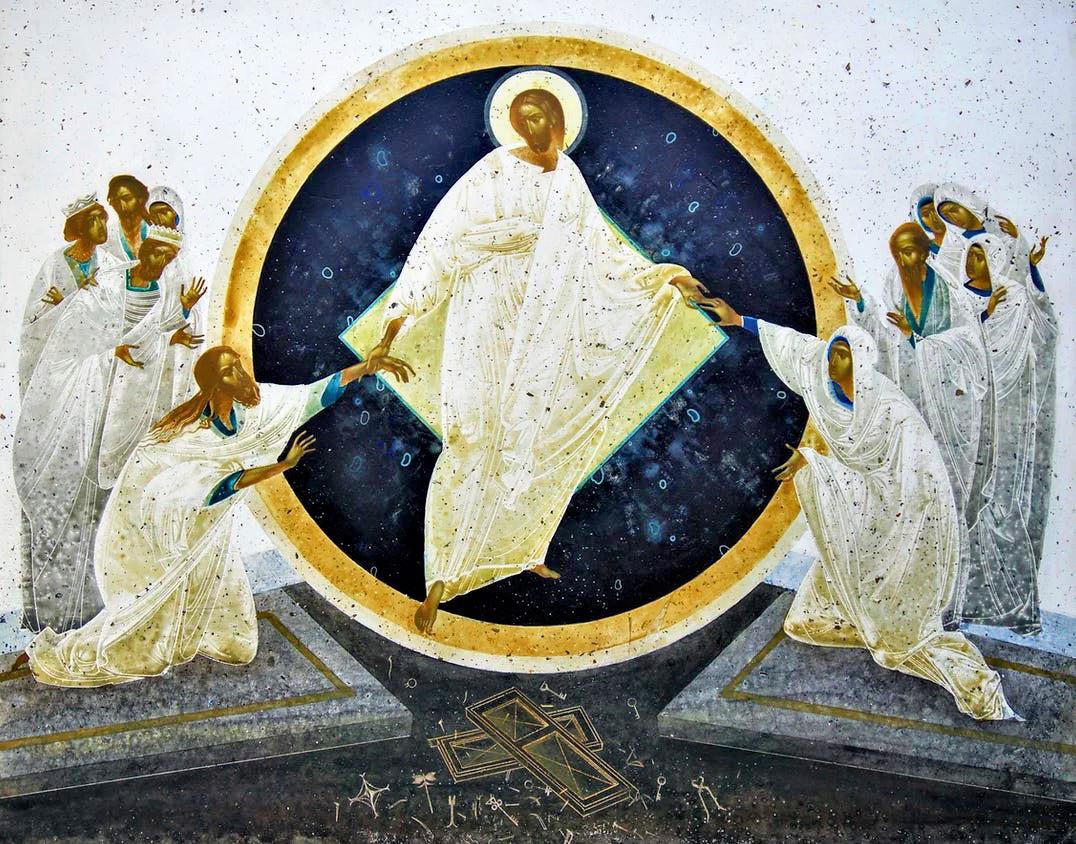
Mary Magdalene, Joanna, Mary the mother of James, and the other women entered the tomb with certain expectations that were completely shattered —and they left the tomb with Easter eyes[1].

Peter ran to the tomb with his own preconceived assumptions and stooped low looking inside, and inspected the linen wrappings—and he, too, began to see with Easter eyes.

But the rest? Locked in a house, clinging to disbelief, they remained blind—spiritually cataracted, unmoved by the story the women brought them. For them, the women’s report was non-sensical; Easter morning was just another Sunday.

Here’s the thing: Jesus’ resurrection, the whole Easter event, must be explored personally by each of us. It cannot simply be observed from a distance – we cannot take the word of others when we each have to go to the tomb, experience it, and see for ourselves. And when we do explore it—when we dare to wrestle with its meaning — God meets us in that place and blesses us with new sight. The Holy Spirit gives us Easter eyes.

So, have you begun to see the world through your Easter eyes?

Does the resurrection change how you see your life, your death, the people around you? Or are you like most of the disciples that first Easter morning who thought the story was a mere idle tale and failed to check it thoroughly for themselves? Friends, the thing is, one typically obtains Easter vision only through a crisis of some sort.

For the women and the disciples, the crisis was the death of Jesus—their Master, their teacher, and their hope.

Most people do not realize it, but this preacher wears two prominent tattoos. On my right shoulder, I wear a Celtic cross and on my left shoulder, I have a tattoo made up of two Chinese characters that together mean “crisis.” One character means risk and the other represents the word for opportunity. That’s what a crisis is — a moment when risk and opportunity meet, and the possibility of a new way forward opens in front of you. A new way of seeing comes into focus. I’ve lived by the mantra that I never waste a good crisis because it opens pathways that move me forward in a new direction. What personal crisis have you been through that has opened the way forward in your life?

The Triduum — the three holy days from Maundy Thursday to Easter morning — was the greatest crisis in cosmic history. There was the risk of political rebellion in Jerusalem and the subsequent violence inflicted upon the people by Roman garrisons. There was the risk, on God’s part, of giving His beloved Son into the hands of sinners. There was the risk of religious leaders losing their grip on power and influence. But Jesus, in his crisis of betrayal and the cross — even amid all the risk — he saw opportunity:

Jesus saw an opportunity to restore those who were broken back to the Source, the Fountain of All Healing.

Jesus saw the opportunity to realign the world’s values and ethics with the principles aligning to the will of God.

Jesus saw the opportunity to live out what the Jewish Law was really proscribing to build just, caring communities.

Jesus saw the opportunity to model the very character of God through self-sacrificial love.

Yes, Jesus’ death and crucifixion was risky move on God’s part. But oh – look at the 

opportunity that literally rose out of it! The empty tomb reorders our reality. It enables us to see — truly see — again. It affirms that nothing, not even death, can separate us from the love of God in Christ Jesus.

Fellow Presbyterian pastor, Pendleton Peery, writes:  We tend to see the resurrection as the epilogue to the story of Jesus’ life and death.[2]

He’s right.

We build up to Easter, celebrate the empty tomb, and then… pack it away with the baskets and chocolate. But friends — we’ve got it backwards. Easter is not the epilogue. It’s the prologue. It’s the beginning of a new story! Easter is the beginning of our transformation — not the end of Jesus’ drama.

Former professor, Walter Brueggemann, puts it this way: The new truth of Jesus is that self-giving love is the wave of the future… because love is the very character of God.[3]

You see, Easter places our feet in two worlds:


One foot is placed in the brokenness of this world as it is.

The other foot is grounded in the Kingdom of God as it is becoming.

And now, we must choose where to focus our gaze. Will we stare into the despair and division of the past? Or will we, like the women, bow our faces to the ground, remember what Jesus taught, and rise to proclaim that everything has changed?

You see, once you see the risen Christ, you cannot unsee him. Have you ever had an experience when you saw something and there is no way to unsee it?

I remember watching my daughters — Lauren and Kate —being born. I cannot unsee the strength on my wife, Kelly’s, face. I cannot forget the moment the doctor held up each one of my girls for the first time. That moment changed me. It changed how I saw everything. Their births were moments when everything in my life changed and evolved – my priorities, my values, and the depth of love I never knew one could feel.

That’s what the women at the tomb experienced.


That’s what Peter experienced when he peered inside.

The women and Peter may not have fully understood it all yet — but they knew: nothing would ever be the same. They were jolted into a new way of seeing and experiencing their world. They were given Easter eyes.

Does the empty tomb still jolt us today? In the original language of the New Testament, the 

words for “tomb” and for “remember” share the same common root word. A tomb is a place of remembering. It’s a place one goes to reflect upon former days of people we lost.

But on Easter morning, the angels said, “Remember what he told you… He is not here!”  For us, the tomb no longer holds memory. It points forward to hopeful possibility we have not looked for before and urges us forward.

Jesus is not among the dead.

He is among the living — and he is calling us to join him there.

With Easter eyes, we see others as bearers of God’s image.

With Easter eyes, we see injustice and do something about it.

With Easter eyes, we see hope—radical, resurrection hope—alive in the world again.

With Easter eys, we wake each day not with fear, but with faith.

We live as a people who, as one scholar said, “Refuse to participate in the anxiety of the world—because we know the One who clothes the lilies and feeds the birds will care for us, too.”[4] Beloved, Easter is our day to remember that everything has changed. Easter means we don’t doomscroll through the news and think the worst; with Easter eyes, we see opportunity on where Christ wants to get us working.  

So, this morning, as you walk out of these church doors, step outside with new vision, new hope, new joy. And may the Spirit give you my beloved… Easter Eyes. Amen.

© 2025 by Patrick H. Wrisley, Pastor, First Presbyterian Church of Glens Falls, 8 West Notre Dame Street, Glens Falls, NY 12801.  Sermon manuscripts are available for the edification of members and friends of First Presbyterian Church Glens Falls, New York and shall not be altered, re-purposed, published or preached without permission. All rights reserved.


[1] I am indebted to colleague and friend, Dr. Robbie Carol, for this phrase ‘Easter Eyes’. It was in the title of a sermon he preached in 1987 at the Decatur First Presbyterian Church in Atlanta.

[2] Feasting on the Gospels–Luke, Volume 2: A Feasting on the Word Commentary by Cynthia A. Jarvis, E. Elizabeth Johnson, Presbyterian Publishing Corporation, 948 (https://a.co/2jlyxm3).

[3] Brueggemann, Walter. A Way other than Our Own (p. 86). Presbyterian Publishing Corporation. Kindle Edition.

[4] Ibid, https://a.co/gpM7aqc.

Posted in Sermon | Tagged , , , , , , , , , , , , , , , , , , , | Leave a comment

Two Parades, One Choice; Luke 19:28-40

A sermon delivered on Sunday, April 13, 2025 by the Rev. Dr. Patrick H. Wrisley.

When a single preacher says something from the pulpit, people will say, “He or she is only preaching.”  When two preachers who don’t know one another say the same thing on the same day, well it then becomes prophetic. This is what happened to me today.  

I wrote today’s sermon some six months after the confrontation in Charlottesville between Christian Nationalists and Civil Rights protesters back in 2019. I was reworking it for today’s message as similar issues are going on in our country. Like I do every Sunday, I finish reviewing my message and read the headlines from several sources to see what is happening in the world. Well, I was scanning the New York Times and saw an op-ed piece by Episcopal priest, Andrew Thayer, whose premise in his article was exactly what I had written for today some three years ago. I encourage you to read it if you haven’t. The deal is this: God is being prophetic.[1]

Sometimes, people need a wake-up call to jar them out of complacency. We take things for granted. Our country has done that with our civil liberties and the Church has done so with the Christian faith. We’ve grown so familiar with the Triumphal Entry that we often forget how disruptive, how controversial, and how dangerous it really was. It wasn’t a peaceful parade. It was a moment when two kingdoms—two visions for how the world should be clashed and confronted each other. On one side: the empire of Rome and its local collaborators, built on control, fear, and inequality. On the other: a man riding a borrowed donkey, proclaiming a different kind of kingdom—a kingdom of grace, inclusion, justice and truth.

When Jesus entered Jerusalem, he wasn’t just visiting, he was claiming the city s his own. His very presence was a challenge to the powers that be. And his first act? Marching into the Temple to flip over the tables of a faith gone off the tracks.

 Do we truly understand Palm Sunday? Do we see what was at stake then—and what’s still at stake now?

Let us listen now to the Word of the Lord, from Luke’s Gospel:

Luke 19:28-40 (NRSV)

 28After he had said this, he went on ahead, going up to Jerusalem.29When he had come near Bethphage and Bethany, at the place called the Mount of Olives, he sent two of the disciples, 30saying, “Go into the village ahead of you, and as you enter it you will find tied there a colt that has never been ridden. Untie it and bring it here. 31If anyone asks you, ‘Why are you untying it?’ just say this, ‘The Lord needs it.’” 32So those who were sent departed and found it as he had told them. 33As they were untying the colt, its owners asked them, “Why are you untying the colt?”34They said, “The Lord needs it.” 35Then they brought it to Jesus; and after throwing their cloaks on the colt, they set Jesus on it. 36As he rode along, people kept spreading their cloaks on the road. 37As he was now approaching the path down from the Mount of Olives, the whole multitude of the disciples began to praise God joyfully with a loud voice for all the deeds of power that they had seen, 38saying, “Blessed is the king who comes in the name of the Lord! Peace in heaven, and glory in the highest heaven!” 39Some of the Pharisees in the crowd said to him, “Teacher, order your disciples to stop.” 40He answered, “I tell you, if these were silent, the stones would shout out.”

Let’s take a closer look at what Jerusalem was really like when Jesus entered the Holy City.

Just like today, people were divided—by religion, by politics, by wealth, by tribe. There were conservative and progressive factions within Judaism. There were nationalists like the Zealots, there were those who tried to stay quiet and just keep the peace, and then there was the vast number of poor folks who comprised the majority of people. There was Rome—an occupying force—and also the Jewish religious elite who had made their own compromises to survive within it.

There was ethnic division, religious discrimination, and class-based exclusion. There were backroom deals and political power brokers making decisions that impacted everyday people who had little say in their own futures.

In short: it was a world not so different from ours.

And it’s into that world Jesus comes riding—not with a war horse, but on a donkey. Not with armor and soldiers, but with humility and truth surrounded by throngs of ordinary folk. His entrance is not just about fulfilling prophecy—it’s about declaring a whole new way of being human, a whole new way of living in community. His entry is a protest. It’s a public witness. It’s an act of holy defiance.

We tend to sentimentalize Palm Sunday, don’t we? We picture children waving palm branches, singing “Hosanna,” and smiling. But the real Palm Sunday was electric. Think Charlottesville. It was dangerous. Jesus was making a statement—and everyone knew it.

He was physically declaring, “There is another way.”

The first thing we need to remember about Palm Sunday is this: Jesus’ descent from the Mount of Olives was every bit a political act. Not partisan politics, but something even more radical—he was making a public, prophetic statement that challenged the foundations of the existing political and religious order.

It looked like a parade, but it was really more like a protest march. Think Selma. Think Gandhi walking to the sea. Think Dr. King in Memphis. This wasn’t about celebrating past victories—it was about confronting present injustice and revealing a new kind of kingdom.

And Jesus wasn’t the only one entering Jerusalem that week.

As biblical scholar H. Stephen Shoemaker notes, there were likely two processions into Jerusalem that day. From the west came Pontius Pilate, the Roman governor, riding in with the full spectacle of imperial might—war horses, chariots, and armed soldiers. Rome wanted to make a statement, especially during Passover, when Jewish memory of liberation from Egypt was at its highest. Pilate came to remind the people who was really in charge.[2]

But from the east came another procession—humble, almost absurd in contrast. Jesus, riding a borrowed colt. No weapons. No armor. Just cloaks and palm branches, and the cries of ordinary people daring to hope that maybe, just maybe, God’s promised kingdom was finally breaking in.

It was a moment of contrast. Two empires. Two kingdoms. Two processions. Two definitions of power.

Pilate embodied Pax Romana —the peace of Rome, peace maintained by violence, hierarchy, and fear.

Jesus embodied Pax Christi — the peace of Christ, peace grounded in justice, compassion, and the dignity of every person.[3]

Shoemaker puts it like this: Our challenge is to show how the gospel of the kingdom has political implications but transcends our everyday political loyalties. In other words, he says, “If we take the gospel seriously, then living it out will reshape the world around us.”

Today, we face a similar divide in our own nation. The language might be different, the setting more modern, but the battle lines are familiar: Pax Republican or Pax Democrat. So often, it’s our politics that shape our faith, rather than our faith shaping our politics.

But Palm Sunday calls us to something deeper. It calls us into a third way— Pax Christi. Not the peace derived from fear, power and control, but the peace of radical grace, costly love, and unshakable justice.

Whatever your party, your policy preferences, or your voting history—none of it matters if your life and mine aren’t first shaped by the ethics of Jesus. If our faith doesn’t come before our flag, then we’ve missed the point of the gospel.

The early Church understood this. In the first few centuries after Christ, it wasn’t Roman political movements that changed the world; rather, it was groups of small communities of believers, living differently from everyone else around them. They shared what they had. They cared for the sick and the poor. They welcomed the outcast. They turned the empire’s values upside down simply by embodying the way of Jesus. During this time, the Roman Empire was in decline; the Christian Empire was in the ascension.

We’ve seen it in our own lifetimes, too. During the Civil Rights Movement, it was the Church—Black churches in particular—that became the moral engine of change. During the Cold War, it was the underground Church in Eastern Europe that overturned communism – that sparked what became known as the “Velvet Revolution” – not through violence, but through faithful resistance and bold witness.

Jesus’ descent into Jerusalem wasn’t just the beginning of Holy Week. It was the launch of a movement—one that would change the course of human history.

So, let me ask us today: Are we still part of that movement?  Or have we become too comfortable, complacent, and complicit with the status quo? Have we given up thinking that our voice, our actions will or can make a difference?

Are our choices shaped more by partisan, economic, or nationalistic loyalties or by the radical teachings of Jesus? Beloved, Palm Sunday is a day of Jesus is calling for fellow revolutionaries.

If we want to know what real revolution looks like, we don’t have to look far. Just listen:

  • Blessed are the poor in spirit, for theirs is the kingdom of heaven.  
    • Blessed are those who mourn, for they will be comforted.  
    • Blessed are the meek, for they will inherit the earth.  
    • Blessed are those who hunger and thirst for righteousness, for they will be filled.  
    • Blessed are the merciful, for they will receive mercy.  
    • Blessed are the pure in heart, for they will see God.  
    • Blessed are the peacemakers, for they will be called children of God.  
    • Blessed are those who are persecuted for doing what is right, for theirs is the kingdom of heaven.[4]

This is the way of Jesus. This is what the revolution looks like. So, Church—are you ready? Are you ready to be part of the movement again?  Are we ready to lay down the flags of empire and pick up the cross of Christ?  Are we ready to reject the din of culture and choose the path of the donkey-riding king? Lest we forget, there are two groups at a parade. There are those in the parade and those watching it. Palm Sunday is Jesus’ invitation to fall in behind him and join the parade of justice and grace he is leading. 

© 2025 Patrick H. Wrisley, Pastor, First Presbyterian Church of Glens Falls, NY 12801. Sermon manuscripts are available for the edification of members and friends of First Presbyterian Church of Glens Falls, New York and may not be altered, re-purposed, published or preached without permission. All rights reserved.

[1]  Sunday Was a Protest, Not a Procession, by the Rev. Andrew Thayer, The New York Times, Sunday, April 13, 2025, 6:00 a.m. ET. See https://www.nytimes.com/2025/04/13/opinion/palm-sunday-protest.html

[2] Bartlett, David L.; Barbara Brown Bartlett (2009-10-12). Feasting on the Word: Year C, Volume 2: Lent through Eastertide (Kindle Locations 5617-5622). Presbyterian Publishing Corporation. Kindle Edition.

[3] Bartlett, David L.; Barbara Brown Bartlett (2009-10-12). Feasting on the Word: Year C, Volume 2: Lent through Eastertide (Kindle Locations 5631-5632). Presbyterian Publishing Corporation. Kindle Edition.

[4] Matthew 5:1-11, the Beatitudes. 

Posted in Sermon | Tagged , , , , , , , , , , , , , , , | Leave a comment

Walking into the Future Facing Backwards, Philippians 3:4b-14

A sermon delivered on Sunday, April 6, 2025 by Rev. Dr. Patrick H. Wrisley

Paul has a problem. Similar to the old adage, “When the cats away, the mice come out to play.” Paul is languishing in a prison cell in Rome, and he has heard there is a group of new teachers who are upsetting the congregation he established in Philippi. He cannot personally confront these people in person, so he writes the church a letter. These new teachers are telling the people something controversial. They claim that to be real, bona fide Christians, all male Gentile believers must be circumcised. This requirement is like their Jewish counterparts. These new teachers are telling people in the church that it’s not enough to believe in Jesus, but they must also live according to the old, prescribed dictates of the Jewish Law. Paul is none-too-pleased with these new teachers and meddling pastors and warns members of the church, “Beware of the dogs, beware of the evil workers, beware of those who mutilate the flesh!” (Phil 3:2).

We pick up in the letter immediately following this harsh word from the Apostle. Paul is reminding the Philippians by what authority he has in warning them of these false teachers. Listen to the Word of God.

Philippians 3:4b-14

                  4 If anyone else has reason to be confident in the flesh, I have more: 5circumcised on the eighth day, a member of the people of Israel, of the tribe of Benjamin, a Hebrew born of Hebrews; as to the law, a Pharisee; 6as to zeal, a persecutor of the church; as to righteousness under the law, blameless. 7Yet whatever gains I had, these I have come to regard as loss because of Christ. 8More than that, I regard everything as loss because of the surpassing value of knowing Christ Jesus my Lord. For his sake I have suffered the loss of all things, and I regard them as rubbish, in order that I may gain Christ 9and be found in him, not having a righteousness of my own that comes from the law, but one that comes through faith in Christ, the righteousness from God based on faith. 10I want to know Christ and the power of his resurrection and the sharing of his sufferings by becoming like him in his death, 11if somehow I may attain the resurrection from the dead. 12Not that I have already obtained this or have already reached the goal; but I press on to make it my own, because Christ Jesus has made me his own. 13Beloved, I do not consider that I have made it my own; but this one thing I do: forgetting what lies behind and straining forward to what lies ahead, 14I press on toward the goal for the prize of the heavenly call of God in Christ Jesus. [1]

There are two types of people in the world. There are those who use personal computers and those who use Macs. The saying is true and worthy of full acceptance, “Once you go Mac, you never go back!” The new life you experience in the Apple iOS-operating system is mind-expanding compared to the old PC DOS operating platforms. Everything is so much easier and intuitive on a Mac in comparison to a PC. I’ll never forget my conversion experience over 25 years ago. It was so liberating and easy: I discovered that all I had to do was open up the laptop and it immediately turned on and was ready to go! My old, PC, however, was like an old Chrysler – you would turn it on and it would take forever to crank up and work!

Paul is telling the members of the Philippian church to remember they are running on a new operating system. They are to be indebted to their Jewish heritage because Jesus emerged from that Jewish heritage himself. It was the Jewish heritage that shaped who Jesus was and provided the basis for the Good News he brought. Christians are to honor that heritage, be grateful for it but we are to build upon it. When Steve Jobs and Steve Wozniak began Apple in 1976, they took what they knew about computers and the old DOS operating system and built something new on its foundation. The way the computers worked was similar but yet were entirely different. You simply cannot run Apple software on PC hardware.

Paul goes through a very intense and heavy resume that covers his ethnic, religious, and cultural status. Paul was born and raised in the Jewish faith and cultural traditions. He later became an elite member of spiritual leaders known for their scrupulous attention to the Jewish Law’s details. Paul is not bragging. He is telling the Philippian church that the upstart church leaders instructing the Gentile men about circumcision cannot compete with his street credibility. They cannot match the authority Paul has. 

The deal is this: Jesus’ life, death, resurrection, and ascension has installed a new divine operating system. This system is not based on showing fidelity to laws and precepts. It is based on Jesus’ expression of grace and sacrifice. Faith moves from a transactional “do” or “do not do” certain things to becoming a relational loyalty by following Jesus and his grace-full way of living. It moved from doing religious things and acts to being a loving human being in the way Jesus loved. It moves from living out a faith of woulds and shoulds to expressing one’s beliefs in God by loving others as God in Christ loved us. The old song is not “They’ll know we are Christians by our circumcisions” but “They’ll know we are Christians by our love.”

God has Isaiah the prophet tell the people, “Do not remember the former things, or consider the things of old. I am about to do a new thing; now it springs forth, do you not perceive it? (Is 43.18-19)” Paul says it this way: Beloved, I do not consider that I have made it my own; but this one thing I do: forgetting what lies behind and straining forward to what lies ahead, I press on toward the goal for the prize of the heavenly call of God in Christ Jesus.  These are words describing a new operating system. 

The old system said, “Follow the religious rules, you will be loved by God.” The new system says, “Give your heart and loyalty to Jesus and he will guide your steps.”[2]

The old said, “An eye for an eye.” The news system says, “Love those who persecute you. Do good to those who hate you.”[3]

The old system said, “Strength through power.” The new system says, “My grace is sufficient for you, for my power is made perfect in weakness.”[4]

Lent has been a time when we church-folk are asked to reflect upon our identity. Specifically, how do we arrive at our identity? Where do each of us get our cues as how to live out our identity? Is it from politics? Our economy? Do we get our identity from what we do for living? Maybe it comes from where we live and where we were bought up. Then again, maybe we get our identity from our educational accomplishments. The fact is, all of these items will come to form our identity and who we are. Paul emphasizes that his identity is focused on wanting to be more like Jesus. This perspective illuminates everything else.

Do our politics shine light on Christ, or does Jesus first shine light on our politics?

Do our personal economics shine light on Christ, or does Jesus first shine light on how we spend our money?

Do our professions or retirement shine light on Christ, or does Jesus first shine light on our professions or retirement?

Do our friendships shine light on Christ, or does Jesus shine light on our relationships?

Beloved, the beauty and power of Lent is it asks us to look at ourselves, our faith, and each other in a new way. Isaiah says, “Forget the former things…behold I do a new thing!” Paul says, “Forgetting what is behind, I press ahead to grab the prize.” The question du jour is this: Are we?

Being in the pastorate all these years, I share a sadness with my ministerial colleagues. Our sadness stems from the fact there are many professed Christians in our country. Their lives do not show any sort of transformative new identity in Christ. Then again, there are also those self-righteous Christians who wear us out. They tell or shame the rest of us and say we are doing it wrong. They will then try to regulate what we can read, talk about, or how to live. Either way, Jesus is missing. 

Paul is reminding us that the invitation to follow Jesus will change everything. It readjusts our way of seeing, speaking, and relating to others. It charts us on a new course. It forces the Church to see its neighbors and potential ministry adapt and change. It forces the Church to speak about Christ’s love and justice in ways that will differ from what FOX news or CNN says. It forces the Church to change the way it does ministry as it relates to the community. 

Have you ever gone hiking in these beautiful woods we call home in the Adirondacks? Imagine going on a hike together. Before we start, I tell you, “We’re going to hike to the waterfall together. But we are going to face backwards as we go.” How well do you think that would work? Well sadly, that’s the way many of us, including the Church in America today, is living our lives. We are walking into the future facing backwards – taking our cues and direction from the past without turning around and walking on a new path in front of us. Is it any wonder why the Church in our country is in decline?

Isaiah and Paul are encouraging us to turn around. We should forget what lies behind. Let Jesus’ Spirit shine light on a transformed way of living and being in the future. We still have time before Easter gets here to take them up on it. In the name of the one who is, who was, and who is to come. Amen. 

© 2025 Patrick H. Wrisley, Pastor, First Presbyterian Church of Glens Falls, NY 12801. Sermon manuscripts are available for the edification of members and friends of First Presbyterian Church of Glens Falls, New York and may not be altered, re-purposed, published or preached without permission. All rights reserved.


[1] New Revised Standard Version (NRSV). New Revised Standard Version Bible, copyright © 1989 the Division of Christian Education of the National Council of the Churches of Christ in the United States of America. Used by permission. All rights reserved.

[2] CP Joshua 1:1-9 & Eph 4:17-24.

[3] CP Exodus 21:22-25 & Luke 6:27-36.

[4] CP 2 Kings 25:1-7 & 2 Cor 12:9-10.

Posted in Sermon | Tagged , , , , , , , , , , , , , , | Leave a comment

 Stepping Into New Life: The Call to Transformation, 2 Corinthians 5:16-21

A sermon delivered on March 30, 2025 by the Rev. Dr. Patrick H. Wrisley.

Turn in your Bible to 2 Corinthians 5:16-21. Paul is writing to the church describing his intent to come and see them, but he has been delayed. Just before our passage today, Paul reminds the Corinthians of what keeps him and his companions going in the face of hostile persecution; he tells them, “The love of Christ urges us on, because we are convinced that… he died for all, so that those who live might live no longer for themselves, but for him who died and was raised for them.”

Paul was passionate about the life Christ gave him. If we know anything about the Apostle Paul, it’s that passion that enabled him to endure so much hardship. His motivation is Christ’s love urging him forward. He wants to tell as many people as possible the Jesus Story. Paul wants others to experience the same transformation he has experienced. Now, let’s turn our attention to today’s reading, beginning with verse 16.

2 Corinthians 5:16-21

16 From now on, therefore, we regard no one from a human point of view; even though we once knew Christ from a human point of view, we know him no longer in that way. 17 So if anyone is in Christ, there is a new creation: everything old has passed away; see, everything has become new! 18 All this is from God, who reconciled us to himself through Christ, and has given us the ministry of reconciliation; 19that is, in Christ God was reconciling the world to himself, not counting their trespasses against them, and entrusting the message of reconciliation to us. 20 So we are ambassadors for Christ, since God is making his appeal through us; we entreat you on behalf of Christ, be reconciled to God. 21 For our sake he made him to be sin who knew no sin, so that in him we might become the righteousness of God.[1]

Have you ever had one of those experiences that when after you have it, you just know that life is never going to be the same. I had one three years ago just after my wife died. After ten emotional days of leading up and then getting through her memorial service and entertaining family and friends from all over the country, I drove my daughter, son-in-law, and granddaughter to the airport as they had to return home. They were trying to beat an approaching April blizzard in Boston. I noticed time slowed down for me after I kissed them goodbye at the terminal and began my drive home. It was Sunday morning, and the streets were empty, but I drove home slowly, nonetheless. Honestly, I didn’t want to go home, but I had to.

When I arrived, I walked slowly from the car to the front door of my apartment. As I grabbed the door handle, I froze. My hand trembled as I held the handle. I stood there for about thirty seconds before stepping inside. It was my first time being alone in the apartment since Kelly’s death. As I crossed the threshold, I felt acutely aware that I was leaving a wonderful past. I was stepping into an unknown future. It could be a lonely future. It was one of those moments etched into my memory. Walking through that door, I realized my life was forever changed and there was no going back.

Beloved, this is what Paul describes today. He’s describing a total transformation.  When a person is pursued by the love of God and embraces Jesus, life is never the same. Paul says that he or she becomes a new creation. The word he uses for ‘creation’ denotes making a place, region, or a person habitable. It’s the same word to describe God’s work at Creation making something from nothing at all. Consequently, people in Christ have a complete transformation, a heavenly reboot, and have had a new operating system installed. Everything changes as we step into a redeemed future. Our lives will never be the same.

Or at least, they shouldn’t be. This is why Paul writes to the Corinthians. He reminds them that a relationship with God in Christ will reflect a life that is distinct. It will differ from those still living in the old empire. This is not because we must earn God’s love by following rules. Instead, His love radically transforms us. It fills our lives with divine peace and hopeful buoyancy.

Pastor and Professor, Alan Roxburgh, indicates that our lives change in at least three ways after we embrace Jesus:

  1. The way we see the world, others, God, and issues of injustice changes.
  • The way we speak about God, others, the world, and its injustices changes.
  • Our community and the people we hang out with changes because the values of our old networks no longer align with our Christ-infused life.[2]

Get embraced by Jesus, and the way you see, speak, and live is dramatically transformed. Now, let us pause. Close your eyes and take a deep breath. Reflect upon these questions:

Do I see others with the eyes of God and see them the way God sees them or do I even notice them at all?

Can those around me — at the kitchen table, in the boardroom, at the checkout line, or in the classroom —experience that I treat others, the environment, the immigrant differently from others in our harried, selfish world?

Has my way of speaking about others, social issues, and justice evolved and changed?

Do my life and the company I keep outwardly reflect I am a transformed person working to reconcile differences?

Paul reminds us that Christ reconciled us to God. Our new life in Christ carries a responsibility. We must execute the specific ministry of sharing the unmerited love we received with others around us. This is part of what it means to step into a new life with Christ. Paul says that when we follow Christ, we become his ambassadors. Interestingly, the Greek word here for ambassador is presbeuo, the same word we get the term Presbyterian. Paul calls us to be “Presbyterians in the world,” not only spreading the message of reconciliation but by becoming active agents of reconciliation ourselves.

Reconciliation means restoring balance—not just in financial ledgers, but in our relationships with God, others, and environment. It means reconciling between communities, even with those we dislike or even hate. Scholar Casey Thompson reminds us: Once we have discerned Jesus to be the Savior of the world, we cannot limit our estimate of other human beings—the born or unborn, exploiters or murderers, terrorists or militarists, frauds, or failures—as dwelling beyond his reach. We cannot see any person as anything other than a creature for whom Christ has died and risen, and thus as one meant also to become ‘a new creation.’”[3]

Jesus is so passionate about reconciling us back to God that there is no place he would not go to make it so. He went so far as to descended into the abyss of hell because, as one person put it, “He didn’t want to leave anyone out who may not have had a second chance.” Another said, “Because he descended into hell, it reminds us that there is no place too dark and scary that God can’t go.” 

Wow. Just wow.

This is Paul’s message: God actively goes into spiritually dark and scary places. He reconciles and restores people and creation to balance back to Godself. This is what drove Paul forward in his new transformed life in Christ. This is what Paul wants to drive us in our as well. 

Today, Paul calls us to be vital Presbyterians — ambassadors — engaged in the ministry of reconciliation and restoring balance. At a time when our country and the world is so fractious and violent, it needs bold ambassadors for reconciliation. We are called to be ambassadors actively trying to restore balance in an unbalanced world. When we profess our faith, we step through the door into new life. We leave the past behind us. We walk into a fresh new spring garden of seeing, experiencing, speaking, and relating to those around us. Our lives will never be the same. 

In the Name of the One Who is, Who was, and Who is to come. Amen. 

© 2025 Patrick H. Wrisley, Pastor, First Presbyterian Church of Glens Falls, NY 12801. Sermon manuscripts are available for the edification of members and friends of First Presbyterian Church of Glens Falls, New York and may not be altered, re-purposed, published or preached without permission. All rights reserved.


[1] New Revised Standard Version (NRSV). New Revised Standard Version Bible, copyright © 1989 the Division of Christian Education of the National Council of the Churches of Christ in the United States of America. Used by permission. All rights reserved.

[2] I read this by Rev. Dr. Alan J.  Roxburgh in a book that has been misplaced. I wish I could remember the book! He is the one who highlighted these changes in newly-faithed people.

[3] Feasting on the Word: Year C, Volume 2: Lent through Eastertide by David L. Bartlett, Barbara Brown Bartlett. See https://a.co/4NevUkz.

Posted in Sermon | Tagged , , , , , , , , , , , | Leave a comment

Embracing Grace in Times of Suffering, Luke 13:1-9

A Sermon Delivered on March 23, 2025 by the Rev. Dr. Patrick H. Wrisley.

Turn in your Bible to Luke 13:1-9. We are going to read a passage that only appears in Luke’s Gospel. It addresses a deep theological issue with a fancy name: “theodicy” —the question of why bad things happen to good people. As you listen, you will note two tragedies and a parable. Let’s see how they fit together. Hear the Word of the Lord.

Luke 13:1-9

13.1 At that very time there were some present who told him about the Galileans whose blood Pilate had mingled with their sacrifices. 2He asked them, “Do you think that because these Galileans suffered in this way they were worse sinners than all other Galileans? 3No, I tell you; but unless you repent, you will all perish as they did. 4Or those eighteen who were killed when the tower of Siloam fell on them—do you think that they were worse offenders than all the others living in Jerusalem? 5No, I tell you; but unless you repent, you will all perish just as they did.”

6Then he told this parable: “A man had a fig tree planted in his vineyard; and he came looking for fruit on it and found none. 7So he said to the gardener, ‘See here! For three years I have come looking for fruit on this fig tree, and still I find none. Cut it down! Why should it be wasting the soil?’ 8He replied, ‘Sir, let it alone for one more year, until I dig around it and put manure on it. 9If it bears fruit next year, well and good; but if not, you can cut it down.’”[i]

Several years ago, Rabbi Harold Kushner wrote a book whose title is often misquoted. Many call it, “Why Bad Things Happen to Good People” but the actual title is “When Bad Things Happen to Good People”. Do you hear the difference? The first title asks “why” suffering happens, while the second assumes suffering “will” happen and asks how we shall respond. 

On one hand, “Why” questions are centripetal in nature as they drill down and can immobilize us. “Why did this happen to me?  Why would God allow this to happen to them? Why, if there is a loving God, would people have to endure the pain of treatment for their disease?”  We can get mired in all the speculation we want but it still will not resolve the dilemma of the pain we feel or experience.

On the other hand, “When” questions are centrifugal in nature as they spin us outward in search of the meaning of the pain or misfortune we encounter. Spiritually and emotionally, we move from raising our fist and indicting God to intentionally begin walking alongside God in order to discover the meaning in the mess. You see, it’s not a question if bad things will happen to good people; it’s a question of when they will.

For centuries, people—including many in Jesus’ time—believed that suffering was a sign of divine punishment. If someone was sick, poor, or faced tragedy, people assumed they must have sinned in some way. Likewise, if someone was wealthy and healthy, it was seen as proof of God’s favor. This belief persists today, particularly in prosperity gospel teachings, where some claim that faithfulness guarantees material blessings. The problem is, Jesus does not endorse this way of thinking.

People approached Jesus, referencing Galileans whom Pilate had killed and whose blood was mixed with pagan sacrifices. They were essentially asking: Did they suffer because they were worse sinners than others? Jesus rejected this notion outright: No, I tell you; but unless you repent, you will all perish as they did.

Ouch, Jesus, that’s a little harsh!

Then Jesus brought up another tragedy—the collapse of the tower of Siloam, which killed eighteen people. Again, he asked, “Were they worse sinners than everyone else in Jerusalem?” And answering his own question, he replied, “No! But unless you repent, you will all perish as they did.”   What is Jesus really saying here?

Jesus refused to speculate on the why of suffering; instead, he shifted the focus to how we respond to suffering and to life itself.

Jesus then followed up this discussion with a parable: A man had a fig tree that produced no fruit for three years. He told the gardener to cut it down, but the gardener asked for one more year to nurture it with fertilizer and care. 

At first, this fig tree story sounds like it’s a non sequitur…this parable seems unrelated to what he has just said; yet a careful reading of our text reveals Jesus is making a subtle point: We are all like that fig tree. The tragedies Jesus mentioned remind us that life is fragile. Instead of wasting time speculating on the why of suffering, we should rather focus on making our lives fruitful right now while we are able to do so. And here’s the good news:  God is the patient gardener, willing to nourish us with grace, waiting for us to turn heavenward.

Jesus is calling us to stop asking speculative “why” questions and start preparing for the “when”. 

  • When tragedy strikes, will we be grounded in faith?  
  • When suffering comes, will we trust that God is present?  
  • When we face loss, will we turn toward God rather than away?

There is a well-know Latin phrase, Memento Mori, that is instructive here. Memento Mori means, “Remember, one day you will die”. Jesus is reminding us that we can ask God all the speculative questions we want but unless we turn back around (the actual meaning of the word, repent) and embrace the relationship God wants with us, then our lives immediately lose their meaning and we live the rest of our days bitter at best and lonely and isolated at worst; we will live our lives and die emotionally and spiritually alone. Jesus is not trying to instill fear but is inviting us to be spiritually prepared, to live with purpose in this present moment, and to lean into God’s grace.

The word “repent” can sound heavy, even threatening. But biblical repentance is not about shame or fear — it is all about turning back to the One who loves us most, God. Imagine a child who falls and scrapes their knee. Instead of running away, they run straight way into the arms of their loving parent. That is what repentance looks like—it’s our running headlong back into the arms of God, trusting in Her love rather than living in fear.

When we embrace this kind of repentance, we stop understanding suffering as some form of divine punishment. Instead, we come to understand life’s hardships as part of our human condition.  The deal is, however, we do not face them alone. God is not distant, handing down judgment from afar.  God is right here, nurturing us like the gardener tending the fig tree, surrounding us with grace. God is like the patient waiting mother waiting for her beloved to come falling headlong into her arms. 

Let’s close with a simple declaration. Repeat after me:  

“Bad things happen to good people like me…and when they do…I will repent and fall into the waiting arms of God.”  

In the Name of the One who is, who was, and who is to come. Amen.  

© 2025 Patrick H. Wrisley. Sermon manuscripts are available for the edification of members and friends of First Presbyterian Church, 8 West Notre Dame Street, Glens Falls, NY 12801 and shall not be altered, re-purposed, published or preached without permission. All rights reserved.


[i] The New Revised Standard Version, copyright 1989, 1995 by the Division of Christian Education of the National Council of the Churches of Christ in the United States of America. Used by permission. All rights reserved.

Posted in Sermon | Tagged , , , , , , , , , , , , , , , | Leave a comment