
Set Your Watch to 10:02, Luke 10:1-11

A sermon delivered by Patrick H. Wrisley, D.Min. on July 6, 2025.

Last week, we looked at the cost of following Jesus when he asks us to fall in line behind him and follow where he asks us to go. We noted that when we choose to align our lives with Jesus’s Way, it requires more than a tacit nodding of one’s mental approval for doing so; it requires us to count the costs of doing so, it demands we reset our priorities in our daily living, and once we step out, we can’t look back. We noted our tendency to couch our discipleship with a series of Yes, Buts. “Yes, Jesus, I will follow you, but first…”

At this point in Luke’s Story, Jesus has turned his face to Jerusalem and realizes his time is growing short. So today, we have him sending out 35 advance teams to fan out to villages he has yet to visit but plans to on his way to Jerusalem.  This is where we pick up in the text today.

Luke 10:1-11

After this the Lord appointed seventy others and sent them on ahead of him in pairs to every town and place where he himself intended to go. 2He said to them, “The harvest is plentiful, but the laborers are few; therefore ask the Lord of the harvest to send out laborers into his harvest. 3Go on your way. See, I am sending you out like lambs into the midst of wolves. 4Carry no purse, no bag, no sandals; and greet no one on the road. 5Whatever house you enter, first say, ‘Peace to this house!’ 6And if anyone is there who shares in peace, your peace will rest on that person; but if not, it will return to you. 7Remain in the same house, eating and drinking whatever they provide, for the laborer deserves to be paid. Do not move about from house to house.8Whenever you enter a town and its people welcome you, eat what is set before you; 9cure the sick who are there, and say to them, ‘The kingdom of God has come near to you.’ 10But whenever you enter a town and they do not welcome you, go out into its streets and say, 11‘Even the dust of your town that clings to our feet, we wipe off in protest against you. Yet know this: the kingdom of God has come near.’[1]

One of the reasons I love living in the Upstate is being able to get on my bike and take off through all this beautifully, rich farmland. During the spring and summer planting seasons, you can smell the heavy scent of natural fertilizer; it’s the wonderful smell of future profits and harvest in the air. 

Farm life is not always easy, especially at harvest time, when there is a bustle of activity. A friend of mine who grew up on a farm tells me that you’re up before sunrise and mommas cooked a big breakfast for everyone before they go out and begin their work. The days are full and long because you are racing against the fleeting hours of the day with good sunlight to harvest the crop. You are also racing against the reality that there is only a limited time you can harvest the produce of the farm before the crops and grain begin to rot. There is a sense of intentionality at harvest time. The quiet long days of growing are over; there’s work to do and there’s only so much time to get it done. Harvest time is a busy time when everyone has his or her part on the farm to get the crop in on time.

In our Story today, we hear about the ebb and flow of God’s grace and our participation in it. As disciples, our job is not to prepare the harvest as that is God’s sole responsibility. A disciple’s job is to physically, personally, intentionally respond to that graceful giftedness of God and gather in the harvest and pray others will come and join us in this critical time; we need others to labor with us to help get the crops in before they rot.[2]

Our text today has Jesus is letting us know that it’s harvest time for the Church. Today we are gathered around the breakfast table before we head out the door and he is giving us our job assignments for the day. Did hear what it is? It is to go out and harvest the crop God has already planted and pray for more laborers to help us. Before we hit the fields and start our harvesting, Jesus gives us some advice. 

He first tells us harvesters are exposed and vulnerable. You and I are going out into a world that is hostile to the message and way of life we are demonstrating. The news of the Kingdom of God will butt up against the empires, the values, and the mores of this world; in response to the good news we bring, the lions of the world will try to bring us down and silence us as it reminds us in verse 3.

Yet, the Farmer also tells us in verse 4, “Beloved, take heart and trust God completely.” Travel light with the bare necessities. You don’t need a lot of stuff to help with the harvest; you only need to trust God.

Jesus, the Sower, tells us to travel with single-minded focus (vs. 4b).  Don’t dilly-dally on the way as the crops are ready for harvest now…not next week or next month but now! He cautions us there will be distractions along our way to the fields, but we are to keep our focus.

Furthermore, Jesus tells us from the Table that we are to go into the fields with words and spirits of peacefulness that will stand in stark contrast to the of angst and darkness in the world today (v. 5). He says that while out harvesting, we show others that it’s okay to live simply. Living within the Kingdom of God means being content with who we are, where we are, and with who God is and what God expects (v. 8).

Our recent news cycle over the last several weeks offers some insight in Jesus’ call for harvesters to go out into the fields. Congress passed a bill this week that approves $30 billion dollars for the Immigration and Customs Enforcement department. Migrants working in our farmland’s fields are getting arrested and detained for doing work Americans do not want to do. The irony is those people grumping about illegal immigrants are also complaining about the higher prices they must pay because there is a shortage of workers to bring in the harvest. 

The greatest challenge in US Christian congregations today is that we are full of consumers of the spiritual fruit and produce Church provides but there are not enough willing laborers in the church to go out and bring in the harvest. “That’s the pastor’s job.” “I don’t want do be seen as a religious fanatic.” “Someone else will do it.” Friends, we sit and wait to be served the fruits from the labors of others when our call is to be day-laborers in the Kingdom gathering in the crops today ourselves.

Friends, it’s a temptation to look at our text today and focus on the fruit “out there” in the world and wonder, “What can you do pastor, to bring more younger families into the Church?” This is the typical way of looking at this Story. This is a story about someone else bringing in the proverbial sheaves. I suggest a different way of looking at Jesus’ words. 

Perhaps Jesus’ words are a demand on us a church body. Jesus emphatically tells us to pray to the Lord of the Harvest to give us laborers for the harvest. In other words, we are to pray, that like members of a family farm, we are to pray that everyone in the family gets their fanny out of bed and helps bringing the crops in. Harvesting requires everyone getting involved and not just a few specialized migrant workers. Everyone on the farm has his or her part to play whether it’s harvesting, gleaning, or storing. Others prepare the mid-day meal and evening suppers for the laborers while the others are in the field sweating and getting covered with manure-infused soil. The deal is everyone is involved in the harvest time. It’s intentional. It’s focused. Everyone has her or his part.

Church, our text today demands all of us get off the porch rocker and into the rhythmic dance of the harvest. All of us have a job to do. The Church and her neighborhoods are a farm that needs harvesters not consumers. If we want a larger crop of produce, it will take all of us and not just the farm owner to get it done.

Some years ago,I met a retired Presbyterian pastor and during our conversation, his watch alarm begins to chime. He says, “Excuse me,” as he looks down and presses a button and then looks at me and smiles. I quickly asked him, “Do you need to go! I didn’t mean to keep you!” and he replies, “Oh, no. It’s 10:02.” I gave him a doggie-head tilt look, and he said, “It’s my reminder to pray for  laborers of the harvest. In Luke 10.2, Jesus tells us the harvest is plentiful, but the laborers are few; therefore, we are to pray that the Lord of the Harvest will send out laborers into the harvest.”[3]    

Beloved let us take a moment and do two things. First, ask yourself if you are a spiritual consumer or are you a harvester? Second, take a moment and set your phones or watches to sound a chime at 10:02 to remind you first who you are and second what God needs you to do – go labor in His vineyard! So be it. Amen. 

© 2025 Patrick H. Wrisley. Sermon manuscripts are available for the edification of members and friends of First Presbyterian Church Glens Falls, 8 West Notre Dame Street, Glens Falls, NY 12801 and shall not be altered, re-purposed, published or preached without permission.   All rights reserved.


[1] New Revised Standard Version (NRSV). New Revised Standard Version Bible, copyright © 1989 the Division of Christian Education of the National Council of the Churches of Christ in the United States of America. Used by permission. All rights reserved.

[2] David Lose, Feasting on the Word.

[3] Harland Mirriam, Presbyterian pastor and Chaplain, US Army (RET).
Posted in Sermon | Tagged , , , , , , , , , , , , , , , | Leave a comment

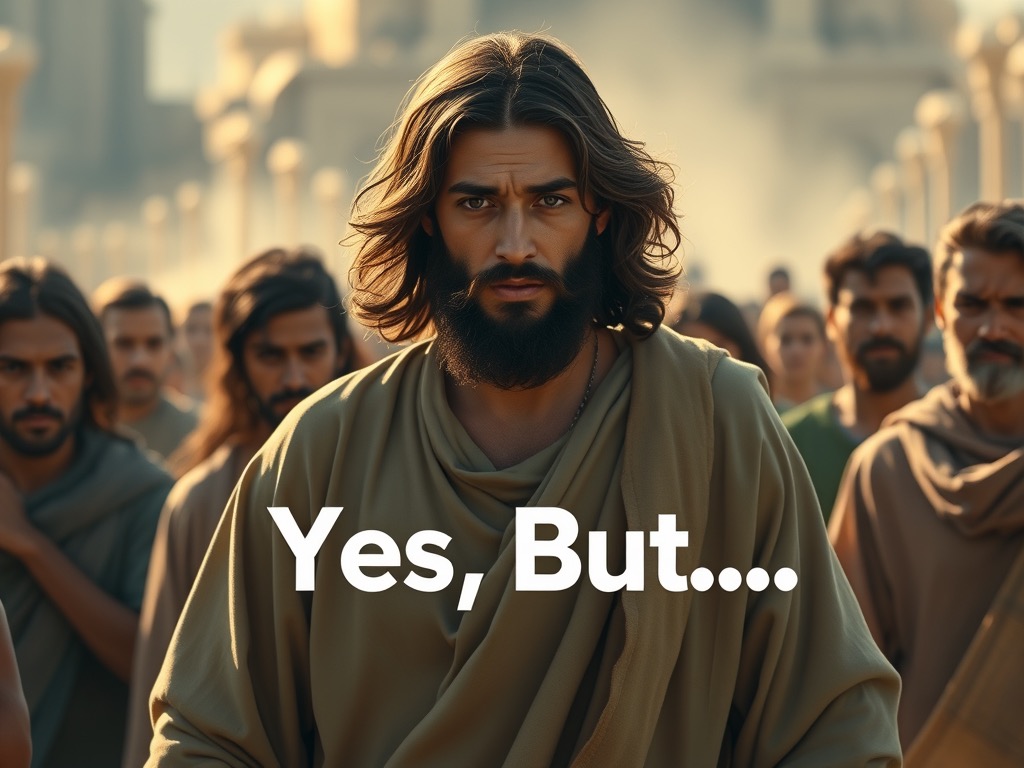
Yes, But…, Luke 9:51-62

A sermon delivered by the Rev. Dr. Patrick H. Wrisley on June 29, 2025.

Thus far in Luke’s gospel, he has focused his Story on Jesus’ teaching, preaching, healing people. Jesus has demonstrated deeds of wonder among the general populace in the various small towns north of Jerusalem around the Galilee. But today, there is a shift in the narrative Luke 9:51 is the fulcrum, the hinge point of Luke’s gospel. Luke subtly adjusts Jesus’ focus from the general population and now has Jesus spending the next part of the Story making sure his disciples are fully comprehending what is going on and what is about to take place. Listen to the Word of the Lord from Luke 9:51-62.  

Luke 9:51-62

51When the days drew near for him to be taken up, he set his face to go to Jerusalem. 52And he sent messengers ahead of him. On their way they entered a village of the Samaritans to make ready for him; 53but they did not receive him, because his face was set toward Jerusalem. 54When his disciples James and John saw it, they said, “Lord, do you want us to command fire to come down from heaven and consume them?” 55But he turned and rebuked them. 56Then they went on to another village.

57As they were going along the road, someone said to him, “I will follow you wherever you go.” 58And Jesus said to him, “Foxes have holes, and birds of the air have nests; but the Son of Man has nowhere to lay his head.” 59To another he said, “Follow me.” But he said, “Lord, first let me go and bury my father.” 60But Jesus said to him, “Let the dead bury their own dead; but as for you, go and proclaim the kingdom of God.”61Another said, “I will follow you, Lord; but let me first say farewell to those at my home.”  62Jesus said to him, “No one who puts a hand to the plow and looks back is fit for the kingdom of God.”[1]

Did you hear the shift in the story? It’s as though Luke has turned an hourglass over, and the sands are now funneled into a more narrow and constricting space. Jesus’ journey is funneling downward to Jerusalem and the cross. From this point on, Jesus resolutely sets his face toward that which he came to do: to confront the political, religious, and economic powers of the day, to suffer, and to reconcile all creation back to God — fully reestablishing God’s kingdom here on earth.

Luke tells us twice in three verses that Jesus “set his face to go to Jerusalem.” Jesus is determined. Jesus is focused. Jesus has set his strategic priorities. And now he teaches his disciples what it will mean for them to follow him on this path. He invites them — and us — to do what he himself has done. And what exactly is that?

Count the cost.

Set our priorities.

And once we step out in faith, don’t look back.

Beloved, can you see yourself in any of the would-be followers in today’s passage?

The first would-be follower says, “I will follow you wherever you go.” But Jesus responds, “Foxes have holes, and birds have nests, but the Son of Man has nowhere to lay his head.”  In other words: Have you counted the cost? Are you ready to give up the comforts you know and trust that God will provide?

The second says, “Lord, first let me go and bury my father.” And Jesus replies, “Let the dead bury their own dead; but as for you, go and proclaim the kingdom of God.” In other words: What is your top priority? God’s call can’t always wait.

The third says, “I will follow you, Lord; but let me first say farewell to those at my home.” And Jesus replies, “No one who puts a hand to the plow and looks back is fit for the kingdom of God.” In other words: If you keep looking back nostalgically, you won’t be able to move forward in the work God has waiting which only you can accomplish.

If we pause to think about it, when people resort to using “yes, buts…” it is really just a polite way of saying, “no.” 

They say ‘no’ because the ask is too inconvenient.

They say ‘no’ because they really have not bought into what you are saying.

They say ‘no’ because it is simply not a value they embrace.

I wonder, friends — what are the “yes, buts…” in our own lives?

Yes, Lord, I’ll follow you but let me get through this busy season first.

Yes, Lord, but let me get my finances in order.

Yes, Lord, but not until the kids are grown.

Yes, Lord, but first let me retire and then I will have the time.

Yes, Lord but… 

We all have them, don’t we?

I remember a season in my own life when I felt God nudging me toward something new — something that would stretch me. “Patrick, I am calling you to build a church in Disney World.” Say what? Guess what – I found myself full of “yes, buts…”

Yes, Lord — but not now. The girls are all established in school and our family lives nearby.

Yes, Lord — but what if I fail? What if there is competition from other churches trying to do the same thing?

Yes, Lord — but what if it costs more than I can physically, emotionally, or spiritually give?

And friends, every “yes, but…” held me back from what God wanted to do. It was only when I said a simple “yes” — no conditions, no hesitation — that I discovered God’s provision was already there, waiting. I discovered I was the one who had to get out of God’s way and let the Spirit do what it does best and that is create!

Commentator Richard Schaffer writes

Faith can be expressed and experienced in a variety of ways, but there comes a time in each one’s journey when it is necessary clearly and unequivocally declare the depth of that commitment. Adopting a life of discipleship cannot be a part-time or momentary commitment. It is a life-changing shift in direction and priorities.”[2] 

In other words, it’s like to old saying, “You’re either pregnant or you’re not.” 

Today, Jesus stands at the door of our hearts and is asking us to follow, to do something for the kingdom. Only you know where he is asking you to go or what he is calling you to do – whatever it is, it is uniquely designed and fit for you to accomplish. God will not call us to go or do something knowing we will fail because it is a call from God and that means God is in the midst of it with you and me. This is the invitation Jesus places before us today:

To come.

To count the cost.

To set our priorities.

To walk forward — without looking back.

And here’s the good news: Jesus does not ask anything of us that he hasn’t already done. He set his face to Jerusalem for you. For me. For the world. And he walks with us as we take our risky first step.

So today, may we have the courage to say yes — no buts, no maybes — just yes. In the name of the Father, and of the Son, and of the Holy Spirit. Amen.

© 2025 Patrick H. Wrisley, Pastor, First Presbyterian Church of Glens Falls, 8 West Notre Dame Street, Glens Falls, NY 12801.  Sermon manuscripts are available for the edification of members and friends of First Presbyterian Church of Glens Falls, NY and shall not be altered, re-purposed, published or preached without permission. All rights reserved.


[1] New Revised Standard Version (NRSV). New Revised Standard Version Bible, copyright © 1989 the Division of Christian Education of the National Council of the Churches of Christ in the United States of America. Used by permission. All rights reserved.

[2] Feasting on the Word: Year C, Volume 3: Pentecost and Season after Pentecost 1 (Propers 3-16) by David L. Bartlett,  Barbara Brown Taylor. See https://a.co/gX7Wn0n

Posted in Sermon | Tagged , , , , , , , , , , , | Leave a comment

Generous Orthodoxy, Galatians 3:23-29

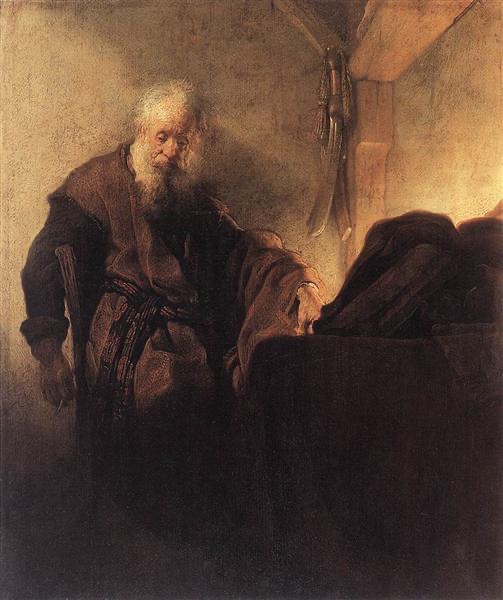
A very tired St. Paul at his writing desk. .https://www.wikiart.org/en/rembrandt/st-paul-at-his-writing-desk-1630

A Sermon delivered on June 22, 2025 by Rev. Dr. Patrick H. Wrisley.

Paul had a fundamentalist problem. Upstart second-generation missionaries have come to town and have begun sowing seeds of dissension in the Galatian church’s congregation. Paul founded the church on the gospel news that Jesus Christ’s atoning work opens the door for all people to be right with God through the graceful love of God in order to become healed and made whole. These missionaries who came after Paul are telling the church members there is more to it than mere faith in Christ. They are reinserting the notion that Gentile followers of Jesus need to become circumcised like their Jewish counterparts and follow the Mosaic Law. Paul is exasperated; He begins chapter two writing, “You foolish church! Who has bewitched you in this thinking!” 

Our scripture this morning is Paul’s concise reminder that although the Mosaic Law had its place, it could not do for us what we needed in reestablishing our relationship with God; it is the Law, after all – no one is able to fulfill its requirements. Listen to our text from Galatians 3:23 and following and note what Paul does say about reconnecting to God in relationship. Hear the Word of the Lord.

Galatians 3:23-29

23 Now before faith came, we were imprisoned and guarded under the law until faith would be revealed. 24 Therefore the law was our disciplinarian until Christ came, so that we might be reckoned as righteous by faith. 25 But now that faith has come, we are no longer subject to a disciplinarian, 26 for in Christ Jesus you are all children of God through faith. 27 As many of you as were baptized into Christ have clothed yourselves with Christ. 28 There is no longer Jew or Greek; there is no longer slave or free; there is no longer male and female, for all of you are one in Christ Jesus. 29 And if you belong to Christ, then you are Abraham’s offspring, heirs according to the promise.[1]

Fundamentalism in any form is heretical. In other words, fundamentalism always overreaches itself in giving itself more power and authority than it really has. It makes its declarations to be the final word on any given subject without offering room for intelligent, thoughtful dialogue so others can engage. Fundamentalism is rife with hubris; it reeks in pride for itself and displaces any room for others as it crowns itself as the self-sanctioned authority. For religion, people’s pride assumes to know the mind of God and usurps the Lord. For politics, fundamentalism is when a platform and agenda is more important than the Constitution that provides the foundation for political discourse. For race and ethnicity, it is the belief “my” country, my state, my skin color, my denomination, or my religious belief is better than yours; I take it upon myself to ignore, exploit, demean and harm you because you are not like me and my people. Paul speaks as a former fundamentalist, a Pharisee of Pharisees. In a writing flurry in Galatians 5, his frustration erupts at the religious fundamentalists in the Galatian church when he writes, “I wish those who unsettle you would castrate themselves!” Fundamentalism, if left unchecked is dangerous.

Friends, we are seeing signs of increased fundamentalism in our nation and in our world. Fundamentalist thinking is easily revealed in binary thinking, declarations, and statements. For example, I am correct; you are wrong. 

My way of thinking, doing, speaking is best and yours is stupid. 

I am saved; you are going to hell. Jesus died for people like me, not you.

I can say all this because I am a recovering fundamentalist; I know the signs of fundamental creep reemerging in our culture today. Can you? In the last few weeks, some 50 United Methodist churches left the denomination in Alabama and Florida districts because of the issue of gay ordination[2]. The Southern Baptist Convention rails at woman pastors in their churches even though the apostle Paul had women pastor leading his churches (so Phoebe[3]). They also have decided to challenge the court systems to overturn protections for the LBGTQ+ population[4]. Race relations are heating up to where now in our National Parks, no mention of the actual history of what took place there can be heard or construed as disparaging to “the principles of our nation.”[5] I am sorry: The only appropriate response to slavery and the vast displacement of indigenous Americans in our country is to disparage them.

For much of my ministry I have had to hold the lines of two opposing sides of the church together; it wore me down and out. I had one group encouraging me to split the church out of the PCUSA for its inclusion of LBGTQ members in leadership and marriage. I had a second group urging me to keep the church in the fight. At one point in my church in Washington state, I preached upon ordination standards that should be followed if we are to be orthodox Christians. My daughter, who is now a Ph. D. In Franciscan Historical Theology, was visiting from college that weekend. I got home from church that morning and I was getting the cold shoulder from her and my wife. It got uncomfortable for me and I so I asked her, “Hey, is everything OK?”

“Dad, I have sat under your teaching and preaching my whole life. I have always learned and agreed with what you have said until today. You’re wrong and your views are not biblical.” My little girl took a baseball bat to my fundamentalism. Her comments began for me a journey of re-reading the scriptures with fresh, grace-full eyes. Her comments burned off the cataracts of my narrow thinking. It made me understand that the singular thread that runs through all the Bible is that God goes to any length to establish and have relationship with those God created. The overarching arc of God’s character is always bent on demonstrating love and inclusion and the most prominent proof of that love is Jesus.

As Senior Pastor of First Presbyterian Church Fort Lauderdale, I was asked to have the Session approve a wedding between two very involved members of the congregation who were gay. This couple was involved in volunteering heavily in our music and youth ministries. They were active in pastoral care. They gave financially to the budget of the church with a pledge. They consistently brought people to the church with them and wanted me to meet them. They were there every Sunday and beloved by all that knew them. If you wanted to show someone what a committed church person looked like, these two were it. There was just one snafu. The Session of the church 10 years before I arrived demanded all church officers sign a purity letter and that each officer agreed in writing that gay relationships were verboten. Before a gay wedding could occur, I would have to have the Session either reaffirm its purity stance or change it.

After about an hour of loving and thoughtful conversation, the Session unanimously approved the wedding. The reasoning was simple: All people fail to live up to the standard of the Mosaic Law. All we can do is thrive to do our best, live into the Beatitudes, and love and serve others as God in Christ loved and served us. As much as we are all united in Christ in our baptism, we are united with him in our death. All the questions new members are asked on the day they join are questions pertaining to faith; this is the criteria for being a church member. Paul’s words from today’s scripture became the great leveler at the meeting. Paul reminds us that…

26 for in Christ Jesus you are all children of God through faith. 27 As many of you as were baptized into Christ have clothed yourselves with Christ. 28 There is no longer Jew or Greek; there is no longer slave or free; there is no longer male and female, for all of you are one in Christ Jesus. 29 And if you belong to Christ, then you are Abraham’s offspring, heirs according to the promise.

A favorite contemporary Christian writer I glean a lot from is Brian McLaren. Years ago he authored a book entitled, Generous Orthodoxy. Based upon the work of Yale University professor Hans Frei, it simply asks people in the church to put aside their personal assumptions and engage in dialogue to look for a third way forward together. It moves from a model of “Me and you” to a way of thinking about “We and Us.” The word orthodoxy means correct thinking. Dr. Frei says, “Generosity without orthodoxy is nothing, but orthodoxy with generosity is worse than nothing.”[6]

Did you catch what he meant? It is one thing to have right or good thinking but it is not enough. Good and right thinking demands that we demonstrate good, correct action. The fifty-cent word for that is orthopraxy – literally, good practice. A generous orthodoxy is when Christians can come together from various traditions and seek to move forward making a difference for the cause of Christ. The cause of Christ is more vital, valuable, and necessary than our individual traditions and disagreements. It is not an easy thing to do but it is the right thing to do. 

On this heritage Sunday when we celebrate the lives of the members of this church, I am grateful First Presbyterian is a church that embraces and lives out to the community a generous, loving orthodoxy. We are demonstrating what it means to live as one in Christ.

In the name of the Father, the Son and the Holy Spirit, amen.

© 2025 Patrick H. Wrisley, Pastor, First Presbyterian Church of Glens Falls, 8 West Notre Dame Street, Glens Falls, NY 12801. Sermon manuscripts are available for the edification of members and friends of First Presbyterian Church of Glens Falls, New York and may not be altered, re-purposed, published or preached without permission. All rights reserved.


[1] New Revised Standard Version (NRSV). New Revised Standard Version Bible, copyright © 1989 the Division of Christian Education of the National Council of the Churches of Christ in the United States of America. Used by permission. All rights reserved.

[2] See https://www.al.com/news/2025/06/united-methodists-close-27-churches-in-south-alabama-and-panhandle.html.

[3] Romans 16.1-2—  I commend to you our sister Phoebe, a deacon of the church at Cenchreae, so that you may welcome her in the Lord as is fitting for the saints, and help her in whatever she may require from you, for she has been a benefactor of many and of myself as well.

[4] See https://www.cbsnews.com/news/southern-baptist-same-sex-marriage-ban-delegates-overwhelmingly-back/.

[5] See https://www.govexec.com/management/2025/06/censorship-see-national-park-visitor-responses-after-trump-requested-help-deleting-negative-signage/406176/.

[6] Brian McLaren, Generous Orthodoxy (Grand Rapids: Zondervan Publishing Company, 2006), 14. 

Posted in Sermon | Tagged , , , , , , , , , , , , , , , , , | Leave a comment

Digging Down into Hope, Romans 5:1-5

A sermon delivered by the Rev. Dr. Patrick H. Wrisley on Sunday, June 15, 2025.

Several years ago, Netflix came out with a successful TV series about a group of young teenagers in a small town who explore strange happenings in their community. Entitled, Stranger Things, it is a story about a world referred to as “The Upside Down” where things that should be up are down and those that should be down are up. It is a world where everything is cattywampus to some degree. It reminds me of the world we are living in at the moment. It feels like we are living in a world of stranger things.

A Boeing Dreamliner takes off in India, clears the runway and then drops like a rock killing 263 people onboard with dozens more on the ground.

The IDF has taken upon itself the need to bomb Iran and now missiles are flying all over the Middle East and it appears the United States risks getting pulled into another armed conflict.

American military personnel have been called up to police other US citizens for protesting while convicted folks in the January 6 capital riot are summarily pardoned.

Hundreds of drones attacked Kyiv several nights this week while Putin says he will broker a peace deal between Israel and Iran. 

Politicians in Minnesota are assassinated while they slept peacefully in their own beds Friday night.

The tensions and anxieties are palpable in our nation and world right now. I heard a firecracker go off late yesterday afternoon downtown in the midst of all the crowds and at once thought, “Was that a gunshot?” Folks are jumpy. Nervous.

It is for times such as these the Church is to be a steady, pastoral voice to the larger culture. We, members of the Church, are called on during this season of political, economic, and cultural cacophony to sound a consistent, steady tone of promise to a disoriented world. This is what we are spiritually wired up to do, isn’t it? Our basic calling is to be a people of hope in a hopeless world. Isn’t that what Jesus was for us? Today, we are going to dig down into this whole concept of hope. Turn in your Bible to Paul’s letter to the Roman church. We are going to pick up with Romans 5:1-5. 

Romans 5:1-5

5.1 Therefore, since we are justified by faith, we have peace with God through our Lord Jesus Christ, through whom we have obtained access to this grace in which we stand; and we boast in our hope of sharing the glory of God. And not only that, but we also boast in our sufferings, knowing that suffering produces endurance, and endurance produces character, and character produces hope, and hope does not disappoint us, because God’s love has been poured into our hearts through the Holy Spirit that has been given to us.[1]

Let Paul’s words marinate a bit. He is telling the Roman church that it is not through following the rules of Law and tradition we have access to God; no, because God comes to us in Jesus, whose own life and death opened the door for us to access the grace and love of God. We do not earn grace; we simply reach out and accept it with hearts of faith. What is it that God offers us? Paul says we are given peace with God. There is shalom between God and his beloved. 

What does this shalom, this peace look like? It does not mean a cessation of conflict per se; peace, shalom, is the peace, contentment, and well-being God feels within Godself. Our faith in Jesus Christ gives you and me access to that peace. What a gift! It is this gift, my friends, that provides the foundation for our being Church to the swirly world around us.  You see, when the Church, when her members, live with a Spirit of shalom, we become the beacons of hope others reach out for and grab. As Christians, we know the end of the proverbial Story. The access to God’s shalom now allows us to hold on and hope for the time when we shall reside in God’s full glory and presence.

Paul is not being Pollyannaish; he too lived in a world dominated by Pax Romana which was Caesar’s way of exacting peace by force. And though Paul and the church in Rome lived under the present Pax Romana, they also currently lived under the already accessible peace of God in Christ while they wait in hope for the culmination of time. Paul describes it this way:  

And not only that, but we also boast in our sufferings, knowing that suffering produces endurance, and endurance produces character, and character produces hope, and hope does not disappoint us, because God’s love has been poured into our hearts through the Holy Spirit that has been given to us.

The Peace of Rome came through the tip of a sword. It was a sword of violence, fear, and shame. Paul and the others lived during this violence, fear, and shame. It is the basis of their suffering. And then Paul makes the radical claim that he boasts in his sufferings. The ancient language used by Paul literally means “rejoice” in his sufferings. How can Paul say this? He says this because he knows that Christian suffering is not meaningless; rather, our suffering is a part of a Christian’s spiritual formation process. Paul says, “suffering produces, endurance, and endurance produces character, and character produces hope which does not make us ashamed.”

The swirly time we are living through does not have to define us. The suffering each of us are dealing with – whether spiritual, physical, financial, or emotional – does not have the last word on how we experience this life until we come into the next. Suffering does not define us; what we do with our suffering does.

Suffering can make us a victim of our circumstances, or it can be an engine for transformation. Paul understands suffering as an engine that propels us forward and that engine’s energy is fueled by hope. Hope is the energy that carries our suffering to endurance, and that endurance produces character, and that character in turn produces more hope. You see, hope is a centrifugal force that propels outward in ever-larger circles of grace. Let me provide a real-life example. 

I went to high school with a young man named Scotty and little did I realize, much less did he, the lesson about hope he taught me. When Scotty was in elementary school, he was cutting the lawn when he slipped and the lawn mower rolled back over his leg. He lost his leg from the knee down.

Scotty suffered his leg getting cut off. He endured the pain of healing and had to learn to function with one limb and a prosthesis. Without him really knowing it, his character was getting shaped and formed. He learned to be tenacious. He learned that it did not help to sit back and feel sorry for himself. He learned not to be a victim. He learned perseverance. He learned how to walk and then run again; indeed, we wrestled and played football together. He learned the life lesson that you can do whatever you set your mind to do. This is in turn generated in him a spirit that, “Nothing can stop me; if I can get through this, I know I have the resources to get through anything.” This “knowing”, my friends, is called hope.

I watched Scotty wrestle in the regional meet in high school. Some guy made a move and grabbed Scotty leg for a take down; little did he know that Scotty wore a prosthesis and when he grabbed Scotty’s leg, he pulled it off and he froze in shock. Scotty quickly turned around and pinned the guy winning the match! It was classic.

Suffering produces endurance. Endurance produces character. And character produces hope which does not disappoint us or make us ashamed. 

Think for a moment. What suffering have you undergone? How did, or how can that suffering make you stronger and give you endurance and strength?

How did, or how does, your enduring create in you a strong, developed Christian character? Has it or are you stuck? If you are stuck, let’s you and I chat a bit.  

What does that character of yours look like to someone in the swirly world we live in?

Finally, how does your character produce the fly-wheel effect of hope that spins outward in circles of grace shimmering with a peace – a shalom – you experience with God? Remember, beloved, our suffering does not shape who we are, our resting in the peace of God who gives us hope does. Let us pray.

© 2025 Patrick H. Wrisley, Pastor, First Presbyterian Church of Glens Falls, 8 West Notre Dame Street, Glens Falls, NY 12801. Sermon manuscripts are available for the edification of members and friends of First Presbyterian Church of Glens Falls, New York and shall not be altered, re-purposed, published or preached without permission. All rights reserved.


[1] New Revised Standard Version (NRSV). New Revised Standard Version Bible, copyright © 1989 the Division of Christian Education of the National Council of the Churches of Christ in the United States of America. Used by permission. All rights reserved.

Posted in Sermon | Tagged , , , , , , , , , , , , | Leave a comment

What is Your Dialect?, Acts 2:1-21

A sermon delivered on Sunday, June 8, 2025 by the Rev. Dr. Patrick H. Wrisley.

The Rev. Amy Allen, now Adjunct Professor of New Testament at Columbia Theological Seminary, tells of a time when she served as a hospital chaplain in Dallas, Texas. Although many of her patients spoke only Spanish, she did not. At orientation, she was handed an index card with basic Spanish prayers and sent off to begin her rounds. “You all go on out and get to chaplaining!” the supervisor said cheerfully. 

One day, a nurse paged her to visit a frantic elderly woman who was loudly scolding the staff in Spanish. Allen arrived, young and unsure, and did the only thing she could: she pulled out her card and began to read, “Padre Nuestro…” The Lord’s Prayer. Her pronunciation was poor, but the woman stopped. She bowed her head, smiled, and joined in. Words — even imperfectly spoken — had power to reach across fear and language.[1]

Beloved, there is power in language. There is inherent power, dare I say, Divine Power, in the uttering of words! Words can cause tears, or they can bring joy. Words can cause war and words can bring peace. Words can bring confusion or words can bring clarity.  Words can tear down, or words can build up.  Words can segregate and words can unite and bring together. 

Let us now turn to Scripture and see how God uses the power of language to transform hearts and build the Church. The scene is Jerusalem fifty days after Jesus was betrayed, killed, and rose from the dead. The Festival that is taking place fifty days after Passover is called the Feast of Weeks. It is also known as the Festival of the First Fruits or Pentecost, and people have flocked to the city to bring their tithe, the first produce from their crops and herds to God for all of God’s faithfulness. Think of the Festival as a combination of a holy, religious version of our Thanksgiving Day combined with the culmination of the yearly stewardship campaign. We find the early disciples gathered for prayer while the rest of the city is enjoying the festival. Hear the Word of the Lord.

Acts 2:1-21

2.1When the day of Pentecost had come, they were all together in one place. 2And suddenly from heaven there came a sound like the rush of a violent wind, and it filled the entire house where they were sitting.3Divided tongues, as of fire, appeared among them, and a tongue rested on each of them. 4All of them were filled with the Holy Spirit and began to speak in other languages, as the Spirit gave them ability.

5Now there were devout Jews from every nation under heaven living in Jerusalem. 6And at this sound the crowd gathered and was bewildered, because each one heard them speaking in the native language of each.7Amazed and astonished, they asked, “Are not all these who are speaking Galileans? 8And how is it that we hear, each of us, in our own native language? 9Parthians, Medes, Elamites, and residents of Mesopotamia, Judea and Cappadocia, Pontus and Asia, 10Phrygia and Pamphylia, Egypt and the parts of Libya belonging to Cyrene, and visitors from Rome, both Jews and proselytes, 11Cretans and Arabs—in our own languages we hear them speaking about God’s deeds of power.” 12All were amazed and perplexed, saying to one another, “What does this mean?” 13But others sneered and said, “They are filled with new wine.”

14But Peter, standing with the eleven, raised his voice and addressed them, “Men of Judea and all who live in Jerusalem, let this be known to you, and listen to what I say. 15Indeed, these are not drunk, as you suppose, for it is only nine o’clock in the morning. 16No, this is what was spoken through the prophet Joel: 17‘In the last days it will be, God declares, that I will pour out my Spirit upon all flesh, and your sons and your daughters shall prophesy, and your young men shall see visions, and your old men shall dream dreams. 18Even upon my slaves, both men and women, in those days I will pour out my Spirit; and they shall prophesy. 19And I will show portents in the heaven above and signs on the earth below, blood, and fire, and smoky mist. 20The sun shall be turned to darkness and the moon to blood, before the coming of the Lord’s great and glorious day. 21Then everyone who calls on the name of the Lord shall be saved.’ [2]

This moment in Acts is no less explosive than Genesis 1. The wind, the fire, the words — this is God’s Spirit doing a new thing, creating again. Think for a moment upon the opening chapter of Genesis when God created the heavens and the earth. We read how the Spirit of God was blowing over the chaotic nothingness but then God did what? God spoke, the Spirit moved, and creation began! The Word and the Spirit work together to bring new creation. This is what we have happening today in our Story.  

Jesus had instructed the disciples to stay put in the city until, “You have been clothed with power from on high”[3] and they are waiting for that dressing and clothing to occur![4] While gathered in prayer, the Constructive Spirit of Creation blows in with hurricane force winds and begins creating the Church. 

The Christian tradition calls Pentecost the “Birthday of the Church.”  Just as the Spirit took the chaos of creation and formed all that is, so the Spirit on that Pentecost 2,000 years ago blew into a group of ragtag, anxious men and women and created the foundation for the new community of Jesus called the Church. And just exactly how did the Spirit of God do that?  The Spirit did it through the power of the Word brought forth in the early Church.  

We read in Acts 2 how the Spirit appeared to them in the power of language and the ability to speak the news of Jesus to other people. A literal reading of verse three could be, “Divided languages (or tongues), as of fire, appeared among them, and a language (a tongue) rested upon each of them.”  It is my contention that the language, the tongue of fire that rested upon the disciples that first Pentecost was the language of God’s salvific Story of Jesus. You see, Peter declares in verse 21:  Everyone who calls upon the name of the Lord shall be saved and made whole!

Just as the Spirit unified the disciples in their language and understanding about Jesus, now the Spirit drives them out and gives them the ability to speak that language of Christ in the specific dialect of those gathered in the Jerusalem’s busy streets during the festival.

Our English Bibles translates the word ‘tongue’ and ‘language’ interchangeably in our Story but Luke does not. In verses 1-4, Luke uses the general word for language, glossa, but he changes the term in verse 6. He uses the extremely specific word that we get our word ‘dialect’ from. 

I used to work with a wonderful pastor from Britain, Michael Bodger, who had this great accent. For example, one day we got to talking and Michael began talking about “veet-a-men D.”  I asked him, “Veetamens?  Do you mean vitamins?”  He replied back in his dry British way, “Of course, that’s what I said, “Veetamen!”  We both speak English, but we both have different dialects of English. Just like Amy Allen with the Hispanic patient who did not know English, once she began to pray the Lord’s Prayer in Spanish, the patient fully understood! The chaplain had to speak the patient’s dialect.

Brothers and sisters, the Church of Jesus Christ is called to speak the same language that in Jesus, there is salvation and wholeness for all and for God’s creation.  Our text also affirms that each particular church and each individual Christ-Follower is called to speak that same language of God’s love, grace, and justice in a dialect, in the language spoken of the people around us, so that they too can hear, be transformed and believe.

Some years ago, the late Pope Francis preached, “We keep the Holy Spirit as a ‘luxury prisoner’ in our hearts: we do not allow the Spirit to push us forward, to move us…(The Spirit) is the protagonist of the Living Church.”[5]  I love that!  The Holy Spirit is the protagonist, the main character, of the Living Church! Beloved, the Spirit is a Spirit of power, of creativity, of movement, of action, of tearing down and reconstructing; the Holy Spirit is not a Spirit of the status quo! The Spirit gives you and me, the Living Church, the needed specific dialect to speak and act out the Good News of Jesus right where we live; the Lord wants us to move from our holy huddle inside the church building, from our small groups of familiarity and complacency, and get into the world speaking, living, and enacting the grace-full Story of Jesus Christ.  

The Holy Spirit of God is not a passive presence tucked away in our private prayers. The Spirit is the driving force of a Living Church — dynamic, courageous, ever-speaking in the language people need to hear.

So, what does that mean for us? It means we cannot be content to speak only within the dialects of our comfort zones — the language of “church as usual,” the vocabulary of what has always been. The Spirit is giving us fresh words — not new doctrine, but new expression. New courage. New understanding. The Spirit empowers us to speak God’s love in the dialect of a hurting neighbor. To speak justice in the language our community understands. To speak peace in the middle of polarized shouting.

Church, the world is not waiting for perfection. It’s waiting for us to speak. So this week — in your workplace, at the coffee shop, in the school pick-up line, over dinner, or in a quiet text to someone who’s struggling — speak the dialect of Christ. Speak mercy. Speak courage. Speak hope. And when you don’t know the words? Trust the Spirit to give you just enough. Even broken, awkward words — like a hospital chaplain’s stumbling Spanish — can become holy ground when the Spirit speaks through them.

May the Holy Spirit of God trouble us in our comfort and awaken us in our complacency. And may we be bold enough to speak and live the language of Jesus — until every heart hears and every life is made whole. So be it. Amen. Pray with me.

© 2025 Patrick H. Wrisley. Sermon manuscripts are available for the edification of members and friends of First Presbyterian Church, 8 West Notre Dame Street, Glens Falls, NY 12801 and shall not be altered, re-purposed, published or preached without permission.   All rights reserved.


[1] Allen, Amy, “The Politics of Language – Acts 2:1-21”, Political Theology Today, May 9, 2016. Accessed on 5/12/16 at http://www.politicaltheology.com/blog/the-politics-of-language-acts-21-21-amy-allen/

[2] New Revised Standard Version (NRSV). New Revised Standard Version Bible, copyright © 1989 the Division of Christian Education of the National Council of the Churches of Christ in the United States of America. Used by permission. All rights reserved.

[3] See Luke 24:44-53.

[4] See Acts 1:14.

[5] “Don’t lock up the Holy Spirit in your heart, Pope Francis says,” The Catholic News Agency, May 9, 2016.  See http://www.catholicnewsagency.com/news/dont-lock-up-the-holy-spirit-in-your-heart-pope-francis-says-11868/

Posted in Sermon | Tagged , , , , , , , , , , | Leave a comment