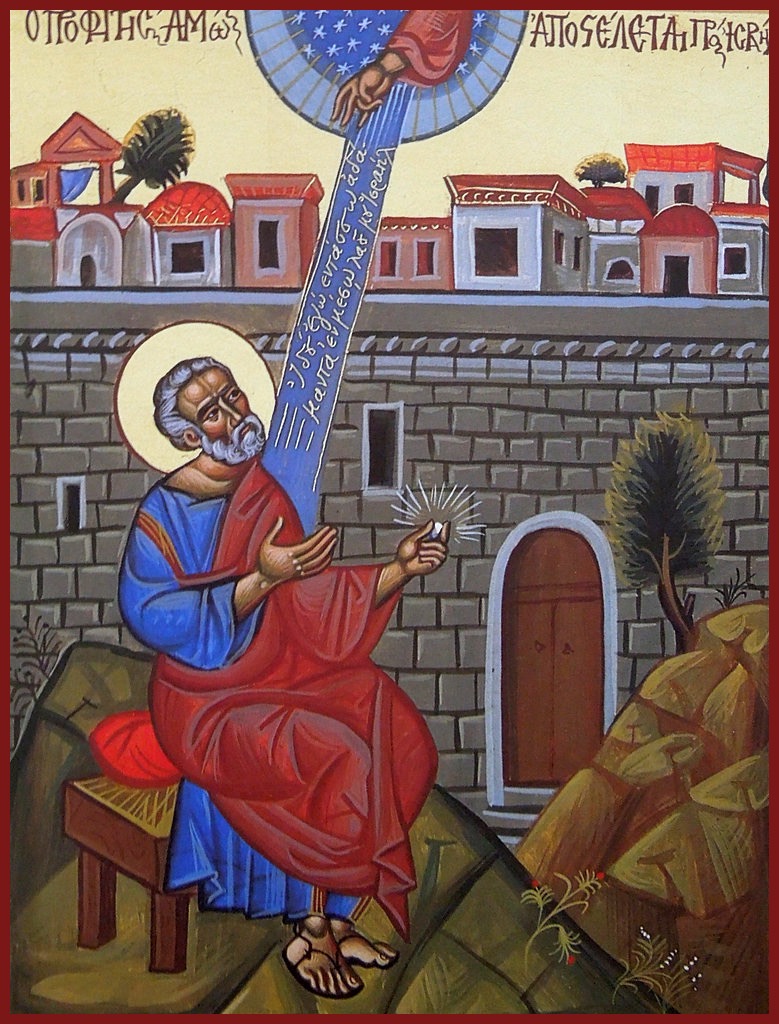
Fear Not, Little Flock, Luke 12:32-40

A Sermon Delivered by the Rev. Dr. Patrick H. Wrisley on Sunday, August 10, 2025.

Luke 12:32-40

32“Do not be afraid, little flock, for it is your Father’s good pleasure to give you the kingdom. 33Sell your possessions, and give alms. Make purses for yourselves that do not wear out, an unfailing treasure in heaven, where no thief comes near and no moth destroys. 34For where your treasure is, there your heart will be also. 35“Be dressed for action and have your lamps lit; 36be like those who are waiting for their master to return from the wedding banquet, so that they may open the door for him as soon as he comes and knocks. 37Blessed are those slaves whom the master finds alert when he comes; truly I tell you, he will fasten his belt and have them sit down to eat, and he will come and serve them.38If he comes during the middle of the night, or near dawn, and finds them so, blessed are those slaves. 39“But know this: if the owner of the house had known at what hour the thief was coming, he would not have let his house be broken into. 40You also must be ready, for the Son of Man is coming at an unexpected hour.”

This morning, we hear some of the most tender and reassuring words Jesus ever spoke. Words that were not shared the large masses nor to the powerful or the prominent, but to those closest to him – the vulnerable, the uncertain, the anxious. Did you hear them?

“Do not be afraid.”

This phrase, “do not be afraid,” is one of the most repeated commands in both the Old Testament and New Testaments; in fact, Jesus uses it three times just in this one chapter of Luke. The phrase shows up again and again because the entirety of scripture is full of humanity’s best and worst moments. Fear is prominent thread throughout the Bible and Jesus knows we need to hear this reminder over and over again; he especially knows this when we are emotionally fragile, are confused, or weighed down by the chaos our present world.

Secondly, did you notice how Jesus addresses us?  He said, “Don not be afraid, little flock.” We are his little flock. It’s intimate and affectionate. It’s as though he is telling us, “No fear, my little lambs.” It’s a shepherd talking to his sheep. We are the lambs.  As such…

We are vulnerable.  

We are not the strongest or the wisest animals out there.  

We sometimes push and jostle one another at feeding time.  

We don’t see very well.  We are smelly.We get scattered and distracted.  

We bleat, grumble, and snort a lot.

And the deal is this: we are not lone lambs and sheep in the wilderness. We are part of the larger flock with others and this one point that makes all the difference. You see, when one lamb can’t quite hear the Shepherd’s voice, the rest of the flock helps listen out for it. We sheep rely on each other, we draw strength from one another, we stay connected to one another; we do this, not just out of instinct, but because that’s how the Shepherd designed it. The flock is not a random collection of individuals; it is a community, a body, a people called the Church who are to look out for one another when the Shepherd seems distant or when one among us is lost.

Even when the Shepherd must go searching for the one who’s gone astray, he leaves the flock knowing we’ll hold together. And while the Shepherd may seem to tarry, we trust he will return—because that’s who the Shepherd is. The Shepherd cannot be anything other than what the Shepherd is at his very core: loving, faithful, generous, attentive. The Shepherd lays down his life for the sheep. The Shepherd’s one purpose is to care for us. Consequently, the Shepherd reminds us we need not be afraid.  

Friends, what comforting words for such a swirly mixed-up, muddled up time as this.  We live in a world where fear seems baked into our daily headlines. Terrorism, political division, climate change, runaway costs of living, the rise of Christian nationalism and violence, and yes, even the growing national anxiety that our economic, civic, governmental and religious institutions are not as stable as they once were. It’s enough to make you wonder: how do people get through the day without some grounding in faith?

Beloved, there is hope and assurance for those of us in the faith because we are part of the little flock called the Church. We are not left to fend for ourselves. We have a Shepherd. We have one another. We are the Church – the gathered community of lambs and smelly sheep. We are created to be a community of comfort, courage, and connection for each other in the midst of fear.

Yet even as we rest in the Shepherd’s care, Jesus gives us a word of challenge.  Be ready, he says. Be dressed for action. Keep your lamps lit.  In other words, don’t get too comfortable or complacent. Jesus calls us to be alert and watchful. He calls us to live intentionally, strategically.

And how do we do that? He says we must travel light. As fearful sheep, we have a proclivity to grab hold of stuff whether real or imagined to give us a sense of security and safety. When we start grabbing stuff out of fear, we let go of God’s hand to do so. So, Jesus tell us tells us to let go of the stuff and reach out for God’s hand.  

Let go of the possessions and priorities the world tells us we must cling to.  

Let go of the wealth or the drive to acquire more things that weigh us down.  

Let go of the distractions that numb our spirit. 

Because all the stuff we either store up or fail to accumulate in our in barns, bank accounts, or closets can rob us of our focus and our joy. And in the end, it only fuels our fear.

Did you know that one of the root meanings of the word fear is “to hesitate” or to balk at something? That makes sense. Fear causes us to freeze up and second-guess our decisions or even other people. Fear pulls us back when we should move forward.

It’s like teaching a teenager to drive. You tell them, “If you’re going to change lanes or turn across traffic, you must commit. Don’t hesitate, just go. Once you start the turn, see it through.” Fearful hesitation can cause more harm than action. It’s the same in our spiritual life. Fear causes us to hesitate when God is calling us to move, to commit.

This, Jesus says, is how to live in the Kingdom of God. Let go of the things that burden you. Carry only what truly matters. Travel light and trust God has the rest.  But if we’re honest, that is not always easy to do.

I remember a moment when I had to confront this truth in myself. I was spending a few days in the mountains of eastern Tennessee, surrounded by snow and silence. A friend had a beautiful cabin perched on a ridge with views that stretched for miles. I sat outside puffing on a pipe admiring the scene’s beauty taking it all in. I began thinking, “Wouldn’t it be nice to have a place like this one day? I wish I could afford it.” I began feeling this deep sense of envy creeping, dare I say jealousy?, into my gut. Just then in this mystical moment, the Spirit whispered, 

Patrick, you don’t have to own this to enjoy it. These are my hills, my valleys—and they are yours too. When you hold nothing, you can receive everything. When you own nothing, you possess it all. 

That’s the paradox of the Kingdom of God – when we let go and in doing so, we inherit it all.

So, I ask you, beloved:  What are you still clinging to?  What fears, what possessions, what ambitions or grudges or insecurities are weighing you down and keeping you from fully living in the presence of God that is already at hand?

Jesus is inviting us to put it all down. He is asking us to lay everything at his feet without any hesitation. The Lord wants us to open our hands so we can receive more of the promised blessing.

Kayla McClurg, a pastor whose writing I admire, once reflected on this passage. She wrote,

Do not be afraid, little flock—even in times of assault and violence, disrespect and meanness, when even the ones we call leaders speak all manner of evil against you. Do not be afraid. God is, right now, growing among us a different kind of kingdom, a realm of love and hope. How shall we live if we want to practice this realm of be-not-afraid? Jesus says, for one thing, to go ahead and release everything we cling to, and start to give. Start carrying new kinds of purses for our real valuables, the kind that do not wear out, that no thief can steal away from us.[1]

Church, Jesus never asks us to do what he hasn’t already done himself. On the night before he died, in the Garden of Gethsemane, Jesus faced his own deep fears; he too hesitated. He prayed, “Father, if it’s possible, take this cup from me.” He hesitated. He balked. But ultimately, he let go. “Not my will, but yours be done.”

He surrendered everything so his fledgling, scared, smelly little flock of followers could be restored to God. This morning, I invite us to reflect upon what causes us fear and anxiety. What are we holding onto that is keeping us from living fully in God’s presence?  And once we each know what it is, remember Jesus words: Don’t be afraid little flock.    


© 2025 Patrick H. Wrisley. Sermon manuscripts are available for the edification of members and friends of First Presbyterian Church of Glens Falls, 8 West Notre Dame Street, Glens Falls, NY 12801 and shall not be altered, re-purposed, published or preached without permission.   All rights reserved.


[1] Kayla McClurg, Be Not Afraid, Inward/Outward, August 7, 2016.  Accessed on 8/7/16 at http://inwardoutward.org.

Posted in Sermon | Tagged , , , , , , , , , , , , , | Leave a comment

Another Brick in the Wall, Luke 12:13-21

A Sermon Delivered by the Rev. Dr. Patrick H. Wrisley on August 3, 2025.

Turn in your Bibles to Luke 12:13–21. Today, Jesus is out teaching crowds of people. Someone interrupts him from within the crowd to ask him to settle a family dispute over an inheritance. Jesus refuses to step into the middle of someone else’s family disagreement but he does not let a good teachable moment slip by. Let us listen together for the Word of the Lord.

Luke 12.13-21

13Someone in the crowd said to him, “Teacher, tell my brother to divide the family inheritance with me.” 14But he said to him, “Friend, who set me to be a judge or arbitrator over you?” 15And he said to them, “Take care! Be on your guard against all kinds of greed; for one’s life does not consist in the abundance of possessions.” 16Then he told them a parable: “The land of a rich man produced abundantly. 17And he thought to himself, ‘What should I do, for I have no place to store my crops?’ 18Then he said, ‘I will do this: I will pull down my barns and build larger ones, and there I will store all my grain and my goods. 19And I will say to my soul, ‘Soul, you have ample goods laid up for many years; relax, eat, drink, be merry.’ 20But God said to him, ‘You fool! This very night your life is being demanded of you. And the things you have prepared, whose will they be?’ 21So it is with those who store up treasures for themselves but are not rich toward God.” (NRSV)

Biblical commentator David Schlafer notes, “This parable contains no last-minute rescue engendering a ‘happily ever after’ (ending)… The story leads us to a cliff edge—and leaves us there.”[1]

The man in the crowd was looking for quick arbitration. He wanted Jesus to take his side in a family dispute. But instead of providing a ruling, Jesus tells a Story; you know, one of those uncomfortable, unsettling stories that answers a different question than the one asked. That’s just like Jesus, isn’t it? So often, when we pray, when we plead, when we ask God for one thing, the answer we receive comes in a form we didn’t expect or even in a form we didn’t want. Yet we discover, it’s just the answer we need.

Jesus’ parable isn’t really about inheritance laws—though we could certainly go there. Deuteronomy 21:17, for instance, makes it clear that the eldest son inherits a double portion of the father’s estate. So maybe the questioner in our Story was a younger brother who feels he is being shortchanged, or maybe he’s just greedy. We don’t know the details. But what we do know is that Jesus shifts the focus from the question of inheritance to deeper questions: What are your priorities? Describe to me the relationship you have with all your stuff, with all your family, and with God?

Let’s also be clear about what this parable is not about.

  • It’s not saying that wealth is inherently bad.
    • It’s not saying that saving and investing are unfaithful practices
  • And it’s not saying that planning for the future is wrong.

Jesus tells other parables that praise careful stewardship and wise investment. So no, this isn’t a blanket condemnation of wealth. What Jesus is warning us about is something subtler, and far more insidious: the wall that gets built up between us and the kingdom of God. A wall made of misplaced priorities. A wall called greed.

Back in the mid-1980s, I had the opportunity to visit Germany while the Cold War still divided it. A group of us from seminary traveled there to learn from the church in both the capitalist West and the communist East.

It was January, bitterly cold, and we found ourselves traveling the frozen Autobahn through the Fulda Gap into East Germany. Our little group of American seminarians drew attention from the authorities. We were followed, and more than once pulled over by East German police, who searched our Volkswagen van from top to bottom.

When we finally arrived in Berlin, the contrast between East and West was heartbreaking. West Berlin had rebuilt itself into a bustling European center. East Berlin still bore the scars of World War II—buildings pockmarked with shell damage, infrastructure crumbling, streets eerily quiet.

And there was the Wall.

That massive concrete wall, slicing neighborhoods in half. A wall not just of stone and barbed wire, but of ideology and fear. One image I’ll never forget: standing on the western side of the River Spree near the Brandenburg Gate, looking across the frozen water into East Berlin. On the fence where we stood, there were about two dozen crosses—each marking the spot where a man, woman, or child had been shot trying to swim to freedom. Two worlds, 150 yards apart. So close, and yet so very far away. Years later, when I visited Jerusalem, I saw another wall —this one dividing Israelis and Palestinians. It was hauntingly familiar. Here was one wall built by Germans. Here is another wall built by the Jews fifty years later. The irony is profound.

The Berlin Wall was the inspiration for the band Pink Floyd’s album The Wall back in the 80’s. The album tells the story of a fictional character named Pink who becomes increasingly more isolated from the world around him. All the traumatic experiences he has experienced such as war, loss, emotional neglect from his mother, and strict schooling are symbolized as “another brick in the wall” he builds around himself.1

In today’s parable, Jesus speaks about our human tendency to build walls around ourselves – albeit a spiritual one. The spiritual wall separates us from God and from one another.  Just like the fictional character Pink, we build our wall and it is built, brick by brick, from things like ingratitude, selfishness, and an obsessive focus on ourselves. Together, those bricks form a wall called greed.

Let’s look at those bricks more closely.

The first brick in the wall of greed is the brick of ingratitude. Jesus begins the parable by saying, “The land of a rich man produced abundantly.” The man didn’t do anything remarkable—he didn’t farm better, invest smarter, or pray harder. The land produced. It was a gift. In Jesus’ time, such a bounty would be seen as a blessing from God. But what’s the man’s response? Not a single word of thanks. No prayer. No sacrifice. No recognition of God’s hand. Just a private conversation with himself about building bigger barns.

Second, there is also the brick of selfishness. Not once does he consider sharing. Not with his workers, not with his neighbors, not even with his extended family. He’s a classic hoarder. Compare him with Joseph in Pharaoh’s court, who stored up Egypt’s surplus grain not for personal gain but to feed the people during famine.[2] This rich man? He hoards, and he gloats. It’s all about him.

Third, we note there is the brick of self-absorption. Look again at verses 17–19. In just three verses, he uses “I” six times and “my” four times. “I will do this… my barns… my crops… my goods… my soul.” The man is talking to himself, about himself, making plans for himself. He’s in love with himself. There’s no room in his imagination for others; there is no apparent room for God either. It’s all about me. Never about we.

So how does this parable speak to the man who asked Jesus about his inheritance? Simple: It’s not the inheritance that’s the issue. It’s about how we relate to what we have. Or as artist Sheryl Crow sings in her song, Soak Up the Sun, it’s not having what you want; it’s wanting what you’ve got. 

So beloved, are we grateful for the blessings we have been given? Do we believe we earned those blessings all on our own? Are we generous with our blessings and share them with others? There again, do we hoard what we have, convinced we’ll never have enough? Which personal pronoun best describes your relationship with money — “me” or “we”?

Jesus ends the parable with a sober line:


‘You fool! This very night your life is being demanded of you. And the things you have prepared, whose will they be?’  So it is with those who store up treasures for themselves but are not rich toward God (vss. 20-21).

Pastor and scholar Patricia Lull puts it well:


Money is always about more than just money. Our spending, our saving, and our general attitude toward material wealth are all invested with emotions and memories. Our capacity to trust in God can only deepen as other matters (like money) loosen their grip on our lives.[3]

She’s right. This isn’t just a financial issue. It’s a spiritual one. So, beloved, here’s your spiritual homework this week: Take time to reflect honestly on your relationship with money, wealth, and “stuff.” Where do you find yourself building walls instead of opening gates? Where are you tempted to store up for yourself instead of being rich toward God? As you inspect your wall, do you see bricks of ingratitude, selfishness, and self-absorption?

Because in the end, the question we each must ask is this: How do my life, my spending, my saving, and my priorities, show that I am rich toward God in gratitude, service, and community?

The Holy Spirit add understanding to the reading and the proclamation of God’s Word. And all God’s people said, Amen.

© 2025 Patrick H. Wrisley. Sermon manuscripts are available for the edification of members and friends of First Presbyterian Church of Glens Falls, 8 West  Notre Dame Street, Glens Falls, NY 12801 and shall not be altered, re-purposed, published or preached without permission.   All rights reserved.


[1] Bartlett, David L.; Barbara Brown Taylor. Feasting on the Word: Year C, Volume 3: Pentecost and Season after Pentecost 1 (Propers 3-16) (Kindle Locations 11438-11444). Presbyterian Publishing Corporation. Kindle Edition. Article by David J. Schlafer. Words in parenthesis were added for rhetorical clarity.

[2] See Genesis 41: 46-49.

[3] Bartlett, David L.; Barbara Brown Taylor. Feasting on the Word: Year C, Volume 3: Pentecost and Season after Pentecost 1 (Propers 3-16) (Kindle Locations 11354-11356). Presbyterian Publishing Corporation. Kindle Edition. Article written by Patricia J. Lull. Words in parenthesis were added for rhetorical clarity.

  1. See https://en.wikipedia.org/wiki/Another_Brick_in_the_Wall#:~:text=During%20%22Part%201%22%2C%20the,become%20bricks%20in%20the%20wall. ↩︎

Posted in Sermon | Tagged , , , , , , , , , , , , , , , , , , | Leave a comment

Teach Us to Pray, Luke 11:1-13

A Sermon Delivered on July 27, 2025 by the Rev. Dr. Patrick H. Wrisley.

This morning, we’re looking at Luke 11:1–13, a passage that comes right after last week’s story of Mary and Martha where Mary chooses to sit at Jesus’ feet, soaking up his teaching while Martha fretted about in the kitchen. Today, we find Jesus in prayer.

Prayer is a big deal in Luke’s Gospel, and he uses it like a thread running through his entire story. Luke opens with Zechariah praying in the temple and ends with the disciples gathered there again praying and worshiping after the resurrection. There are many references of Jesus rising before the break of day and going to a lonely place to be with his Father. In between, we catch Jesus praying at key moments in his ministry such as at his baptism, before choosing his disciples, and before his arrest. For Jesus, prayer is as necessary to life as breathing. 

Let’s listen to the Word of the Lord.

Luke 11:1-13

He was praying in a certain place, and after he had finished, one of his disciples said to him, “Lord, teach us to pray, as John taught his disciples.” 2He said to them, “When you pray, say: Father, hallowed be your name. Your kingdom come. 3Give us each day our daily bread. 4And forgive us our sins, for we ourselves forgive everyone indebted to us. And do not bring us to the time of trial.” 

5And he said to them, “Suppose one of you has a friend, and you go to him at midnight and say to him, ‘Friend, lend me three loaves of bread; 6for a friend of mine has arrived, and I have nothing to set before him.’ 7And he answers from within, ‘Do not bother me; the door has already been locked, and my children are with me in bed; I cannot get up and give you anything.’ 8I tell you, even though he will not get up and give him anything because he is his friend, at least because of his persistence he will get up and give him whatever he needs. 

9“So I say to you, Ask, and it will be given you; search, and you will find; knock, and the door will be opened for you. 10For everyone who asks receives, and everyone who searches finds, and for everyone who knocks, the door will be opened. 11Is there anyone among you who, if your child asks for a fish, will give a snake instead of a fish? 12Or if the child asks for an egg, will give a scorpion? 13If you then, who are evil, know how to give good gifts to your children, how much more will the heavenly Father give the Holy Spirit to those who ask him!” (NRSV)

The disciples ask a reasonable request: Lord, teach us to pray. They had seen John the Baptist teach his disciples how to pray, and now they want Jesus to do the same. After all, they’ve seen how central prayer is to his life. For Jesus, prayer is not about ritual; prayer is all about building and maintaining relationship with his Father in heaven.

Jesus teaches us that building our relationship with God takes an investment of prayer on our part and that prayer has three components: prayer is simple; prayer is trinitarian in its form, and prayer is persistent.

Prayer is simple. So many people get nervous about praying, especially saying prayers aloud for others to hear. That is why during the passing of the peace when you are a particularly rowdy bunch some mornings I will sometimes say, “The last person standing says the opening prayer!”  People tend to worry about getting the words wrong, as if God is grading us on style points. Friends, if prayer is about establishing and building relationship, then there is no wrong way to pray. Prayer is simply opening our hearts in God’s presence whereby we bring all that we are, all that we feel, and all the burdens we carry and place them in the lap of God. Prayer is beautifully, profoundly simple.

I remember my first church out of seminary. There was an old saint named Mary England. She was in her 80s, but nobody could keep up with her. Her nickname was “Flash.” One Sunday, Flash pulled me aside after church. Smiling sweetly, she said, “Preacher, you’re new at this, so let me give you some advice: Stand up to be seen; speak out to be heard; and sit down to be appreciated.” Then she patted me on the chest and walked off. It is still the best preaching advice I have ever received!

This is what Jesus is saying about prayer. We are to keep it simple. Be direct. We are to say what we need to say and trust God is listening.

Jesus teaches us to pray to our “Father” which is an intimate, relational word. He just as easily could have said, “When you pray, speak as though you are talking with your loving mother.” The point Jesus is making is prayer is conversation between beings who love one another. It is like a preschooler tugging on a parent’s sleeve and saying, “Momma, daddy, why is the sky blue?” Prayer is trusting that God is bending down straining to hear us, no matter how small or confused we may feel.

The second component of prayer Jesus teaches is that prayer has a trinitarian shape in its practice. Prayer involves God, my neighbor, and then myself. We tend to make prayer a private conversation between “me and Jesus” when a careful reading of the Lord’s Prayer reveals there is no first-person singular voice said at all. Like the trite saying, “There is no “I” in Team,” there is no “I” in the Lord’s Prayer either. The “I” or the “me” is only in relationship with the “us” and “our.” 

Jesus teaches us to pray for our daily bread, not just mine. He teaches us to not only ask release from the harm of our personal sin but he demands we release others from the sins they have committed against us personally. Prayer is about restoring our personal relationship with God along with restoring relationship with those around us.

We have said The Lord’s Prayer so many times we miss the subtlety our Jewish friends would pick up at once. When Jesus says, “forgive us our sins as we forgive our debtors,” his Jewish listeners would think of Leviticus 25 where the concept of the Year of Jubilee is described. In the Jewish Law, a person’s personal and family debts were automatically cancelled every fifty years. If your family’s land was used as collateral to pay a debt, it was returned to you, its original owners on the fiftieth year. If you were sold into slavey, you were set free during the Jubilee Year. The whole community hit the reset and reboot button. It was a reenactment of the entire Exodus event where all the people were liberated from their bondage to Pharaoh and his taskmasters in Egypt. 

This is what prayer does. It re-centers us. It reboots the relationship between God and us; it also tells God we are intent on resetting the relationship with our neighbors.

Finally, Jesus teaches the third component of prayer is that it is persistent. Ask. Seek. Knock. And then, keep knocking. 

Jesus tells a story about someone knocking on their neighbor’s door at midnight asking for bread. And the sleepy neighbor, annoyed as he is, eventually gets up and helps. Why? Because it is what hospitality demanded. To refuse hospitality would have brought shame not just on the individual who failed to answer the door, but it would bring shame to the whole family.

Jesus is reminding us that even a cranky neighbor will eventually help because of the person’s persistence, how much more will our loving God respond to our persistence?

God is not like that reluctant neighbor. God derives joy from giving us good things. “If you, who are imperfect parents, know how to give good gifts to your kids,” Jesus says, “how much more will your heavenly Father give the Holy Spirit to those who ask?”

But What About Unanswered Prayers?

I am going to lean out there and say our feeling of unanswered prayer often reveals more about us than it does about God. Sometimes we’re looking for the wrong answer. Sometimes we’re looking in the wrong direction. Sometimes we’re looking for a “yes” when God’s loving response is a gentle “not yet” or even a “no.”

Then again, maybe we are praying for the wrong thing. Did you hear what Jesus said is the object of our prayer? Prayer is not about asking for things; prayer’s purpose is asking God’s Holy Spirit to dwell in our presence. It’s about intimacy with God. And when we sit in that presence, we trust God hears even when the answer is delayed or is different than we expected. Sometimes, the hardest spiritual work is staying open long enough to see the answer when it finally comes.

So, this week, take a good, long look at how you pray. Let’s go back to the basics by keeping it simple. Let us keep its trinitarian shape of God, each other, as well as ourselves. And finally, stay persistent. Ask. Seek. Knock. God is already listening. In the name of the Father, Son, and Holy Spirit. Amen.

© 2025 Patrick H. Wrisley. Sermon manuscripts are available for the edification of members and friends of First Presbyterian Church of Glens Falls, 8 West Notre Dame Street, Glens Falls, NY 12801 and shall not be altered, re-purposed, published or preached without permission. All rights reserved.

Posted in Sermon | Tagged , , , , , , , , , , , | Leave a comment

Becoming (w)Holy Uncomfortable, Amos 8:1-12

A sermon delivered by the Rev. Dr. Patrick H. Wrisley on July 20, 2025.

The lectionary this week gives us two very different types of scripture. On one hand, we have the well-known story of Mary and Martha hosting Jesus in their home—a gentle, intimate portrait of discipleship. On the other hand, we hear from Amos, a blunt, unsettling voice from the south sent to call out the sins of the northern nation of Israel.

It would have been easier—more comfortable, certainly—to stay with Mary sitting at Jesus’ feet and talk about the posture of the faithful disciple. But the Spirit nudged me toward the meddlesome voice of Amos.

Amos wasn’t a professional prophet. He was a shepherd and a groundskeeper—someone who took care of sycamore and fig trees. But God called him as a prophet anyway and sent him north to Israel with a message that would make people squirm a bit.

A prophet’s message usually does one of three things:  

  • It tells what is coming; it’s future telling.
  • It reminds people of the truth they have forgotten; it’s truth telling.
  • Then again, sometimes, it does both.

This morning’s text from Amos does both. He’s describing an impending exile on the near horizon—and at the same time, he’s holding up a mirror to show the people how far they’ve drifted from their calling as living as God’s people.

Before we hear Amos’s words, let me add a quick note: the prophet is using hyperbole—strong, exaggerated imagery—to drive the point home. It is the biblical and rhetorical version of shock and awe. Listen for the underlying message.

Amos 8:1-12

8.1This is what the Lord God showed me—a basket of summer fruit. 2He said, “Amos, what do you see?” And I said, “A basket of summer fruit.” Then the Lord said to me, The end has come upon my people Israel; I will never again pass them by. 3The songs of the temple shall become wailings in that day,” says the Lord God; “the dead bodies shall be many, cast out in every place. Be silent!”

 4Hear this, you that trample on the needy, and bring to ruin the poor of the land, 5saying, “When will the new moon be over so that we may sell grain; and the sabbath, so that we may offer wheat for sale? We will make the ephah small and the shekel great, and practice deceit with false balances, 6buying the poor for silver and the needy for a pair of sandals, and selling the sweepings of the wheat.” 7The Lord has sworn by the pride of Jacob: Surely I will never forget any of their deeds. 8Shall not the land tremble on this account, and everyone mourn who lives in it, and all of it rise like the Nile, and be tossed about and sink again, like the Nile of Egypt? 9On that day, says the Lord God, I will make the sun go down at noon, and darken the earth in broad daylight. 10I will turn your feasts into mourning, and all your songs into lamentation; I will bring sackcloth on all loins, and baldness on every head; I will make it like the mourning for an only son, and the end of it like a bitter day.

11The time is surely coming, says the Lord God, when I will send a famine on the land; not a famine of bread, or a thirst for water, but of hearing the words of the Lord. 12They shall wander from sea to sea, and from north to east; they shall run to and fro, seeking the word of the Lord, but they shall not find it.[1]     

So, what’s the message?

Amos is saying the people of Israel have lost their spiritual and moral compass. Yes, they’re keeping the Sabbath, they’re attending worship—but their hearts aren’t in it. In fact, they’re sitting in the proverbial pews scheming about how to cheat their neighbors as soon as the service ends.

Amos doesn’t pull any punches. He says that when we claim to follow God but then do not live a life that reflects God’s justice and compassion, we’ve lost our integrity. And when a people lose their integrity—when the gap between what they profess and how they live becomes too wide—the whole society begins to unravel around itself.

That word — integrity — is at the heart of this text today. To live with integrity means a person’s inner life and their reflected outer life match and are in synchronicity. Our spirituality, our values, our sense of ethics — those interior-birthed concepts and assumptions should be the drivers as how we treat others, how we work, how we vote, how we spend our money, how we speak. If they don’t, Amos says, then something is off. There is a lack of integrity.

Amos the prophet bluntly tells the Israelites they had become people of God in name only. They had the label, but not the life. They went through the motions, but they had left far behind the heart of the faith and what it means to be a Jew. They had become, as the old sayings go: They were all driveshaft and no engine. They were all tall hat but no saddle.

The Law of Moses makes it clear: to be God’s people means to live with compassion, justice, and fairness. It means taking care of the poor, protecting the widow, welcoming the outsider, insert Immigrant. It means using honest scales in the marketplace and feeding people real food — not scraps or substitutes.

This is why God pulls Amos away from the flocks and sends him north to Israel. Amos looks around and sees a community that has forgotten its identity. He sees a people more concerned with profit than with their neighbor. He sees a people whose worship no longer lines up with their publicly declared way of life as God’s chosen people. God sends Amos to tell them: if you keep moving in the direction you are taking this, everything will fall apart — your joyful songs will become songs of mourning and dirge, your festivals will become funerals. Worst of all, Amos tells them, you will lose the ability to hear God at all. You’ll suffer a famine — not of bread or water, but a drought the Word of the Lord.

Now that was roughly 3,000 years ago; what does it have to do with any of us?

Friends, in the person Jesus, God has given us a new prophet—one who not only tells the truth but is the truth. Jesus, too, calls us to a life of integrity: a life where our worship and our weekday behavior match. A life where we don’t just say we follow Jesus, but live it—in our homes, in our workplaces, in how we treat the stranger, the poor, the marginalized.

Amos forces us to ask: Does what I say about what I hold true about Jesus line up with how I live my daily life? Do my personal ethics express themselves through our public policies to reflect the love of God to my neighbor? Let me make it Crayola, simple to understand: If we say we love our neighbor, but — then we’ve still got spiritual homework to do. Love doesn’t come with qualifiers like if, ands, ors, or buts.

Amos’ message speaks directly to our own personal, social, and national predicament we find ourselves in today. Today’s text from Amos is a call to perform a self-diagnostic check to determine if what we say we believe about Jesus and his way of life is consonant with how we are living and expressing those values in all we do as a Christian citizen. Amos’ words are a call to check whether our beliefs are being lived out in real time. In Reformed terms: our orthodoxy — what we rightly believe — demands orthopraxy — how we rightly live.

Years ago, I heard a presentation given by business leader and author Ken Blanchard who wrote, The One Minute Manager. He spoke about his “gap rule.” The gap rule he used in his companies was this: If at any time someone in the company — whether it was an executive vice-president or the custodian cleaning the toilets — felt that Blanchard as the President and CEO was not living into his expressed values of servant leadership, they had the authority to walk into his office and call “Gap.” If at any time someone felt that Blanchard’s expressed core values and beliefs did not align with his behavior or expressing those values and beliefs, they could call, “Gap.”  

Mr. Blanchard, there is a gap between what you say is important and what you are doing. I am calling you on that. 

In other words, they are telling him his orthopraxy – what he does — does not match his orthodoxy – what he believes.

Amos’s message is not easy to hear—but it’s vital. As the preacher Will Willimon says, “One way you can tell the difference between a true and living God and a fake god is that the fake god never tells you anything that makes you uncomfortable.”[2]

My hope is the Holy Spirit will make us just a little uncomfortable this morning, or as I like to say, (w)Holy uncomfortable. I want the Spirit to nudge us to examine the state of our integrity — whether it’s personally, spiritually, ethically, and even nationally — and then convict us if there is a gap between what we say we believe and how we really live out our lives.

In the name of the Father, the Son, and the Holy Spirit.  Amen.

© 2025 Patrick H. Wrisley. Sermon manuscripts are available for the edification of members and friends of First Presbyterian Church of Glens Falls, 8 West Notre Dame Street, Glens Falls, NY 12801 and shall not be altered, re-purposed, published or preached without permission. All rights reserved.


[1] New Revised Standard Version Bible: Anglicized Edition, copyright © 1989, 1995 National Council of the Churches of Christ in the United States of America. Used by permission. All rights reserved worldwide. http://nrsvbibles.org

[2] Bartlett, David L.; Barbara Brown Taylor. Feasting on the Word: Year C, Volume 3: Pentecost and Season after Pentecost 1 (Propers 3-16). Presbyterian Publishing Corporation. Kindle Edition.

Posted in Sermon | Tagged , , , , , , , , , , , , , , , , , , | Leave a comment

The Butterfly Effect, Luke 10:25-37

A painting by John August Swanson. See https://diglib.library.vanderbilt.edu/act-imagelink.pl?RC=56548

A Sermon Delivered by the Rev. Dr. Patrick H. Wrisley on July 13, 2025.

This morning, we are continuing in Luke chapter ten. Last week, we learned about setting our alarms for 10:02 each day as a reminder to pray for laborers to go into the harvest, inspired by Luke 10:2. Today, we pick up with the disciples returning from their journey, full of joy and stories of healing and hope. Jesus, seeing their excitement, says something profound in verse 23: “Blessed are the eyes that see what you see!” And that brings us to one of Jesus’ most familiar teachings—Luke 10:25–37.

Now I’ll be honest: I hesitated to preach this text. It’s so well-worn, so familiar. I wondered, “What could I possibly add that hasn’t been said a thousand times before?” But a wise older member of the church gave me a nudge: “It’s a story we need to hear again and again. Preach it!” So, with his voice in my head, I invite you to listen for God’s Word.

Luke 10:25–37

25 Just then a lawyer stood up to test Jesus. “Teacher,” he said, “what must I do to inherit eternal life?” 26 He said to him, “What is written in the law? What do you read there?” 27 He answered, “You shall love the Lord your God with all your heart, and with all your soul, and with all your strength, and with all your mind; and your neighbor as yourself.” 28 And he said to him, “You have given the right answer; do this, and you will live.” 

29 But wanting to justify himself, he asked Jesus, “And who is my neighbor?” 30 Jesus replied, “A man was going down from Jerusalem to Jericho, and fell into the hands of robbers, who stripped him, beat him, and went away, leaving him half dead. 31 Now by chance a priest was going down that road; and when he saw him, he passed by on the other side. 32 So likewise a Levite, when he came to the place and saw him, passed by on the other side. 33 But a Samaritan while traveling came near him; and when he saw him, he was moved with pity. 34 He went to him and bandaged his wounds, having poured oil and wine on them. Then he put him on his own animal, brought him to an inn, and took care of him. 35 The next day he took out two denarii, gave them to the innkeeper, and said, ‘Take care of him; and when I come back, I will repay you whatever more you spend.’ 36 Which of these three, do you think, was a neighbor to the man who fell into the hands of the robbers?” 37 He said, “The one who showed him mercy.” Jesus said to him, “Go and do likewise.”  (Luke 10:25–37, NRSV)

Scholar James Wallace asks, “When a parable becomes a cliché, can it still function in the life of the community?” He notes that “Good Samaritan” has become shorthand for “someone who helps.” But Wallace presses further; he asks, “Is that all Jesus meant? Just “be helpful” or “feel guilty when you don’t stop for a homeless person?”[1] I suggest the answer is a resounding “no!”  

This parable isn’t designed to make us feel guilty—it’s meant to hold up a mirror. It asks us to assess the coordinates of our spiritual GPS.[2] Is our heart tuned to mercy? Is our life pointed toward compassion?

If we are really honest, I would venture to guess that most of us hear this story and assume we’d be like the Samaritan. Surely, we wouldn’t cross to the other side of the road like those religious leaders! We tell ourselves, “I would stop. I wouldn’t look away. I’d be the one to help!”  

But…would we really act any differently?

Years ago, a group of researchers at Princeton Seminary decided to test that very question. They brought in seminary students—young people preparing for ministry—and gave them a simple assignment: go give a short talk across campus. Some were asked to speak about their career plans. Others were asked to speak about—you guessed it—the Good Samaritan. But before they left to fulfill their assignment, a proctor waiting with the students told each seminarian one of three things:

 “You are late! They’re waiting—get going!”

 “You are right on time. Head over now.”

 “You have a few minutes to spare but go ahead and walk over.”

As the students crossed campus, they had to pass a man slumped in a doorway—an actor pretending to be sick and injured. He moaned and coughed, just enough to draw attention. What would the students do? Here’s what happened:

Only 10% of those students who were told they’re running late stopped to check on the man.

Just 45% of the “you’re on time” students did.

Of those students who were told there was no rush to get to the appointment, only 63% stopped to give care.[3]

It wasn’t their theology that determined their compassion—it was their schedule. They didn’t fail the exercise because they were cold-hearted per se (although the numbers could point that way). The study demonstrated the students failed to provide care because they felt pressed for time.

Friends, does that sound familiar? Can you relate with that? Doesn’t that describe us?

Like the students, we are not bad people; we’re just busy. Too busy to notice. Too busy to stop. Too busy to care. If I were to create a bumper sticker for modern life, it might say: “Too Busy to Care.”

And here’s where the Butterfly Effect comes in. You may have heard of it—a term from chaos theory that says a butterfly flapping its wings in Brazil can set off a tornado in Kansas. In other words, small, seemingly insignificant actions can create far-reaching, transformative effects.[4]

The Samaritan’s act wasn’t grandiose. It was practical. It was messy. It was inconvenient. But it is an event described that rippled through time, didn’t it? Here we are, 2,000 years later, still being moved by a Story that describes one small act of mercy on a dusty road.

The Butterfly Effect is real—and we see it all around us:

A teacher who speaks a kind word to a discouraged student—and that student, years later, becomes a teacher who inspires hundreds.

A neighbor who brings soup to someone recovering from surgery—and that small act restores their faith in humanity.

A church member who notices a visitor and says, “Come sit with me”—and that moment changes the visitor’s whole perception of church.

We never know what our small acts of compassion and kindness will do.

The truth is that small choices make big impacts in peoples’ lives. Simple gestures plant deep seeds. Quiet kindness reshapes souls.

So, before we toss the priest and the Levite under the bus for being uncaring, maybe we should take an honest look in the mirror. Are we walking past people in need because we’re too distracted, too rushed, too numb to the needs of others? Are we missing the chance to show mercy because we’ve convinced ourselves we have “more important” things to do?

Jesus told us this parable to reorient us. He told it to help us calibrate our spiritual GPS not to efficiency or obligation—but to love.

And here’s the good news: we don’t need to change the world today. We just need to stop long enough to see the one lying in the road. Just stop. Just notice. Simply offer what we can with what we have. That’s the moment the Butterfly Effect begins.

As the infamous 1980’s philosopher, Ferris Bueller once said, 

Life moves pretty fast. If you don’t stop and look around once in a while, you might miss it.

Author Kurt Vonnegut put it this way:  

Welcome to Earth. It’s hot in the summer and cold in the winter. It’s round and wet and crowded. You’ve got about a hundred years here. There’s only one rule that I know of: You’ve got to be kind.[5]

So beloved, let’s rip off the bumper sticker that says “Too Busy to Care.” Let’s slow down, see who’s in front of us, and make a promise to act with kindness—no matter how small. You never know what a little mercy might set in motion. Amen.

© 2025 by Patrick H. Wrisley. Sermon manuscripts are available for the edification of members and friends of First Presbyterian Church of Glens Falls, 8 West Notre Dame Street, Glens Falls, NY 12801 and shall not be altered, re-purposed, published or preached without permission.   All rights reserved.


[1] Bartlett, David L.; Barbara Brown Taylor. Feasting on the Word: Year C, Volume 3: Pentecost and Season after Pentecost 1 (Propers 3-16) JAMES A. WALLACE, C.SS.R.,  (Kindle Locations 8806-8809). Presbyterian Publishing Corporation. Kindle Edition.

[2] Ibid.

[3] Nagesh Belludi,  Lessons from the Princeton Seminary Experiment: People in a Rush are Less Likely to Help Others (and Themselves), June 16, 2015 from the blog “Right Attitudes. Ideas for Impact” accessed on July 10, 2019 at https://www.rightattitudes.com/2015/06/16/people-in-a-rush-are-less-likely-to-help-themselves/.

[4] See https://thedecisionlab.com/reference-guide/economics/the-butterfly-effect.

[5] Bartlett, David L.; Barbara Brown Taylor. Feasting on the Word: Year C, Volume 3: Pentecost and Season after Pentecost 1(Propers 3-16), by Douglas John Hall (Kindle Locations 8689-8690). Presbyterian Publishing Corporation. Kindle Edition. Vonnegut’s original quote says, “Goddammit, Joe, you’ve got to be kind!” I edited the saying in light of using this in the context of worship.

Posted in Sermon | Tagged , , , , , , , , , , , , | 1 Comment