Take A Soil Sample Before Tilling the Soil, Matthew 13:1-9, 18-23

Sermon:        Take a Soil Sample before Tilling the Soil
Scripture:     Matthew 13:1-9,18-23
Preacher:      Patrick H. Wrisley, D.Min.
Location:      First Presbyterian Church, Fort Lauderdale, FL
Date:              July 12, 2020

Today’s scripture comes from Matthew 13 which contains several parables from Jesus talking about the Kingdom of Heaven. In Matthew’s gospel, Jesus not only inauSower_and_the_Seed_image_onlygurates the personal presence of God in the world; Jesus sets out the plan for how his followers will engage the world when he’s gone.
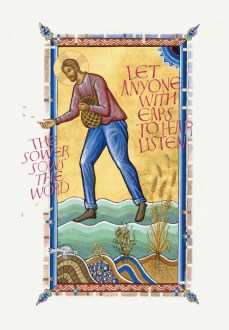
Listening to our text today, you may be very familiar with it. It’s well known and we are tempted to begin hearing its wisdom and automatically flash sort our impressions of it and immediately categorize where we are in the parable. Let’s try not to do that and simply listen to the text as though you’ve never heard it before. Listen to the Word of the Lord!


Matthew 13:1-9, 18-23

13.1 That same day Jesus went out of the house and sat beside the sea.2Such great crowds gathered around him that he got into a boat and sat there, while the whole crowd stood on the beach. 3And he told them many things in parables, saying: “Listen! A sower went out to sow.4And as he sowed, some seeds fell on the path, and the birds came and ate them up. 5Other seeds fell on rocky ground, where they did not have much soil, and they sprang up quickly, since they had no depth of soil.6But when the sun rose, they were scorched; and since they had no root, they withered away. 7Other seeds fell among thorns, and the thorns grew up and choked them. 8Other seeds fell on good soil and brought forth grain, some a hundredfold, some sixty, some thirty. 9Let anyone with ears listen!” …18“Hear then the parable of the sower. 19When anyone hears the word of the kingdom and does not understand it, the evil one comes and snatches away what is sown in the heart; this is what was sown on the path. 20As for what was sown on rocky ground, this is the one who hears the word and immediately receives it with joy; 21yet such a person has no root, but endures only for a while, and when trouble or persecution arises on account of the word, that person immediately falls away. 22As for what was sown among thorns, this is the one who hears the word, but the cares of the world and the lure of wealth choke the word, and it yields nothing. 23But as for what was sown on good soil, this is the one who hears the word and understands it, who indeed bears fruit and yields, in one case a hundredfold, in another sixty, and in another thirty.” [1]

Did you hear it? Did you notice how Matthew bookends the first part of our text to make sure we get it? Jesus begins by telling his followers, “Look here!” and he ends the parable with, “Listen up, now!”  He wants us to be sure to get what he is trying to say because what he said is the key to breaking the code of this parable!

Professor of New Testament at Whitworth University, Dale Bruner remarks, “Listening to Jesus’ words is the key to life; our ears are the soil of our lives. Ears attentively devoted to the Word of Jesus are good soil; ears that are distracted, inattentive, casual, or diffused in concentration are the several unfruitful soils of the parable.”[2]  You see, friends, all the different soils received the seed, i.e. heard the Word from Jesus yet only one paid attention to what he said and produced a crop. Beloved, Jesus is grabbing our collars and looking at us in the face and wants us to get that the key attitude in the spiritual life is the attitude of listening to Jesus’ Word![3] Are we?

So, what type of soil represents you? I mean, you’re tuned into worship and all and that’s a good thing! If you’re participating in worship then surely you’re the good soil! Let’s unpack that a little.

Jesus is speaking to the disciples and to you and me, the Church. He is speaking to four various types of people who have comprised the Church’s community since the days of Jesus himself. Within the Church, there are Path Soil people, Rocky Soil people, Thorny Soil people, and Good Soil people. My colleagues Pam and Nic are mathematicians and they would indicate that statistically as you and I look at the whole group, each of us has a one in four shots to be in the Good Soil camp. There are four options; we get to choose one.  The unfortunate reality is that seventy-five percent of us will not get, hear, and internalize the message Jesus is trying to convey. As scholar Dale Bruner reminds us, only one in four will understand the Word but yet all four soil types are in the church.[4] It’s a reminder of the Old English proverb that says, “Not all people who go to church say their prayers.”

First, there are Path Soil people. The gracious, whimsical Sower enthusiastically scatters seeds and some of it lands on the path. The path, the road, is heavily used and the soil has been compressed tight from all the weight of the people tramping on it over the years.  The seed, the Word of God, isn’t able to penetrate the soil because the soil is dense and the seed is exposed to birds who swoop in and eat it before it has a chance to germinate. Jesus is telling us that there are some people in the faith community who are so hard-hearted that even when the Word is shared, it fails to penetrate their surface.  Have you ever seen Path Soil people in the Church?  They’re here.

Next, there are Rocky Soil people. These are the people who are spiritually all drive-shaft but no engine, tall hat but no saddle. They look well put together and behave like Christians are supposed to behave on the outside but there’s not a whole lot of spiritual substance to them on the inside. First-level thinkers, they tend to go with the flow of what others are saying but once another compelling story or personality and charismatic preacher, speaker, or author come along, when problems arise, they forget the Good News Word Jesus has proclaimed. Have you ever seen Rocky Soil people in the Church? They’re here.

Third, Jesus says there are Thorny Soiled people. These are attentive hearers of the Word of Jesus but they have the attention span of a Labrador retriever puppy; they hear the Word but are distracted by too many other things.  Jesus says they are consumed by anxiety about life or they are too wrapped up in their financial portfolio to let the Word of God take root.  Driven by issues and distractions, their inability to be still and quiet inhibits them to really absorb the Word of Jesus into their lives. Have you ever seen Thorny Soil people in the Church? They’re here.

Finally, we have Good Soil people. These are people who hear the Word of Jesus and take it down deep into their hearts and lives only to have the seeds grow and blossom into bountiful fruit everyone can see and experience! These are the Christ-Followers whose lives of faith explode with a harvest producing yet more seeds to catch the wind and have the chance to grow as well. Have you ever seen Good Soil people and the results of their planting in the Church? They’re here.

Friends, the positive test of a good soil sample is simply the fruitfulness of the disciple and the church. Jesus claps his hands and shouts, “Look! Listen!” He’s telling us that when you and I hear the Word and receive it deeply into the soil of our heart, then our life, our ministry, our church will be fruitful. A person’s or a church’s fruitfulness and faithfulness are first and foremost determined by whether you and I, whether we as a Church, receive the Word of Jesus into our lives.  It’s not rocket science. You and I, the Church, is useful and fruitful and productive for the Kingdom of heaven when we simply place ourselves under the Word and receive it.

The path’s soil heard the Word but did not receive it.

The rocky soil people heard the Word and received it with great joy but when the pressures came, they let it go.

The thorny soil people heard the Word and held it in one hand while they filled their other hand with anxieties and wealth and couldn’t hold onto both and the Word slipped away.

The good soil people hear the Word and cups both hands together to catch all the seed to keep it safe for its intended use; they take the good seed and strategically plant it in good soil for the greatest amount of fruitfulness to occur.

Beloved, what’s the state of the soil of your Spiritual life? Is it hard, rocky, thorny, or prepared to receive the seeds from the Word of Jesus? What’s the state of the soil for our particular church? Is it hard, rocky, thorny, or prepared to grow deep in the Word?  How shall we really know? Well, I suppose we will have to get through this season and see how much fruit we bear and can give to others in Christ’s and the Kingdom’s Name. Faithfulness, i.e. fruitfulness to the Word of Jesus is determined by the crop we generate and how much seed we spread for the Kingdom of Heaven. God help us be a part of that 25%!

Let those who have ears listen!

Patrick H. Wrisley, D.Min.
Senior Pastor & Teaching Elder
First Presbyterian Church
401 SE 15th Avenue
Fort Lauderdale, FL 33301

© 2020 Patrick H. Wrisley. Sermon manuscripts are available for the edification of members and friends of First Presbyterian Church, Fort Lauderdale, Florida, and may not be altered, re-purposed, published, or preached without permission.   All rights reserved.

[1] New Revised Standard Version (NRSV). New Revised Standard Version Bible, copyright © 1989 the Division of Christian Education of the National Council of the Churches of Christ in the United States of America. Used by permission. All rights reserved.

[2] Dale Frederick Bruner, Matthew. A Commentary. The Churchbook, Matthew 13-28, Vol. 2 (Grand Rapids: William B. Eerdmans Publishing Company, 1990), 4.

[3] Ibid.

[4] Ibid., 23.
Posted in Sermon | Leave a comment

The Little Foxes that Spoil the Vine; Song of Solomon 2:8-15

Sermon:        The Little Foxes Spoil the Vines
Scripture:     Song of Solomon 2:8-15
Preacher:      Patrick H. Wrisley, D.Min.
Location:      First Presbyterian Church, Fort Lauderdale, FL
Date:             July 5, 2020

Today we are looking at a text from one of the only two biblical books that does not exclusively mention “God” throughout the book.[1] It’s also the only time this book of the Bible is referenced in the lectionary readings for Sundays. Specifically, we will be taking a look at the Hebrew text from The Song of Solomon, or sometimes referred to as the Song of Songs.

In its most basic form, the Book of Songs is a lyrical and very passionate love poem written from the voice of a woman as she expresses herself to her beloved. It is loaded with physical euphemisms to the point some have argued over the centuries whether it should even be in the Jewish and Christian canon of scripture! Yet, as far back as the first century, Rabbi Akiba ben Joseph, renowned Jewish scholar and biblical commentator described the Song of Solomon this way:

The whole world is not worth the day on which the Song of Songs was given to Israel, for all the Scriptures are holy, but the Song of Songs is the Holy of Holies (Mishnah Yadayim 3:5).

What made this late first-century rabbi say such a thing? He said it because it describes the overflowing passionate love of God for her beloved! Even though the Temple in Jerusalem had already been torn down, Akiba reminded people that the beauty and essence of God could be found in the words of the Song of Solomon. Reciting the poem, a person can feel the passion and longing of God for her beloved.[2] The love expressed is holiness indeed! Later Christian scholars believe it’s an allegory that describes Christ’s passion for the church.

I will be reading Song of Solomon 2:8-15. Listen to the Word of God!

Song of Solomon 2:8-15

8The voice of my beloved! Look, he comes, leaping upon the mountains, bounding over the hills. 9My beloved is like a gazelle or a young stag. Look, there he stands behind our wall, gazing in at the windows, looking through the lattice. 10My beloved speaks and says to me: “Arise, my love, my fair one, and come away; 11for now the winter is past, the rain is over and gone. 12The flowers appear on the earth; the time of singing has come, and the voice of the turtledove is heard in our land. 13The fig tree puts forth its figs, and the vines are in blossom; they give forth fragrance. Arise, my love, my fair one, and come away. 14O my dove, in the clefts of the rock, in the covert of the cliff, let me see your face, let me hear your voice; for your voice is sweet, and your face is lovely. 15Catch us the foxes, the little foxes, that ruin the vineyards— for our vineyards are in blossom.”[3]

The two lovers’ eyes meet and they are totally smitten with the other.  They cannot stop staring at one another through the lattice on the fence and they begin to utter sweet words of love to each other. They are words of longing, pleading, desiring and there are words of warning.  Did you catch them?

Note verse 15 in our story.  In the midst of their intimate exchange come words of warning. “Let us catch the foxes, the little foxes, that ruin the vineyards – for our vineyards are in blossom.”

The lovers are enraptured with each other. Their love and passion for one another are in full bloom; the enticing fragrance of love is literally in the air; it is palpable! Their desire is real, it is beautiful, it is good! The relationship is strong and fruitful but because it is real, beautiful, and good, the couple must first catch the little foxes that spoil the vineyard. These little foxes are the little things that can intrude into the couple’s relationship and cause havoc in their love together.

You know those little relationship foxes, don’t you?  Telling trivial half-truths to your partner. Using the credit card too much without the other’s knowledge. Saying that you will do something for the other but you never do; you only say what you know will to get them off your back. It’s the little things that are the genesis for larger problems.

How do the little foxes destroy a vineyard? First, foxes are nocturnal and come out at night where their mischief cannot be seen. And from where do they come from? They come from their dens and tunnels burrowed under the vineyards. Have you ever seen a dog digging? They are no respecter of the damage they’re doing. They’ll tear through anything – roots, dirt, rocks. You see, when foxes start burrowing near a food source like a garden, they will create a network of underground tunnels that damage the integrity of the ground as well as by chewing and digging through the garden’s root systems. The garden may not only fall in on itself but the fruit or vegetables will be destroyed because the root systems aren’t getting nourishment to the fruit. On the outside of things, everything looks great in the garden; it’s only after time the damage done beneath the surface begins to visibly impact what others see on the vineyard’s surface.

Furthermore, Foxes, if they go unchecked, attract other pests and rodents like mice and rats; when those other critters begin smelling the dying fruit of the vine, they will come running. Then come the bugs and insects swarming to eat the leaves of the vines or the fruit itself. Foxes may be awfully cute (which makes it so hard to do anything to hurt one of them!) but they are an invasive species for a vineyard or garden and we all know about invasive species here in south Florida don’t we? We’ve got everything from Bufo Toads, curly-tailed lizards, and our beloved chicken of the trees, iguanas! A little fox in the vineyard is a catalyst for all sorts of problems in a garden.  Hence, the urging of verse 15, “Catch the little foxes that spoil the vineyard.”

So, if Rabbi Akiba is correct and Songs is a glimpse into the Holy of Holies where you and I encounter the Living God, what are those little foxes we need to be aware of in our own vineyards that will prohibit our relationship with Jesus Christ from growing into a beautiful love story?

Little Fox number one:  Excuse making. Making excuses for failing to do something or not in a relationship will kill the relationship over time. It conveys to the other, “You’re really not that important to me because I would do what you asked if you really mattered.”

What excuses do you and I make with God? Are there aspects in your walk with Christ that you consistently make excuses for not doing? “I don’t have enough time to read the Bible” but you do have time to play golf. “I don’t have enough to give to the church’s ministry” but you can drop $500.00 on a night on the town? Golf and nights out are all good things, friends, but when God hears our excuses over and over again for not living and demonstrating basic Christian practices and values, Jesus will shrug and move on assuming we really don’t care.

Little Fox number two: Failing to spend time with the other. Our society has bought into the lie of “quality time.” Don’t misunderstand me, quality time spent with others is important but so is the quantity of time spent with others.  I may take you on some of the finest, most glamorous dates you have ever been on but unless we consistently spend time with each other on a somewhat daily basis, our relationship will not grow very deep. What happens is the dreaded marital drift. By spending less time with the one you love, your love for them loses its passion and glow and grows duller. In the midst of marital drift, lies are a little easier to say, excuses are easier to make, and absence all the more desirable.

Church, how much time are you spending with God? Let’s not go to little fox number one and start making excuses, but seriously reflect, “Am I spending quantitative and quality time with the Lord?” At the very least, quality and quantity time with Christ is expressed through our worship habits, our growth in spiritual maturity and knowledge, our giving of our time and talents for the care of others and in service to others, and in sharing our financial resources on Kingdom work. You show me a person living consistently displaying these habits and I will show you a person who is devoting time to maintain a holy relationship.

Finally, Little Fox number three:  A relationship is damaged when both people fail to say, “I love you,” on a consistent basis. I cannot tell you how many people I have counseled with over the years who have longed their entire life to have a parent or sibling simply say, “I love you.”  I cannot tell you how many couples I have met with whose wife or husband yearns to hear their beloved say, “I love you.” I cannot tell you how many parents dream of hearing their child say, “I love you.”  You see, when we fail to say, “I love you” we demonstrate that we are taking the other person for granted, or in the words of an old movie, “I’m not all that into you.”

I have named three little foxes that can destroy a relationship’s garden: Making excuses; failing to spend time together; and neglecting to say, “I love you.”  There are countless others, my friends, and over the Fourth of July Weekend, I encourage each of us to reflect on those little foxes spoiling our relationship with God and with those who matter to us. We have lots of homework, beloved! Go in peace. Amen.

Patrick H. Wrisley, D.Min.
Senior Pastor & Teaching Elder
First Presbyterian Church
401 SE 15th Avenue
Fort Lauderdale, FL 33301
pwrisley@drew.edu

© 2020 Patrick H. Wrisley. Sermon manuscripts are available for the edification of members and friends of First Presbyterian Church, Fort Lauderdale, Florida and may not be altered, re-purposed, published, or preached without permission.   All rights reserved.

[1] The other scriptural book that does not mention God is the Book of Esther.
[2] Song of Solomon 2:8-13 Commentary by Kathryn M. Schifferdecker in Working Preacher – Preaching This Week (RCL). Accessed on July 2, 2020 at http://www.workingpreacher.org/preaching.aspx?commentary_id=385.
[3] New Revised Standard Version (NRSV). New Revised Standard Version Bible, copyright © 1989 the Division of Christian Education of the National Council of the Churches of Christ in the United States of America. Used by permission. All rights reserved.

Posted in Sermon | Tagged , , , , , , , | 1 Comment

The Plan: Motivation, InSpiration, and Personalization; Matthew 9:35-10:8

Sermon:        The Plan: Motivation, InSpiration, and Personalization
Scripture:     Matthew 9:35-10:8
Preacher:      Patrick H. Wrisley, D.Min.
Location:      First Presbyterian Church, Fort Lauderdale, FL
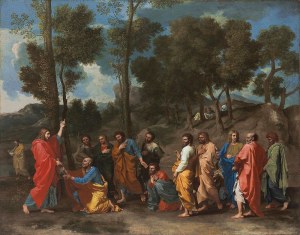
Date:             June 14, 2020poussin_ordination_grt

Our text today comes from Matthew 9:35-10:8. Jesus has a plan he wants you and me to follow and this plan revolves around three words I want us to remember: Motivation, InSpiration, and Personalization. As we hear our text, keep in mind Jesus is reflecting upon the words of the Prophet Ezekiel. In Ezekiel 34, Ezekiel confronts the sad reality that the spiritual and social leaders of Israel were failing to do their God-directed jobs to be the leaders, the shepherds for their flock, the Jewish people[1]. Listen to Matthew’s Story.

 Matthew 9:35-10:8

                  35Then Jesus went about all the cities and villages, teaching in their synagogues, and proclaiming the good news of the kingdom, and curing every disease and every sickness. 36When he saw the crowds, he had compassion for them, because they were harassed and helpless, like sheep without a shepherd. 37Then he said to his disciples, “The harvest is plentiful, but the laborers are few; 38therefore ask the Lord of the harvest to send out laborers into his harvest.”

10.1 Then Jesus summoned his twelve disciples and gave them authority over unclean spirits, to cast them out, and to cure every disease and every sickness. 2These are the names of the twelve apostles: first, Simon, also known as Peter, and his brother Andrew; James son of Zebedee, and his brother John; 3Philip and Bartholomew; Thomas and Matthew the tax collector; James son of Alphaeus, and Thaddaeus; 4Simon the Cananaean, and Judas Iscariot, the one who betrayed him.

5These twelve Jesus sent out with the following instructions: “Go nowhere among the Gentiles, and enter no town of the Samaritans, 6but go rather to the lost sheep of the house of Israel. 7As you go, proclaim the good news, ‘The kingdom of heaven has come near.’ 8Cure the sick, raise the dead, cleanse the lepers, cast out demons. You received without payment; give without payment.[2]

This is one of three times in Matthew’s gospel that he outlines Jesus’ job description and purpose.  Did you hear it? Jesus traveled about and did what three things consistently? He preached, he taught, and he healed.[3] This is the outline for his ministry. He preached the good news, taught, and healed broken people. Straight away, Matthew is outlining what Jesus’ purpose was and is and our text is showing you and me that it should be our purpose as well.

A picture is worth a thousand words. Dr. Hunter Farrell, the Director of the World Mission Initiative at Pittsburgh Theological Seminary, began his presentation by showing the audience a picture. It was a shot of a college-aged student on a mission trip. She was an attractive young woman, her eyes are fresh and bright, magnified by this beautiful smile. She was sitting on the ground and was surrounded by several poor children of color, presumably from Africa. Her arm was extended out with her cell phone in hand and was smiling for the camera but all the bedraggled children in the photo with her looked puzzled and confused. You see, the only one smiling in the picture was the young woman.

Dr. Farrell went on to say that the Church, particularly the Presbyterian Church and other Mainline denominations, who were once known for the power and impact of their mission endeavors, have over the last several decades traded impactful mission for photo-ops. He said, “Whereas there was a time when churches were known for building universities, schools, and hospitals, the church’s current mission seems to fulfill the needs of the missionary as opposed to the ones for whom the mission is to be done. We’ve exchanged meaningful mission for mission selfie experiences that last for a fleeting moment.  Sure, they make us feel good but is our work making a meaningful impact in the long term?”[4]

What Farrell is getting at is what is the motivation behind our missions? We look for our motivation to be modeled after Jesus’ motivation which was what? Compassion for the people. “For they were like helpless sheep without a shepherd.”

Friends, compassion is not just a feeling for someone; it’s experiencing the actual brokenness, sorrow, and needs with that person. Their need becomes our personal desire to alleviate because we feel their pain. Dr. Denise Thorpe, also from Pittsburgh Theological Seminary, writes, “Compassion frames what Jesus sees, his vision of the harvest. It shapes his charge to the disciples (9:36–37). Participation in that harvest is given to the disciples; received without payment. They live in grace’s unrepayable debt (10:8).”[5]

Can you think of the only publicly held team in the NFL? It’s the Green Bay Packers!  It is not owned by a family or a corporate sponsor but by the fans of the Packers themselves! So, when in January 2012, The Green Bay Packers were to play the New York Giants for a Divisional Playoff game at Lambeau Field after a night of nearly a foot of snowfall, the fans who had an investment in the team came to shovel out all the tons snow in the stands and on the field.  The City workers did not do it. A private company did not do it. The fans were motivated by their investment and stock in the team did it!  At 4:30 in the morning of the game, nearly 1,300 people showed up in the subfreezing temperatures to wait for the privilege to blow, shovel, and clean the stadium from tons of snow. On that day, the spectators became the players on the field. It was the spectators who made the game possible in the first place![6] Their feelings for their beloved Packers were the motivation to get them engaged, involved, and making a difference.

What kept Jesus going was his motivation to make a difference in the lives of his countrymen and women by proclaiming the kingdom of heaven was near, correctly teach what the Old Testament prophets actually taught, and brought healing to the broken ones.

God’s got a plan and there is specific motivation driving it. God’s plan must also have InSpiration. Throughout the gospel stories, Jesus is always trying to get away alone and pray. Another way to think of prayer is that it is a time of and for InSpiration. Our English word for inspiration comes from two Latin words “in” and “spirare” which literally is translated, “To be in-breathed, in-Spirited.” Isn’t that what we are about while we pray?  It’s a time to be in-Spirited, inhabited with Spirit, as we seek God’s way in our prayers.

Jesus rues with his disciples, “The harvest is plentiful but the workers are few; pray to the Lord of the harvest for workers to glean the harvest that awaits!”[7]  Missional work requires in-Spiration, in-Spiriting from God! In other words, beloved, we have to be in prayer so that God reveals 1) what mission you and I are to undertake, 2) what mission we as a church are to undertake, and 3) that God will gift our motivation for that mission with resources of gifted persons and financial and tangible resources to make the mission a reality.

God’s got a plan for mission and it requires motivation and inspiration. Yet, the plan is just a plan until it receives personalization! So, Jesus looked out at the motley crew in front of him and he began to personally call out twelve of his followers to help in fulfilling that inspired motivation.  There was Matthew, a despised tax collector. There was Peter, wrapped up in compulsivity whose mouth always blurted out the first thing that came to his mind. There was big-hearted John Zebedee who deeply felt Jesus’ compassion.  There was Andrew, the quiet networker who had this gift of getting the right people together at the right time. Oh, and there was Judas, who in his extremist views ended up selling Jesus out because Jesus did not fulfill his personal expectations.

Jesus calls out personal individuals, warts and all, to put skin on his compassion for others in the world. Jesus is motivated, driven by his love for people and for their relationship with God and with each other. He uses the in-Spirited resources he has to get the job done even when others reflect at the end, “Who would have ever thought?”

Beloved, what motivates you in your life in Christ? Is it primarily what you “get” from God in Jesus or is it that burning compassion for those he loves in the world?

Beloved, are you taking time throughout the hours of the day to be in-Spirited by God in prayer? Are you taking the time to hold yourself up to God and say, “Lord, I’m motivated, now reveal to me if I have or can discover the resources needed to make a difference.”

Beloved, are you personally making yourself available for mission, or are you expecting someone else to do it for you?

Motivation, InSpiration, and Personalization – this is God’s plan. The question is, are we motivated. Are we inSpired? Are we making it personal?  Let’s think about these things. Amen.

Patrick H. Wrisley, D.Min.
Senior Pastor & Teaching Elder
First Presbyterian Church
401 SE 15th Avenue
Fort Lauderdale, FL 33301

© 2020 Patrick H. Wrisley. Sermon manuscripts are available for the edification of members and friends of First Presbyterian Church, Fort Lauderdale, Florida, and may not be altered, re-purposed, published, or preached without permission.   All rights reserved.

[1] See Ezekiel 34.

[2] New Revised Standard Version (NRSV). New Revised Standard Version Bible, copyright © 1989 the Division of Christian Education of the National Council of the Churches of Christ in the United States of America. Used by permission. All rights reserved.

[3] See Matthew 4:23-24 and Matthew 11:2-6.

[4] Dr. Hunter Farrell at a plenary presentation for the June meeting of the Central Florida Presbytery, Wycliffe Bible Translators Discovery Center on June 7, 2017.

[5] Dr. Denise Thorpe, Connections: A Lectionary Commentary for Preaching and Worship: Year A, Volume 3, Season After Pentecost by Joel B. Green, Thomas G. Long, et al. https://a.co/44GHthe.

[6] “Packers fans wait hours for chance to shovel Lambeau Field,” by Alex Morrell, Green Bay Press-Gazette, January 13, 2012. Accessed on 6/14/2017 from http://content.usatoday.com/communities/thehuddle/post/2012/01/packers-fans-wait-hours-for-chance-to-shovel-lambeau-field/1.

[7] Matthew 9:38.

Posted in Sermon | Tagged , , , , , , , , , , , | Leave a comment

It’s Time We All Hit the “Pause” Button, 2 Corinthians 13:5-13, Trinity Sunday

Sermon:        It’s Time We All Hit the Pause Button
Scripture:     2 Corinthians 13:5-13
Preacher:      Patrick H. Wrisley, D.Min.
Location:      First Presbyterian Church, Fort Lauderdale, FL
Date:             June 7, 2020, Year A, Trinity Sunday

Our scripture today comes from the collection of letters from the Apostle Paul to the church in Corinth. Corinth was a salty sea town that was also a valuable crossroads where vital land and sea routes intersected. It had a plethora of different people there coming and going from all parts of the world. It was a place of rousing business deals and trades. Like today, it was a stratified community where there was a huge gap between the rich and the poor, the locals and the newbies, and a mixture of what we would call Anglo European inhabitants with the others from Persia, the Middle East, and Africa.

The collection of churches in Corinth was some of the most challenging of Paul’s career and the corpus of letters comprising First and Second Corinthians are the Apostle’s attempts to get the church healthy and back on track. The issues the church was having to deal with had to do with everything from their promise to help financially support the Church in Jerusalem but then failing to live into that promise, distorting the work of Jesus, having to prevent various philosophies from corrupting the very unique message of Jesus, to struggling with issues of discrimination within the church. Topping it all off were the Corinthians’ habits of fighting, bickering, and gossiping about each other in the church.

Our scripture today comes from the closing of Paul’s last letter to them. He’s letting them know that he is coming back to Corinth for a third time to set things right in this troubled church and he ends his letter with some simple instructions: Take stock of who you are; does your life and does the Church life look like Jesus is there; are you growing into a whole, well-rounded follower of Jesus; and for crying out loud, get along with each other!  Let’s hear Paul say it. Listen to the Word of the Lord!

2 Corinthians 13:5-13

5Examine yourselves to see whether you are living in the faith. Test yourselves. Do you not realize that Jesus Christ is in you? —unless, indeed, you fail to meet the test! 6I hope you will find out that we have not failed.

7But we pray to God that you may not do anything wrong—not that we may appear to have met the test, but that you may do what is right, though we may seem to have failed. 8For we cannot do anything against the truth, but only for the truth. 9For we rejoice when we are weak and you are strong. This is what we pray for, that you may become perfect. 10So I write these things while I am away from you, so that when I come, I may not have to be severe in using the authority that the Lord has given me for building up and not for tearing down.

11Finally, brothers and sisters, farewell. Put things in order, listen to my appeal, agree with one another, live in peace; and the God of love and peace will be with you. 12Greet one another with a holy kiss. All the saints greet you. 13The grace of the Lord Jesus Christ, the love of God, and the communion of the Holy Spirit be with all of you.[1]

Today we are going to focus on verse 5 of our text and I am building my thoughts around the title, “It’s time we all hit the pause button.”

Each of us knows what a pause button is; you’re watching your favorite TV show or movie when all of a sudden you get interrupted. Someone’s at the door. The phone rings. All beverages you’ve been quaffing have to find an exit. For whatever reasons, an interruption will occur and you have to hit the pause button on the remote so you do not miss any action. Today, the Apostle in our text is saying that it’s time for you and me hit the pause button in this swirly life of ours.

This past week, the General Presbyter for Tropical Florida Presbytery, Daris Bultena, posed a very sobering question to the pastors and elders of our presbytery. He asked, “How are you seeing this time we are living in right now?  Is it an interruption or rather, is it a disruption?” His question hit all of us and got us thinking. It was a question that jolted us to hit the pause button and do some reflecting.

Are all the events of 2020 an interruption or are they a disruption? The events of this colorful year are many: a world pandemic; international economic challenges and upheaval; social disruptions in Hong Kong, the United States, Europe, and South America because of abuses of power and privilege against those who are voiceless; violence and land-grabs by one nation against another; and then there is the reality of our ever-evolving weather and climate.  Are these interruptions or are they disruptions?

One could say this swirly year contains both.  Our lives have been interrupted with death and loss and they have been disrupted with fear, anxiety, and hopelessness. But there is a difference between the two and this is what Dr. Bultena was trying to get us to see. If we view the events of 2020 as an interruption, then we will have failed in learning anything. Once the interruption is over, everything will return to normal and we will walk blissfully on our way as though nothing has happened.  However, if we view the events as a disruption, then we take the intrusions thrust upon us this year and see them as value-inducing crises that will help us grow deeper, wiser, and closer together. It’s a reminder there is no return to a safe status quo but that life is going to require you and me, the Church, our governments, to learn new ways of being, relating and leading.

Think of it like this: A hurricane is an interruption. The storm comes, we clean up and get back to living again. A disruption is different. The effects of climate change with rising sea levels and warmer ocean temperatures are a disruption that will have much longer-lasting and deeper consequences. Disruptions cause paradigm shifts in the way we see and experience God, each other, our political, economic and justice systems, and the environment. Disruptions are seeds for new beginnings and life. What is vital is how each of us experiences the disruptions. Friends, what our nation, what the world has experienced this year are major disruptions; there is no going back to the nostalgic normal. Hence, Paul’s words in today’s text:

Examine yourselves to see if you are living in the faith. Test yourselves. Don’t you realize that Jesus Christ is living in you?”

For followers of Christ, we should not be afraid of all that’s going on in the world. World events are, as Jesus said, birth pangs for something new to be born and where God is already waiting for us. Whether or not we will see this time in our lives as a fruitless cause and interruption, or, whether it is an opportunity for new birth, new growth in our spiritual and communal lives that is redeemable by God’s Holy Spirit through Jesus’ redemptive work is up to each of us as we hit the pause button. In this moment of disruption, we pause to examine ourselves, testing whether we are living our lives in and like Christ.

Beloved, as Christians, let’s deeply examine ourselves to see if we are both publicly and interiorly in our souls living out our faith as though Jesus is living in each of us.

If there are hubris and pride, he’s not there.

If there are airs of superiority and entitlement, he’s not there.

If our dedication to political causes overshadows Jesus showing love to all people, he’s not there.

If we have forted-up to the point we cannot have a dialogue on important issues, he’s not there.

If we fail to show humility, he’s not there.

Beloved, these disruptive times are uncomfortable but they are also redeemable. These disruptive times are violent in speech and behavior but they are able to be made peaceful through the love and power of Jesus Christ. These disruptive times can be painful but new life and birth only come as a result of the pain.

Beloved, hit the pause button.  Where is Jesus trying to work in new life, new opportunities, new growth for you? The Church? Our nation? The world?

I close with a poem I found this week on Instagram written by Leslie Dwight. She writes:

What if 2020 isn’t canceled?
What if 2020 is the year we’ve been waiting for?
A year so uncomfortable, so painful, so scary, so raw —
that it finally forces us to grow.
A year that screams so loud, finally awakening us
from our ignorant slumber.
A year we finally accept the need for change.
Declare change. Work for change. Become the change.
A year we finally band together, instead of
pushing each other further apart.

2020 isn’t canceled, but rather
the most important year of them all.[2]

Paul says to examine ourselves to test whether we are living in the faith.  How is Jesus living in each of us during these disruptions?  Amen.

Patrick H. Wrisley, D.Min.
Senior Pastor & Teaching Elder
First Presbyterian Church
401 SE 15th Avenue
Fort Lauderdale, FL 33301

© 2020 Patrick H. Wrisley. Sermon manuscripts are available for the edification of members and friends of First Presbyterian Church, Fort Lauderdale, Florida and may not be altered, re-purposed, published or preached without permission.   All rights reserved.

[1] New Revised Standard Version (NRSV). New Revised Standard Version Bible, copyright © 1989 the Division of Christian Education of the National Council of the Churches of Christ in the United States of America. Used by permission. All rights reserved.

[2]By leslie dwight, located on Instagram, June 2, 2020.

Posted in Sermon | Tagged , , , , , , , , , , , , , , | Leave a comment

I So Thank God for a Drafty Church!, John 14:15-21

Sermon:        I So Thank God for a Drafty Church!
Scripture:     John 14:15-21
Preacher:      Patrick H. Wrisley, D.Min.
Location:      First Presbyterian Church, Fort Lauderdale, FL
Date:             May 17, 2020

John 14.15-21

15”If you love me, you will keep my commandments. 16And I will ask the Father, and he will give you another Advocate, to be with you forever. 17This is the Spirit of truth, whom the world cannot receive, because it neither sees him nor knows him. You know him, because he abides with you, and he will be in you.

                  18”I will not leave you orphaned; I am coming to you. 19In a little while the world will no longer see me, but you will see me; because I live, you also will live. 20On that day you will know that I am in my Father, and you in me, and I in you. 21They who have my commandments and keep them are those who love me; and those who love me will be loved by my Father, and I will love them and reveal myself to them.”[1]

Open the window.  It’s just a little thing, really, but there is something refreshing when the inside air is still and stale and then you open windows on each end of the home; air begins to flow and lovely breezes begin to fill the rooms.

Living in southeast Florida this week, we have heard the blustery and gusty winds up and down the coast. This morning as I sat during my prayer time, I could hear the wind howling outside. Tree branches were battering the windows. There was some heavy drizzle getting blown about giving everything outside a thin sheen and coating of water. But I was dry and safe.  My window was closed.  The winds remained outdoors and I was safely covered by my quilt with the shades drawn like some valetudinarian wanting to keep all illness and the ill effects of the world “out there!”

Listening to the gusty winds over the last few days has given me an insight into our scripture from John’s Story today. Let me explain a bit.

John chapters 13 -17 all contain a singular scene of Jesus and the disciples having dinner together and a heartfelt crucial conversation. This time tomorrow, Jesus would be dead. He was using this table talk in a strategic way to impress upon the disciples things were about to get really different.  It was his expression of what’s called an Ethical Will whereby a person bequeaths not money or property per se to those they love; instead, they bequeath and leave their loved ones with a set of ethics and values,  lessons and blessings they don’t want the other to forget. What is it that Jesus wanted them to remember?

He wanted them to remember that things were going to get a little swirly. He wanted them to remember to look out and care for each other. He wanted them to remember the culmination of the commandments of God which is found in John 13:34 where Jesus says:

I give you a new commandment, that you love one another.  Just as I have loved you, you also should love another.  By this everyone will know you are my disciples if you have love for one another.

He also wanted them to remember that both he, Jesus, and the Father in Heaven were One.  If you knew one, then you knew the other. And finally, he wanted to remind them that they would never be left alone but that God would send the Helper, the Spirit, to live within them. In other words, Jesus was reminding them, that from now on, the divine dance between the Father, Son, and the disciple would be sewn together and intertwined by the Spirit. Jesus describes this sweet, mystical fusion between heavenly reality and our physical presence. And yet, if we read too quickly, we will miss the conditional clause placed by Jesus for this dance to occur in the life of the disciple. What’s the condition he placed as to whether or not this dance between the Divine and humanity can occur? The conditional clause is for you and me to open the window. Our lesson’s opening words today are Jesus declaring,

15”If you love me, you will keep my commandments. 16And I will ask the Father, and he will give you another Advocate, to be with you forever.

In other words, if you love one another as the Father and I have loved you, THEN you are able to open the window of your life and allow the Holy Wind, the Spirit, the Helper, to blow into and out of your life and into and out of the house called the Church!

Beloved, the key to opening the window for the Spirit to come blowing is to open the windows of our hearts and let the breath of our discipleship be carried outside by the Holy Breezes of the Spirit in ever-widening circles of love and grace! To have faith in Jesus is so much more than saying, “I believe!” For you and me to have a fully-formed dynamic faith means for us we not only mentally assent to who Jesus is, but it also means for us to throw open the doors and windows of our hearts and let the Spirit who lives within us to take our expressions of love for and to others out of our houses and into the world. It’s one thing to believe in Jesus but it’s entirely something else to put skin on the bones of our faith by expressing love to not only Jesus but to each other!  It’s at that point the doors and windows of our lives, our Church, are thrown open and the beatific breezes of Father, Son, and Holy Spirit blow more powerfully impacting more and more people.

But if we keep our doors and windows shut, the air will grow stale inside of the house and the air becomes still and stagnant, and stuffy. The Holy Spirit of Jesus cannot live in a stuffy house; we have to open the windows to let the love of Christ’s Spirit flow out the windows!

Over the years in ministry, a pastor learns the difference between mediocre churches and great churches.  Mediocre churches keep their windows nailed shut and locked tight.  Great churches have learned to open their windows and allow themselves to be drafty whereby the Spirit of Jesus enters in and carries out the love of Christ to a broader world.  It’s a church that takes the storyline from Leviticus 19:34 seriously  when it says,

The alien that resides with you shall be to you as the citizen among you; you shall love the alien as yourself, for you were aliens in the land of Egypt: I am the Lord your God.

In order to be a drafty church, we have to love each other as well as the aliens, the strangers in our midst. Great churches, drafty churches, throw open the windows, and let the Spirit blow blessings to whomever it wills!  As pastor of First Pres Fort Lauderdale, I am overwhelmed that you, the members of this congregation, make us a drafty church, a great church! You’re a church that has learned the importance of opening the windows and letting the Spirit of Life blow unhindered through this place and in and throughout Broward County! Like a gloating parent awash in the pride for a child, I am overwhelmed with how this church has kept the Spirit blowing even during a time of lockdown!

On Thursday of this week, I woke up to read the headline from a nationally released press story entitled, A visible mission against an invisible enemy. Fort Lauderdale’s First Presbyterian Church enlists an army of volunteers to make thousands of protective masks[2]. The article goes on to outline how you, Church, began a movement of Spirit to help people in our community you will never know to safely care for thousands of patients and strangers you will never know during a time of forced lockdown.  As Christ-Followers, we know that a lockdown cannot lock up Holy Spirit work, especially when the Church throws open her windows and lets the Wind blow through! You, beloved, produced nearly 11,000 HEPA-quality face-covering for medical professionals in Broward County, along with her firefighters, first responders, police officers, and sheriff deputies.  Singles, widowed, married adults, and their children have all come together and have made a huge dent in the COVID-19’s spread in our community. Jesus saves and you definitely help him!  Families sewed together. Others who could not sew drove supplies all over the county to people who could stitch and sew in order that our production of these life-saving masks could continue.  Others delivered masks to the hospitals, sheriff’s department, firehouses, and assisted living centers. How I thank God for being a part of a drafty…no, windy Church that lets the Spirit blow through!

Friends, as your pastor and friend I want you to know I thank God for each and every one of you! You give of yourself, of your time, and of your resources…not until it hurts but until it feels good!

This week, look for the closed windows in your life and be conscious to opening them up to let the Spirit blow through! This week, let’s ask the Spirit to guide us to what we are called to do next in and through this place!  Who are the other strangers, aliens in our midst we are to love on in the Name of Jesus? Amen.

Patrick H. Wrisley, D.Min.
Senior Pastor & Teaching Elder
First Presbyterian Church
401 SE 15th Avenue
Fort Lauderdale, FL 33301
http://patrickhwrisley.com

© 2020 Patrick H. Wrisley. Sermon manuscripts are available for the edification of members and friends of First Presbyterian Church, Fort Lauderdale, Florida and may not be altered, re-purposed, published or preached without permission.   All rights reserved.

[1] New Revised Standard Version (NRSV). New Revised Standard Version Bible, copyright © 1989 the Division of Christian Education of the National Council of the Churches of Christ in the United States of America. Used by permission. All rights reserved.

[2] Tammy Warren, Presbyterian News Service, May 14, 2020, accessed at https://www.presbyterianmission.org/story/a-visible-mission-against-an-invisible-enemy/?fbclid=IwAR3vEcmejnfSvWNEoPtkdGzMghZyIB-j6o-4Fz7jMzmDbBQqWnOfTtKuuNM

Posted in Sermon | Tagged , , , , , , , , , , , | Leave a comment