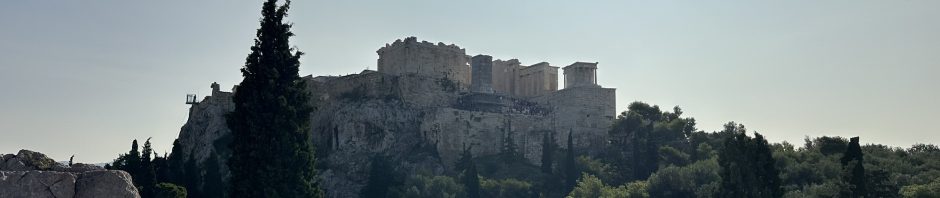
We’re All in This Together!, Philippians 1:21-30

Sermon:        We’re All in This Together 

Scripture:     Philippians 1:21-30    

Preacher:      Patrick H. Wrisley, D.Min.

Location:      First Presbyterian Church Fort Lauderdale         

Date:             September 20, 2020

It’s something I still have tucked away in a little box. It’s a handwritten letter from my oldest daughter, Lauren, that she sent during her first semester of college. Lo was an independent, spirited child during middle and high school and did not mind letting Kelly and I know if she thought our parental instructions were incorrect. So, when I opened her letter that late fall of 2003, I just wept.  In it, she wrote that she claims the fact she was an independent, spirited child over the last several years. In it she shared how she was not always the easiest one to get along with at times.  She said, “Mom and Dad, thank you for not giving up on me and teaching me all the wonderful things you did which I am realizing now that I am on my own.” It was a love note written from a daughter to her mom and dad expressing her deepest feelings and appreciation.

Today’s text is a love letter shared between a pastor and one of his favorite flocks. The pastor, Paul, has full and rich memories of his time with them which interestingly have been unfolded to us in this week’s Daily Common Lectionary readings in Acts 16. Paul and the Philippian church have shared many experiences together that have bound them to one another. Some of those experiences were joyful like finding Lydia, a local businesswoman, who is baptized and helps network Paul and his companions to others in the community. Yet, some of those experiences in Philippi were painful like when Paul was publicly beaten with rods, flogged and thrown into jail. It was through their shared experiences, both good and bad, that have made an iron bond between them.

Think for a moment of a time when you have gone through a season of shared experiences with others that have forged a deeper relationship with them. This church has had many of those types of experiences in her past; this time of pandemic is yet another flowing of the seasons when we as a people are having our relationships tested and strengthened. Paul is presumably writing this letter from a prison cell somewhere and appears to be having a tough time in his own life but he still finds time to pen a letter. Our Story today gives glimpses of his struggles as well as his longing to see his beloved one more time. Listen to the Word of the Lord in Philippians 1.21-30: 

Philippians 1:21-30

21For to me, living is Christ and dying is gain. 22If I am to live in the flesh, that means fruitful labor for me; and I do not know which I prefer. 23I am hard pressed between the two: my desire is to depart and be with Christ, for that is far better; 24but to remain in the flesh is more necessary for you. 25Since I am convinced of this, I know that I will remain and continue with all of you for your progress and joy in faith, 26so that I may share abundantly in your boasting in Christ Jesus when I come to you again.

27Only, live your life in a manner worthy of the gospel of Christ, so that, whether I come and see you or am absent and hear about you, I will know that you are standing firm in one spirit, striving side by side with one mind for the faith of the gospel, 28and are in no way intimidated by your opponents. For them this is evidence of their destruction, but of your salvation. And this is God’s doing. 29For he has graciously granted you the privilege not only of believing in Christ, but of suffering for him as well— 30since you are having the same struggle that you saw I had and now hear that I still have. [1]

Did you hear Paul’s fatigue?  Did you hear his longing? Paul is tired. His decades-long missionary life has been tough and demanding with several beatings, stoning’s, shipwrecks, and imprisonments simply for telling the life-giving Story of Jesus. Here’s the old Apostle whose body aches, whose eyes are going bad and he pines away that he knows that if he dies, he will be with Jesus; frankly, Paul would love just to die and be with the Lord but he realizes that would be selfish of him at this point; there is still vital work to do. The deep love for the members of his church is what keeps him living, hoping, and longing to see them again. Yet, if anything, Paul is a realist. He knows that he may not make it again to see his beloved church and so he gets right to the point of his love letter.

Since the pandemic began, we have been shooting a daily devotional that Nic calls, “This One Thing” where we look at the daily lectionary reading and try to pull one vital thing out of the text for the day. Well, did you know that “This One Thing” originally began with the Apostle Paul in our text today?  Slide your finger to verse 27.

Our English texts begin verse 27 with a simple word, “only” which does not grab the full gist of the meaning. In the original language, this word is an exhortation that can be translated, “Remember there is just one thing!”[2] Paul opens this new paragraph with a little word which is akin to my fifth-grade teacher, Ms. Parks, who would clap her hands and yell, “Children! Listen up!”

 What is this one thing Paul wants his beloved church to remember should he not be able to come and see them? The one thing he wants them to remember is, “Church, live out your Christian citizenship in way that is becoming for a follower of Jesus.” He exhorts them to live their lives in a manner worthy of the Good Gospel News.

He reminds us that living a life worthy of the gospel will have joys as well as sorrows. There will be times of easy sailing and there will be times of rough, violent seas. Just as this was so in the life and death of Jesus Christ, so it is in Paul’s life as a Christian and so he reminds them it will be for all of us in the church. The thing he wants us to remember is that regardless of our life’s condition, we are to maintain and display a consistent citizenship to the Kingdom of Heaven with Christ as our Lord.

It will be evident that we are standing in one Spirit together, not as a Republican spirit or a Democratic spirit but in the Holy Spirit that transcends both.

It will be evident because people will see the rich diversity of this church but note how we are serving, striving side by side to share the Good News, as we become an inspiriting Christ-centered presence in Fort Lauderdale transforming our local community and beyond! 

It will be evident when we actually display and live out the love of God to others instead of segregating people by race, religion, sexuality or party affiliation.

Returning to verse 27, the phrase “live your life” is from a cognate of a word that we get our term “politics.”  Paul uses a word that expresses the connotation that the gathered Church is  not a collection of Romans, Greeks, Jews, or Persians but is a collective group of men, women, and children from all the backgrounds who comprise the citizenry of the realm of God. Jesus has replaced the worship of the Law. Jesus has taken the place of Zeus or even the Emperor Caesar himself. For Paul, a person was a disciple and citizen of Jesus’ realm first and a member of the Roman Empire or Jewish community second. When a person becomes a Christ-Follower, Jesus displaces any political, national, or ethnic rank or economic privilege. 

What’s the natural consequence living in a manner worthy of the gospel?  Paul nails it in verse 30: Both he and the members of the Church will struggle being a light in a shadowy world. Like Paul, the Church will be made fun of, scoffed at, persecuted, ignored and made a pariah by the culture. The only way he, Paul, and the church will survive is if they stand unified together in and against the spirit of the world.  As scholar Cynthia Jarvis writes, “For Paul, the unity of the body is the “manner [of life] worthy of the gospel.”[3]

Paul enjoins us to remember and get this one thing: Each of us is to stand side by side, shoulder to shoulder, and live our commitment to God in Christ in a worthy manner where God is first, front and center in lieu of our politics, our economics, or our polemics.  

What I call the Two P’s of 2020 – the pandemic and the politics – have become our nation’s focus and as such taken our eyes off the mark which is a life focused on the gospel of life. I read the news and look around and lately I do not experience a whole bunch of unity and standing together in our world. The pandemic may have temporarily pushed the church underground, but Church, let our roots become revitalized in the soil and sprout new trees and fruit with the unity of purpose for Jesus the Christ and show a vibrant, tangible bond of solidarity for the Gospel. If the Church can’t do it, no one can! Church, let’s all of us live together in the manner worthy of the Good News of Christ. And all of God’s people said. Amen.

Patrick H. Wrisley, D.Min.

© 2020 Patrick H. Wrisley. Sermon manuscripts are available for the edification of members and friends of First Presbyterian Church, Fort Lauderdale Florida and may not be altered, re-purposed, published or preached without permission.   All rights reserved.

Senior Pastor & Teaching Elder

First Presbyterian Church

401 SE 15th Avenue

Fort Lauderdale, FL 33301

patrickw@firstpres.cc

patrickhwrisley.com

[1] The New Revised Standard Version, copyright 1989, 1995 by the Division of Christian Education of the National Council of the Churches of Christ in the United States of America. Used by permission. All rights reserved.

[2] The New Interpreter’s Bible, Volume XI (Nashville: Abingdon Press, 2000), 496.

[3] Connections: A Lectionary Commentary for Preaching and Worship (Kindle Locations 10370-10372). Presbyterian Publishing Corporation. Kindle Edition.

Posted in Sermon | Leave a comment

Pastoral Prayer for Sunday, September 6, 2020

Resplendent God, full of Light, Justice and Love, we gather as your people and try once more to get it right. We come this day tired and worn out from both the physical and emotional strains we face as humble disciples; we come fatigued by relentless displays of both individual and systemic prejudice, acts of violence done in the name of justice, and wanton expressions of hubris towards those who think differently from the way we do. Holy Spirit, breathe into your people the healing winds of love and the bonds of authentic unity.

Lord God, throughout this difficult year the world has endured, we have become grumpy and impatient with people within your Church, with civic leaders and business owners, and with those who are trying to maintain our safety and security during these rankled times. The evil one has used current events to replace kindness with curtness, longsuffering with impatience, and love for neighbor with looking out for ourself. Holy Spirit, breathe into your people the healing winds of love and the bonds of authentic unity.

Jesus, our Savior, our Lord, and our Friend, we beg your healing touch as the loving physician to not only heal our nations and our countries, but that you would bring comfort and health to those who are undergoing or are about to have major surgery or medical procedures. Please calm anxious hearts and minds as your people await either diagnoses or treatment plans. Bring peacefulness to relationships that have unraveled or are strained between spouses, children and their parents, our adult siblings. Lift those in the dank darkness of depression, PTSD, or other mental illness out of despair and let them bask in the light of radiant joy. Spirit of Life, we pray for those isolated in rehab centers, nursing homes, retirement communities and hospitals who are bereft of the presence and touch of loved-one’s touches and friends. We pray for the everyday heroes in our midst – our teachers, grocery clerks who stock our food shelves, police officers, fire personnel, and EMTs, as well as our next door neighbor who practices patience in the presence of our impatience. Remind those who mourn the death of someone they love of the unbreakable promise of Easter hope.

Lord, Hear us as we pray together, Our Father, who art in heaven, hallowed by thy name. Thy Kingdom come, Thy will be done, on Earth as it is in heaven. Give us this day, our daily bread, and forgive us our debts as we forgive our debtors. And lead us not into temptation, but deliver us from evil. For Thine is the Power, Kingdom and the Glory, forever!

Posted in Sermon | Tagged , , , | Leave a comment

Church, Who is Jesus?, Matthew 16:13-20

Sermon:        Church, Who is Jesus?

Preacher:      Patrick H. Wrisley, D.Min.

Location: First Presbybterian Church Fort Lauderdale

Scripture:     Matthew 16:13-20

Date:             August 23, 2020

Think for a moment: What is your identity? Is it solely your name and address? Is your identity defined by what you do for a living or are retired from? Is your identity expressed by who or what you are “for” or who or by what you are “against”? Perhaps one’s identity is wrapped up in body image or in the display of one’s wealth. What in this life shapes your identity?

You see, today’s text is all about this issue of identity. It’s about who Jesus is. It’s about who Peter is. It is about your identity, my identity, being displayed through who we are as a Church called First Presbyterian Fort Lauderdale.

Earlier in Matthew 16, Jesus is confronted by the religious establishment in order to prove his identity. They were demanding Jesus to perform miraculous signs to legitimate his teaching and works. Jesus didn’t bite at their baiting tactics but he did use the exchange between the religious old guard and himself as a way to teach his disciples about issues of identity. This is where we pick up in Matthew’s Story today at Matthew 16:13-20. Jesus and the disciples are located in the mountainous hinterlands of Jewish territory located some thirty miles north of the Sea of Galilee. Hear the Word of God!

Matthew 16:13-20

13Now when Jesus came into the district of Caesarea Philippi, he asked his disciples, “Who do people say that the Son of Man is?” 14And they said, “Some say John the Baptist, but others Elijah, and still others Jeremiah or one of the prophets.” 15He said to them, “But who do you say that I am?” 16Simon Peter answered, “You are the Messiah, the Son of the living God.” 17And Jesus answered him, “Blessed are you, Simon son of Jonah! For flesh and blood has not revealed this to you, but my Father in heaven. 18And I tell you, you are Peter, and on this rock I will build my church, and the gates of Hades will not prevail against it. 19I will give you the keys of the kingdom of heaven, and whatever you bind on earth will be bound in heaven, and whatever you loose on earth will be loosed in heaven.” 20Then he sternly ordered the disciples not to tell anyone that he was the Messiah. (NRSV)

Identity. Jesus has travelled to the very edge of the boundary of Israel to ask his disciples, “Who do people say that I am?” He was as far away from Jerusalem as one could get when he asked his disciples this question of identity. Perhaps he thought it was safe to ask this question away from the prying ears of Jerusalem’s religious authorities. Then again, maybe he took them to the furthest cultural and religious boundary he could find in order to show them the boundaries they would have to break in the future both figuratively and practically.

“Who do people say that the Son of Man is?” Is he a reincarnated version of his cousin, John the Baptist, or the great prophet Elijah who was whisked off to heaven in a chariot?  Some mused he was one of the ancient revered prophets of Hebrew Scripture fame like Jeremiah who were the speakers of hard truth to a corrupt people and government.

If Jesus posed that question to you and me, what would we tell Jesus about what others think of him today? Sadly, the first thing that comes to my mind is that I’d say is, “Jesus, people are not even thinking of that question today.”

Ouch.

You might disagree with me about that depending on what Christian circles you run in but I still argue that I’ve not seen a lot of evidence that people are asking who Jesus is even within the church itself.

Well, that’s a problem.

You see, what that means is that Western Church has lost its Jesus-bearing identity. Simply look at the declining influence Churches and communities of worship have on the larger culture today. Look at the empty parking lots on the Sabbath and the same tired faces of the people who serve on church teams and committees year in and year out because others will not step up to take their turn.

It’s at this crucial point Jesus asks disciples another question on identity: Who do you all say I am? The “you” Jesus uses is plural; he is speaking to all the disciples both then and now: Who do y’all say that I am?

Bless Peter’s heart. He steps up and speaks for all them and declares, “You are the Messiah, the Son of the living God!” and Jesus beams with delight! Peter highlights and correctly announces Jesus’ identity and then Jesus turns right around and pronounces Peter’s! “You’re blessed, Simon of Jonah! You are Peter, and on this rock I will build my church and the gates of the dead will not prevail against it!”

Peter expresses to Jesus how all of them understand Jesus’ identity to be the long expected Messiah to come and liberate the people. Yet, Peter also adds a twist to it: Not only is Jesus the Messiah, he is also the very presence of God in their midst. Jesus’ identity, his character, is wrapped up in the very character and identity of God that he has been displaying throughout Matthew’s Gospel: An identity wrapped up in the visible, patient, longsuffering, sacrificial love in order to reconcile people and society back to God making them whole once again. Peter nails and sticks the landing! Like gymnast Simone Biles executing a perfect floor routine, Peter scores a 10! The disciples understand who Jesus really is!

When Jesus tells Simon, “you are Peter and on this rock I will build my church!”, Jesus is referring to the proclamation and profession Peter made on behalf of his fellow disciples. It’s not so much the church is going to be built upon Peter per se; it’s that the gates of hell and the dead cannot overcome the proclamation that Jesus is Messiah and the Son of the Living God. The rock the church is built upon is the declaration that Jesus’ identity is that he is the very Presence of God in the midst of our swirly world! He is not some reincarnated prophet or some enlightened teacher but rather he is God’s Presence among us! This is Jesus’ identity. This is what Peter and the disciples professed that day in the remote safety of Caesarea Philippi.

Should Jesus pull you and me aside in Caesarea Philippi and ask us about what we thought his identity was, would we get it right? Are we still building on the rock of the church, which is the profound proclamation that Jesus is Messiah, the Son of the Living God, or is the Western Church building on the scattered rocks of discordant social issues trying to define who and what the Church actually is. The Western Church has at times let the issues of the day define Jesus instead of having Jesus define the vital issues; we have let the proverbial tail wag the dog. What Peter gets right is that he put Jesus first and Jesus’ very identity defines who Peter is and what the Church is to be about in its purpose and mission. The Church in America today suffers from an identity crisis!

The vital question for you and me is to ask what our part is in either contributing to the Church’s identity crisis or how we are helping to shape the Church’s healthy identity.

We contribute to the Church’s identity crisis when we withhold our spiritual gifts of leadership, giving, serving that Paul speaks about in Romans 12.

We contribute to the Church’s identity crisis when we hold on to nostalgic ministries of yesterday that do not meet the spiritual needs of the people in our community today.

We contribute to the Church’s identity crisis when we make our personal agendas or wish dreams drive ministry instead of letting Jesus’ identity permeate throughout the whole Body of Christ in a specific places, shaping itself to its community’s hurts and pains.

We contribute to the Church’s identity crises when we overlay cultural values onto the way we approach church business and ministry and raise them above the values Jesus would engender.

Friends, whenever the Church, whenever you and I as individual members of Christ’s Church, replace humility with hubris, sacrificial love with personal convenience, or adoration of God in Jesus with any other idol in the form of money, stuff, power or prestige, we know we have lost our Christian identity.

Who do people at your office, your Bridge game, your Bible study or sports group say Jesus is? Do they know who Jesus is to you? When they look at you and me, do they first see Patrick, Don, Laura, Chris and Margaret or do they first see the face and radiance of Jesus expressing your new identity?

Amen.

Patrick H. Wrisley, D.Min.

Senior Pastor & Teaching Elder

First Presbyterian Church

401 SE 15th Avenue

Fort Lauderdale, FL 33301


Posted in Sermon | Leave a comment

Nothing Works if We Don’t Get the Basics Right; Psalm 133

Sermon:        Nothing Works if We Don’t’ Get the Basics Right
Scripture:     Psalm 133; Philippians 3:17- 4:3
Preacher:      Patrick H. Wrisley, D.Min.
Location:      First Presbyterian Church, Fort Lauderdale, FL
Date:             August 16, 2020

Today’s Psalm, coupled with the Philippians text, shape the thoughts we are going to explore this morning as we look at the fact that nothing works if we don’t get the basics right. For the Apostle Paul, it’s the basic reminder that Christ-Followers are members of the citizenry of heaven. Let’s read what it is from the Psalm’s perspective.

Psalm 133 is a from a group of Psalms that are called “Songs of Ascent.”  The Songs of Ascent were the various Psalms the Jewish people sang as they made their way up to Jerusalem for the major religious festivals. Members from all the different tribes would join in a singular voice singing praises to God for all God had done, is doing, and will do, not just in their personal lives but as a nation. Listen to this brief psalm and listen for God’s reminder to us; hear the Word of the Lord.

Psalm 133

1How very good and pleasant it is when kindred live together in  unity!

2It is like the precious oil on the head, running down upon the beard, on the beard of Aaron, running down over the collar of his robes.

3It is like the dew of Hermon, which falls on the mountains of Zion. For there the Lord ordained his blessing, life forevermore.[1]

This is a song the people would sing as they made their way to the Temple.  They sang it as a reminder that through their history together, God wove them from a scattered group of people called Hebrews and made them a unified nation of Jews. I may be from the tribe of Judah but I sing with one voice with my brothers and sisters from the tribe of Asher, Dan, Benjamin, and Naphtali.  We may live in different areas in Palestine but we are all united together as members of one nation. Our Psalm describes what it looks like when the people live together in unity by using two similes of abundance.

When sisters and brothers dwell and get along, it is like the extravagant oil that is used to ordain and set Aaron apart for his work. There is so much oil it rolls down his face, through his beard, and soaks into his clothes.

When brothers and sisters live in unity, their very community sounds like a well-practiced symphony of grace that starts in the mountain snows and flows down into the dusty valleys below bringing life where life may appear tenuous and doubtful. One scholar writes, “When unity settles in a community—be it family, church, or even a nation—it brings blessing and great joy to everyone”[2] but especially to God.

The Psalmist reminds us that yes, we may be different but there is beauty when that diverse uniqueness comes together and finds its oneness, its connectedness that is centered on worshipping the Lord God. The Apostle Paul reminds us that even though Euodia and Syntyche may disagree, they will come together and conform as mutual citizens of heaven and show the world there is another, a better way.

Last Monday morning I followed my daily routine. Every morning upon waking, I will make the coffee and then scan the headlines to see what has happened overnight. If I have time before the coffee pot finishes brewing, I will quickly scan Facebook or Instagram to see what’s up with those I know. When the coffee is finally made, I grab two mug-fulls and head upstairs into my study for scripture reading and prayer.

This past Monday morning, I followed my routine and made it to my chair for prayer but I was heartbroken and all I could do is sit there and stew. I even had a moment of professional despair as I pondered, “What good has my three decades of ministry produced if my people, my sheep, my flock are saying these things about each other?”

I closed my eyes and saw your faces sitting across and next to one another in worship. I saw the faces of congregants of the many churches I served over the many years in a similar way. Faces of people who loved each other. People who sacrificed their time and money for the cause of Christ in the community with each other.  People who took time praying for one another and with each other while studying the Holy Scriptures learning about the engine of God’s heart which is love.  With eyes closed, I saw you stand up and point a finger at the person you take communion with and declare, “You’re a left-wing, pinko-communist!” while the other stands up and shouts, “You’re a right-wing fascist!” One side declares to the other how unchristian, how “Satan-filled”, how ungodly, how stupid their brother or sister is because they don’t see the world like us. In my meditation that morning, this scene of bickering turned arguing with one another just broke my heart.

Jesus was nowhere to be found in the words you used against one another in my meditation. It’s what caused me to have a crisis of call and wonder, “Why do I even bother to try?”

What led me down that path during my Monday morning prayers this week is Facebook. Social media.  I was reading vitriol being espoused in rants, commentaries, and reposted newspaper articles from members of my churches over the years towards others that lacked any godly substance or edification at all.  With my mouth agape, I thought to myself, “These aren’t the people I see on Sunday morning in worship, at a prayer meeting, Bible study, or while serving others!” And yet, your voice, your words, were on full display on social media. The words I read and the posts I watched did not match the people whose faces receive communion from my hands in worship together. There is a disconnect. I tried to imagine what it would be like if you could stand up, look at another church member in the eye across from where you sit, and tell them how radically un-Chrisitan, Fascist, Communistic, left, or ring-wing extremist militants they are face to face. “That would never happen in real life in church!” I reminded myself. It was then the Holy Spirit whispered in my ear, “Preacher, it already is happening on Facebook.”  I wondered to myself how sensible, reasonable people I know from the church can lose all their sensibility and emotional filters when they go online and don’t have to look at someone in the eye?

Serendipitously, or better, Providentially, our General Presbyter, Daris Bultena, raised these issues for a group of clergy and laypeople the very next day at a regularly scheduled meeting. The way he put it was that when it comes to social media, your personal “brand” comes first and is more important than the “content” of what you post. In other words, we need to ask ourselves if how we portray ourselves online with what we are posting is consistent with the men and women we say we are as Christians and followers of Jesus. You see, this is what got me so upset in my prayer time Monday.  There was a gross inconsistency between the people I know my members to really be and with who they appear to be based upon what they’re posting online. There’s a gap.

Beloved, we are living in one hell of a year that has been beset with all sorts of physical, emotional, communal, financial, and spiritual pain and it is only August! We are at the door of a Fall season that is dripping wet with political bitterness, fear of the pandemic mixed with the flu, and with the fact that as a group, many white people like me have yet to face up to the fact that as a culture, we have not treated people of color very well and have caused them harm and angst.  Friends, we have a long way to go before we sing “Auld Lang Syne!” so let’s use today as a pause button to recalibrate our life so our “inner” spiritual, ethical world matches what we show others in our “outside” public world.  In other words, does the brand of being a Christian match the content of being a Christian by what we see say, by what we post, by how we love? Is the Christian example we display online marked by the threads of sacrificial love, justice, and reconciliation, or, displayed by the knots that reflect bitterness derived from hubris, moral superiority, and my sense of self-entitlement at the expense of others?

Friends, we are all brothers and sisters together. Some are Republican and some are Democrat. Some are straight and some are gay. Some are happy and some are filled with depression. Some are white Caucasians while others are black, or brown. But in this Church and in the world, we are all followers of Jesus Christ and the world, our very country, needs us to act like it and show others what it means.  Can I get an “Amen”?

Patrick H. Wrisley, D.Min.
Senior Pastor & Teaching Elder
First Presbyterian Church
401 SE 15th Avenue
Fort Lauderdale, FL 33301

© 2020 Patrick H. Wrisley. Sermon manuscripts are available for the edification of members and friends of First Presbyterian Church, Fort Lauderdale, Florida, and may not be altered, re-purposed, published, or preached without permission.   All rights reserved.

[1] New Revised Standard Version (NRSV). New Revised Standard Version Bible, copyright © 1989 the Division of Christian Education of the National Council of the Churches of Christ in the United States of America. Used by permission. All rights reserved.

[2] Connections: A Lectionary Commentary for Preaching and Worship: Year A, Volume 3, Season After Pentecost by Joel B. Green, Thomas G. Long, et al.
https://a.co/6FPL83w

Posted in Sermon | Tagged , , , , , , , , , , , , , , , , | Leave a comment

The Place of Remembered Blessing, Genesis 28:10-19a

Sermon:        The Place of Remembered Blessing
Scripture:     Genesis 28:10-19a
Preacher:      Patrick H. Wrisley, D.Min.
Location:      First Presbyterian Church Fort Lauderdale
Date:             July 19, 2020

Have you ever known a family that puts the ‘fun’ in ‘dysfunctional’?  You know the families I am talking about, don’t you?  There’s sibling rivalry between brothers who are so totally different in every possible way you wonder how they came from the same parents!  The younger brother does everything he can to supplant and cheat his older brother.  The younger brother manipulates his parents against one another.  He steals from the older brother what’s rightfully his.  He lies and twists the truth.  It finally gets so bad that he has to run away from home because of the turmoil he’s caused; his dad is dying, his mother is beside herself, and his older brother is out to run him down and kill him for all the strife the youngest sibling has caused.

Friends, I have just set up the scripture for this morning.  The dysfunctional family I am talking about is Isaac, Rebekah, Esau, and the conniving younger brother, Jacob himself.

In our story, we find Jacob on the run as we know from verses 27:41-45 when Jacob steals his brother’s birthright and is now on the lamb.  This is where we pick up.

Genesis 28:10-19a

10Jacob left Beer-sheba and went toward Haran. 11He came to a certain place and stayed there for the night, because the sun had set. Taking one of the stones of the place, he put it under his head and lay down in that place.12And he dreamed that there was a ladder set up on the earth, the top of it reaching to heaven; and the angels of God were ascending and descending on it. 13And the Lord stood beside him and said, “I am the Lord, the God of Abraham your father and the God of Isaac; the land on which you lie I will give to you and to your offspring; 14and your offspring shall be like the dust of the earth, and you shall spread abroad to the west and to the east and to the north and to the south; and all the families of the earth shall be blessed in you and in your offspring. 15Know that I am with you and will keep you wherever you go, and will bring you back to this land; for I will not leave you until I have done what I have promised you.”

16Then Jacob woke from his sleep and said, “Surely the Lord is in this place—and I did not know it!” 17And he was afraid, and said, “How awesome is this place! This is none other than the house of God, and this is the gate of heaven.” 18So Jacob rose early in the morning, and he took the stone that he had put under his head and set it up for a pillar and poured oil on the top of it. 19He called that place Bethel.[1]

One of my favorite authors, fellow Georgian Barbara Brown Taylor, writes in her book, Altar in the World, about a trip she took to Hawaii. Walking along the beach, she came to a secluded place where there was a little pool.  She writes,

Walking around the pool, I came to three stones set upright near the edge where the water was deepest.  All three were shaped like fat baguettes, with the tallest one in the middle.  The other two were set snug up against it, the same grey color as humpbacked whales.  Altogether, they announced that something significant had happened in that place…whoever had come before me had set up an altar, and though I might never know what that person encountered there, I knew the name of the place: Bethel, House of God.”[2]

Years ago a dear friend preached a sermon entitled, “A Place of Remembered Blessing.”  Though I cannot remember the specifics of his sermon, I do remember the title and have held onto it for over 30 years.[3]  A place of remembered blessing.  A place where you are surprised by God’s Presence and are taken aback and you know that you have been surprised by the Almighty, or as C.S. Lewis noted, Surprised by Joy.  This is what Jacob discovered.  It was all Jacob could do but erect a rock pile, anoint it, and call it, Bethel – the House of God.

This is a Story laced with four incredible strands of grace; it’s woven together with four threads of Good News.  First, there’s the Good News that even though Jacob was a scoundrel and a jerk, he is still useable and needed by God. It’s a Story that reminds you and me that God can use anyone, even scoundrels like you and me, to accomplish the task God has set before us.  Our text reminds us that there is not a single person our Lord cannot show or reveal himself to if it’s God’s choice to do so. A former professor of mine, Walter Brueggemann, says the remarkable thing is not God’s appearance but that God would show up and appear to such a conniving exiled one![4]

Second, even though Jacob didn’t know God, God knew Jacob. We often think that a person has to be looking for God before God can be revealed.   This is simply not the case. There are many families where one member of the family believes in Jesus and another doesn’t. We are given hope that either in our own or in one of our family member’s recalcitrance God still loves them and will show up when they are able and capable to hear the Divine Word; believe me, friends, I doubt there are many family members or friends of ours whose ways were any worse than Jacob’s!

Third, though Jacob was smack dab in the middle of nowhere – it’s akin to being on some side road off Alligator Alley in the Everglades – God was right there in a place that Jacob would not expect to find anyone.  This Good news reminds us that wherever our loved-ones flee to, or, wherever we go and escape the issues or nasty people in our life, God is already waiting there for us.

Fourth, there is the Good News that God shows up and appears to Jacob in a way that matches Jacob’s personality, i.e. in a dream. Remember, Jacob was a master manipulator.  Even when he was born he was grasping at his twin Esau’s heal as Esau was moving through Rebekah’s birth canal! Jacob wanted to be first![5]  He wanted to be in control! He lived his entire life that way and God knew that fact.  So what does God do?  God shows up at a time when Jacob is totally unaware and defenseless.  God shows up in a dream.  God shows up at a time when Jacob’s guard was down, and as such, it provides Jacob the opportunity to have an alternative course laid out for his life.[6] God does not want to get into a discussion with a controlling Jacob; God waits until Jacob is asleep so that Jacob can’t talk back and give God mouthy lip-service.

This is such a wonderful Good News Story!  God takes a no-place and makes it a holy place.  God takes a no-good person and makes him a called and vital person.  It all happens at Bethel – the place of blessing.  Bethel is where God redeems Jacob and sets him on a new course in life. Bethel is the place Jacob becomes a new man who is set on a new path.  The old scandalous life of the scoundrel is now set on a life re-oriented towards living life for God and for others.  It is the place where God surprised him with bright divine joy!

Beloved, if God can do that with a person like Jacob, God is able to reveal himself to you and me as well.  I want you to think for a moment:  When and where has God shown up in your life when you least expected it and given you an encounter that changed your life forever?  You see, at Bethel, Jacob became a new man.  At that desert-sleeping place, he was touched by God and his life was never the same.  He called it Bethel and built a rock pile to remember the place.  Tell me, where’s your Bethel?  Where have you built your rock pile?

The ancient Celts, our Presbyterian forbears, had a name for these places where God makes himself present in powerful ways to us.  They call them “thin places” after the notion that the veil that separates heaven and earth is stretched so thin that we are, like Jacob, given the opportunity to experience the profound Presence of the Lord.

New York Times reporter Eric Weiner describes these types of places like this. He writes,

They are places that beguile and inspire, sedate and stir, places where, for a few blissful moments (we) loosen (our) death grip on life, and can breathe again. It turns out these destinations have a name: thin places…They are locales where the distance between heaven and earth collapses and we’re able to catch glimpses of the divine…(these places have the habit to) disorient…confuse (us). We lose our bearings, and find new ones…we are jolted out of old ways of seeing the world.[7]

I have my own thin place, my own Bethel, and place of remembered blessing. Like the Cherokee, I find the Smoky Mountains to be a place where heaven touches earth.  It’s in those mountains forty-five years ago that I, as a young teenaged boy confused by life events, first experienced the graceful, loving power of God. It is there I met Jesus and my life was changed forever. The deep woods of those mountains are my Bethel. I have built a rock pile there.  When I am physically, emotionally, or spiritually spent, I know I have to go back to the Smoky Mountains, my Bethel.  They are the place of remembered blessing to me. If I cannot go there physically, as has been the case with this virus, I close my eyes in meditation and go there in my mind and Spirit.

Where is that place of remembered blessing for you, beloved?  Where is your Bethel?  Where is the place you can either physically or mentally go to and re-live, re-experience the soft, deft touch of God’s presence in your life?  Where’s your place of remembered blessing?

If you have not encountered a thin place, if you have not discovered your Bethel yet, then be patient.  You will.  God is eager to reveal himself to each of us. We cannot force it.  It’s not that we can make up our own Bethel because Bethel, the place of remembered blessing, is a gift God gives to each of us in God’s own time. You know it when it happens, though. It will be a surprise.  It will be a moment or a place that will change the way you see yourself and the world around you. It will be a place where you will all of a sudden catch a scent of the Garden of Heaven.

Where’s your Bethel?  Where is your place where you remember the blessing of God?  When was the last time you physically or mentally went there?  Don’t wait too long to go back!  The Spirit add understanding to these words!  Amen.

Patrick H. Wrisley, D.Min.
Senior Pastor & Teaching Elder
First Presbyterian Church
401 SE 15th Street
Fort Lauderdale, FL 33301
Http://patrickhwrisley.com

© 2014, 2020 Patrick H. Wrisley. Sermon manuscripts are available for the edification of members and friends of First Presbyterian Church, Fort Lauderdale, Florida and may not be altered, re-purposed, published or preached without permission.   All rights reserved.

[1] New Revised Standard Version (NRSV). New Revised Standard Version Bible, copyright © 1989 the Division of Christian Education of the National Council of the Churches of Christ in the United States of America. Used by permission. All rights reserved.

[2] Barbara Brown Taylor, An Altar in the World: A Geography of Faith (New York: HarperCollins, 2009), 2.

[3] A sermon preached by the Rev. Dr. Robbie Carroll at Decatur First Presbyterian Church in Atlanta sometime in the 1980’s.

[4] Walter Brueggemann, Genesis. Interpretation Bible Commentary Series (Atlanta: John Knox Press, 1982), 242.  For those who are interested in biblical commentaries, this is one of the best ones for explanations of the Genesis narratives.

[5] Genesis 25.24-26.

[6] Brueggemann, 243.

[7] Eric Weiner, “Where Heaven and Earth Come Closer,” The New York Times, March 9, 2012.  See http://www.nytimes.com/2012/03/11/travel/thin-places-where-we-are-jolted-out-of-old-ways-of-seeing-the-world.html?_r=0. Accessed on 7/20/2014. Words in parenthesis were added by me for rhetorical clarity.

Posted in Sermon | Tagged , , , , , , , , , | Leave a comment