A Cross is More than Something to Slip into Your Pocket, Mark 8:31-38, Lent 2, Year B

Turn in your Bible to Mark 8.31-38. We find that Jesus and his companions have traveled roughly 30 miles north from Capernaum to the town of Caesarea Philippi – a town that would be considered to be as pagan as it gets.  It was a pilgrimage destination for Romans and Greeks who would go there to worship the Greek God Pan.  While strolling about the city dedicated to this Greek god, Jesus asks his disciples who people in general thought he was. Some said John the Baptist, others said, Elijah, or perhaps one of the great prophets. Peter true to form, a guy who doesn’t have an unspoken thought, blurts out, “You’re the Christ!” 

Looking good Peter!  It looks like he’s getting it, doesn’t it?  And this is where we pick up.

Mark 8.31-38

Then he began to teach them that the Son of Man must undergo great suffering, and be rejected by the elders, the chief priests, and the scribes, and be killed, and after three days rise again. He said all this quite openly. And Peter took him aside and began to rebuke him. But turning and looking at his disciples, he rebuked Peter and said, “Get behind me, Satan! For you are setting your mind not on divine things but on human things.” He called the crowd with his disciples, and said to them, “If any want to become my followers, let them deny themselves and take up their cross and follow me. For those who want to save their life will lose it, and those who lose their life for my sake, and for the sake of the gospel, will save it. For what will it profit them to gain the whole world and forfeit their life? Indeed, what can they give in return for their life? Those who are ashamed of me and of my words in this adulterous and sinful generation, of them the Son of Man will also be ashamed when he comes in the glory of his Father with the holy angels.”[1]

Our text has Jesus going from preaching to meddling. It contains some of the hardest sayings we have from our Lord.  First, there is Jesus who tells Peter, the one person who finally articulated out loud who Jesus is, to shut his mouth and get behind him! Peter thought he saw Jesus for who Jesus really was, but he missed the point. Jesus had to verbally slap him up the side of his head and say, “Peter, you sound like the evil one confusing the way the world does things and the way God works.

Second, however, our text has one of the most well-known and most difficult sayings of Jesus; it’s not really a saying so much as that of an imperative of Jesus to all disciples. We discover that Jesus is not waxing eloquently on the ideals of a spiritual life; Jesus is drawing a line in the sand and says, “If you are going to follow me, you’ve got to do one thing and once you cross it, there’s no going back!” Like when Hernando Cortez back in the 1,500’s landed in what is today, Mexico, he told his soldiers to burn their boats because there was no turning back This is what it means to pick up our cross.

Friends, what is the one thing he is requiring of you and me?  It’s the command to pick up our own cross and follow him. This one requirement moves our faith from simply believing in Jesus to believing Jesus.

In Tacoma, Washington, I had a member of the church I pastored who helped found the church decades earlier by turning a Sunday school in an old tomato shed on the side of a hill into a church of 1,000 strong. Mel was always trying to get people to see Jesus and come to church and if he ever met you, he would come up and introduce himself and then press this tiny little pocket cross into your hand. He would remind you that God loves you and there are a group of people at the church who want to be the physical arms of God and love you, too!  And though I cherish the little cross he gave me years ago, it got me to thinking.

Too often, when we think of carrying our cross, we oftentimes think it’s the size of a cross that easily slips into our pockets. We think to ourselves, “I’ll carry it along with me if I remember to pull it out of the bowl where I keep my car keys as I leave in the morning.” I’m not sure this is what Jesus is talking about when he tells us to be cross-bearers. Jesus is not asking us to slip convenient crosses into our pockets, he is telling us in the imperative to pick up the full weight of Christ-Followership and imitate the way he actually lived.  But let’s pause and reflect for a moment: If we’re honest, we’ll admit we are not always certain about what cross-bearing actually is.

Many of us have heard the expression, “Oh, I’ve got my cross to bear.”  It’s usually said by someone when he or she is going through a hard time or an illness.  Recovering from a car accident is painful and it’s your cross to bear. Going through a long and uncomfortable medical treatment is seen as bearing the pain of the burden of a cross. Yes, God can and does speak through difficult experiences like those, but my friends, those are not the crosses Jesus is talking about. You see, the cross Jesus is talking about is the cross we each to have to consciously and willingly pick up. “A cross” is not something passive that happens to us; it is something we choose to deliberately grab hold of and lift.  So, what is Jesus talking about?

In the first century, the cross represented death. It was used by the State to publicly humiliate the offender in front of the people he or she lived with for the sole purpose of instilling fear and obedience to the State. The offenders would be stripped and forced to carry their own instruments of execution to a prominent public spot so people could not help but see the gruesome spectacle. Death on a cross was caused by exposure and asphyxiation and normally lasted several days. So, is Jesus telling Peter, telling you and me, we must become martyrs for the Christian cause? No, although some in history have had to take that path. What is Jesus asking us to do?

In Paul’s letter to the Colossians church, he says that we are to take off our “old self” with its pre-Christian practices and worldview and put on our “new self”, the new life in Christ, which is being renewed to become the image, literally a living icon of the Creator God! Though it may not necessarily mean literal death for most of us, it is a death nonetheless. As German pastor/professor/ethicist Dietrich Bonhoeffer in chapter two of his seminal book, The Cost of Discipleship, wrote, “When Jesus calls a man [sic], he bids him to come and die.”

What is Jesus asking us to do exactly?  He’s asking you and me, he’s asking us a church, to put to death our current ways of relating and responding to the world as the rest of the world currently does. It means putting to death any old assumptions and prejudices we have.  It means putting to death the notion that our money, possessions, or 401K’s are actually ours. He is telling us we must shatter the notion God is wrapped up in the flag or of any one political party so that we, like Peter, don’t become the Satan, the deceiver in the world, and muddy up what it means to live in healthy, Christocentric Christ-Followership. It means we put to death any sense of entitlement we think we are owed or deserve. It means to put to death our overcharged sense of self-importance. It means standing buck naked before the Living God totally exposed and vulnerable relying on God’s sovereign love and grace alone.

Now, if we are honest with ourselves, we must admit that our discipleship in following the Lord and imitating Jesus is oftentimes more guided by convenience as opposed to sacrifice. So, let’s make it real:  When was the last time you and I really sacrificed anything for Christ besides inconvenience?

Let me provide you a very rough, literal reading of verses 34 and 35.  Jesus says,

If anyone comes after me and wants to continue the work I’m doing, then he or she must cut off all relationship to the old way of living and forget he or she even lived that way.  Then, a person must pick up a cross moment-by-moment and come along behind me.  For whoever wants to make his or her life whole and complete must utterly destroy the old way of living, but whoever wants to destroy their old way of living for me and for the good news will be made whole and complete!

Yes, that’s pretty radical.

The question before us is this: Does our life reflect that we are putting to death our old way of life and are being clothed with the majesty of our Lord? Are we like Peter telling Jesus to conform to the world as we know and experience it or are we willing to cut all ties with worldly ways and follow and live like Christ? 

Dr. Wiley Stephens, the Methodist preacher who married Kelly and me over 40 years ago preached in a sermon, “I have a question for you. God invested his Son’s life for you. Has your life, has the life of this church, made any interest on that investment?”[2] Cross-bearing earns interest on Christ’s investment. Do each of our lives, the life of First Pres, add accumulated interest and dividends on the principal Jesus died to give us? If not, we are carrying our crosses conveniently in our pockets

So, beloved, what must you, what must I let go of and put down to pick up the cross and make our lives whole and complete in Christ? As we make our way through the season of Lent plodding towards Easter, I want Jesus’ words to get inside our heads and doggedly gnaw on us. Let us hear his words as questions to each of us: Patrick, how have you denied yourself, picked up your cross, and followed me? How have you lost your life for my sake and for the proclamation of the gospel? You see, these aren’t questions we will be asked at the Pearly Gates one day; they are questions Jesus is asking you and me today. Let us pray…

© 2024 Patrick H. Wrisley. Sermon manuscripts are available for the edification of members and friends of First Presbyterian Church of Glens Falls, 8 West Notre Dame Street, Glens Falls, New York, and may not be altered, re-purposed, published, or preached without permission.  All rights reserved.


[1] The New Revised Standard Version, copyright 1989, 1995 by the Division of Christian Education of the National Council of the Churches of Christ in the United States of America. Used by permission. All rights reserved.

[2] The Rev. Dr. Wiley Stephens, Dunwoody Methodist Church, Dunwoody, Georgia. Read the Fine Print, Mark 8.27-38, 15th Sunday after Pentecost (Proper 19), September 14, 2003.  Accessed on 2/29/12 at http://day1.org/498-read_the_fine_print.  I modified Dr. Stephen’s last sentence to fit the context at FPC.
Posted in Sermon | Tagged , , , , , , , , , , , , , , , , , | Leave a comment

The Full Wilderness Experience, Mark 1:9-15

Turn in your Bible to Mark 1.9-15. In today’s Story, three vital incidents happen that shape Jesus’ identity, character, and purpose in his life, i.e. His baptism, his temptation in the wilderness, and his mission to proclaim the Good News.  Interestingly, Mark has these same three issues appear again later in his Story where the religious authorities question Jesus’ identity in Mark 11, when Jesus is once again tempted three times by Caiaphas, Pilate, and the soldiers at the Cross, and when the resurrected Jesus tells the women to go and proclaim to the others what they have experienced.[1]  

Mark wants us to notice these three themes because they are three movements and themes in each of our lives, too. We each have to wrestle with our identity, our character, and our purpose in life. Listen to Mark 1:9-15 and hear the Word of the Lord!

Mark 1:9-15

In those days Jesus came from Nazareth of Galilee and was baptized by John in the Jordan. And just as he was coming up out of the water, he saw the heavens torn apart and the Spirit descending like a dove on him. And a voice came from heaven, “You are my Son, the Beloved; with you I am well pleased.” And the Spirit immediately drove him out into the wilderness. He was in the wilderness forty days, tempted by Satan; and he was with the wild beasts, and the angels waited on him.

Now after John was arrested, Jesus came to Galilee, proclaiming the good news of God, and saying, “The time is fulfilled, and the kingdom of God has come near; repent, and believe in the good news.”[2]

This morning, we are going to focus on verses 12 and 13 which have been often called Jesus’ temptation story; specifically, we are going to zero in on the wilderness and its impact on forming one’s personal spiritual character.

The wilderness played a large part in Jewish spiritual formation.  When God liberates the people from Pharaoh’s cruel hand, God leads them through the wilderness for not 5, 10, but 40 years – an entire generation! Along the way, they complained to God, they fought with God, they disobeyed God but through all their ups and downs, they learned something about themselves and most importantly, they learned something about God’s character.

They learned God is the creator and they are the created.  They learned that God is holy and separate from the rest of the world and that God was calling them to be the same. They learned God has set limits and boundaries in our relationships to help us keep our focus on the Lord while honoring and loving our neighbor as well.  For the ancient Hebrews, the wilderness was the often uncomfortable but ever-so-necessary University of Hard Knocks that shaped them into a people before they claimed the land of Promise.

The Patriarch Jacob went into the wilderness and learned something about God as well as himself.  The wilderness humbled Jacob and he began to see the jerk he was acting like in the family.

The Prophet Elijah escaped into the wilderness hiding for his life, totally despondent because he felt God had set him up in his confrontation with Ahab and Jezebel.

And then today, we see Jesus going into the wilderness. Actually, Jesus was driven out by the Holy Spirit into the wilderness as this was the one place where he, like his ancestors Jacob, Moses, and Elijah before him, would have to go and develop his character and learn about God and others in ways he had not before. It was the place where he had to confront his doubts, confront the very face of evil, and then lean into the angels of God to tend to him in ways he may not have known he needed at the time. It was the place where Jesus learned the difference between knowing his Bible, i.e. the Torah and living it out in real life. The wilderness taught him about his Father as well as his relationship with the people of Israel at the time and why he was sent to us.

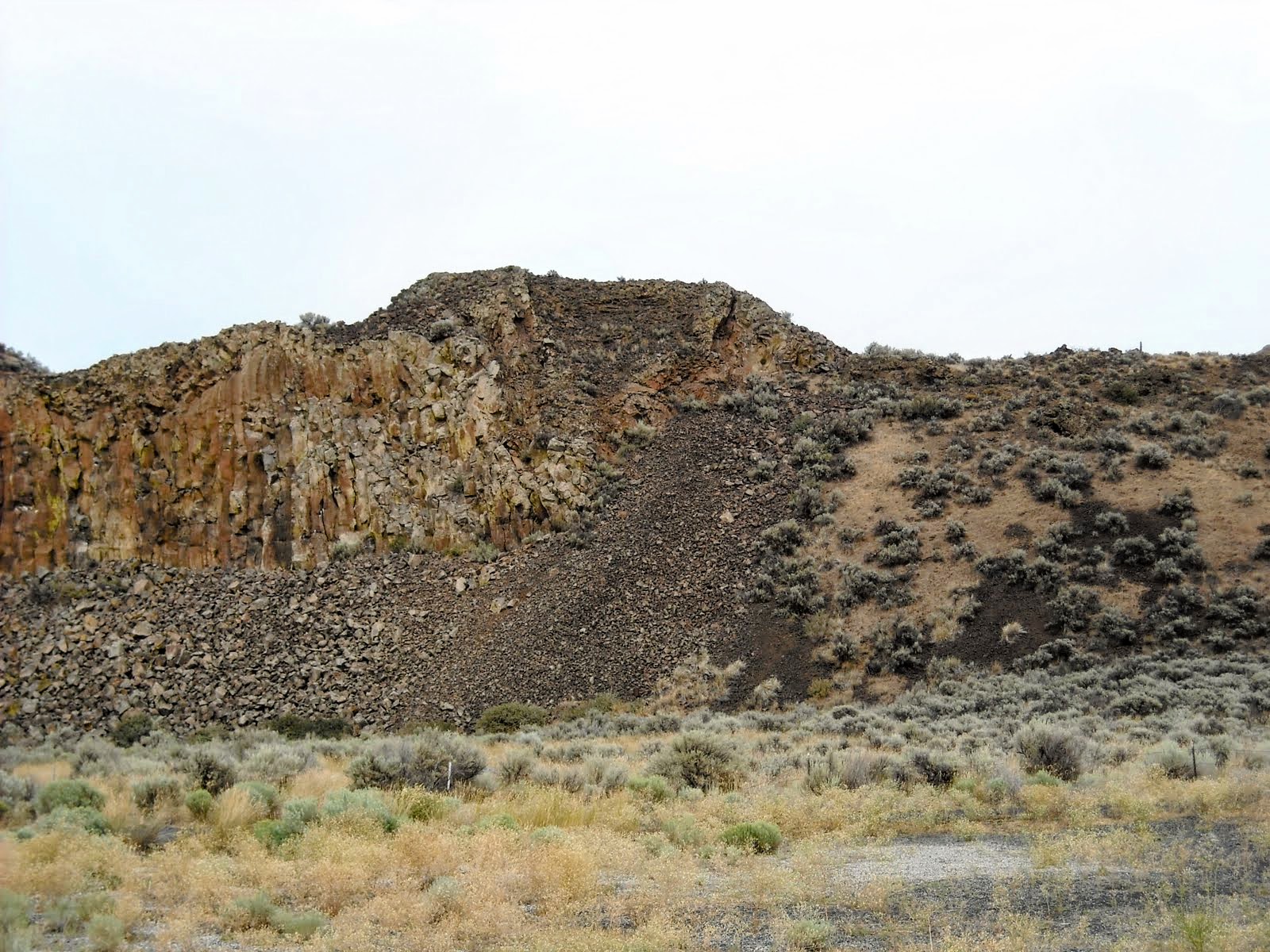
The wilderness of Judea is a hot, rocky, rugged place. It is an unforgiving environment that will make or break you. There is a road today that runs from Bethlehem down some twenty-five miles towards Jericho called the “Fire Road” because it’s so hot and unforgiving. I’ve also seen this type of wilderness in the high deserts of Washington and Oregon as well as in the Badlands of South Dakota.

The wilderness is the place where the limits of our faith and understanding of God are tested and tried.  The wilderness is the place where we discover if we will fall into the temptations before us or if will we rely on the beloved angels to minister to our character and keep us God-focused instead of moment-focused. The wilderness is that place that is difficult and we are forced to confront what we ultimately believe about life, our neighbor, and most importantly, our God.  

Consequently, the wilderness may not always be a physical place for you and me.  The wilderness may be the endurance of a painful divorce or a betrayal in a loving relationship.  The wilderness may be for some of us a period of depression when all we see and experience around us is an ever-decreasing hole of light and warmth as we are swallowed into cold darkness. The wilderness may be a diagnosis of cancer or disease that pushes the limits of one’s faith and trust in God to the edge.

Now let me clarify, divorce, a disease, or illness are not to be confused with the wilderness itself; a divorce, a life struggle, or an illness or disease is simply how we are driven out into the wilderness’ stark reality. So, what are redemptive life-sustaining, and spirit-enhancing lessons we can gain from being in the wilderness?

First and foremost, God has not left us alone in the wilderness.  Unlike Elvis, God has not left the building!  God is present with us amid the wilderness times whether we are aware of that special holy Presence or not. Jesus was in the wilderness, but he was not alone! Yes, evil was there to tempt and try him but so was God’s presence in the angels who tended to his needs. Jesus could choose to be open to the Presence of God or not; the choice was his.

The second lesson we can learn is that the place of wilderness is neither good nor bad per se; rather, it’s what we do and ascribe to what happens in the wilderness that dictates its “goodness” or “badness.”  For Jesus, the wilderness was always ‘just out there’ for every Palestinian. When placed in the wilderness, Jesus had to learn how to respond to the pains, trials, temptations, and doubts. Jesus had a choice. He could choose to respond by remaining grounded in his Father and responding out of his Father’s character, or Jesus could choose to take the easy way of temptation to reap short-term benefits in exchange for long-term, spiritual costs. The wilderness did not tempt Jesus; Satan tempted Jesus. The wilderness is where Jesus had to figure out how to respond to the voice of evil.

So, for you and me, the lay-off, the divorce, the illness, the accident, or whatever the crisis is in our life are simply the vehicles that drive us to the wilderness whereupon we each have to choose how we will navigate our faithful response. It’s the place where we quit focusing on the life circumstances that brought us to the wilderness (e.g. cancer, illness, divorce, etc.) and begin learning how to rely on God in those circumstances. The wilderness is an existential place each of us is delivered to where we are left to face a panoply of choices on how we will consciously choose to live life. It’s the place where we wonder about our existence as well as about God’s place in our lives; the wilderness is the place where we wrestle with God like Jacob at Bethel and deal with hard questions.

This Lent, the Holy Spirit is driving each of us into the wilderness. Do not be afraid to go there, beloved. It is the place where you and I can grow deeper and closer to God and to one another.  Don’t be afraid to go there because…remember, we do not go into the wilderness alone!  God and his angels are already waiting for you and for me! Amen.

© 2024 Patrick H. Wrisley. Sermon manuscripts are available for the edification of members and friends of First Presbyterian Church, Glens Falls, and may not be altered, re-purposed, published or preached without permission.   All rights reserved.


[1] See Mark 11:27, Mark 14:53-15:15 and Mark 15:16-32.

[2] New Revised Standard Version (NRSV). New Revised Standard Version Bible, copyright © 1989 the Division of Christian Education of the National Council of the Churches of Christ in the United States of America. Used by permission. All rights reserved.

Posted in Sermon | Tagged , , , , , , , , , , , , , , , | Leave a comment

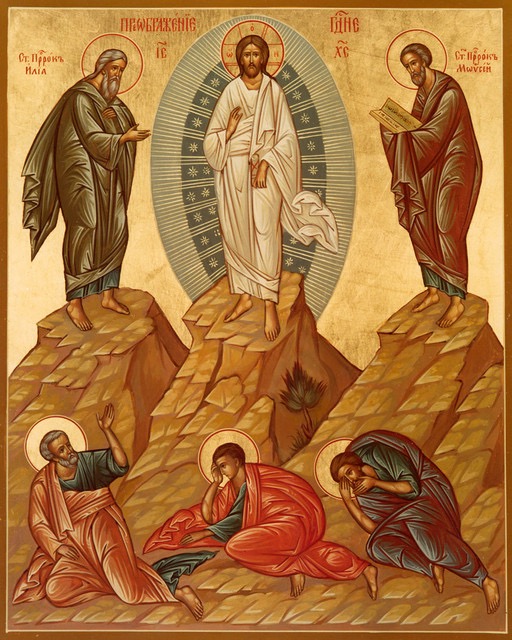
Why are we so uncomfortable with silence?, Mark 9:2-9

Turn in your Bible to Mark 9:2-9. It literally falls in the very center of Mark’s Story and serves as a continental divide of sorts for the gospel. The first half of Mark laid out who Jesus was and described the works he did: He preached; he taught; and he healed.  He demonstrated authority over the courses of nature and unexplainable demonic influences. The first half of Mark’s gospel leads us to this point in today’s passage: The revelation of the glory of God in Jesus.  The second half of Mark’s gospel describes how well the world understood and responded to this revelation of Jesus’ true identity. As we approach the season of Lent, we will have forty days to wade into the Story of how the religious, political, and economic systems rejected this revealed identity. We will also have the opportunity to reflect on how each of us responds to this frank, revealed identity as well.

In the chapter leading up to today’s reading, some pretty exciting things have happened that point to the fact the disciples were still not really “getting it” when it came to Jesus.  Peter has told Jesus that he is the Christ of God, which is all well and good, but when Jesus began describing what that really entailed, Peter flinched (Mk 8:30-33). Jesus’ understanding of what it means to be the Christ of God did not align with Peter’s triumphalist view. Jesus even sternly told Peter, “You’re acting like the Evil One; get behind me.”

So, this morning, we hear Jesus call three of his disciples to join him on an outing. This is how Mark the author tries to get us to pay attention to what’s coming up in the Story. He’s using specificity to get our attention; you see, Peter, James, and John have accompanied Jesus before on these special trips like the time they were invited to the bedside healing of a twelve-year-old girl in Mark 4.  Later in Mark’s Story, we will see Jesus invite this group again to stay with him while he prays alone in the Garden of Gethsemane. Peter, James, and John were the first line of Jesus’ spiritual support system[1]. These were his proverbial soul brothers who knew him better than anyone!  Well, at least they thought they did. Listen closely to this compact and rich encounter. Listen to the Word of the Lord!

Mark 9:2-9

Six days later, Jesus took with him Peter and James and John, and led them up a high mountain apart, by themselves. And he was transfigured before them, and his clothes became dazzling white, such as no oneon earth could bleach them. And there appeared to them Elijah with Moses, who were talking with Jesus. Then Peter said to Jesus, “Rabbi, it is good for us to be here; let us make three dwellings, one for you, one for Moses, and one for Elijah.” He did not know what to say, for they were terrified. Then a cloud overshadowed them, and from the cloud there came a voice, “This is my Son, the Beloved; listen to him!” Suddenly when they looked around, they saw no one with them anymore, but only Jesus.

As they were coming down the mountain, he ordered them to tell no one about what they had seen, until after the Son of Man had risen from the dead.[2]

So, let’s unpack our text. For a person acquainted with the Jewish spiritual stories, you would immediately hear all types of Old Testament allusions in our text.  You have the great prophets mentioned and you have earnest disciples encountering God on a high mountain. There is a familiarity to this Story. We should know where it’s headed and be able to call out the punchline before the Story is even finished! Like a simple math equation, Great OT Prophets plus a High Mountain plus a Select Few People equals an epiphany, a revelation! We know that God shows up at these times!  God speaks through burning flames in bushes and clouded and misted mountaintops. God reveals Godself on the top of mountains through wind, earthquakes, booming voices, and sometimes just through gentle whispers like with Elijah.

Friends, this is now the second time God speaks in Mark’s Story.  The first time was at Jesus’ baptism when a voice from heaven said, “You are my son, the beloved.”[3] The second time is today but this time God lets others hear the declaration as well: This is my Son, the beloved. Listen to him!

I don’t know about you, but in my imagination, I can hear a tone of annoyance in God’s voice. Think about it: Peter, James, and John are specifically invited to the mountain whereupon they witness the mystical, spiritual revelation of Jesus talking with Moses and Elijah! Not only was Jesus talking with them, but this was the moment when the soul brothers got a glimpse of his heavenly glory and the pure essence of who Jesus is! This Jesus of Nazareth is the Christ of God!  What an ecstatic spiritual moment and experience for these three disciples!  What a privilege it is to be there, to hear conversations only angels can hear! What a magical, luminous moment!

And then Peter starts talking.

He interrupts the Divine board meeting; I wouldn’t blame God a bit for being annoyed with Peter.

Dear Peter. Once again, he opens his mouth and sticks his foot in it. Once again, he is presented with an opportunity to fully see Jesus for who Jesus is and misses the point. I’m grateful Peter is so loved and is close to Jesus because that gives me hope! We are all like Peter! We miss the point of who God is and what the Lord is doing in our lives as well! Peter is us!

If we’re honest, we don’t fully get it either.  We like Peter want to turn our encounter with the glorified Christ into a personal moment on the mountaintop. We like Peter fail to see that Jesus is not on the same plane as Moses and Elijah; Jesus is not another prophet but is the very Presence and essence of the Divine I Am! Like Peter, we have an encounter with the Living God, and we also get uncomfortable at God’s awesome Presence and feel we have to do or say something.

God’s reply, “This is my Son, the Beloved. Can you hush up and just listen to him!” Maybe God is trying to tell us, “Don’t just do something but simply sit there and be still for him! Listen to what Jesus, the Beloved, has to say!”

In fairness to Peter, he does what we all typically do. We like to fill space and silence with empty words. We are uncomfortable with silence. We have this need to fill it. Like a father to a teenage son who is trying to instill a life lesson at a poignant time, God is telling Peter, “Won’t you just hush up and pay attention!” Peter’s busyness gets in the way of his ability to see who Jesus really is. Instead of just being consumed in the moment, taking it in, seeing how Jesus is similar but oh-so-very different from Moses and Elijah, Peter disrupts the moment. As soon as Peter opened his mouth, the glorified encounter was over.

We don’t like silence. We get uncomfortable in silence. Silence can feel overwhelming, almost heavy. So, we open our mouths and say something silly to fill the empty space and void. For example, I was standing with a couple whose child recently died of cancer, and someone very well-meaning (just like Peter, by the way), dared to come up to the parents and say, “I guess God needed him more than you do right now.” What! Instead of sitting in that holy moment and experiencing the pain and discomfort along with the parents, we open our mouths and say words that tear down. We mask our own fear and discomfort by saying something that’s just plain uncaring.

Beloved, as we begin the change of season from Epiphany to Lent, we are invited into prayerful, thoughtful, silent, and contemplative reflection on what happens to Jesus in the second half of Mark’s Story leading to persecution, arrest, and crucifixion.  It’s a time we are invited into the space where can experience the fullness of Christ’s glory and just sit with him. We are invited to be still and simply marinate in his transfigured Presence soaking up what the Spirit is trying to teach each one of us in our own place. But we have to be still.  We have to learn to be comfortable in the silent and sometimes uncomfortable Presence of God.

Over the time I have served with you, you may have picked up on a tradition I have at the beginning of every worship service. I invite us to be still and listen!  “Shhhh!” I say, “The Spirit of God is in this place.”  Have you wondered why I do that? It’s to call us back to the Mount of Transfiguration where we like Peter, James, and John surround ourselves with Prophets and stories from old and can sit in the Presence of God…if only we would be quiet and listen!  Amen.

© 2024 by Patrick H. Wrisley, 8 West Notre Dame Street, Glens Falls, NY 12801. Sermon manuscripts are available for the edification of members and friends of First Presbyterian Church of Glens Falls, NY, and may not be altered, re-purposed, published, or preached without permission. All rights reserved.


[1] See Mark 14:32 ff.

[2] New Revised Standard Version (NRSV). New Revised Standard Version Bible, copyright © 1989 the Division of Christian Education of the National Council of the Churches of Christ in the United States of America. Used by permission. All rights reserved.

[3] Mark 1:9-11.

Posted in Sermon | Tagged , , , , , , , , , , , | Leave a comment

The Real GOAT, Isaiah 40:21-31

Photo by Pixabay on Pexels.com

One of the most important people in any indigenous culture is the storyteller. These are the men and women who remind, preserve, and pass down vital knowledge of the community, its history, and its cultural traditions to future generations. In essence, our stories shape who we are and our identity.

 It is not uncommon for the spiritual leader, the shaman, to be the primary storyteller for the community because faith and religion are the fabric of any community’s makeup. Both the ancient Hebrews and the early Christian church were steeped in telling the stories about the patriarchs, Moses, the Judges, and the kings. The early Church kept orally sharing the stories about Jesus until they were finally begun to be written down some forty years after he died. One of my jobs as your pastor is to tell the stories of our faith but also to remind you of the stories of our faith. This morning’s scripture is a story to help us remember.

I like the word ‘remember’ because at its essence, when we remember we are literally re-membering, re-ligamenting, re-connecting to stories and events in our past. When we remember, we begin to realize where we have been and apply that knowledge to where we are now. Frankly, there’s safety and comfort in the practice of remembering. This is what Isaiah the prophet is doing in our reading this morning.

Turn to Isaiah 40. It’s helpful to realize that the large biblical book of Isaiah can be split up into three smaller sections which were written for a couple of hundred years. Chapters 1 to 39 were written to the people in the southern kingdom of Judah and warned them about the impending doom and Babylonian captivity. Chapters 55 until its conclusion are written to those Jews who were going back to Jerusalem and Palestine and were imploring them to live lives of justice and mercy as a people of God. Chapters 40 to 54 are written to the Jews who had been in captivity for a generation or more and are words that God still cares for them and is going to bring them back home. This is where today’s reading comes from.

 Written some 650-some-odd years before Jesus, the Jews who heard these words were second-generation exiles and had parents and grandparents who were the ones originally forced-marched out of Palestine. They were not treated as severely as the Hebrews were with Moses under Pharaoh’s captivity in Egypt, but a generation of Jewish people were languishing in a country far from home. Throughout this generational exile, the people began to take on some of the characteristics of their captors; they did business the way the locals did, and they began to worship the idols of this strange new world. The more they adapted to their culture in Babylon, the more they began to lose their Jewish identity as God’s chosen people. You see, they forgot what home was and looked like. Verse 21 begins our section with four rhetorical questions asked in staccato fashion and the answer to all four questions is an emphatic “yes!” Hear the Word of the Lord.

Isaiah 40:21-31

21 Have you not known? (YES!) Have you not heard? (YES!)
   Has it not been told you from the beginning? (YES!)
   Have you not understood from the foundations of the earth? (YES!)
22 It is he who sits above the circle of the earth,
   and its inhabitants are like grasshoppers;
who stretches out the heavens like a curtain,
   and spreads them like a tent to live in;
23 who brings princes to naught,
   and makes the rulers of the earth as nothing. 
24 Scarcely are they planted, scarcely sown,
   scarcely has their stem taken root in the earth,
when he blows upon them, and they wither,
   and the tempest carries them off like stubble. 
25 To whom then will you compare me,
   or who is my equal? says the Holy One.
26 Lift up your eyes on high and see:
   Who created these?
He who brings out their host and numbers them,
   calling them all by name;
because he is great in strength,
   mighty in power,
   not one is missing. 
27 Why do you say, O Jacob,
   and speak, O Israel,
‘My way is hidden from the Lord,
   and my right is disregarded by my God’?
28 Have you not known? (YES!) Have you not heard? (YES!)
The Lord is the everlasting God,
   the Creator of the ends of the earth.
He does not faint or grow weary;
   his understanding is unsearchable.
29 He gives power to the faint,
   and strengthens the powerless.
30 Even youths will faint and be weary,
   and the young will fall exhausted;
31 but those who wait for the Lord shall renew their strength,
   they shall mount up with wings like eagles,
they shall run and not be weary,
   they shall walk and not faint.[1]

My momma was a 5’2” whirling Scots Irish stick of dynamite and ruled the house. She had a parental technique whereby if my brothers, sister, or I failed to get up in time to get to school, she would get a cold washcloth and slap it on our face; not only did it wake us up, but the dripping water forced us to get out of bed to dry off! Today’s text is Isaiah’s wet washcloth to the face of the exiled Jews. It’s his way of telling them, “Wake up and remember who you are! Remember Whose you are! Remember who God is!”

Methodist biblical scholar and pastor Richard Puckett reminds us that a person or community’s faith begins with memory and when memory fails, the faith community becomes threatened. He writes, “The crisis of the Babylonian exile has caused the people to forget their own story, the story of God’s attentiveness and dependability, the story of God’s love for Israel. Because they have forgotten, they are questioning the presence and power of this God. But those who remember their history and believe in the God who fulfills promises will be able to receive new strength and life from their relationship with this God.”[2]

Isaiah the prophet and storyteller is attempting to wake the people up from complacency and help them to dream again. He’s reminding them of the God who called them into a community in the first place. Isaiah is calling them out for muttering under their breath and living their lives as though their ways were hidden from the Lord and that he has forgotten them. He’s reminding them to remember the God who called them as a people – the same God who created everything around them – is the One and Only God who will renew their strength and lift them up on eagle’s wings! He’s imploring the exiles to remember who the real GOAT is!

You know what a GOAT is, don’t you? Simone Biles is a GOAT. Tom Brady is a GOAT. Michael Jordan is a GOAT. In sports nomenclature, a GOAT stands for the Greatest of All Time. There is no other gymnast better than Biles. There is no other quarterback like Brady. No basketball star can fly through the air and do what Jordan did. And, my dear exiles in Babylon, there is no other God as great as the Lord God who created the heavens and earth and understands the unsearchable wisdom of all things. God is the ultimate Greatest of All Time.

In our officer’s training, we’ve been looking at the one cornerstone belief Presbyterians cling to is that God is THE GOAT. God is sovereign. In other words, no matter what happens or fails to happen in this life, we cannot out god God. When things are going well, God’s in control. When the wheels of our lives feel like they are coming off, God is in control.

When you fail to get the promotion – God is still in control.     

When you fail the class – God is still in control.

When you hear of a diagnosis – God is still in control.

When you are given the news you have a limited time to live – God is still in control.

When the wheels of our life are coming off, they cannot out god God. A failed promotion cannot out god God. A failed exam cannot out god God. A horrible diagnosis cannot out god God. Even death cannot out god God!

Intuitively, we probably all believe that. Practically, most of us probably forget it. This is why we are called to re-member, and re-connect with who God is and what God has already done in our lives.

I’m going to let you in on a little secret. I want to share with you how you can have a sense of spiritual peace in the midst of any and all of life’s hardships and difficulties. I promise that the more you apply this secret in your life, the more spiritually at peace and steadfast you will become. People will look at you and marvel at the depth of your faith. So, here’s the secret.

Gratitude. Simple gratitude. The cultivation of gratitude is the key to spiritual peace and well-being. Why? There is an axiomatic relationship between gratitude and remembering. The more consistently grateful we are, the more we remember God’s sovereign Presence in our lives even when we feel like we’re exiled in Babylon. When we remember with gratitude how God has consistently been with us in the past, we shall be confident amid life’s swirling waves that God is with us in the present. It’s in this grateful remembering that the sovereign Lord gives power to the faint, increases the strength of our feeble souls, and we will be lifted up as on eagle’s wings.

Our homework today is to begin cultivating the habit of waking up in the morning and going to sleep at night offering God gratitude for the way God has shown up in your life. Beloved, I promise, that the more you do this, the more spiritually at peace and settled you will become.

In the Name of the One who is, was, and is yet to come. Amen. Let us pray…

© 2024 Patrick H. Wrisley. Sermon manuscripts are available for the edification of members and friends of First Presbyterian Church of Glens Falls, 8 West Notre Dame Street, Glens Falls, NY 12801, and may not be reproduced or repurposed without permission from the author. All rights reserved.


[1]New Revised Standard Version Bible, copyright © 1989 National Council of the Churches of Christ in the United States of America. Used by permission. All rights reserved worldwide. http://nrsvbibles.org.

[2] An article by Richard A. Puckett in Feasting on the Word: Year B, Volume 1: Advent through Transfiguration (Feasting on the Word: Year B volume) by David L. Bartlett, Barbara Brown Taylor https://a.co/2GZ0yKd.

Posted in Sermon | Tagged , , , , , , , , , , , , , , , | Leave a comment

Fishing, Mark 1:21-28

                       A message on how to read the Bible.

Photo by Tima Miroshnichenko on Pexels.com

Turn in your Bible to Mark 1. Last week, Jesus was introduced in the Story as coming to herald the in-breaking of the reign of God which required people to do two things. First, they were to repent which meant they were asked to change their long-held assumptions about how they looked, thought, related, and experienced God in their life. Jesus called them to look at their faith from a refreshingly new perspective that God was not “way out there” but that the presence of God was right here in the midst of them; indeed, that is how we defined “gospel” — God is with us now. Second, Jesus told them to believe the Good News; in other words, the people were to actually live their lives in such a way and relate to their neighbors as though they were walking side-by-side with the very Presence of God next to them. In the process, Jesus called four fishermen to follow him and that he would teach them a new type of fishing, namely, how to fish for people. This brings us to our biblical passage this morning where Jesus begins to show and teach the four fishermen how to do just that very thing. Slide your finger down to verse 21 and hear the Word of the Lord.

 21They went to Capernaum; and when the sabbath came, he entered the synagogue and taught. 22They were astounded at his teaching, for he taught them as one having authority, and not as the scribes. 23Just then there was in their synagogue a man with an unclean spirit, 24and he cried out, “What have you to do with us, Jesus of Nazareth? Have you come to destroy us? I know who you are, the Holy One of God.” 25But Jesus rebuked him, saying, “Be silent, and come out of him!” 26And the unclean spirit, convulsing him and crying with a loud voice, came out of him.27They were all amazed, and they kept on asking one another, “What is this? A new teaching—with authority! He commands even the unclean spirits, and they obey him.” 28At once his fame began to spread throughout the surrounding region of Galilee.[1]

Our passage this morning provides us three truths on how to fish for people so let me knock those out really quick because they are obvious. I want to spend most of our time on the third one.

Truth 1: Jesus taught with authority. He felt his faith and relationship with God passionately. To put it in modern parlance, he believed in what he was selling! He was all in! He taught out of his shared and lived experience. You can remember your teachers over the years. You can remember the ones who were passionate about what they were teaching and made the material come alive. They were not just reading and regurgitating the textbook; they took the material and applied it to real life.  Jesus was such a teacher.  He taught from the scriptures and then made them come alive, and as we heard today, he then applied it to some unsuspecting, unclean-spirit-filled man who came to the synagogue that morning.

Truth 2 for fishing for people: He took what was commonplace and normal and reframed it in a new way. Jesus wasn’t making up new scripture for the people to learn; Jesus was taking the words of the well-known Torah and was making them come alive. We do not know the scripture Jesus was teaching from that day, but we do know what he said about it pushed some buttons. Jesus framed the old words of the prophets about God in such a way that evil personified among the people became agitated. This rabbi wasn’t like Charlie Brown’s teacher who groaned on “wah-wah-wah-wah-wah-wah-wah.” Jesus took what was well-known and framed it in such a way that it caused a reaction. His words kept people leaning forward in the pews wondering, “What’s he going to say next?!” And this leads us to truth number 3 in fishing for people.

Truth 3: Good fishermen and women know where to drop the line and hook. They know how weather affects the fish. They know how certain water conditions will affect fish behavior. They know the bait the fish like to nibble on in each of those conditions. She knows where to drop the Beaded Glo Bug Egg Fly or the Tungsten Jig Squirmy Wormy in the water to catch the trout of her dreams! That’s why fishing Luddites like me need a fishing guide to show me where and when to drop the hook.

In the brief time left, I want to help you learn how when, and where to drop the line in the water “to catch” larger fish in your faith. Before any of us can go fishing for other people, we are to learn how to read the water on our own. As an old crusty fisherman myself, I’ve been on the lake many years and I want to help you learn to read the water and conditions, so you’ll know where to drop your line. The lake I want to teach you on is not Lake George but right here, the Bible in your lap; let’s spend our few remaining moments in learning to begin reading the water of our scripture. Like Jesus, I want to reframe and de-mystify reading the Bible. Here we go!

Like anything we read in literature, we first begin to learn about a text by noting the basics of the story as it’s presented. For example, where do the events take place? Who are the characters in the story or action? Who speaks? Who remains silent? What is the action? How is the scene described? What time of day is it? Is there conflict or not? Who causes it? Just noting these basic items will help us as we read any story to grasp its deeper meaning. And so it is in our own fishing hole called scripture.

Today, our Story takes place in Capernaum, a fishing village on the northern side of the Sea of Galilee some 65 miles northeast of Jerusalem as the crow flies. We also note that all this takes place in a synagogue, a community hub where the Jewish people gather to socialize, celebrate worship, and learn. Mark informs us that all this is taking place on a Saturday which is the Jewish Sabbath day.

Who is gathered there?  We note Jesus and the four fishermen Peter, Andrew, James, and John are there. Jesus was also recognized as one of the local boys from nearby Nazareth. Also, there are the common run-of-the-mill folks of the town celebrating the Jewish Sabbath – men, women, children, the Rabbi, and of course, the scribes – the men who unpacked what the Torah – the Jewish Law really meant. Who else is present? Did you catch him? It’s the broken man, the impure man among the supposedly pure people, the man with an unclean spirit. Finally, Jesus is identified as the Holy One of God.

What’s happening in the text from a 40,000-foot perspective? Let’s look at the verbs used in the story; what action is taking place? Jesus is moving about and traveling. He taught in the synagogue with people he was familiar with, i.e. fellow Jews. We read how people were astounded by the teaching. The word in the ancient language Mark uses literally means what we say today: They were literally “blown away.”[2] He is rebuking and casting out. The man was convulsing and crying out. Commands are issued. Jesus’ fame was spreading.

Who was speaking and who was silent? What was said? Jesus spoke.

The unclean/impure spirit spoke. The congregation was murmuring among themselves. Who was silent? The fishermen Peter, Andrew, James, and John were all silent, as were the religious officials in whose synagogue Jesus was teaching. I wonder why?

Let’s hit the pause button a moment and apply this is us. What is this describing? Us! It describes a group of ordinary people who have come to gather on their holy day to socialize, celebrate worship, and learn. This group is describing us! Here we are some 60-some miles from the state capital on the southern edge of a lake in Warren County, New York. We are just regular, old folks living out our lives – men, women, children, a pastor, and leaders of the local church. And surprise, in case you weren’t aware of it, there are some of us in this room who are broken, too! There are some of us here who have unclean spirits as well – there lies in us the unclean spirit that separates genuine, normal relationships with those around us. We see others as “them” and they think they are against us. We see others through the lenses of hate, anger, jealousy, or even lust. With subtle hubris, there are those among us who even look at others as “those” people who are the real problem in the community.  We hear a southern preacher who is trying to get these old words to come alive for you as they are reframed in how you read your scriptures.

Beloved, before we can go fish for people, we need to learn how to fish for ourselves to gain our own sustenance. Our scriptures are every bit more beautiful than the Queen of American Lakes, Lake George. As your pastor a la fishing guide, I want us to learn to read the Bible so we can see, hear, and experience it come alive for us today in our dystopian 21st century world.

This is why I am asking you to join me on a Lenten 40-day journey into the wilderness that begins March 14th. I want us to be reading, discussing, and questioning together the daily lectionary readings for the forty days leading up to Easter. Then, when we gather together on Easter morning and shout, “He is Risen!” It will have a deeper significance and meaning for us. Beloved, let’s go fishing together!

In the Name of the One who is, was, and is yet to come. So be it.

© 2024 Patrick H. Wrisley. Sermon manuscripts are available for the edification of members and friends of First Presbyterian Church of Glens Falls, 8 West Notre Dame Street, Glens Falls, NY 12801, and may not be reproduced or repurposed without permission from the author. All rights reserved.


[1] New Revised Standard Version Bible, copyright © 1989 National Council of the Churches of Christ in the United States of America. Used by permission. All rights reserved worldwide. http://nrsvbibles.org.


[2] In Greek, the word is ekplesso, a verb that means to strike out, expel by a blow, drive or blow away.

Posted in Sermon | Tagged , , , , , , , , , , , , , , , | Leave a comment