

A Sermon delivered on Sunday, September 8, 2024, by Rev. Dr. Patrick H. Wrisley
Have you ever heard someone use the phrase, “I’ve hit the wall”? It is a phrase used to describe someone who has reached her limits and has nothing left in the tank to give anymore. They are exhausted. They have hit the wall. If you think back a few years, you will remember how many of us felt that when the pandemic thrust itself into our everyday lives. It required all of us to adapt most uncomfortably and inconveniently to life as it played out around us.
It happened to me in the church. One Sunday, we have several hundred people in worship and the next week, we have set up a make-shift TV studio in my office trying to figure out this thing called Livestream. Full-time parents with full-time jobs all of a sudden had to work at home along with their children who were full-time students online for school learning how to not only get along but learn how to do life together 24/7. Week after week I would get calls, “Why aren’t we meeting back in person yet? Why aren’t there Bible Studies? Why not this, or how come that?!” After a year of it, I was exhausted. How about you?
I noticed there were changes in how I related to both people and life. I grew emotionally tired of trying to be a cheerleader and encourager for a large staff and congregation. Every single day was a new pivot I had to make in my leadership because all aspects of everyday life had turned upside down. Every day was a continuing education workshop as I had to adapt to leading a staff and congregation daily in ways I never imagined I would. My dear wife had congestive heart failure, so I had this nagging fear that I would bring the virus home and kill her. It got to the point I was physically there, but I was not there. It got to the point I had to go talk with a counselor about it because I just wasn’t my old self.
So there, in my first ever Teladoc appointment (have you ever had one of those?), I am told, “Mr. Wrisley, I am seeing this a lot lately. The problem is you have depleted your surge capacity.” Huh?
Surge capacity is our human ability to draw upon spiritual, physical, and emotional reserves in times of crisis or high stress. We look back on a situation and wonder, “How did I, how did we, ever get through that?” We got through it because we had stored reserves in our surge capacity. A person’s surge capacity is those reservoirs of strength, clear-headedness, faith, and pragmatism that we dip into when we feel like we are hitting the wall. The problem appears in us when those reserves are depleted because the crisis or stress has lasted too long. My counselor told me, “Patrick, you have depleted your surge capacity. You have nothing in the tank, and we must figure a way for you to fill it back up so you can be your old self again.”[1]
As you think back over your life, whether from the pandemic, time in the armed services, natural disasters, or simply from the frenetic pace of life your job and other commitments demand of you – have you ever had depleted surge capacity? My guess is an unqualified, Yes! We human beings can only absorb and do so much.
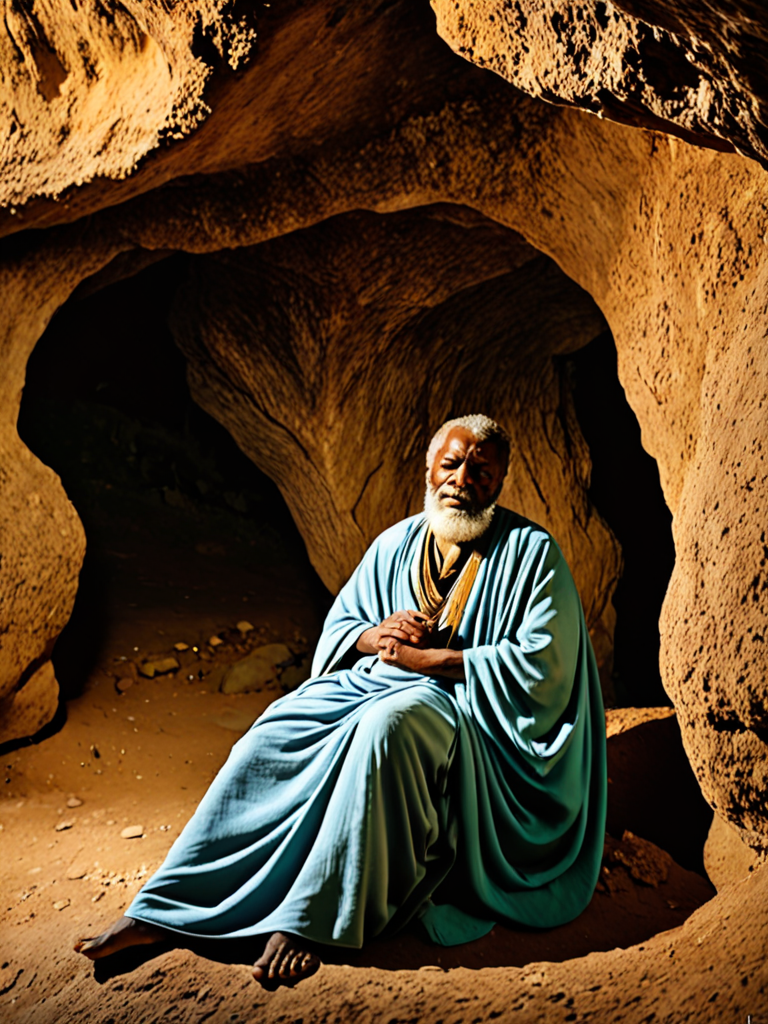
This morning, we are going to look at a moment when Jesus’ surge capacity is depleted. His tank was dry. He hit a wall. Turn in your Bible to Mark 7 and we are going to pick up at verse 24. It is helpful to remember all that has happened before this point in the story. Jesus has begun his ministry tour and has crisscrossed the region teaching, preaching, healing the sick, casting out demons, and trying to mentor his disciples. His cousin, John the Baptist, has been executed by the Empire. His family and kinsfolk of Nazareth did not accept his teaching or work. And now the hot-shot religious leaders from Jerusalem have traveled to Capernaum and are grilling Jesus and trying to trip him up. The Jewish Ph.D.’s of religion of the day, the Pharisees, are embroiled in arguments with Jesus about traditions and commandments about what is clean and unclean. The wall is hit. Listen to the Word of the Lord.
Mark 7:21-30
24.21 From there he set out and went away to the region of Tyre. He entered a house and did not want anyone to know he was there. Yet he could not escape notice, 25but a woman whose little daughter had an unclean spirit immediately heard about him, and she came and bowed down at his feet.26Now the woman was a Gentile, of Syrophoenician origin. She begged him to cast the demon out of her daughter. 27He said to her, ‘Let the children be fed first, for it is not fair to take the children’s food and throw it to the dogs.’ 28But she answered him, ‘Sir, even the dogs under the table eat the children’s crumbs.’ 29Then he said to her, ‘For saying that, you may go—the demon has left your daughter.’ 30So she went home, found the child lying on the bed, and the demon gone.[2]
Let’s be honest. This is not a flattering text. Preachers and scholars have all made various explanations for Jesus’ salty attitude from, “He is focused on the people of Israel first because that’s his mission” to “the word for ‘dog’ in the original language means ‘puppy’ so Jesus really isn’t being so snarky.” I don’t know. We have a saying back home that you can put lipstick on a pig but it’s still a pig. Jesus uses a common saying among the Jewish people describing the Gentiles in less than flattering ways; in other words, at this point in his journey, Jesus is not what we describe as being ‘woke.’
As tempting as it was to pick another text to preach on, we must wrestle with this hard verse. Why? Because it is a visible reminder that Jesus was a human being like you and me. The human Jesus had foibles. Christians have so focused on Jesus’ divine aspects that we have neglected to remember the beauty of the Incarnation of Christmas: Jesus, God with us, became a human being. It is the human Jesus that snapped at Simon Peter when got his purpose wrong. It is the human side of Jesus we see crying tears of blood from anguish on the night he was betrayed. It is the human side of Jesus who flipped the tables in the Temple when he saw how God’s house had been turned into a marketplace. It is the human side of Jesus that burned with anger when the religious know-it-alls placed policy above human need or interest. It is the human side of Jesus who scolds the disciples telling them, “Let the little children come to me.” And, it’s the human side of Jesus, who is operating with a depleted surge capacity who tells the Greek woman, “I’m here for my people first, then…”
What I love about this story is that it shows us a Jesus who gets tired and acts impulsively. I love the bold tenacity of the woman who dared to approach a Jewish male and make a plea to him. I love this story because this woman schooled Jesus and taught him something that he was not perhaps fully aware of within himself. Just as Jesus schooled the Pharisees in verses 1-23 about what defiles a person, so this desperate mother was not going to settle for a brush-off when it came to her little girl. “Even the puppies eat the scraps of food that are dropped from the master’s table.”
This woman and her bold, tenacious behavior and demand is exactly what Jesus needed to refill his surge capacity. She taught him that unlike his very own disciples who were not sure who he was, unlike his family who thought he was a little funny in the head, unlike the religious officials who thought he was corrupting the faith and Jewish culture, this bold woman is the one who recognized Jesus for who he was. Up until this point in Mark’s Story, it was mostly the exorcised demons who recognized and knew who Jesus was. Here, the Syrophoenician gentile woman falls at Jesus’ feet in an act of worship and believes in who Jesus is.
Wouldn’t you love to have seen Jesus’ face? The woman did the symbolic “drop-the-microphone”, and I can see this look of, “I just got schooled…I just got reminded of my larger purpose and task. Go, your daughter is well and her demons are gone.” I see Jesus with a wry smile shaking his head slowly back and forth thinking, “She gets it. Now I know I need to keep pressing ahead; there are detractors, but people are beginning to understand, even if it’s not the ones I expected.”
Because of a bold, tenacious, respectful bulldog of a woman, we have access as Gentiles to come to this table. Because of Jesus’ humanity that was shaped by the desperate pleas of a mother in distress, the Table has been opened to all of us. She helped refill our Lord’s surge capacity. Through this meal, Jesus restores yours and mine. Let us pray.
© September 8, 2024, by Patrick H. Wrisley. Sermon manuscripts are available for the edification of members and friends of First Presbyterian Church of Glens Falls, NY, and not be altered, re-purposed, published, or preached without permission. All rights reserved.



 patrick h wrisley