
A Sermon Delivered on January 11, 2026 by the Rev. Dr. Patrick H. Wrisley.
I grew up in Georgia, where debutante balls were part of the social fabric; these were elaborate galas where young women from prominent families were formally “presented” to society. I never attended one. While my peers were learning ballroom etiquette, I was working at Economy Carwash in Sandy Springs, cleaning mud pits and emptying vacuum canisters. I wasn’t bothered by missing those events; in fact, I found my work oddly fascinating as you’d be surprised what people lose in their cars at the car wash. We found all sorts of things in the vacuum canisters.
The word “debutante” comes from the French débuter. It means “to lead off” or “to begin.” Historically, these public presentations served a practical purpose: daughters of marriageable age from aristocratic families needed to find husbands of appropriate social standing. The entire ritual was about establishing networked connections within a particular circle of society.[1]
I did not run in those circles. As you might imagine, young men who cleaned car wash mud pits didn’t typically receive invitations to such events. I say all this because in a profound sense, today’s Scripture is about a debutante, i.e., in this instance, a divine presentation to the world. Please turn with me to Matthew 3:13-17.
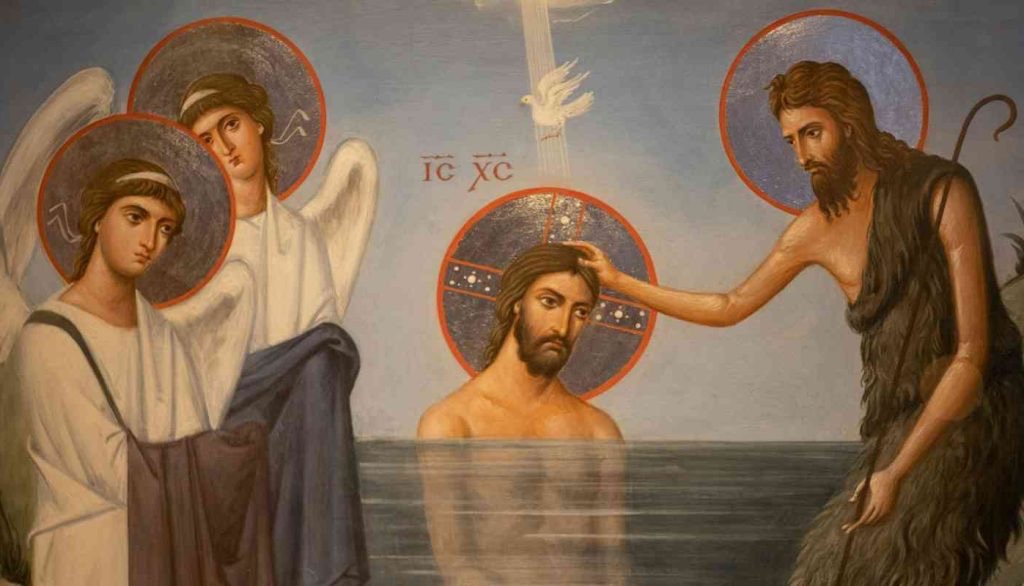
13 Then Jesus came from Galilee to John at the Jordan, to be baptized by him. 14 John would have prevented him, saying, “I need to be baptized by you, and do you come to me?” 15 But Jesus answered him, “Let it be so now; for it is proper for us in this way to fulfill all righteousness.” Then he consented. 16 And when Jesus had been baptized, just as he came up from the water, suddenly the heavens were opened to him and he saw the Spirit of God descending like a dove and alighting on him. 17 And a voice from heaven said, “This is my Son, the Beloved, with whom I am well pleased.”[2]
When we encounter John the Baptist, he’s not baptizing in Jerusalem, the religious center for the Jewish people but near Galilee. The region of the Galilee was crossroads region populated by Jews and Gentiles alike. First-century Galilee was remarkably diverse, with a population of approximately 350,000 that included 100,000 enslaved people. Scholars note that God could hardly have chosen a more multicultural context for Christ’s ministry to begin.[3]
Galilee wasn’t prestigious. Faithful Jews who lived there were viewed with suspicion precisely because they lived among so many ritually unclean Gentiles. Jesus came from this mixed region, with its blend of ethnicities and religious practices. And it’s here amongst the hoi polloi that Christ’s public ministry begins as opposed to the gleaming temple of Jerusalem.
Imagine the scene: John stands in the water, dripping wet, having captivated the crowd with his prophetic preaching. People recognize him as the reincarnation of Elijah, that great prophet who called Israel back to faithfulness. Into this moment, Jesus arrives and asks to be baptized. John, recognizing his own cousin, protests: “I need to be baptized by you; why do you come to me?” Jesus’ response is profound:
Let it be so now; it is proper for us to do this to fulfill all righteousness.
Now, what does it mean to “fulfill all righteousness”? It means simply this: the Son of God, the great I Am, chose to become fully human so as to completely identify with us. This echoes the Christmas story, when God became flesh. Jesus didn’t need cleansing from sin; rather, as God incarnate, he was establishing a pattern of adoption for all who would follow him.
Baptism represents adoption and a commissioning into the Christian community. It reenacts the Easter drama where those baptized die to the old life and rise out of the water to new, resurrection life. Through his baptism, Jesus was presented to the world; it was his divine debutante, if you will. But again, notice where it happens: not in society’s elite circles, but at the equivalent of a car wash on Broad and Thomas Streets. God revealed himself not to those the culture deemed worthy, but to ordinary people, the very ones society overlooked.
Before this moment, people believed God revealed himself only through priests and holy men and women. Now God in Christ had his coming-out party among everyday people like you and me. “Fulfilling all righteousness” means God chose to make his grand entrance with average folks of the first century. That Galilee serves as the location underscores that the Gospel is for everyone, Jews and Gentiles alike.
Our key verse is verse 17:
And a voice from heaven said, ‘This is my Son, whom I love; with him I am well pleased.’
This is like the master of ceremonies at a debutante ball announcing the next young woman who is being introduced. This is the moment of revelation. But here’s my question for us: Are we listening? Are we out in the ballroom paying attention to this divine introduction and announcement, or are we distracted, metaphorically standing in the buffet line when God’s Son is being introduced?
A minister once told her congregation:
This morning I’m going to speak on the relationship between fact and faith. It’s a fact that you’re sitting here. It’s a fact that I’m standing here speaking. But it’s faith that makes me believe you might actually be listening.[4]
It’s a fact that we celebrated Christmas. It’s a fact that hundreds worshiped with us through December. But it takes faith to believe that some word, some carol, some prayer, some Scripture might have caused at least one worshiper to truly awaken and see the Christ child enabling them to have their own epiphany that makes them say, “I hear. I see. I believe.”
This same dynamic occurs at baptism. When we baptize someone in this congregation, it reminds us of that moment when we first stirred to the Holy Spirit’s movement, when we had our own spiritual “aha!” moment and grasped the profound spiritual truth of the children’s song: “Jesus loves me, this I know, for the Bible tells me so.”
Every time someone comes to this font, we should hold our breath in anticipation, knowing God is at work in ways that will ripple through countless lives. My second-grade Sunday school teacher once told me, years later, “I never thought you’d become a pastor!” Miraculous things can happen when one comes to the font!
You see, it’s a fact that parents and baptismal candidates answer questions about faith. It’s a fact that water is placed upon them, sealing them with the Holy Spirit and adopting them into the covenant community. But it’s faith, my beloved, that makes me believe you will uphold your part of the baptismal vows when you promise to the baptized child or adult, “I will pray for you, teach you, and guide you in the faith.”
Christ’s baptism prefigures our own. Just as he came among ordinary people and was announced as God’s beloved Son, so too are we announced as children of God at baptism. God declares over each baptized person: “This is my child! Love them and bring them to spiritual maturity.”
Yes, God meets us where we are. The question is: Are we paying attention?
Let me ask you: when did you last experience an epiphany? When has God been viscerally real to you? When have you had that “aha!” moment when you knew that you knew that you knew Jesus was real and present? When has the dove of the Spirit alighted on you and quickened your heart?
As you leave today, I invite you to pause at our baptismal font. Place your hand in the water. As you do, pray that God’s grace will rest upon you, that you might regularly receive epiphanies, those revelations of God in the mundane moments of life. As you feel the cool water, remember the promises you’ve made over the years to those baptized at the font. Take a moment to remember your own baptism, your own presentation as God’s beloved child. I tell parents who bring their kids for baptism to celebrate those days every year like a birthday party. Help your kids remember their special day. To this day, I still send cards and call my adult daughters on their baptism anniversary. I let them know how proud I am of the women they have become. Friends, once you reconnect with that baptismal moment of yours and or that of someone else, you’ll experience Christ’s debutante as though you were there.
You’ll see John walking his cousin into the Jordan. You’ll watch as he places his hand behind Jesus’ head. You’ll see Jesus fall back beneath the surface and rise up dripping. And you’ll hear the voice, that divine announcement of presentation:
“This is my Son, whom I love; with him I am well pleased.”
In the name of the Father, and of the Son, and of the Holy Spirit. Amen.
© 2026 by Patrick H. Wrisley. Sermon manuscripts are available for the edification of members and friends of First Presbyterian Church of Glens Falls and may not be altered, re-purposed, published or preached without permission. All rights reserved.
[1] “The History of the Debutante Season,” from the San Marino Women’s Club Guild, http://www-rcf.usc.edu/~clingerm/history.html. Accessed on 5 January 2005
[2] The Holy Bible: New Revised Standard Version (Nashville: Thomas Nelson Publishers, 1989), Mt 3:13–17.
[3] Leonard I. Sweet in Homiletics, Listening for God, Matthew 3,13-17, 1/10/1993. Accessed from www.homileticsonline.com on 12/28/2004.
[4] This story was shared with a colleague years ago.


