
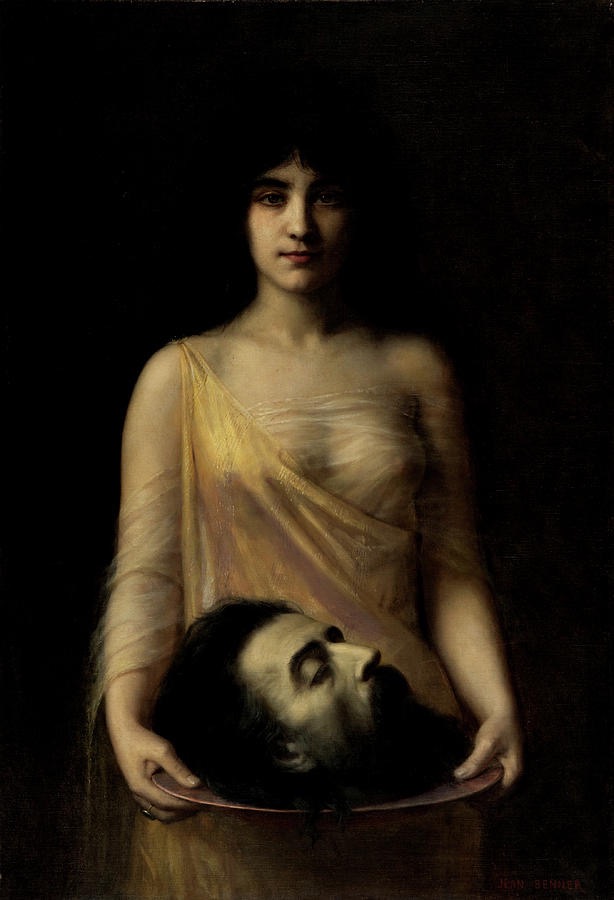
A sermon delivered on July 14, 2024, by Rev. Dr. Patrick H. Wrisley
One of the daily readings for the lectionary this week was from Matthew. It registered with me considering what happened last evening in Pennsylvania as well as with the general tone and tenor of our bifurcated Divided States of America. Matthew 24.12 reads, “Because of the increase of lawlessness, the love of many will grow cold.” Over the past 15 or so years, we have undergone the Great Regression as bigotry, hate speech, and discrimination towards people of color, ethnicity, and sexuality have increased. Individuals who believe they are wiser than you and me and who believe they are entitled to take the law into their own hands have done so. Whether it was Kevin Monahan[1] who shot a 20-year-old girl who simply pulled into the wrong driveway in Hebron a year ago or the individual who believed he had the right to take out a former President, people are showing a lack of trust within their communities and government.
Some American governors have such disdain for the Federal government that they are recruiting and building their own private state militias who are only responsible to the governor in power at the time.[2]
There are even churches that have had to hire mediation experts to ensure members of the same congregation could play nicely together in the same sandbox. Yes, this mistrust of each other in our nation has seeped into every layer of our country and the result is the death of Civitas. Civitas, the shared values a community believes in and lives into, is vital for a stable nation. Civitas defines who and what a community is and how it behaves.
Centuries ago, the Church Father and Theologian Augustine wrote a book entitled, The City of God, which describes two competing cities. One is the Earthly City whose ambitions are all about power and greed. The other is the City of God, the spiritual city, where God and the spiritual powers reign in implementing a way of life that is consistent with the Gospels and Jesus’ ethics. This disparate juxtaposition is highlighted in our Gospel lesson this morning.
In a poll of my preacher-friends on what text they are preaching this morning, every single one was avoiding this text in Mark about the death of John the Baptist. “C’mon Wrisley, it is just too messy.” And it is. It is a text that hoists a mirror in front of our face that we must gaze into. It is a dramatic text that forces us to look at ourselves, our nation’s Civitas, and our church’s Civitas, and realize the Church of Jesus Christ, i.e., you and me, are striving to live into the City of God.
At least we should be.
Last week, we read how Jesus scandalized the people in the synagogue he grew up in, and then he commissions the Twelve Disciples to go out two-by-two to preach and heal. Between their sending and their return, Mark inserts our Story about John’s death. It is a Story about the confrontation of political power and prophetic faith.[3] It paints a shadow of what comes next with Jesus, Pilate, and the Crucifixion in chapter 15. Before we hear the text, let me introduce some of the characters to you.
The first person we meet is King Herod. This is not the larger-than-life Herod the Great but one of Herod’s sons, Antipas. Antipas petitioned Caesar to become an actual king, but Caesar refused and made him a tetrarch, one of four governors who ruled Palestine. Even though Caesar did not make him a king, Antipas felt the freedom to call himself one. Antipas could care less about the Jewish way of life. He even built his magnificent palace in Tiberius on top of an ancient burial ground which discouraged Jews from coming to visit him because the palace defiled a graveyard.
Next, we hear about Jesus. Perhaps it was because of the 12’s preaching and healing tour in Jesus’ name that word got to Antipas, but the wannabe king began to second guess his rash act in killing John. Herod’s confusion about Jesus made him think it was a reincarnated John the Baptist who came back to haunt him. Others said Jesus was the prophet, Elijah.
We then hear about this woman named Herodias. She was a cousin of Herod Antipas who was married to one of his half-brothers, Phillip. Antipas convinced her to divorce Phillip and marry him instead. John the Baptist called Antipas out on this which caused Herodias to hate and despise John. And then we meet another Herodias who is Mother Herodias’s daughter. Later church tradition gives her the name Salome.[4] She is Herodias’ daughter and Antipas’ stepdaughter and niece, and who by all accounts, was quite the dancer. Did you get all that? Hear the Word of the Lord.
Mark 6:14–30
6.14 King Herod heard of it, for Jesus’ name had become known. Some were saying, “John the baptizer has been raised from the dead, and for this reason, these powers are at work in him.” 15 But others said, “It is Elijah.” And others said, “It is a prophet, like one of the prophets of old.” 16 But when Herod heard of it, he said, “John, whom I beheaded, has been raised.”
17 For Herod himself had sent men who arrested John, bound him, and put him in prison on account of Herodias, his brother Philip’s wife because Herod had married her. 18 For John had been telling Herod, “It is not lawful for you to have your brother’s wife.” 19 And Herodias had a grudge against him and wanted to kill him. But she could not, 20 for Herod feared John, knowing that he was a righteous and holy man, and he protected him. When he heard him, he was greatly perplexed; and yet he liked to listen to him. 21 But an opportunity came when Herod on his birthday gave a banquet for his courtiers and officers and for the leaders of Galilee. 22 When his daughter Herodias came in and danced, she pleased Herod and his guests; and the king said to the girl, “Ask me for whatever you wish, and I will give it.” 23 And he solemnly swore to her, “Whatever you ask me, I will give you, even half of my kingdom.” 24 She went out and said to her mother, “What should I ask for?” She replied, “The head of John the Baptist.” 25 Immediately she rushed back to the king and requested, “I want you to give me at once the head of John the Baptist on a platter.” 26 The king was deeply grieved; yet out of regard for his oaths and for the guests, he did not want to refuse her. 27 Immediately the king sent a soldier of the guard with orders to bring John’s head. He went and beheaded him in the prison, 28 brought his head on a platter and gave it to the girl. Then the girl gave it to her mother. 29 When his disciples heard about it, they came and took his body, and laid it in a tomb.[5]
Presbyterian Pastor and Professor of New Testament at Luther Seminary, Matthew Skinner writes that this is a story, “About an elite culture that plays by its own twisted, pernicious rules. Rome chose a pompous leader to govern Galilee, and (Antipas) represents a culture fueled by power and privilege that will do anything to extend its capacity to pursue its own desires, (to) hold onto power, (to) trumpet its own self-importance, (to) eliminate criticism, and (to) resist the justice and peace that God longs to bring to fruition.”[6] This is a Story of personal political expediency and privilege over and against the Civitas of Jewish ethics.
With subtle hyperbole, Mark weaves a narrative exposing two brilliantly lit extremes: Herod and his partygoers expose a life, conscience, and government devoid of grace and God’s justice in the pursuit of power and prurient self-interest. John, in stark contrast, is a Nazarene who has lived a strict, ascetical life devoid of any worldly pleasure or power. Our is a Story of political ambition and expediency, seduction, sexual lust, abuse of power, and murder. This is one of only two scenes in Mark’s gospel Jesus is not the center of the plot. The plot is pitting the way we treat each other in society and the way we resent the in-breaking of God’s presence into our realm.
Mark frames his narrative in a way the Jewish people would hear because they have heard of this Story before. First, they are reminded of how Queen Jezebel manipulated her husband King Ahab in her hatred of the prophet Elijah. There are echoes of the Book of Esther when a drunken Persian King named Ahasuerus made a promise to Queen Esther to give her half of the Kingdom should she want it.[7] Furthermore, Jewish biblical scholar, Amy-Jill Levine, notes that the Greek word for Jairus’ 12-year-old daughter Jesus previously healed in chapter five is referred to as a korasion, i.e., a virginal young child. Queen Esther when she is brought before King Ahasuerus is referred to as a korasion in the Greek version of the Old Testament. Salome in today’s text is also called a korasion![8]
This Story is full of disgusting behavior. An uncle has his 12-year-old stepdaughter and niece dance seductively before kings, princes, queens, state officials, and businesspeople of the day and then promises her something he does not have the authority to give. The daughter has no sense of Civitas or conscience and is manipulated by a disgruntled and hateful mother. Herod is a drunken wannabe king who makes a rash offer only to be given a rash ultimatum in return by a twelve-year-old. “Daddy, immediately give me on a dinner platter, the head of John the Baptist.” As Professor Levine remarks, “The platter was (Salome’s) idea. She does not question her mother’s desire for John’s death; she adds to it. She thus transforms John into another course at the banquet.”[9]
Theologian Cheryl Bridges Johns says, “The execution of John forces the reader to gaze into a world of corruption, lust, and power…Herod’s court is in a far country whose horizon seems so distant from ours.”[10] But is it, really? Our Story of John’s execution should shake us up, my friends. His world is not that much different from ours. It reminds us of the seduction of power and prestige which encourages us to act out on our own because I sure cannot trust you nor can I trust my neighbor! It reminds us of John, the person whom Jesus called, “The greatest man born of woman, was killed over a cocktail wager.[11]
The point of Mark’s Story, Church, is that to be a Christian disciple means it is not going to be easy. It teaches us that as members of the Church, we have the spiritual obligation to speak Truth to power even when it’s inconvenient and dangerous to do so. If there ever was a time our country needed her churches to stand up and do just that is right now; now is the time for the Church to speak Truth to Power.
My sermon title is a bit esoteric this morning and I do not mean it to be, but it captures well the goal of our text’s teaching. It is derived from Acts 1:1 where it says, “Jesus began to do and teach.” Coepit facere et docere – is a Latin phrase that describes a concept which means, “We cannot preach what we do not practice.” We cannot preach what we do not practice. Friends, now is the time to put into practice our belief in Jesus and his ethic of loving each other even in our nasty politics and swirly state of social affairs. It means we do this when it is unpopular and difficult to do so.
In the name of the One who is, was, and is yet to come. So be it.
© July 14, 2024, by Patrick H. Wrisley. Sermon manuscripts are available for the edification of members and friends of First Presbyterian Church of Glens Falls, NY, and may not be altered, re-purposed, published, or preached without permission. All rights reserved.
[1] “New York man who fatally shot woman who was mistakenly driven up his driveway sentenced to 25 years to life in prison,” from CBS News, March 1, 2024. See https://www.cbsnews.com/news/kevin-monahan-sentenced-kaylin-gillis-killed-pulling-into-driveway/.
[2] “The Florida Guard Looks Like Desantis’ Own Militia,” The Miami Herald, February 1, 2024. Accessed 7/8/24 at https://www.miamiherald.com/opinion/editorials/article284959592.html.
[3] Bartlett, David L.; Taylor, Barbara Brown. Feasting on the Word: Year B, Volume 3: Pentecost and Season after Pentecost 1 (Propers 3-16) (Feasting on the Word: Year B volume). Presbyterian Publishing Corporation. Kindle Edition.
[4] See Josephus Antiquities of the Jews (Book XVIII, Chapter 5, 4.
[5] The New Revised Standard Version, copyright 1989, 1995 by the Division of Christian Education of the National Council of the Churches of Christ in the United States of America. Used by permission. All rights reserved.
[6] Connections: Year B, Volume 3: Season after Pentecost (Connections: A Lectionary Commentary for Preaching and Worship) by Joel B. Green, Thomas G. Long, et al. See https://a.co/3CMDvQB. I added the word (to) for rhetorical clarity.
[7] See Esther 7.
[8] Levine, Amy-Jill. The Gospel of Mark: A Beginner’s Guide to the Good News (pp. 39-40). Abingdon Press. Kindle Edition.
[9] Ibid., 40.
[10] Bartlett, David L.; Taylor, Barbara Brown. Feasting on the Word: Year B, Volume 3: Pentecost and Season after Pentecost 1 (Propers 3-16) (Feasting on the Word: Year B volume) . Presbyterian Publishing Corporation. Kindle Edition.
[11] James R Edwards, The Gospel According to Mark (Grand Rapids: William B Eerdmans Publishing Company, 2002), 189.


