
A message on how to read the Bible.
Turn in your Bible to Mark 1. Last week, Jesus was introduced in the Story as coming to herald the in-breaking of the reign of God which required people to do two things. First, they were to repent which meant they were asked to change their long-held assumptions about how they looked, thought, related, and experienced God in their life. Jesus called them to look at their faith from a refreshingly new perspective that God was not “way out there” but that the presence of God was right here in the midst of them; indeed, that is how we defined “gospel” — God is with us now. Second, Jesus told them to believe the Good News; in other words, the people were to actually live their lives in such a way and relate to their neighbors as though they were walking side-by-side with the very Presence of God next to them. In the process, Jesus called four fishermen to follow him and that he would teach them a new type of fishing, namely, how to fish for people. This brings us to our biblical passage this morning where Jesus begins to show and teach the four fishermen how to do just that very thing. Slide your finger down to verse 21 and hear the Word of the Lord.
21They went to Capernaum; and when the sabbath came, he entered the synagogue and taught. 22They were astounded at his teaching, for he taught them as one having authority, and not as the scribes. 23Just then there was in their synagogue a man with an unclean spirit, 24and he cried out, “What have you to do with us, Jesus of Nazareth? Have you come to destroy us? I know who you are, the Holy One of God.” 25But Jesus rebuked him, saying, “Be silent, and come out of him!” 26And the unclean spirit, convulsing him and crying with a loud voice, came out of him.27They were all amazed, and they kept on asking one another, “What is this? A new teaching—with authority! He commands even the unclean spirits, and they obey him.” 28At once his fame began to spread throughout the surrounding region of Galilee.[1]
Our passage this morning provides us three truths on how to fish for people so let me knock those out really quick because they are obvious. I want to spend most of our time on the third one.
Truth 1: Jesus taught with authority. He felt his faith and relationship with God passionately. To put it in modern parlance, he believed in what he was selling! He was all in! He taught out of his shared and lived experience. You can remember your teachers over the years. You can remember the ones who were passionate about what they were teaching and made the material come alive. They were not just reading and regurgitating the textbook; they took the material and applied it to real life. Jesus was such a teacher. He taught from the scriptures and then made them come alive, and as we heard today, he then applied it to some unsuspecting, unclean-spirit-filled man who came to the synagogue that morning.
Truth 2 for fishing for people: He took what was commonplace and normal and reframed it in a new way. Jesus wasn’t making up new scripture for the people to learn; Jesus was taking the words of the well-known Torah and was making them come alive. We do not know the scripture Jesus was teaching from that day, but we do know what he said about it pushed some buttons. Jesus framed the old words of the prophets about God in such a way that evil personified among the people became agitated. This rabbi wasn’t like Charlie Brown’s teacher who groaned on “wah-wah-wah-wah-wah-wah-wah.” Jesus took what was well-known and framed it in such a way that it caused a reaction. His words kept people leaning forward in the pews wondering, “What’s he going to say next?!” And this leads us to truth number 3 in fishing for people.
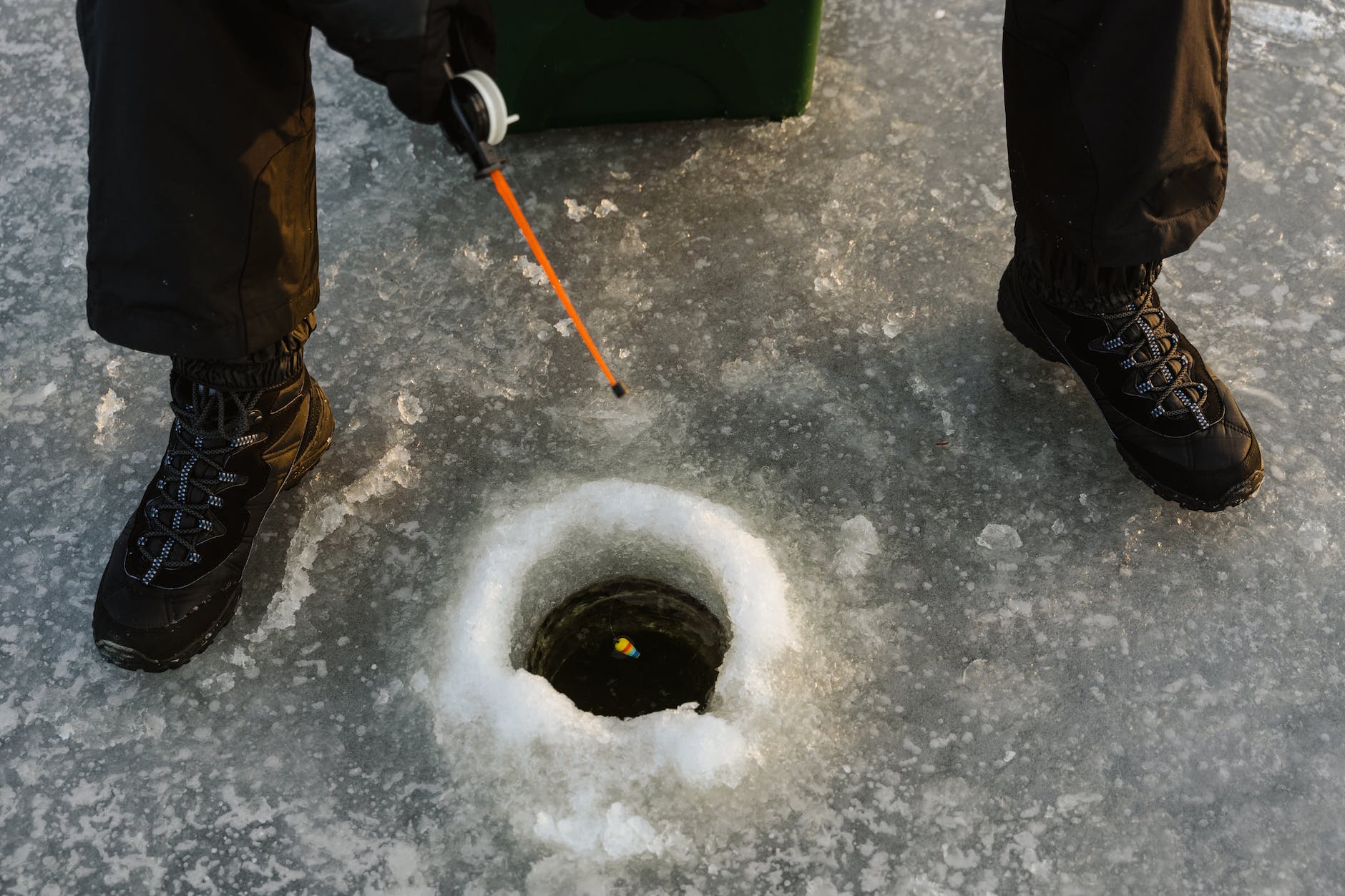
Truth 3: Good fishermen and women know where to drop the line and hook. They know how weather affects the fish. They know how certain water conditions will affect fish behavior. They know the bait the fish like to nibble on in each of those conditions. She knows where to drop the Beaded Glo Bug Egg Fly or the Tungsten Jig Squirmy Wormy in the water to catch the trout of her dreams! That’s why fishing Luddites like me need a fishing guide to show me where and when to drop the hook.
In the brief time left, I want to help you learn how when, and where to drop the line in the water “to catch” larger fish in your faith. Before any of us can go fishing for other people, we are to learn how to read the water on our own. As an old crusty fisherman myself, I’ve been on the lake many years and I want to help you learn to read the water and conditions, so you’ll know where to drop your line. The lake I want to teach you on is not Lake George but right here, the Bible in your lap; let’s spend our few remaining moments in learning to begin reading the water of our scripture. Like Jesus, I want to reframe and de-mystify reading the Bible. Here we go!
Like anything we read in literature, we first begin to learn about a text by noting the basics of the story as it’s presented. For example, where do the events take place? Who are the characters in the story or action? Who speaks? Who remains silent? What is the action? How is the scene described? What time of day is it? Is there conflict or not? Who causes it? Just noting these basic items will help us as we read any story to grasp its deeper meaning. And so it is in our own fishing hole called scripture.
Today, our Story takes place in Capernaum, a fishing village on the northern side of the Sea of Galilee some 65 miles northeast of Jerusalem as the crow flies. We also note that all this takes place in a synagogue, a community hub where the Jewish people gather to socialize, celebrate worship, and learn. Mark informs us that all this is taking place on a Saturday which is the Jewish Sabbath day.
Who is gathered there? We note Jesus and the four fishermen Peter, Andrew, James, and John are there. Jesus was also recognized as one of the local boys from nearby Nazareth. Also, there are the common run-of-the-mill folks of the town celebrating the Jewish Sabbath – men, women, children, the Rabbi, and of course, the scribes – the men who unpacked what the Torah – the Jewish Law really meant. Who else is present? Did you catch him? It’s the broken man, the impure man among the supposedly pure people, the man with an unclean spirit. Finally, Jesus is identified as the Holy One of God.
What’s happening in the text from a 40,000-foot perspective? Let’s look at the verbs used in the story; what action is taking place? Jesus is moving about and traveling. He taught in the synagogue with people he was familiar with, i.e. fellow Jews. We read how people were astounded by the teaching. The word in the ancient language Mark uses literally means what we say today: They were literally “blown away.”[2] He is rebuking and casting out. The man was convulsing and crying out. Commands are issued. Jesus’ fame was spreading.
Who was speaking and who was silent? What was said? Jesus spoke.
The unclean/impure spirit spoke. The congregation was murmuring among themselves. Who was silent? The fishermen Peter, Andrew, James, and John were all silent, as were the religious officials in whose synagogue Jesus was teaching. I wonder why?
Let’s hit the pause button a moment and apply this is us. What is this describing? Us! It describes a group of ordinary people who have come to gather on their holy day to socialize, celebrate worship, and learn. This group is describing us! Here we are some 60-some miles from the state capital on the southern edge of a lake in Warren County, New York. We are just regular, old folks living out our lives – men, women, children, a pastor, and leaders of the local church. And surprise, in case you weren’t aware of it, there are some of us in this room who are broken, too! There are some of us here who have unclean spirits as well – there lies in us the unclean spirit that separates genuine, normal relationships with those around us. We see others as “them” and they think they are against us. We see others through the lenses of hate, anger, jealousy, or even lust. With subtle hubris, there are those among us who even look at others as “those” people who are the real problem in the community. We hear a southern preacher who is trying to get these old words to come alive for you as they are reframed in how you read your scriptures.
Beloved, before we can go fish for people, we need to learn how to fish for ourselves to gain our own sustenance. Our scriptures are every bit more beautiful than the Queen of American Lakes, Lake George. As your pastor a la fishing guide, I want us to learn to read the Bible so we can see, hear, and experience it come alive for us today in our dystopian 21st century world.
This is why I am asking you to join me on a Lenten 40-day journey into the wilderness that begins March 14th. I want us to be reading, discussing, and questioning together the daily lectionary readings for the forty days leading up to Easter. Then, when we gather together on Easter morning and shout, “He is Risen!” It will have a deeper significance and meaning for us. Beloved, let’s go fishing together!
In the Name of the One who is, was, and is yet to come. So be it.
© 2024 Patrick H. Wrisley. Sermon manuscripts are available for the edification of members and friends of First Presbyterian Church of Glens Falls, 8 West Notre Dame Street, Glens Falls, NY 12801, and may not be reproduced or repurposed without permission from the author. All rights reserved.
[1] New Revised Standard Version Bible, copyright © 1989 National Council of the Churches of Christ in the United States of America. Used by permission. All rights reserved worldwide. http://nrsvbibles.org.
[2] In Greek, the word is ekplesso, a verb that means to strike out, expel by a blow, drive or blow away.


