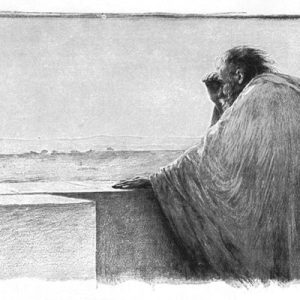
Jesus Invites Us to the Fetching Table!, Luke 19.1-10

Sermon:        Jesus Invites Us to the Fetching Table
Scripture:     Luke 19:1-10
Preacher:      Patrick H. Wrisley, D.Min.
Location:      First Presbyterian Church, Fort Lauderdale, FL
Date:              November 3, 2019

Luke 19:1-10

19.1He entered Jericho and was passing through it. 2A man was there named Zacchaeus; he was a chief tax collector and was rich. 3He was trying to see who Jesus was, but on account of the crowd he could not, because he was short in stature. 4So he ran ahead and climbed a sycamore tree to see him, because he was going to pass that way. 5When Jesus came to the place, he looked up and said to him, “Zacchaeus, hurry and come down; for I must stay at your house today.” 6So he hurried down and was happy to welcome him. 7All who saw it began to grumble and said, “He has gone to be the guest of one who is a sinner.” 8Zacchaeus stood there and said to the Lord, “Look, half of my possessions, Lord, I will give to the poor; and if I have defrauded anyone of anything, I will pay back four times as much.” 9Then Jesus said to him, “Today salvation has come to this house, because he too is a son of Abraham. 10For the Son of Man came to seek out and to save the lost.”[1]

Throughout his gospel account, Luke has done a masterful job of letting his readers get confronted by those who think they are “on the inside” of favoritism only to be demoted by Jesus as being spiritual and cultural outsiders. Who are those who think they are on the inside? Typically, healthy and wealthy Jewish males with lots of sons and those who were the religious rule followers. If you were unhealthy, poor, physically different, or a Gentile, you failed at receiving God’s blessing.

Luke 18 has Jesus turning those ideas on their heads. The rich young ruler who has followed the Law of Moses, has amassed wealth, has been an upstanding member of his Jewish community wants to have eternal life and follow Jesus. Surely if there was anyone who could fit the bill of being the Uber Jew, it was this man; unfortunately, he couldn’t get past the death-grip he had on his possessions and wealth and would not give it up to follow Jesus.

Today, we have the antitype of a good upstanding Jewish male. He was a little man. He worked for the Roman government as a middle-man tax collector and could charge whatever fees he wanted in obtaining the taxes. His wealth was a result of his exploitation of his fellow Jewish citizens. There is no evidence that he even practiced his Jewish faith. We can easily imagine him at a first-century bar singing along with the Garth Brook’s tune,

“’Cause I’ve got friends in low places
Where the whiskey drowns,

And the beer chases my blues away,

and I’ll be okay.”

Poor, little, wee Zacchaeus. He had money, wealth, and influence but little else. He was a distrusted, disliked, and damned man by his community; in other words, he was just perfect for Jesus.

Jesus is on his way to Jerusalem to face his destiny. Jericho is a town a little east/northeast of Jerusalem along the Jordan River. Once you leave Jericho heading to Jerusalem, you began a grueling 18-mile climb from a height of 825 feet below sea level to Jerusalem at 2,500 feet.[2] We can imagine Jesus lost in his thoughts about his climb up to Jerusalem and what awaited him there when all of a sudden, he stops, looks up, and sees Zacchaeus looking down from a tree.

Try to imagine this awkward scene.  Crowds are pushing Jesus along when he decides to stop suddenly.  He looks up. You look up. “There’s Zacchaeus” you mutter under your breath.  “What’s HE doing here?!” And then Jesus calls him down, declaring, “I must stay in your house today!” This really gets the crowd buzzing. “Does Jesus know who this guy is?”

Yes.

“Does Jesus know the corruption of this man’s house?”

Yes.

“Does Jesus know that this man has friends in low places?”

Absolutely. Jesus even pushes social protocol and invites himself for a meal and lodging at this wee man’s house!

The power of our Story is that it was a result of Jesus’ desire to have friendship with him that Zacchaeus found his conversion. It was only after Jesus noticed the unloved, isolated man that Zacchaeus responded with his personal commitments to giving to the poor or to any and all he had cheated. Unlike the rich young ruler who wanted eternal life but greedily held on to his money and would not share it, Zacchaeus went looking for Jesus and was willing to give it all away.

If we are not careful, we will fall for our story’s sleight of hand. You see, we think the Story is pointing towards Zacchaeus and his transformation. It does, indeed, do that but only after the Story first points to Jesus’ initiative to restore this lowly man to high places of the Kingdom. Jesus took the initiative in this relationship when he stopped, looked up, and demanded to be his houseguest!

Back in 1996 when my family and I first moved to Celebration, Florida, the Disney Company’s new urban town, I had to start a worshipping congregation within two weeks of our arrival. Celebration is a planned community designed by Imagineers to be an example of what communities should be like in the future.  Disney built the infrastructure and town, selected builders built the houses and amenities, and over 5,000 people entered a lottery to be one of the first 300 homeowners in the town.  So in November 1996, Disney opened the town and the first few hundred residents moved in roughly the same week. Central Florida Presbytery had the foresight to enter the lottery and build a house in town for a pastor, so Kelly and I didn’t have to go through the lottery silliness. Still, I had to start worshipping community within two weeks of our arrival which in new church development circles, simply had not been done. What was I to do?

In downtown Celebration, the businesses all opened up at the same time as well, and one place caught my eye: Barneys Coffee Shop. It was down near the lake. It had an expansive outdoor patio and it was always jammed as it was the only coffee shop in the area. So what I did was to station myself at a table immediately in front of the exit door of the coffee house in the courtyard thereby giving me the chance to greet everyone who walked out the door. I’d introduce myself as the new pastor in the community and that we were starting a church in the AMC theater in a few weeks. Over 150 people showed up that first service.

For the next twelve years, I sat at that table and invited people to sit and let’s visit. Someone who later became a dear friend from that experience gave both me and the table a name.  Gabriela was from Hamburg, Germany and in a very thick German accent, she would call me “Dr. Fetch” because I was always sitting at the “fetching table” getting to know people’s views of God. “Day would smell that awful cigar of yours and den they would be buying you coffee. You were a Fetcher!”

Today, beloved, we come to the Fetching Table of Christ.  Like with Zacchaeus, Jesus stands before us and demands that he come and stay and eat with us!  Jesus sits at the Table and says, “Come over here and let’s visit a while and share with me what is going on in your world!” You see, Jesus is taking the initiative to be with you and me and wants to spend time around the table with you and me.  We may be like Zacchaeus up a tree looking at Jesus from a distance but Jesus is looking up at you and me saying, “Get down here and let’s have supper together!”  Jesus is inviting us to the Fetching Table!  Come, beloved, come! Zacchaeus and the others are beckoning us, “What are you waiting for?” Amen.

Patrick H. Wrisley, D.Min.
Senior Pastor & Teaching Elder
First Presbyterian Church
401 SE 15th Avenue
Fort Lauderdale, FL 33301

© 2019 Patrick H. Wrisley. Sermon manuscripts are available for the edification of members and friends of First Presbyterian Church, Fort Lauderdale, Florida and may not be altered, re-purposed, published or preached without permission.   All rights reserved.
[1] New Revised Standard Version (NRSV). New Revised Standard Version Bible, copyright © 1989 the Division of Christian Education of the National Council of the Churches of Christ in the United States of America. Used by permission. All rights reserved.

[2] See http://bibleresources.americanbible.org/resource/from-jerusalem-to-jericho.

Posted in Sermon | Tagged , , , , , , , , , | Leave a comment

All in! Come before winter!, 2 Timothy 4:6-8, 16-22

Sermon:       All in! Come Before Winter!
Scripture:     2 Timothy 4:6-8, 16-22
Preacher:      Patrick H. Wrisley, D.Min.
Location:      First Presbyterian Church, Fort Lauderdale, FL
Date:             October 27, 2019

How many of you have a will? A will is a legal document that specifies how you want your remaining assets and estate to distribute to others after you die. But did you know there is such a thing called an ethical will?

An ethical will contains a person’s personal ethical, spiritual, and moral values to those they love. It’s not about leaving money or property; it’s about bequeathing your values to a future generation. Ethical wills can be written or they can be recorded. They can be presented in photographs, videos, or simply through basic storytelling. When you leave an ethical will, you are simply sharing the life-lessons you want to leave your family and friends about what you think is important and what you want them to remember.[1]

Today’s text picks up from where Nic left off last week in 2 Timothy. These pastoral epistles, as they are known, are letters from the Apostle Paul to his protégé, Timothy, who was living in Ephesus at the time. Paul is in a prison in Rome awaiting his second trial with Emperor Nero. Today, we have Paul’s ethical will as these are thought to be the very last words he wrote before he died.

These are some of the most tender words in scripture. Written by an old man who has spent the last thirty years doing ministry traipsing back and forth from Palestine to Italy and all parts in between, these are words written by a man who is facing imminent death and fully realizes that his time is about through.  As you listen to the text, listen to what is important to Paul and what he values. Listen to what consists of his earthly estate. Listen for his urgency. Hear the Word of the Lord.

2 Timothy 4:6-22

6As for me, I am already being poured out as a libation, and the time of my departure has come. 7I have fought the good fight, I have finished the race, I have kept the faith. 8From now on there is reserved for me the crown of righteousness, which the Lord, the righteous judge, will give me on that day, and not only to me but also to all who have longed for his appearing.

9Do your best to come to me soon, 10for Demas, in love with this present world, has deserted me and gone to Thessalonica; Crescens has gone to Galatia, Titus to Dalmatia. 11Only Luke is with me. Get Mark and bring him with you, for he is useful in my ministry. 12I have sent Tychicus to Ephesus. 13When you come, bring the cloak that I left with Carpus at Troas, also the books, and above all the parchments. 14Alexander the coppersmith did me great harm; the Lord will pay him back for his deeds. 15You also must beware of him, for he strongly opposed our message.

16At my first defense no one came to my support, but all deserted me. May it not be counted against them! 17But the Lord stood by me and gave me strength so that through me the message might be fully proclaimed and all the Gentiles might hear it. So I was rescued from the lion’s mouth. 18The Lord will rescue me from every evil attack and save me for his heavenly kingdom. To him be the glory forever and ever. Amen.

19Greet Prisca and Aquila, and the household of Onesiphorus. 20Erastus remained in Corinth; Trophimus I left ill in Miletus. 21Do your best to come before winter. Eubulus sends greetings to you, as do Pudens and Linus and Claudia and all the brothers and sisters. 22The Lord be with your spirit. Grace be with you.[2]

Did you note what was important to Paul? Relationships! Relationships with friends, colleagues, members of the church family, and most of all, his relationship with Jesus. We can hear the sadness in his voice as he recounts this long list of people, most of them friends, who totally deserted him when the going got tough.  Demas, a longtime ministry colleague with Paul seems to have not been able to muster the challenges of ministry and chose the easy path of the world and went back to Thessalonica. Crescens and Titus are too wrapped up in their own work to get there to Rome and support him. Only Luke is with him.

Relationships are important to Paul. He even asks Timothy to find Mark and bring him along as well. If you’ll remember, this is John Mark, Barnabas’ cousin, that Paul got angry with because earlier in his life, Mark did not show the fortitude or maturity to be a minister of the Lord; he literally abandoned his post and went home. Paul and Barnabas had a horrible falling out that sent them both on their separate ways.[3] But Paul has matured. Mark has matured. Paul is showing us that even old enmities need to be dealt with and healed. Over the course of years, Paul forgave Mark and wants this one-time deserter to be by his deathbed when the time comes knocking on the door. Relationships matter. Paul is lonely.

Beloved, who are the people that matter most to you? Have you told them so? Do they know it? Are there people in your life that you, like Paul, need to forgive and move on in your relationship with them? It may simply mean letting go of the anger or hate that paralyzes you in that relationship; let that person go, let their actions go, and make peace within yourself.

Did you hear how Paul relates to earthly needs and goods? Quite unlike people today, Paul had a personal stewardship that relied totally on the Lord. Throughout his ministry, he beheld how in every town, in every circumstance, the Lord provided for him whether it was through the generosity of the churches he served or through the gifts of his working as a tentmaker. Paul’s possessions, Paul’s estate, were the experiences of grace and strength of God’s presence in Christ. When he was stoned, he possessed the presence of Christ. When the ship was being battered and torn asunder by the reef, he possessed the presence of Christ. When he was knocked off his horse at his conversion and was blind, his only possession was the presence of Christ.

Paul traveled light. If he possessed the presence of Christ, it was enough, and it was the presence of the Lord in his life that determined what he owned. In other words, friends, Paul lived simply. As he awaited his trial and death, he only wanted his friends to bring him his books, some parchments, and his robe to ward off the cold of the Italian winters. What these books and parchments were are left to speculation. Some think they were scrolls of the Torah. Others believe that perhaps the parchments were Paul’s personal notes on the various churches he founded. Some even speculate that Paul wanted John Mark, who spent a lot of time with Simon Peter, to join both he and Luke in Rome so he could edit their written accounts of the gospels!  We just don’t know. What we do know is that what Paul owned could be carried in a suitcase. Books, loose writings, and a coat. He traveled light. He did not need much because what he lacked he was confident the Lord would provide through the relationships and network he had developed.

The question confronts you and me: What are those things we possess? Or better yet, do our things possess us? Paul possessed experiences with Christ through the relationships and experiences in his life. His possessions, the books, and parchments were used to help sharpen that relationship with God and with others. What do our possessions say about us?  Do they sharpen and enhance our relationship with God and our neighbor?  If we had to pack a suitcase of all that is vital for us, what would be in it?

Finally, did you hear the words of urgency? “Come before winter.” His life was being poured out, death was coming down the street. He was longing to have those relationships, experiences with those he loved, his scripture and notes, and his cloak to stay warm. Paul’s words to Timothy would have cost Timothy something. It would require him to drop everything he was doing in Ephesus, travel one hundred miles north to get Paul’s cloak in Troas, and then make his way over the sea to Rome. “Come before winter” Paul urges. Why? One, he didn’t want to be a shivering old man! But he also knew that boats quit sailing in late autumn because the seas grew too rough to sail. It would take Timothy some four or more months to get to Paul depending on conditions and Paul wanted him to get on with it.

Years ago, Dr. Clarence McCartney who pastored the First Presbyterian Church of Pittsburgh, preached a sermon called, “Come Before Winter.”  As he reflects on our text, he wonders what would have happened if Timothy hesitated before leaving. What if Timothy waited until springtime to go see Paul? Dr. McCartney puts it this way:

 Suppose that Timothy, when he received that letter from Paul asking him to come before winter, had said to himself: “Yes, I shall start for Rome; but first of all I must clear up some matters here at Ephesus, and then go down to Miletus to ordain elders there, and thence over to Colossae to celebrate the Communion there.” When he has attended to these matters, he starts for Troas, and there inquires when he can get a ship which will carry him across to Macedonia, and thence to Italy, or one that is sailing around Greece into the Mediterranean. He is told that the season for navigation is over and that no vessels will sail till springtime. “No ships for Italy till April!

All through that anxious winter, we can imagine Timothy reproaching himself that he did not go at once when he received Paul’s letter, and wondering how it fares with the Apostle. When the first vessel sails in the springtime, Timothy…hurries to Rome. There he seeks out Paul’s prison, only to be cursed and repulsed by the guard. Then he goes to the house of Claudia, or Pudens, or Narcissus, or Mary, or Ampliatus, and asks where he can find Paul. I can hear them say: “And are you Timothy? Don’t you know that Paul was beheaded last December? Every time the jailer put the key in the door of his cell, Paul thought you were coming. His last message was for you, ‘Give my love to Timothy, my beloved son in the faith when he comes.’” How Timothy then must have wished that he had come before winter![4]

Beloved, Paul’s words are words of urgency. What do you and I need to do before winter comes? Life has a and python populations with temps in the 90’s at the end of October. Winter? Who needs to plan for winter? I’ve got plenty of time!

But do we? Come before winter. There is urgency in Paul’s words. Is there something you need to do in your life to tie up loose ends? Are there personal letters that need to be written to share what you really feel towards another?  Are there phone calls to be made to people who matter in your life? Are there commitments you need to make to the church as you start putting Christ in the center of your life like Paul did? Are you all in or are you going to wait until spring?  Let’s come before Winter!

Patrick H. Wrisley, D.Min.
Senior Pastor & Teaching Elder
First Presbyterian Church
401 SE 15th Avenue
Fort Lauderdale, FL 33301

© 2019 Patrick H. Wrisley. Sermon manuscripts are available for the edification of members and friends of First Presbyterian Church, Fort Lauderdale, Florida and may not be altered, re-purposed, published or preached without permission.   All rights reserved.

[1] Please see Ethical Wills at https://en.wikipedia.org/wiki/Ethical_will.
[2] New Revised Standard Version (NRSV). New Revised Standard Version Bible, copyright © 1989 the Division of Christian Education of the National Council of the Churches of Christ in the United States of America. Used by permission. All rights reserved.
[3] See Acts 15:36 ff.
[4] Clarence Macartney (1879–1957), Come Before Winter, accessed 10/25/2019 at
https://www.preceptaustin.org/come_before_winter.  My former colleague, the late W. Frank Harrington, Pastor of the Peachtree Presbyterian Church in Atlanta took up McCartney’s mantel and preached a “Come Before Winter” every Labor Day weekend.

Posted in Sermon | Tagged , , , , , , , | Leave a comment

All in! Two out of three is not too bad, or is it?, Luke 17:11-19

Sermon:        All in! Two out of three is not bad, or is it?
Scripture:     Luke 17:11-19
Preacher:      Patrick H. Wrisley, D.Min.
Location:      First Presbyterian Church, Fort Lauderdale, FL
Date:             October 13, 2019

Leviticus 13:45-46

 45 The person who has the leprous disease shall wear torn clothes and let the hair of his head be disheveled; and he shall cover his upper lip and cry out, “Unclean, unclean.” 46 He shall remain unclean as long as he has the disease; he is unclean. He shall live alone; his dwelling shall be outside the camp.

Luke 17:11-19

 11 On the way to Jerusalem Jesus was going through the region between Samaria and Galilee. 12 As he entered a village, ten lepers approached him. Keeping their distance, 13 they called out, saying, “Jesus, Master, have mercy on us!” 14 When he saw them, he said to them, “Go and show yourselves to the priests.” And as they went, they were made clean. 15 Then one of them, when he saw that he was healed, turned back, praising God with a loud voice. 16 He prostrated himself at Jesus’ feet and thanked him. And he was a Samaritan. 17 Then Jesus asked, “Were not ten made clean? But the other nine, where are they? 18 Was none of them found to return and give praise to God except this foreigner?” 19 Then he said to him, “Get up and go on your way; your faith has made you well.”[1]

My momma was a bit of an eccentric at times and would teach my brothers and sister life lessons with living hyperbole. One Father’s Day comes to mind. The six of us heard the call to supper following church and we came running.  My mom had busted her tail getting everything all prepped before we went to church that morning and by the time we got home, the house smelled delicious.  We swooped in and tore into dinner. We all got done with desert and all of us got up to leave the table, including dad and headed for the den to watch football. A few minutes later we heard mom back in the kitchen. Actually, we heard crying and breaking plates on the floor of the kitchen. All of us ran into to see what was going on there she was, all five feet one of her, scrapping food onto the floor and dropping the plates on top of it. When the full audience of my dad, two brothers, sister and I all got there, she stopped and looked at us.

“I’ve been killing myself to help make this a special Father’s Day meal for you.  I was up and cooking before any of you got out of bed and got this meal prepared and ready so by the time we got back from church, we could enjoy nice family time.  But you know what, each of you came home grumpy, ate your dinner, got up from your seats and left the room without as much as a ‘thank you’ for dinner; furthermore, none of you cleaned off your own dishes from the table and just assumed I would clean up after you! Well, you need to know, that train has stopped!”

With that, momma washed her hands off and dried her eyes. She gave each of us a stern look and walked out of the house. In utter silence, each of us began cleaning off the table, washing the dishes and pots, swept and mopped the floor and took the trash out. Looking back, I realize there was something much deeper going on between my mom and dad that I was not aware nor mature enough to understand. All me and my siblings knew is that we failed someone we loved through our dynamic ingratitude. We failed to say thank you. We took what my mom did for granted and the result is that it deeply hurt her.

So, if I am ever at your home for a meal or for coffee, I will always carry my dishes to the kitchen and clean up after myself. I will always say thank you as well.  My momma taught me that lesson.

She taught me to say thank you.  She taught me to show appreciation for what others do for me. She taught me what it means to feel taken for granted and unappreciated. She taught what it means to show gratitude.

This is what our Story is about today in our text. Jesus has been north doing his teaching and healing ministry around the Galilee and was now heading towards Jerusalem for the Jewish festival of Passover. He was going through a region that skirted Samaria, which for the Jew, was an unclean place. You see, for the Jews, the Samaritans were posers.  They were not the real deal. These feelings went centuries back to the times of the Jewish kings after David when the nation of Israel was split into two kingdoms.  To the north was Israel. To the south, Judah, whose capital was Jerusalem. All of this is described in the books of 1 and 2 Kings. Those in Samaria had their own temple to God while the people of Judah had the real Temple in Jerusalem. The people in Judah felt the people of the north sold out. Their worship was inferior. They were unreconciled to God.  They did not follow the edicts of the law. They were seen as “those people” who live a less than holy life and who failed to follow good Jewish tradition. So this is where Jesus was at the time of our Story. He’s in a country his Jewish neighbors taught him to hate from the time he was little.

But Jesus did not listen to his neighbors. He enters a village when from a distance he is assailed by ten men who are described as lepers. Technically, they could have had any type of skin disease and they would be treated with the same scorn. They were dirty. They were unclean. They were separated from their community and social structure and had to go it alone and fend for themselves without any support or sympathy from anyone. If they were indeed suffering from leprosy, or Hanson’s Disease as it’s known today, they suffered from an illness that destroyed the nerve endings in your body’s extremities. It robbed the person from feeling any pain. You could step on a nail and not even know it. Your foot becomes infected, diseased, and deteriorates usually causing the loss of skin tissue or even a limb. Their illness became their identity.  No longer did people see a person as a child of God but as a defiled and diseased human being that must have deserved God’s scorn. These are the ten men who hollered at Jesus for mercy.

It’s interesting that there is no explicit request for healing on the part of these guys but they do ask for mercy. They want to be noticed, cared for, and longed for love and the acceptance of their community and family. Jesus knows all too well what these men need and simply tells them to go and show themselves to the priests as Moses commanded and they would be fine. They turn to leave and all of them are made well again.  They are whole. They are clean and embraceable again. They’re thrilled! They’ve been shown mercy! But none of them stopped to say ‘thank you.’

Except one. A Samaritan at that.  The one who is considered to be an alien, a non-Jew, is the only one who came running back to Jesus to show gratitude, and because he did, he received a gift the other nine missed out receiving: Salvation. You see, there are two different words to describe the healings in our Story. One word used is to describe being made clean and healthy again. The other word is used to describe restoration to having one’s relationship with God restored and healthy again and this is the word used when Jesus talks with the returned Samaritan.

There is a direct relationship with one’s faith and with the expression of thankfulness and gratitude. It’s one thing to be made clean; it’s entirely something else to be made truly whole and one with God again. “Were not ten made clean? Where are the other nine? Well, brother, get up and go on home. Your faith has made you whole, well, clean, but most importantly, restored to God! Begin your new life right this minute!”

Professor at Columbia Seminary, Kimberly Bracken Long, writes, “To practice gratitude intentionally changes an individual life, to be sure. It also changes the character of a congregation. When Christians practice gratitude, they come to worship not just to “get something out of it,” but to give thanks and praise to God. Stewardship is transformed from fundraising to the glad gratitude of joyful givers. The mission of the church changes from an ethical duty to the work of grateful hands and hearts.”[2] Furthermore, she says, the Samaritan demonstrates a mature faith because it is a faith that is wrapped up in gratitude.

There is an old saying that two out to three is not bad, or as in the case of today, one out of then. It’s not bad but it’s not too good either. All of the lepers had the opportunity to express gratitude to God but only one out ten did. That’s rather sad, isn’t it?  “Surely I would be like the one who came back!” we protest. But do we?  In 2017, we had 18 estimate of giving cards on file for 1,100 members. Last year we upped that to a few hundred.  I guess two out of three is not bad, or a few hundred out of 1,100…yes, my friends, it is bad. It’s not good at all.

Friends, our giving back to God with what God has blessed us with is a spiritual issue that measures the depth of one’s faith. It’s a way we show the Lord our gratitude for coming alongside us and showing us the Way.  How deep or how shallow is your faith and mine?  Are we all in or do we simply expect God to bless us because that’s what God does?  I realize now that telling my momma “thank you” for a great dinner and helping her clean up after myself was the best way to show my love and appreciation to her.  The Samaritan leper showed his appreciation and love to God by saying, “I’m all in, Jesus!  Thank you!”  How shall we show ours?

The Holy Spirit enlighten our hearts.  Amen.

Patrick H. Wrisley, D.Min.
Senior Pastor & Teaching Elder
First Presbyterian Church
401 SE 15th Avenue
Fort Lauderdale, FL 33301
wrisley@outlook.com
patrickhwrisley.net

© 2019 Patrick H. Wrisley. Sermon manuscripts are available for the edification of members and friends of First Presbyterian Church, Fort Lauderdale, Florida and may not be altered, re-purposed, published or preached without permission.   All rights reserved.

[1] New Revised Standard Version (NRSV). New Revised Standard Version Bible, copyright © 1989 the Division of Christian Education of the National Council of the Churches of Christ in the United States of America. Used by permission. All rights reserved.

[2] Kimberly Bracken Long, Feasting on the Word: Year C, Volume 4: Season after Pentecost 2 (Propers 17-Reign of Christ) (Kindle Locations 6343-6344). Presbyterian Publishing Corporation. Kindle Edition.

Posted in Sermon | Tagged , , , , , , , , , , , , | 1 Comment

prodigal-son3-400x400Sermon:        The Lord’s Lost and Found, Part 2:A Father’s Extravagant Love
Scripture:     Luke 15.11-24;  Zechariah 3.1-7
Preacher:      Dr. Patrick H. Wrisley
Location:      First Presbyterian Church Fort Lauderdale
Date:              September 22, 2019

Last week, we began studying Luke 15 and looked at three parables Jesus shared about something getting lost and then found: A sheep, a coin, and a son.  We took time to note how the stories of the lost sheep and the lost coin are really stories more about the shepherd than the sheep and the relentless woman as opposed to the lost coin. The shepherd reminds us that God will sacrifice everything for the lost one and the woman reminds us that God is so much larger, textured, and complex than we can ever imagine.  Today we turn our attention to the third parable in Luke 15. Turn in your Bible to Luke 15:11-24 and let’s dig into the parable of the extravagant father.

Luke 15:11-24

11Jesus continued: “There was a man who had two sons. 12The younger one said to his father, ‘Father, give me my share of the estate.’ So he divided his property between them.

13“Not long after that, the younger son got together all he had, set off for a distant country and there squandered his wealth in wild living. 14After he had spent everything, there was a severe famine in that whole country, and he began to be in need. 15So he went and hired himself out to a citizen of that country, who sent him to his fields to feed pigs. 16He longed to fill his stomach with the pods that the pigs were eating, but no one gave him anything.

17“When he came to his senses, he said, ‘How many of my father’s hired men have food to spare, and here I am starving to death! 18I will set out and go back to my father and say to him: Father, I have sinned against heaven and against you. 19I am no longer worthy to be called your son; make me like one of your hired men.’ 20So he got up and went to his father.

“But while he was still a long way off, his father saw him and was filled with compassion for him; he ran to his son, threw his arms around him and kissed him.

21“The son said to him, ‘Father, I have sinned against heaven and against you. I am no longer worthy to be called your son.’

22“But the father said to his servants, ‘Quick! Bring the best robe and put it on him. Put a ring on his finger and sandals on his feet. 23Bring the fattened calf and kill it. Let’s have a feast and celebrate. 24For this son of mine was dead and is alive again; he was lost and is found.’ So they began to celebrate

This is one of the most well-known parables in scripture.  For those familiar with it, we refer to it as the parable of the prodigal son about a young man who squanders his livelihood and who finally comes to his senses and returns home. Though this is a part of the Story, it is only one reading of the Story.  There are two other main characters in this part of Luke 15 which are the father and the grumpy older brother. Today we will look at the parable from the father’s point of view and next week, we will look at the grumpy older brother’s and see what this story says to us today.

The story immediately begins with the youngest ‘troubled child’ asking for his inheritance. Straight away the parable opens with a shock we miss today but would not have been missed by Jesus’ audience. The boy’s demand was about as disrespectful and pretentious as it could be and would have been a slap in the face to his father; we don’t see it today but back then, his request was a huge insult.

“Give me my inheritance.” The statement is scandalous for a couple of reasons. First, daddy’s not dead yet. Inheritances are distributed upon the death of the patriarch. The father may tell his children, “Now when I’m gone, you will have this and your sister will have that” but the distribution of assets occurred when daddy died. Second, the boy’s demands show that he feels he has some sense of entitlement to that which he has not earned himself; in other words, he is spoiled. And third, by asking for his inheritance, he was violating family protocol and tradition by usurping the elder brother’s birth rite. The elder son always gets his inheritance first. The pretentious, self-entitled spoiled one demonstrates he does not care for his dad and neither does he care for his older brother.  So here is insult number one.

Insult number two is that by demanding his inheritance, he, in essence, is declaring to his dad, “You’re dead to me.”

Insult number three is declared by the younger boy because by demanding his inheritance, he is communicating to the family, to his father, that he can manage his own life better than his current family and father does.  We need to realize the younger son’s actions represent his forsaking his family of origin; it’s the youngest boy’s move to remove himself from his family. So, not only is the father ‘dead to him’ but so, too, is his entire family.  What’s the result?  The boy undergoes a self-imposed exile but sadly, does not see it as such.   And this is where the story gets really interesting.

Note again verse 20:

But while he was still a long way off, his father saw him and was filled with compassion for him; he ran to his son, threw his arms around him and kissed him.

This verse is packed with multiple layers of meaning. Like a layered ice-cream cake where there is a layer of vanilla cake on top, once you cut into it you discover the other layers of thick, chocolate ice cream.

One layered reading of this verse is that while the son was coming home, his daddy saw him coming and ran to greet him.  Well, the word we translate as ‘see’ not only means to see with one’s eyes but it also connotes seeing someone or something with your heart, soul and inner senses. The father intuits something in his heart is not quite right.  Many parents report of this intuition about their kids…we just know deep down when somethings not right.

Another word layered with a double meaning is the statement we read as the father saw the boy from “a long way off.”  It not only means a distance where we can make something out with our eyes, but the distance can also be interpreted as one that’s impossible to broach.  Being ‘far away’ also is a metaphor pointing to a person’s spiritual darkness.[1]

But then Luke goes and adds a third double-entendre in verse 20.  When the father runs and embraces his son, he literally grabs him around the throat. In English we use the term “neck” but the ancient language is more specific. Luke uses the word we get our English word trachea – the part of the throat that lets us breathe. It’s one thing to hug a neck; it’s another to have one’s neck squeezed so tight that it causes the other person to pass out because he or she can’t breathe. So let’s put all these double-entendres together to hear a deeper meaning.

On one hand, there is the boy wallowing in the pig’s slop and excrement. A pig – an unclean animal in the eyes of any good Jew – is one of the animals that is considered to cause one’s spiritual purity to be tarnished.  This would mean the boy is not only exiled from his family but he is also at the point of being excluded from his Jewish community.  The boy knows he is three-times removed from home: From his daddy, from his family, from his spiritual and social community.  What was he to do but to begin back home and become an outcast farmhand on his dad’s land?

On the other hand, however, we see in our layered meaning of verse 20 that his daddy knew in his gut that his youngest son was literally far away in a dark exiled place.  Daddy knew his son was clouded with spiritual darkness and that his son didn’t know what to do.  And even though his son was far away, Dad leaves the house and goes to fetch his son while the son was still exiled in a spiritual Mordor of darkness and separation.  He finally meets his boy and the father throws himself at him.  From the son’s perspective, the father flinging himself on the boy could’ve been interpreted as the father attacking the boy according to the Greek wording.  But daddy’s got a surprise! He grabs his son around the neck and squeezes him tightly, not to cause him peril or out of retribution but because He “attacks” his boy with reckless, lavish love.

Instead of stripping and beating the boy, the father does the unexpected reverse.  He calls for the servants to bring a robe, a signet ring, and sandals.  A robe, a new covering, is his father’s way of making his son feel respected and approachable again.  It’s a way of changing his son’s status as a homeless person to a person who is accepted in their culture and tribe.  A signet ring is then put on his finger – a ring that in antiquity was a way to visibly demonstrate and symbolize family connection.  And then there are the sandals.  Sandals are a sign of social stability that indicates he is now of higher standing and can enjoy the freedom of moving about without pain or discomfort.

A robe, a ring, and a pair of sandals.  Taken together, this was the father’s way of reinstating the younger boy back into the family.  No longer was he an outsider but the boy is now an insider.  No longer seen as a social outcast, the son is made clean by the father’s demonstration of grace.  No longer is the boy in fear but he is caught up in his daddy’s unbridled joy![2]

Beloved, how do you relate with this Story? Have you noticed the father’s extravagant love? Or, are you wallowing in the pig slop of guilt, shame, and brokenness? The Good news is like a woman feverishly looking for a lost coin, God is like a father who runs up to greet us and nearly hugs us to death out of joy. This is the story of the extravagant father.  Amen.

Dr. Patrick H. Wrisley
Senior Pastor & Teaching Elder
First Presbyterian Church
401 SE 15th Avenue
Fort Lauderdale, FL 33303
wrisley@outlook.com
patrickhwrisley.net

© 2019 Patrick H. Wrisley. Sermon manuscripts are available for the edification of members and friends of First Presbyterian Church and may not be altered, re-purposed, published or preached without permission.   All rights reserved.

[1] See Acts 2.39, Ephesians 2.13, 17.

[2] Thanks to www.swapmeetdave.com/Bible/Luke/Luke-15-11-32.pdf for making this insight. From A Robe, a Ring, and a Pair of Shoes, an outline of Luke 15:20-22.  Accessed on 4/27/09.

Posted on by patrick h wrisley | Leave a comment

The Lord’s Lost and Found: The Sheep and the Coin, Luke 15.1-10

Sermon:        The Lord’s Lost and Found: A Sheep and A Coin
Scripture:     Luke 15.1-10
Preacher:      Patrick H. Wrisley, D.Min.
Location:      First Presbyterian Church, Fort Lauderdale, FL
Date:             September 15, 2019

Did you know our church has a lost and found? It’s located at the end of the counter at the mailboxes near the kitchen by the Spanish Room. For the nicer items, there’s a clear case you can peer into and rummage through.  For the really expensive stuff like iPhones, watches, and wallets, it all goes to a secret place that you have to ask around for to find them! Or, you can always just ask Darleen, I suppose. I’ve seen everything from glasses – lots and lots of glasses – sweaters, and Bibles. I always check the Bibles to let people know we’ve got theirs but sadly most people don’t put their names in them. There are beautiful leather Bibles, Bibles that have been written in and marked up with life-changing thoughts, Bibles that were obviously gifts and there is no way to return them to their owners. So, if you bring a Bible, put your name in it!

Every church has a lost and found and do you know what?  God has a lost and found, too, and it is called the Church!  The Church is the place the Lord of Hosts has purposefully created to welcome and receive those of us who know well enough that the world is a big swirly place and our lives can feel out of control because we know we are not God. The Church is the place all of us lost ones can come to and know that we do not have to pretend to be God and we allow the Lord that privilege instead of taking it on ourselves.

The Lord’s lost and found is called the Church. In it are people like you and me and others who are trying to find their way.  Luke 15 has three stories about the lost and the found and frankly, they are some of the most scandalous biblical texts in all of scripture, but we’ve become too familiar with them. These three stories are about a sheep, a coin, and a wayward son. Actually, they are about a bold shepherd, a woman, and an extravagant father.

Today, we are going to look at the first two, the shepherd and the woman, and then next week we will look at the famous Story of the prodigal son, or as I call it, the Story of Extravagant Father.  Hear the Word of the Lord from Luke 15.1-10!

Luke 15:1-10

15.1 Now all the tax collectors and sinners were coming near to listen to him. 2And the Pharisees and the scribes were grumbling and saying, “These fellow welcomes sinners and eats with them.”

3So he told them this parable: 4“Which one of you, having a hundred sheep and losing one of them, does not leave the ninety-nine in the wilderness and go after the one that is lost until he finds it? 5When he has found it, he lays it on his shoulders and rejoices. 6And when he comes home, he calls together his friends and neighbors, saying to them, ‘Rejoice with me, for I have found my sheep that was lost.’ 7Just so, I tell you, there will be more joy in heaven over one sinner who repents than over ninety-nine righteous persons who need no repentance.

8“Or what woman having ten silver coins, if she loses one of them, does not light a lamp, sweep the house, and search carefully until she finds it? 9When she has found it, she calls together her friends and neighbors, saying, ‘Rejoice with me, for I have found the coin that I had lost.’ 10Just so, I tell you, there is joy in the presence of the angels of God over one sinner who repents.” [1]

Each of the two stories follows the same pattern. Something is lost; someone diligently searches for it and finds it; a celebration of friends and neighbors is thrown to rejoice at their good fortune at finding it again (interestingly, neither mentions their family); and finally, even the heavens rejoice at all that has transpired. Let’s look at three scandalous revelations in our brief ten verses.

The first scandalous revelation we note is in verses 1 and 2. We read how Jesus, an itinerant Rabbi, is choosing to have table fellowship with ‘those people.’ Jesus does not let the virtue of who he is get in the way of who he chooses to rub shoulders with and get to know. The collection of tax collectors and those other sinners, you know – those people – are ironically being welcomed and received by God’s spokesman. Jesus’ faith, religious actions, and spiritual walk were intentionally intersecting with the people who needed it the most – you know ‘those people’ – the ones we read and hear about in the news or who work in ‘those kinds of places.’ When you pause to think of them, who are ‘those people’ in your life?  Is it all those sinners like the prostitutes, the tax collectors, the unjust politicians, the thieves, the hustlers, shady salesman, and the abusive or cheating spouse? You bet; all of these folks were eagerly trying to hear what Jesus was saying.  People like you and me.

Ironically, the religious and pious people, the ones who were the ‘spiritual giants’ in the community, the ones who practiced the ways of good citizenship, these are the ones who were too busy grumbling about Jesus to even hear what he had to say. They were stuck in their religious and spiritual hubris and that pride prevented them to experience the good news. The first scandalous act in our text is that those who are supposed to ‘get it’ don’t and the ones no one ever would imagine ‘getting it’ do!  Furthermore, as soon as you and I start talking about “those people”, we become one of “those people” ourselves!

The second scandalous piece of our Story is found in verses 3 to 7. We often hear this story and think how dedicated and loving the shepherd is who leaves the 99 sheep to look for the single lost one. Isn’t that special? Well, on one level it is but its purpose is to really show us the radical nature of God’s love for the lost.

People in business know that there will always be a certain amount of waste in their business.  A grocer orders twenty bushels of lettuce knowing that she might only sell 18 of them.  The rest is calculated waste that grocers know they will have to throw out and absorb.  Or, it’s like a chef at your favorite local restaurant.  Based on historical trends on how Thursday night dinners go, he will order and prepare so many Thursday night Blue Plate Specials but knows that tonight’s chicken very well could end up in tomorrow’s soup at lunch. What do we think Wendy’s chili is made of anyway? They plan for a certain amount of waste and loss. So it is in our Story.

The scandal in verses 3 to 7 is that the Shepherd leaves the 99% of his working capital to go find a single sheep.  Another valid way to read and hear this text is like this:

Which one of you would actually leave the 99 sheep and go looking for a single lost lamb?!

In other words, who in their right mind would leave an entire flock of sheep, your entire livelihood out, open and exposed to bandits, thieves, lions, and wild dogs to be preyed upon while you’re out looking for a single young lamb?

Think about that a moment.  It would be like a driver of a Best-Buy semi-truck leaving the back and side doors wide open parked in the Bronx full of iPhones, iPads, Macs, TV’s, computers, games and other equipment as the driver walked three or four blocks away to find the one iPad that he forgot to mark off his inventory at the last stop. The scandalous Good News is that Jesus is telling us that God is willing to risk it all for the sake of the one. The one is so important to God that God appears to act irresponsibly in the pursuit of the lost one. This is not so much about finding the lost sheep as it is about the scandalous nature of God as the Good Shepherd risking it all to find the one.

Verses eight through ten reveal the third scandalous piece in our text and it is so subtle that we do not even notice it.  We overlay our twenty-first-century mindsets on top of the story of the woman looking for a lost coin that we fail to see what would be shocking for Jesus’ listeners in the first century.  If you wonder why the religious do-gooders were grumbling about Jesus, well, here you go!

Look at the previous parable of the Good Shepherd. Who are we to understand the shepherd to be in the Story?  It’s God!  God goes and finds the lost lamb. Now, look at this woman tearing up her house to find that lost coin.  Who is the woman in the story?  Who are we to understand the woman to be in the Story? Yup. God. Jesus has done gone to compare God to a woman who is earnestly looking for something she has lost. Jesus is forcing the people to expand their view and the notion of God to be larger, more embracing, more intentionally loving than they ever imagined!  Jesus is stirring it up.  God as a woman?  Women were treated horribly in antiquity; they had few rights and yet look at who Jesus compares God to be.

Today we baptized a beautiful baby girl who could do nothing but to be handed to a stranger with a beard and had her head covered in water. She had no choice to be adopted into this family of God. The Good Shepherd came searching for her. The Woman searching for the lost coin came searching for her. Both the lost sheep and the coin were unaware of being “lost”.  Baby Charlotte is not aware of it either, but the shepherd knew and knows. The woman knew and knows.  And so, it is that God claims this little baby for heaven’s Lost and Found called the Church. Isn’t it wonderful we worship a God who breaks our earthly rules and comes to find ‘those people’ like you and me? God is the pursuer. It’s that simple and uncomplicated.  And all of God’s people say, Amen.

Patrick H. Wrisley, D.Min.
Senior Pastor & Teaching Elder
First Presbyterian Church
401 SE 15th Avenue
Fort Lauderdale, FL 33301

© 2019 Patrick H. Wrisley. Sermon manuscripts are available for the edification of members and friends of First Presbyterian Church, Fort Lauderdale, Florida and may not be altered, re-purposed, published or preached without permission.   All rights reserved.

[1] New Revised Standard Version (NRSV). New Revised Standard Version Bible, copyright © 1989 the Division of Christian Education of the National Council of the Churches of Christ in the United States of America. Used by permission. All rights reserved.

Posted in Sermon | Tagged , , , , , , , , , , | Leave a comment