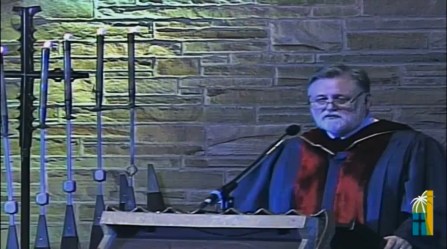
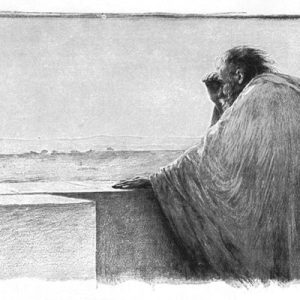
prodigal-son3-400x400Sermon:        The Lord’s Lost and Found, Part 2:A Father’s Extravagant Love
Scripture:     Luke 15.11-24;  Zechariah 3.1-7
Preacher:      Dr. Patrick H. Wrisley
Location:      First Presbyterian Church Fort Lauderdale
Date:              September 22, 2019

Last week, we began studying Luke 15 and looked at three parables Jesus shared about something getting lost and then found: A sheep, a coin, and a son.  We took time to note how the stories of the lost sheep and the lost coin are really stories more about the shepherd than the sheep and the relentless woman as opposed to the lost coin. The shepherd reminds us that God will sacrifice everything for the lost one and the woman reminds us that God is so much larger, textured, and complex than we can ever imagine.  Today we turn our attention to the third parable in Luke 15. Turn in your Bible to Luke 15:11-24 and let’s dig into the parable of the extravagant father.

Luke 15:11-24

11Jesus continued: “There was a man who had two sons. 12The younger one said to his father, ‘Father, give me my share of the estate.’ So he divided his property between them.

13“Not long after that, the younger son got together all he had, set off for a distant country and there squandered his wealth in wild living. 14After he had spent everything, there was a severe famine in that whole country, and he began to be in need. 15So he went and hired himself out to a citizen of that country, who sent him to his fields to feed pigs. 16He longed to fill his stomach with the pods that the pigs were eating, but no one gave him anything.

17“When he came to his senses, he said, ‘How many of my father’s hired men have food to spare, and here I am starving to death! 18I will set out and go back to my father and say to him: Father, I have sinned against heaven and against you. 19I am no longer worthy to be called your son; make me like one of your hired men.’ 20So he got up and went to his father.

“But while he was still a long way off, his father saw him and was filled with compassion for him; he ran to his son, threw his arms around him and kissed him.

21“The son said to him, ‘Father, I have sinned against heaven and against you. I am no longer worthy to be called your son.’

22“But the father said to his servants, ‘Quick! Bring the best robe and put it on him. Put a ring on his finger and sandals on his feet. 23Bring the fattened calf and kill it. Let’s have a feast and celebrate. 24For this son of mine was dead and is alive again; he was lost and is found.’ So they began to celebrate

This is one of the most well-known parables in scripture.  For those familiar with it, we refer to it as the parable of the prodigal son about a young man who squanders his livelihood and who finally comes to his senses and returns home. Though this is a part of the Story, it is only one reading of the Story.  There are two other main characters in this part of Luke 15 which are the father and the grumpy older brother. Today we will look at the parable from the father’s point of view and next week, we will look at the grumpy older brother’s and see what this story says to us today.

The story immediately begins with the youngest ‘troubled child’ asking for his inheritance. Straight away the parable opens with a shock we miss today but would not have been missed by Jesus’ audience. The boy’s demand was about as disrespectful and pretentious as it could be and would have been a slap in the face to his father; we don’t see it today but back then, his request was a huge insult.

“Give me my inheritance.” The statement is scandalous for a couple of reasons. First, daddy’s not dead yet. Inheritances are distributed upon the death of the patriarch. The father may tell his children, “Now when I’m gone, you will have this and your sister will have that” but the distribution of assets occurred when daddy died. Second, the boy’s demands show that he feels he has some sense of entitlement to that which he has not earned himself; in other words, he is spoiled. And third, by asking for his inheritance, he was violating family protocol and tradition by usurping the elder brother’s birth rite. The elder son always gets his inheritance first. The pretentious, self-entitled spoiled one demonstrates he does not care for his dad and neither does he care for his older brother.  So here is insult number one.

Insult number two is that by demanding his inheritance, he, in essence, is declaring to his dad, “You’re dead to me.”

Insult number three is declared by the younger boy because by demanding his inheritance, he is communicating to the family, to his father, that he can manage his own life better than his current family and father does.  We need to realize the younger son’s actions represent his forsaking his family of origin; it’s the youngest boy’s move to remove himself from his family. So, not only is the father ‘dead to him’ but so, too, is his entire family.  What’s the result?  The boy undergoes a self-imposed exile but sadly, does not see it as such.   And this is where the story gets really interesting.

Note again verse 20:

But while he was still a long way off, his father saw him and was filled with compassion for him; he ran to his son, threw his arms around him and kissed him.

This verse is packed with multiple layers of meaning. Like a layered ice-cream cake where there is a layer of vanilla cake on top, once you cut into it you discover the other layers of thick, chocolate ice cream.

One layered reading of this verse is that while the son was coming home, his daddy saw him coming and ran to greet him.  Well, the word we translate as ‘see’ not only means to see with one’s eyes but it also connotes seeing someone or something with your heart, soul and inner senses. The father intuits something in his heart is not quite right.  Many parents report of this intuition about their kids…we just know deep down when somethings not right.

Another word layered with a double meaning is the statement we read as the father saw the boy from “a long way off.”  It not only means a distance where we can make something out with our eyes, but the distance can also be interpreted as one that’s impossible to broach.  Being ‘far away’ also is a metaphor pointing to a person’s spiritual darkness.[1]

But then Luke goes and adds a third double-entendre in verse 20.  When the father runs and embraces his son, he literally grabs him around the throat. In English we use the term “neck” but the ancient language is more specific. Luke uses the word we get our English word trachea – the part of the throat that lets us breathe. It’s one thing to hug a neck; it’s another to have one’s neck squeezed so tight that it causes the other person to pass out because he or she can’t breathe. So let’s put all these double-entendres together to hear a deeper meaning.

On one hand, there is the boy wallowing in the pig’s slop and excrement. A pig – an unclean animal in the eyes of any good Jew – is one of the animals that is considered to cause one’s spiritual purity to be tarnished.  This would mean the boy is not only exiled from his family but he is also at the point of being excluded from his Jewish community.  The boy knows he is three-times removed from home: From his daddy, from his family, from his spiritual and social community.  What was he to do but to begin back home and become an outcast farmhand on his dad’s land?

On the other hand, however, we see in our layered meaning of verse 20 that his daddy knew in his gut that his youngest son was literally far away in a dark exiled place.  Daddy knew his son was clouded with spiritual darkness and that his son didn’t know what to do.  And even though his son was far away, Dad leaves the house and goes to fetch his son while the son was still exiled in a spiritual Mordor of darkness and separation.  He finally meets his boy and the father throws himself at him.  From the son’s perspective, the father flinging himself on the boy could’ve been interpreted as the father attacking the boy according to the Greek wording.  But daddy’s got a surprise! He grabs his son around the neck and squeezes him tightly, not to cause him peril or out of retribution but because He “attacks” his boy with reckless, lavish love.

Instead of stripping and beating the boy, the father does the unexpected reverse.  He calls for the servants to bring a robe, a signet ring, and sandals.  A robe, a new covering, is his father’s way of making his son feel respected and approachable again.  It’s a way of changing his son’s status as a homeless person to a person who is accepted in their culture and tribe.  A signet ring is then put on his finger – a ring that in antiquity was a way to visibly demonstrate and symbolize family connection.  And then there are the sandals.  Sandals are a sign of social stability that indicates he is now of higher standing and can enjoy the freedom of moving about without pain or discomfort.

A robe, a ring, and a pair of sandals.  Taken together, this was the father’s way of reinstating the younger boy back into the family.  No longer was he an outsider but the boy is now an insider.  No longer seen as a social outcast, the son is made clean by the father’s demonstration of grace.  No longer is the boy in fear but he is caught up in his daddy’s unbridled joy![2]

Beloved, how do you relate with this Story? Have you noticed the father’s extravagant love? Or, are you wallowing in the pig slop of guilt, shame, and brokenness? The Good news is like a woman feverishly looking for a lost coin, God is like a father who runs up to greet us and nearly hugs us to death out of joy. This is the story of the extravagant father.  Amen.

Dr. Patrick H. Wrisley
Senior Pastor & Teaching Elder
First Presbyterian Church
401 SE 15th Avenue
Fort Lauderdale, FL 33303
wrisley@outlook.com
patrickhwrisley.net

© 2019 Patrick H. Wrisley. Sermon manuscripts are available for the edification of members and friends of First Presbyterian Church and may not be altered, re-purposed, published or preached without permission.   All rights reserved.

[1] See Acts 2.39, Ephesians 2.13, 17.

[2] Thanks to www.swapmeetdave.com/Bible/Luke/Luke-15-11-32.pdf for making this insight. From A Robe, a Ring, and a Pair of Shoes, an outline of Luke 15:20-22.  Accessed on 4/27/09.

Posted on by patrick h wrisley | Leave a comment

The Lord’s Lost and Found: The Sheep and the Coin, Luke 15.1-10

Sermon:        The Lord’s Lost and Found: A Sheep and A Coin
Scripture:     Luke 15.1-10
Preacher:      Patrick H. Wrisley, D.Min.
Location:      First Presbyterian Church, Fort Lauderdale, FL
Date:             September 15, 2019

Did you know our church has a lost and found? It’s located at the end of the counter at the mailboxes near the kitchen by the Spanish Room. For the nicer items, there’s a clear case you can peer into and rummage through.  For the really expensive stuff like iPhones, watches, and wallets, it all goes to a secret place that you have to ask around for to find them! Or, you can always just ask Darleen, I suppose. I’ve seen everything from glasses – lots and lots of glasses – sweaters, and Bibles. I always check the Bibles to let people know we’ve got theirs but sadly most people don’t put their names in them. There are beautiful leather Bibles, Bibles that have been written in and marked up with life-changing thoughts, Bibles that were obviously gifts and there is no way to return them to their owners. So, if you bring a Bible, put your name in it!

Every church has a lost and found and do you know what?  God has a lost and found, too, and it is called the Church!  The Church is the place the Lord of Hosts has purposefully created to welcome and receive those of us who know well enough that the world is a big swirly place and our lives can feel out of control because we know we are not God. The Church is the place all of us lost ones can come to and know that we do not have to pretend to be God and we allow the Lord that privilege instead of taking it on ourselves.

The Lord’s lost and found is called the Church. In it are people like you and me and others who are trying to find their way.  Luke 15 has three stories about the lost and the found and frankly, they are some of the most scandalous biblical texts in all of scripture, but we’ve become too familiar with them. These three stories are about a sheep, a coin, and a wayward son. Actually, they are about a bold shepherd, a woman, and an extravagant father.

Today, we are going to look at the first two, the shepherd and the woman, and then next week we will look at the famous Story of the prodigal son, or as I call it, the Story of Extravagant Father.  Hear the Word of the Lord from Luke 15.1-10!

Luke 15:1-10

15.1 Now all the tax collectors and sinners were coming near to listen to him. 2And the Pharisees and the scribes were grumbling and saying, “These fellow welcomes sinners and eats with them.”

3So he told them this parable: 4“Which one of you, having a hundred sheep and losing one of them, does not leave the ninety-nine in the wilderness and go after the one that is lost until he finds it? 5When he has found it, he lays it on his shoulders and rejoices. 6And when he comes home, he calls together his friends and neighbors, saying to them, ‘Rejoice with me, for I have found my sheep that was lost.’ 7Just so, I tell you, there will be more joy in heaven over one sinner who repents than over ninety-nine righteous persons who need no repentance.

8“Or what woman having ten silver coins, if she loses one of them, does not light a lamp, sweep the house, and search carefully until she finds it? 9When she has found it, she calls together her friends and neighbors, saying, ‘Rejoice with me, for I have found the coin that I had lost.’ 10Just so, I tell you, there is joy in the presence of the angels of God over one sinner who repents.” [1]

Each of the two stories follows the same pattern. Something is lost; someone diligently searches for it and finds it; a celebration of friends and neighbors is thrown to rejoice at their good fortune at finding it again (interestingly, neither mentions their family); and finally, even the heavens rejoice at all that has transpired. Let’s look at three scandalous revelations in our brief ten verses.

The first scandalous revelation we note is in verses 1 and 2. We read how Jesus, an itinerant Rabbi, is choosing to have table fellowship with ‘those people.’ Jesus does not let the virtue of who he is get in the way of who he chooses to rub shoulders with and get to know. The collection of tax collectors and those other sinners, you know – those people – are ironically being welcomed and received by God’s spokesman. Jesus’ faith, religious actions, and spiritual walk were intentionally intersecting with the people who needed it the most – you know ‘those people’ – the ones we read and hear about in the news or who work in ‘those kinds of places.’ When you pause to think of them, who are ‘those people’ in your life?  Is it all those sinners like the prostitutes, the tax collectors, the unjust politicians, the thieves, the hustlers, shady salesman, and the abusive or cheating spouse? You bet; all of these folks were eagerly trying to hear what Jesus was saying.  People like you and me.

Ironically, the religious and pious people, the ones who were the ‘spiritual giants’ in the community, the ones who practiced the ways of good citizenship, these are the ones who were too busy grumbling about Jesus to even hear what he had to say. They were stuck in their religious and spiritual hubris and that pride prevented them to experience the good news. The first scandalous act in our text is that those who are supposed to ‘get it’ don’t and the ones no one ever would imagine ‘getting it’ do!  Furthermore, as soon as you and I start talking about “those people”, we become one of “those people” ourselves!

The second scandalous piece of our Story is found in verses 3 to 7. We often hear this story and think how dedicated and loving the shepherd is who leaves the 99 sheep to look for the single lost one. Isn’t that special? Well, on one level it is but its purpose is to really show us the radical nature of God’s love for the lost.

People in business know that there will always be a certain amount of waste in their business.  A grocer orders twenty bushels of lettuce knowing that she might only sell 18 of them.  The rest is calculated waste that grocers know they will have to throw out and absorb.  Or, it’s like a chef at your favorite local restaurant.  Based on historical trends on how Thursday night dinners go, he will order and prepare so many Thursday night Blue Plate Specials but knows that tonight’s chicken very well could end up in tomorrow’s soup at lunch. What do we think Wendy’s chili is made of anyway? They plan for a certain amount of waste and loss. So it is in our Story.

The scandal in verses 3 to 7 is that the Shepherd leaves the 99% of his working capital to go find a single sheep.  Another valid way to read and hear this text is like this:

Which one of you would actually leave the 99 sheep and go looking for a single lost lamb?!

In other words, who in their right mind would leave an entire flock of sheep, your entire livelihood out, open and exposed to bandits, thieves, lions, and wild dogs to be preyed upon while you’re out looking for a single young lamb?

Think about that a moment.  It would be like a driver of a Best-Buy semi-truck leaving the back and side doors wide open parked in the Bronx full of iPhones, iPads, Macs, TV’s, computers, games and other equipment as the driver walked three or four blocks away to find the one iPad that he forgot to mark off his inventory at the last stop. The scandalous Good News is that Jesus is telling us that God is willing to risk it all for the sake of the one. The one is so important to God that God appears to act irresponsibly in the pursuit of the lost one. This is not so much about finding the lost sheep as it is about the scandalous nature of God as the Good Shepherd risking it all to find the one.

Verses eight through ten reveal the third scandalous piece in our text and it is so subtle that we do not even notice it.  We overlay our twenty-first-century mindsets on top of the story of the woman looking for a lost coin that we fail to see what would be shocking for Jesus’ listeners in the first century.  If you wonder why the religious do-gooders were grumbling about Jesus, well, here you go!

Look at the previous parable of the Good Shepherd. Who are we to understand the shepherd to be in the Story?  It’s God!  God goes and finds the lost lamb. Now, look at this woman tearing up her house to find that lost coin.  Who is the woman in the story?  Who are we to understand the woman to be in the Story? Yup. God. Jesus has done gone to compare God to a woman who is earnestly looking for something she has lost. Jesus is forcing the people to expand their view and the notion of God to be larger, more embracing, more intentionally loving than they ever imagined!  Jesus is stirring it up.  God as a woman?  Women were treated horribly in antiquity; they had few rights and yet look at who Jesus compares God to be.

Today we baptized a beautiful baby girl who could do nothing but to be handed to a stranger with a beard and had her head covered in water. She had no choice to be adopted into this family of God. The Good Shepherd came searching for her. The Woman searching for the lost coin came searching for her. Both the lost sheep and the coin were unaware of being “lost”.  Baby Charlotte is not aware of it either, but the shepherd knew and knows. The woman knew and knows.  And so, it is that God claims this little baby for heaven’s Lost and Found called the Church. Isn’t it wonderful we worship a God who breaks our earthly rules and comes to find ‘those people’ like you and me? God is the pursuer. It’s that simple and uncomplicated.  And all of God’s people say, Amen.

Patrick H. Wrisley, D.Min.
Senior Pastor & Teaching Elder
First Presbyterian Church
401 SE 15th Avenue
Fort Lauderdale, FL 33301

© 2019 Patrick H. Wrisley. Sermon manuscripts are available for the edification of members and friends of First Presbyterian Church, Fort Lauderdale, Florida and may not be altered, re-purposed, published or preached without permission.   All rights reserved.

[1] New Revised Standard Version (NRSV). New Revised Standard Version Bible, copyright © 1989 the Division of Christian Education of the National Council of the Churches of Christ in the United States of America. Used by permission. All rights reserved.

Posted in Sermon | Tagged , , , , , , , , , , | Leave a comment

Prayer for the Bahamas at the Fort Lauderdale Interfaith Service, September 4, 2019

Psalm 133

How good and pleasant it is
when God’s people live together in unity!
It is like precious oil poured on the head,
running down on the beard,
running down on Aaron’s beard,
down on the collar of his robe.
It is as if the dew of Hermon
were falling on Mount Zion.
For there the Lord bestows his blessing,
even life forevermore.

Last evening, an interfaith community of religious leaders came together in unity of purpose for our prayers for those impacted by Hurricane Dorian.  Presbyterian, Baptist, Episcopalian, non-

fullsizeoutput_143a

denominational, Hindi and Muslim leaders gathered at the Sanctuary Church in Fort Lauderdale for a service of worship and prayer. It was a beautiful example of how God’s people can and should live together in unity.  All the leaders spoke a few words and then offered prayers.  Below is the prayer I offered.

God of all tender mercies, we gather tonight as one people, created in your image, sharing the corporate sense of loss and pain for those who have suffered and are suffering from this apocalyptic storm.

We weave our prayers together from each of our faith traditions knowing full well that Abba, Yahweh, Allah – One God – hear all His children’s prayers.

We cannot imagine the horror of drowning in a submerged attic, seeing our spouse or child slip below the waves at the crest of a surge, or having our homes blown down around us; our hearts cannot fathom what those rescuers and other personnel searching for the lost or dead are witnessing or feeling, and we are left speechless.

Almighty One, in a world where there is such division, we come in the unity of Spirit and purpose to help one another grieve, share the best we have, and show the world the beauty of our diversity as we are woven into a singular rope of grace and encouragement for the broken.

We lift up those who have lost their lives in the storm and commit them to your loving care and embrace.

We implore you to care for the survivors and help them grieve and process the trauma they have endured; may the world reach out in kindness, and supply the people of the island water, medicine, food, and necessities for humane living and survival.

Provide the means by which these life necessities will be transported in a timely way that will not be hindered by political bickering or power plays as our governments have done during other moments of crisis and devastation.

Specifically, we pray for the children…

…rescuers and first responders,

…boat captains, helicopter and airplane pilots delivering supplies,

…the aged and frail,

…the islands’ religious leaders and their hope, courage, and strength,

…doctors and nurses attending to the wounded and sick,

…for families awaiting word to hear if their loved ones are still alive.

Forgive our feckless attitude toward our neighbor and our environment and restore us once again to your side. God of Abraham and Joseph, hear our prayers…Amen.

Posted in Prayers | Tagged , , , , , | Leave a comment

Imitating Jesus. Some Thoughts on Humility; Luke 14.1, 7-14

Sermon:        Imitating Jesus. Some Thoughts on Humility.
Scripture:      Luke 14:1, 7-14
Preacher:      Patrick H. Wrisley, D.Min.
Location:       First Presbyterian Church Fort Lauderdale
Date:              September 1, 2019

Here’s a riddle for you.  What is the one thing you can strive for but once you have it you immediately lose it?

Humility.

So, let me ask you: Are you a humble person? Think about it before you say anything! Hold that thought right here for just a moment and let’s turn to our biblical text.

Our scripture today from Luke has Jesus attending a dinner party at a Pharisee’s home.  Pharisees, if you remember, are religious scholars of the first century and knew the religious rule book backward and forwards. They were considered to be part of what we might describe as “the movers and shakers” of their world.  They dressed impressively, their table manners were impeccable, and they wielded a good amount of influence in their Jewish communities. Our Story is picking up towards the beginning of supper.  Listen to the Word of the Lord from Luke 14:1, 7-14.

Luke 14:1, 7-14

14.1On one occasion when Jesus was going to the house of a leader of the Pharisees to eat a meal on the Sabbath, they were watching him closely…

7When he noticed how the guests chose the places of honor, he told them a parable. 8“When you are invited by someone to a wedding banquet, do not sit down at the place of honor, in case someone more distinguished than you has been invited by your host; 9and the host who invited both of you may come and say to you, ‘Give this person your place,’ and then in disgrace you would start to take the lowest place. 10But when you are invited, go and sit down at the lowest place, so that when your host comes, he may say to you, ‘Friend, move up higher’; then you will be honored in the presence of all who sit at the table with you. 11For all who exalt themselves will be humbled, and those who humble themselves will be exalted.” 12He said also to the one who had invited him, “When you give a luncheon or a dinner, do not invite your friends or your brothers or your relatives or rich neighbors, in case they may invite you in return, and you would be repaid. 13But when you give a banquet, invite the poor, the crippled, the lame, and the blind. 14And you will be blessed, because they cannot repay you, for you will be repaid at the resurrection of the righteous.”[1]

Jesus’ words seem to be giving proverbial advice when it comes to going out to dinner. He then follows that with a second parable which serves to bring out the importance, it brings out the flavors of the proverbial wisdom he has just shared; in fact, the second parable ensures that we don’t just hear Jesus’ words as merely good advice while dining out.  Today, Jesus is lifting up for us how we are to live together in community and how we are to be in relationship with one another. Ultimately, Jesus is foretelling what he himself will do for the community, literally for the whole cosmos, come time for the Jewish Passover.  Our Story is Jesus telling us, “Imitate me.”

How are we to imitate Jesus?  Well, Jesus says we imitate him when we change our perspective and point of view.  He is inviting you and me to look at life through the eyes and ears of those who are seated by the restaurant’s kitchen door, you know the least desirable seat in the place! Have you ever sat by the kitchen door of a busy restaurant?  It is not the most sought-after seat in the place!  It’s the least desirable because it’s often loud.  You not only hear the conversations of people in the restaurant, but you hear the banter between the servers and the cooks, too!  They’re yelling at each other to get the orders out on time.  They’re bickering about how the customer wants her fish cooked.  You hear the busboys slinging dirty dishes as they clang and slap against each other. You can overhear the wait staff gossiping about that jerky customer at Table 16 and what they want to do with his food.

But your perspective also changes with what you can see. It becomes obvious from the table by the kitchen door to see which customers are getting better service. You note how the server at the prep station drops a few lemon wedges from her bowl onto the floor and how she quickly scoops them up and places them back with the others to be served. You see the waiter take his forearm as he sniffs his nose down the length of his arm.  Since you are sitting in a loud and distracting seat, you cannot really talk with the one you’re with, so you end up watching other customers and diners.  Who is talking to whom?  Is that couple in a fight? Who is that sole woman dining alone and why does she look so sad?  It’s all about perspective.

Sit at the best table in the house and you have beautiful views, quiet conversations, and doting staff service.  The Manager usually comes by and checks on you. Other customers watch the staff fawn over you and your party and build up in their mind how special you must be or how important you are.

Jesus is inviting you and me to change our seat in the restaurant, to switch seats at the dinner table, thereby changing our perspective and how we look at and hear the world.  When the person accustomed to sitting at the best seat at the table or restaurant is asked to sit by the kitchen, he or she will relinquish their place of privilege and see and hear their surroundings from the place of servitude and from the margins. Your perspective of the wait staff changes as you see her battling the other servers for her order or hear the chef is screaming at her only to have the customer at Table 7 loudly chew her out because the order is not right.  When you change your perspective, you discover a sense of empathy for the others in the room.  Your outlook on the restaurant might even change as you observe the management relate with the staff. Frankly, when you are seated at the worst table in the place and are by the kitchen, it teaches you how to be a better, more kind and appreciative diner.

At least it can.

Beloved, Jesus wants us to change seats because he knows it will change our perspective from what we are accustomed to a perspective of the ways things truly are. He is asking us to voluntarily give up our places of privilege and assume the posture and position of the lowly, overlooked ones on society’s margins.  He is asking us to put ourselves into their places, to spend time walking in their shoes, in order to gain the perspective of how the non-privileged live and how they are treated.

At least it can.

Isn’t this the core of what humility is about, to begin with? Humility is all about one’s purposeful changing of one’s perspective from that of privilege to the standpoint of being powerlessness and need. It means giving up self-importance in order to experience the impotence of power many in our world experience daily.  It means intentionally positioning oneself to view the world from a position of “I am blessed” to that of being “I am deserving.” It means learning to live with what we have versus what we think we are entitled to possessing.

At least it can.

Humility is not a quality we are to strive for (that’s an oxymoron in its own right!) but humility is a heart-held virtue from which we are to live out our life. It describes more of who we are at the core of our spiritual lives as opposed to how we act.  Humble acts emerge from humbly-lived lives.  It’s the position of looking out for “the other” and trying to understand their dreams, their longings, their hurts, and their sorrows. And then something happens when we do.

You see, when our perspective changes, so too do the way we respond to those around us. When we look at others and the world from the position of being down low like they are, we feel their isolation, their discrimination, their sense of being forgotten at the back of the line. What we see in our lives impacts how we feel and relate to those in our lives. Our hearts and the embraces our arms can contain grow more caring and larger and more encompassing. Perspective changes behavior and how we relate with others.

At least it can.

Jesus is calling us to imitate his own humbleness.  We read in Philippians 2 how Jesus gave up the form of being God in order to become a human being.  Thus, God changing God’s own perspective enabled the Lord to see and experience our humanity, our world, in ways God never had before. It is out of God’s humbleness that His love through Christ was lived out for you and for me. God the Almighty, housed in eternal timelessness changed His perspective by entering our earthly time-bound fleshy existence to experience humanity, to experience our life in a way God never had before!

Our English word for humility derives from the Latin word “humus”, literally the black and brown dirt of the ground comprised of the composted dead leaves, plants and animals of the soil which provide nutrients for other forms of life.  Humus is the compost of the soil which brings nutrients to other items planted in the ground so life can take seed, take form, and express itself in a new creation.  This is what Jesus did for us, isn’t it? The compost, the humus, of Good Friday brought us new life and growth at Easter didn’t it?

And here is the news flash: Jesus desires our lives to be the humus, the compost through which the Kingdom of God can be planted in the here and now in our broken and hurting world.  As Jesus gave his life for us, we are called to give up our seats of honor, our lives, and become the source of nutrients for others as they discover the winsome life with Jesus as well.  And we do this by imitating Jesus; we do this in and through our humility.

The Spirit add understanding to these feeble words. Amen.

Patrick H. Wrisley, D.Min.
Senior Pastor & Teaching Elder
First Presbyterian Church
401 SE 15th Avenue
Fort Lauderdale, FL 33301
pwrisley@drew.edu
patrickhwrisley.net

© 2019 Patrick H. Wrisley. Sermon manuscripts are available for the edification of members and friends of First Presbyterian Church, Fort Lauderdale, Florida and may not be altered, re-purposed, published or preached without permission.   All rights reserved.

[1] The New Revised Standard Version, copyright 1989, 1995 by the Division of Christian Education of the National Council of the Churches of Christ in the United States of America. Used by permission. All rights reserved.

Posted in Sermon | Leave a comment

Reclaiming the Sabbath!, Luke 13:10-17

Schwarz_JesusBentWomanPainting better color (1000x750)

Barbara Schwarz, OP, “Jesus and the Bent Over Woman,” acrylic on canvas, 2014.

Sermon:        Reclaiming the Sabbath
Scripture:     Luke 13:10-17
Preacher:      Patrick H. Wrisley, D.Min.
Location:      First Presbyterian Church, Fort Lauderdale, FL
Date:             August 25, 2019

When pressed this week for a sermon title to print this week, I coughed up, “Churches in America are Operating Under a New Set of Blue Laws.”  I really didn’t like that title for this message and the more I got into the text, the more it just didn’t fit.  So away with that title!  Today, my sermon title is built around these three words: Reclaiming the Sabbath.

Turn in your Bible to Luke 13.10-17. Our Story is placed in a Jewish synagogue and Jesus is teaching. In his day, the “preachers” sat down in front of the crowds to teach their message and we can imagine Jesus sitting down and begin his discussion on some aspect of the Torah, the Jewish Law. As you hear our text, I invite you to join Jesus in that synagogue and take in the sights, sounds and smells of what is around you. In particular, listen to the characters in our Story and imagine what they must have looked like, seen, and felt throughout this exchange.  Put on a pair of “Jewish ears” and see if you can pick up those words that for a Jewish person are a part of their cultural warp and weft. Listen to the Word of the Lord!

Luke 13:10-17

10 Now he was teaching in one of the synagogues on the sabbath. 11 And just then there appeared a woman with a spirit that had crippled her for eighteen years. She was bent over and was quite unable to stand up straight. 12 When Jesus saw her, he called her over and said, “Woman, you are set free from your ailment.” 13 When he laid his hands on her, immediately she stood up straight and began praising God. 14 But the leader of the synagogue, indignant because Jesus had cured on the sabbath, kept saying to the crowd, “There are six days on which work ought to be done; come on those days and be cured, and not on the sabbath day.” 15 But the Lord answered him and said, “You hypocrites! Does not each of you on the sabbath untie his ox or his donkey from the manger, and lead it away to give it water? 16 And ought not this woman, a daughter of Abraham whom Satan bound for eighteen long years, be set free from this bondage on the sabbath day?” 17 When he said this, all his opponents were put to shame; and the entire crowd was rejoicing at all the wonderful things that he was doing.[1]

Who is in our Story? There’s obviously Jesus. There is the synagogue leader who is charged with making sure everything is run decently and in order. There is the sick woman and then there is the crowd of Jewish worshippers who had packed the synagogue that Saturday. So, let’s begin our musings this morning by asking our self, “Which character do I most relate within today’s Story?”

Let’s assume none of us sees him or herself as Jesus in our text…that would be a bit presumptuous on our parts. So, who are you?  Are you the sick woman who has been literally bent over in pain for nearly two decades and has been silently stereotyped by the community as a sinner because of your ailment, unclean and a virtual nobody in the village? Your body does not allow you to look up into the sky or into the face of the person who is speaking with you. Your world is a world spent looking at people’s feet! You have to turn your body side-to-side in order to take in your surroundings. Your move slowly and have to shuffle your feet forward to get anywhere and are easily jostled about by those who are hurrying by you. You feel alone and isolated as who wants to be around a broken old woman with a deformity who doesn’t fit into her community in a way the community appreciates.

Perhaps you relate with the synagogue ruler who is all concerned with protocol and doing things the right way.  You subscribe to the notion of, “It’s worked this way for my grandparents, parents, and now for me and my family, so it’s good enough for people like you today! This is the way we have always done it so don’t rock the boat and deviate from what we’re already doing!” The synagogue ruler enjoys the predictable status quo and the easy power that flows from it. He thinks, “I know the rules. I follow the rules. I will make sure you follow the rules too!”

Then again, maybe you are one of the worshipers who happen to be there that day. You go “to church” that day expecting the same-old, same-old but this new preacher is stirring the pudding. On one hand, you’re tempted to revert to the old “We’ve never done it that before” but on the other hand, you realize there is something refreshingly different in how this teacher/preacher Jesus is presenting his case. You kind of like seeing the stuffy old guard of leadership stirred up a bit and have their myopic points of view challenged and enlarged.

So, beloved, who are you in the Story? How do you personally react to the events of what is unfolding in front of you? Yet, it’s not just about who we relate to in our text; it’s about discerning what the major point of our text is and what is the foil, what is the light that shines on the main point of our Story. Is the Story about the healed woman? Is the Story about Jesus being a rabble-rouser? Is the Story about following religious rules and expectations? Or, is our Story about something else entirely? Although our text talks about a crippled woman who is healed, we realize her healing is really the foil, the light, that shines on the key part of our teaching which is what are we to do about our understanding the Sabbath day.

For the crippled woman, Sabbath was the day to come and truly be in the community as an equal worshipper before the presence of God. For the synagogue ruler, it was time for ensuring proper decorum was adhered to while the community gathered to learn about God. For the crowds, it was a day to fulfill all righteousness as a good Jew and meet at the synagogue for learning and praying; it was what doing what good God-fearing Jews were expected to do. For Jesus, however, the Sabbath had grown dank and stale. For Jesus, the Sabbath was majoring in the minors of life and neglecting the weightier, more profound issues of life.  For Jesus, the Sabbath was about learning and prayer…for sure…but Sabbath was primarily a day when the chosen people were to learn, be reminded and experience God’s gracious and grace-full provision and liberation from a hamster-wheel-type life.  Somehow, that very important reality was lost somewhere and the Sabbath became more about “the rules” and obligations you as a good Jew were to fulfill than it was a time to expectantly encounter God in order to be transformed and to be loved with wells of grace that are deeper than we can plumb!

We see this today in churches across America. For some, coming to Sunday worship is a time when those who are isolated feel they can come and be with others like them whether or not they are even noticed themselves!  For some, church services and routines are expected to follow specific protocols and are to be done in a certain way because that’s the way it’s always been done and frankly, “I have a style preference for the old ways.” For some, church attendance is something that you’re supposed to do as Christians because that’s what we are expected to do at least once a week; yet sadly, studies have demonstrated that people do not even feel it’s important to come to church with others in community anymore as we have taken on the attitude and have bit off the lie that “I can find God on my own.” Our friends in AA, recovering alcoholics, know better than that! They know they can’t find sobriety on their own and so they wonder why most Christians think they can develop a healthy spiritual life by themselves without the accountability of others in the community!

And then for some, fewer and fewer these days it seems, some people come really expecting that “God will show up.” Sabbath has become stale and fewer and fewer people that come on Sabbath come without much expectation that they will encounter the bottomless grace-fullness of God’s love and care. We come and we often do not expect miracles to happen like a crippling spirit held captive by Satan being set free from the bondage of spiritual enslavement.

The power of our Story this morning is that Jesus declares and shows us what Sabbath and worship are really about. Sabbath and worship are to focus on God’s purposefully searching for you and me, lifting up this church, and showering us with liberating, extravagant grace.  It’s about our physically coming together as community showing one another that we need each other, and we cannot live a healthy Christ-following life alone. It’s about coming spiritually crippled as we wholeheartedly expect to leave this place and this day with wholeness, healing, and restoration from the hands of Jesus. It’s a day we set aside and expect God to do something wonderful in our lives! This, my beloved, is what it means to reclaim the Sabbath!

Amen!

Patrick H. Wrisley, D.Min.
Senior Pastor & Teaching Elder
First Presbyterian Church
401 SE 15th Avenue
Fort Lauderdale, FL 33301

© 2019 Patrick H. Wrisley. Sermon manuscripts are available for the edification of members and friends of First Presbyterian Church, Fort Lauderdale, Florida and may not be altered, re-purposed, published or preached without permission.   All rights reserved.

[1] New Revised Standard Version (NRSV). New Revised Standard Version Bible, copyright © 1989 the Division of Christian Education of the National Council of the Churches of Christ in the United States of America. Used by permission. All rights reserved.

Posted in Sermon | Tagged , , , , , , , , , | Leave a comment