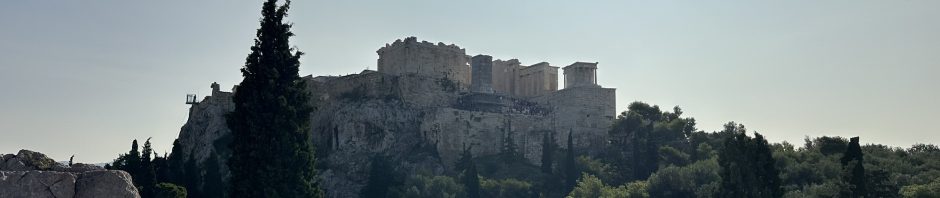
How Many Angels Can Dance on the Head of a Pin?, Luke 20:27-40

A Sermon Delivered on November 9, 2025 by the Rev. Dr. Patrick H. Wrisley


It was a hard day at the office, and I had come home and crashed in the first chair that greeted me when I walked in the door. I just wanted to enter my cave, be alone, and turn everything off for a while. John Gray, author of the famous 1992 book Men Are from Mars and Women Are from Venus, describes the need for men to decompress in those first moments after coming home from work, i.e., to refrain from talking, tasks, or anything that might disturb that time of letting the day settle. Gray asserted the men needed that time of transition from work-mode to home life.  It never dawned on me back then that my wife Kelly was ready to run into a cave of her own by the time I came home in the evening! She quickly reminded me that Gray’s thesis was flawed; both men and women need “cave time” after a long day.

So, there I was trying to sit in my quiet cave-space while our two girls and Golden Retriever puppy tore through the house. After a while, things grew quiet and I began to relax and soon slipped into a pre-dinner nap. No sooner had I closed my eyes when I felt a plop on my lap. My youngest, Katie, had joined me in my chair and was looking up at me. All of five or six at the time, she began chatting up a storm. Then it came out of the blue. From what wall this non sequitur emerged is still a mystery, but in retrospect, it was clearly a glimpse into her future as a Ph.D. in Medieval Historical Theology.

“Daddy, what is hell?”

I just kind of stared at her a few moments, trying to formulate an answer she might understand. I had no idea what images she had running around her little mind when she asked me this question. Here was this little human of five, looking at me with Cindy-Lou Who eyes, wanting an answer to a serious question. I took a breath, stroked her hair, and said, “Honey, that’s a good question. In fact, that’s a great question and it deserves a really good answer! I’ll tell you what: Hey Kelly! Katie has a question for you! Go ask your momma and let me know what she says, ok?”

Oh, those hard questions that come out of left field; we all have them, don’t we?

What’s heaven like?

Well, it’s more incredible than we have words to describe.

What’s hell like? 

Why do we ask that? Do we think we want to book a ticket?

Is there a heaven or hell at all?

Look at your life and the world around us. You tell me the answer.

Why is there suffering if there is a good God?  

God might look at all the good Christians in churches worldwide and dare to ask us the same question.

Why did this happen to me?

Because you and I live in a broken, fallen world right now. It could happen to any of us.

Say, Jesus, how many angels can dance on the head of a pin?  

Jesus cocks his head and sardonically says, “Oh come on! Really?”

What are your questions for God? If Jesus were taking a bus tour through town and stopped here this morning and you could ask him any question, what would it be?

Well, this is what’s happening in our scripture from Luke 20 today. Jesus has entered Jerusalem and has been fielding a barrage of questions from the religious leaders, the strict keepers of orthodoxy and moral purity, who are trying to trip him up in front of the people. They were trained by the greatest religious minds of their time, so who was this country bumpkin from backwater Nazareth to school them in theology?

In today’s text, we meet a group we haven’t encountered before in Luke’s Gospel: the Sadducees. They were the ones who took care of the Temple and ensured the Torah was kept. They were scholarly, ultra-conservative in their strict interpretation of Jewish Law, and live as wealthy religious aristocrats. The Sadducees did not believe in an afterlife; they believed this life was all we get, so we ought to live it well. They only held to the first five books of the Hebrew Bible, the Torah. The Pharisees, by contrast, embraced the Torah, the Prophets, the Wisdom writings, and loved the vibrant oral tradition passed down through generations. Compared to the Sadducees, the Pharisees almost looked like free spirits.

Now, the Sadducees come to Jesus with a question, not really wanting to learn anything but rather to mock him and stir the theological pot between Jesus and their rivals, the Pharisees. Listen to the Word of the Lord from Luke 20.

Luke 20:27–40 (NRSV)

            27 Some Sadducees, those who say there is no resurrection, came to him 28 and asked him a question, “Teacher, Moses wrote for us that if a man’s brother dies, leaving a wife but no children, the man shall marry the widow and raise up children for his brother. 29 Now there were seven brothers; the first married, and died childless; 30 then the second 31 and the third married her, and so in the same way all seven died childless. 32 Finally the woman also died. 33 In the resurrection, therefore, whose wife will the woman be? For the seven had married her.”

            34 Jesus said to them, “Those who belong to this age marry and are given in marriage; 35 but those who are considered worthy of a place in that age and in the resurrection from the dead neither marry nor are given in marriage. 36 Indeed they cannot die anymore, because they are like angels and are children of God, being children of the resurrection. 37 And the fact that the dead are raised Moses himself showed, in the story about the bush, where he speaks of the Lord as the God of Abraham, the God of Isaac, and the God of Jacob. 38 Now he is God not of the dead, but of the living; for to him all of them are alive.”

            39 Then some of the scribes answered, “Teacher, you have spoken well.” 40 For they no longer dared to ask him another question.

This was their way of asking Jesus, “How many angels can dance on the head of a pin?” They didn’t care about resurrection because they didn’t believe in it! For the Sadducees, eternal life was simply about family lineage continuing through their descendants. It’s all about ancestry; resurrection for the Sadducees was nonsense.Yet, despite their ridiculous question, Jesus provides two profound lessons about eternal life.

Lesson One: We believe in eternal life, not immortal life. To be immortal means never dying at all; in other words, immortal life means heaven is just an upgraded continuation of life here, with better houses, better cars, and, in my case, maybe a few extra inches of height! But that’s not what Jesus teaches. Jesus the mortal man died. He took his last breath on the cross. The soldiers even pierced his side to make sure. What Jesus tells us is that though our bodies decay and life itself brings pain, loss, and loneliness, those things do not have the final word. God gives us new life as re-created children of the resurrection.

Lesson Two: In the life to come, things will be both familiar and radically new. Our earthly urges and needs will fall away. We will be like angels: whole, pure, radiant children of God. All those things we think matter now like college degrees, houses, money, health – none of that will matter then any more than knowing how many angels can dance on the head of a pin. When we live in the direct presence of God, the questions that trouble us now won’t even cross our minds then.

Remember what the Apostle Paul said about that day in 1 Corinthians 13:

Love never ends. But as for the gift prophecy, it will come to an end; as for the gift of speaking in tongues, they will cease; as for gift of knowledge, it will come to an end. At this moment, we know only in part… but when the complete comes i.e. the Day of the Lord, the partial will come to an end. At this moment, we see as in a mirror, dimly, but when the Day of the Lord comes, we will see face to face.[1]

In other words, beloved, resurrection is when we finally become fully who God intended us to be eternally. The time for ridiculous questions will end. We will know, even as we have already been fully known. One day, we will see everything clearly, face to face – not with earthly eyes, but through the eyes of eternity.

So, here’s the takeaway: the moment we receive eternal life, which is the moment we ask for it, our questions will and should change. The saying is spot on: If you want to know different answers you must begin asking different questions. The questions we ask on this side of eternity come from our yearning to know and our curiosity. So, maybe our task isn’t to pepper God with unanswerable questions but rather it is our task to begin living into that eternal life now with lavish faith, courageous hope, and generous love for God and one another.

And who knows? When that day comes, we might finally learn just how many angels can dance on the head of a pin and we’ll respond, “Who cares?”

© 2025 by the Rev. Dr. Patrick H. Wrisley. Sermon manuscripts are available for the edification of members and friends of First Presbyterian Church of Glens Falls, 8 West Notre Dame Street, Glens Falls, NY 12801 and shall not be altered, re-purposed, published or preached without permission.   All rights reserved.


[1] My personal paraphrase.

Posted in Sermon | Tagged , , , , , , , , , , , , , | Leave a comment

A Thin Place, Daniel 7:1-3, 15-18

A Sermon Delivered on November 2, 2025 by the Rev. Dr. Patrick H. Wrisley.

Our text this morning comes from the Hebrew scriptures and is from the prophet Daniel. There’s some debate when it was written. Some believe it was written as late of 530 BCE but others place it earlier in the mid-second century.[1] As a prophet, Daniel’s job was to be a truth-teller to those Jews who were still held captive by King Nebuchadnezzar in Babylon as well as a future-teller of events that would come to pass in the years to come. That is what a prophet does: They speak to the facts as they are and point to the way things shall be.

Daniel chapters 7 – 12 are called apocalyptic literature which uses dramatic vivid language to reveal what is hidden. That is what the word apocalypse means – to reveal. Let’s listen to Word of the Lord and then we will unpack it a bit.

Daniel 7:1-3,15-18

7.1 In the first year of King Belshazzar of Babylon, Daniel had a dream and visions of his head as he lay in bed. Then he wrote down the dream: I, Daniel, saw in my vision by night the four winds of heaven stirring up the great sea, and four great beasts came up out of the sea, different from one another…

15 As for me, Daniel, my spirit was troubled within me, and the visions of my head terrified me. 16 I approached one of the attendants to ask him the truth concerning all this. So he said that he would disclose to me the interpretation of the matter: 17 “As for these four great beasts, four kings shall arise out of the earth. 18 But the holy ones of the Most High shall receive the kingdom and possess the kingdom forever—forever and ever.”(NRSV)

Sometimes God will speak directly to a person, but other times God will speak through strange visions and dreams in the night. Daniel has this dream where he is lifted into the heavenly realms and is shown something that would happen in the future. The “four winds” is reference to that which is about to happen and will impact the whole world. The sea is representative of chaos and disorder, and the four beasts are thought to refer to either the kingdoms of Babylon, Media, Persia and Greece, or Babylon, Media-Persia, Greece and Rome.[2]

So, Daniel dreams of four political empires arising and causing havoc and strife. And then he adds verse 18: But the holy ones of the Most High shall receive the kingdom and possess the kingdom forever—forever and ever. Is that just a throw-away line in the narrative or does it mean something more? You see, a prophet’s words are not just to stir people up for action and awareness, but a prophet’s words are geared to provide a measure of hope for the listener as well.

In essence, Daniel is telling those who can hear that 1) the world is getting stirred up from one end to the other, 2) political forces and empires are going to bully their way into people’s lives, but 3) the holy ones will receive an eternal kingdom so just hang on!

Hear that again: The holy ones will receive an eternal kingdom so just hang on. People in the twenty-first century were not even an afterthought for Daniel, but his words spoke hope and truth to people of his time, and they reach into our own. The word for holy ones can also be rendered as saints. The saints will receive an eternal kingdom so just hang on! 

We Protestants have a skewed understanding of what a saint is. We understand saints to be larger than life, miracle working, dead people who reach through time and help those in distress. Scripturally, however, the word saint simply means a holy one. A set apart one. And scripturally, who are the holy ones in the New Testament? Holy ones, saints, are simply all those who follow Jesus. If you have been baptized and professed your faith, you my friend, are a saint. You are a holy one.

A holy one, a saint, does not live a perfect life because we are, after all, terribly broken human beings. Yet, a saint, a holy one, strives to live a cruciform life and that means to live a life, as best we can, like Jesus lived his. Our holiness, our saintliness, is not measured by how perfect our life is lived; rather, it is revealed by whose life we try to emulate, i.e. Jesus’. The best summarization of what a life of a saint should look like can be found the Beatitudes of Matthew 5 and all the blessed-ares.

Today we are celebrating All Saints Sunday. It’s a day we celebrate we are included in Christ’s family. It’s a day we celebrate those who have died before us as they now are among those Daniel saw who possess the kingdom forever. It’s time we reclaim All Saints Day and Sunday from the trappings of our secularized Halloween with its emphasis on scariness and ghouls and dressing up in make-believe characters.  Our culture has shifted the focus away from All Saints Day, where we celebrate resurrection life, and have redirected our attention to death and people chasing other people with fake chainsaws. It is reported that Americans will have spent $13.1 billion on Halloween this year.[3]  Yup, those 10-foot-tall skeletons in our yards add up at $300 a crack! I’m not trying to be a Debbie-downer on Halloween; I am just saying perhaps as holy ones we might want to remember All Saints Day a wee bit more than All Hallows Eve.

Our friends in the Southern hemisphere with their Día de los Muertos celebrations better capture what it is all about. Day of the Dead celebrations are when you throw parties in honor of those who have died in your family and remember your loved ones and ancestors. This is why today, All Saints Sunday is so important and special. All Saints Sunday is a chance to bring some balance back into it. All Saints Sunday is a chance to hit a spiritual reset. It’s a day to remember Daniel’s vision where 1) the world is getting stirred up from one end to the other, 2) political forces and empires are bullying their way into people’s lives, but 3) the holy ones have received an eternal kingdom through Jesus Christ so just hang on!

As we hit the reset, let me introduce to you an ancient Celtic concept called Thin Places. The ancient Celts believed the distance between heaven and earth was just three feet apart but there were at times, thin places where that distance between the two becomes all sheer and shimmering. Writer Eric Weiner says thin places are those locales or moments where the distance between heaven and earth collapse and we can catch glimpses of the divine.[4]

One thing about thin places is that we don’t find them by looking for them; no, a thin place will find and pursue us. Years ago, I was on the Mount of Olives at the Church of the Pater Noster. The place was teeming with tourists, and it was hot and I just wanted to sit down and be quiet. I left the church and started walking down toward Gethsemane and noticed a rock out cropping. It looked cooler there and I walked closer and saw an entrance to a grotto. Making my way into this little cave I sat down in the dark and simply sat there. It was cool, dark, and very quiet. After a few minutes, the hair on my arms and neck stood up at attention and I felt an involuntary quiver and then an overwhelming presence of God. I was overwhelmed with a peacefulness I had never experienced before. Joy washed over me. I encountered a thin place.

This morning, in the midst of a swirly world with wars and rumors of war, where our politicians are talking about ballrooms while cutting food support for 14 million Americans all the while not paying Federal employees, I want to invite you to a thin place. Let’s gather at a place where for a moment, we can let go of our stressed-out death-grip on life and be still in the presence of God.

The Lord’s Supper is a thin place where heaven and earth come together and kiss.  It’s a moment when Holy Spirit collapses all time, space and place and reminds us of our intimate union with God in Christ and with all the saints who have, as Daniel said, received the kingdom. This beautiful sacrament we so often take for granted is a thin place where we experience the real presence of Christ and are spiritually caught up to heaven with the saints gone before us. Come, beloved, let us experience the Presence of Christ together!

© 2025 by the Rev. Dr. Patrick H. Wrisley. Sermon manuscripts are available for the edification of members and friends of First Presbyterian Church of Glens Falls, 8 West Notre Dame Street, Glens Falls, NY 12801 and shall not be altered, re-purposed, published or preached without permission.   All rights reserved.


[1] Barry, John D., Douglas Mangum, Derek R. Brown, Michael S. Heiser, Miles Custis, Elliot Ritzema, Matthew M. Whitehead, Michael R. Grigoni, and David Bomar. Faithlife Study Bible. Bellingham, WA: Lexham Press, 2012, 2016.

[2] Ibid.

[3] See https://www.consolidatedcredit.org/infographics/halloween-statistics/.

[4] Where Heven and Earth Come Together, Eric Weiner, March 9. 2012, The New York Times, at https://www.nytimes.com/2012/03/11/travel/thin-places-where-we-are-jolted-out-of-old-ways-of-seeing-the-world.html. Two other good articles are Thin Places and the Transforming Presence of Beauty, Sarah Blanton, On Being with Krista Tippett, March 17, 2014, https://onbeing.org/blog/thin-places-and-the-transforming-presence-of-beauty/ and Thin Places: Where  the Veil Between This World and Another is Thin, by Carrie J. Knowles, Psychology Today, August 25, 2022 at https://www.psychologytoday.com/us/blog/shifting-forward/202208/thin-places-where-the-veil-between-world-and-another-is-thin.

Posted in Sermon | Tagged , , , , , , , , , , , , , , , | Leave a comment

Come Before Winter, 2 Timothy 4:6-22

The Apostle Paul by the Dutch painter, Jan the Elder Lievens

A Sermon Delivered on October 19, 2025 by the Rev. Dr. Patrick H. Wrisley.

How many of you have a will? A will is a legal document that specifies how you want your assets and estate to be distributed after you die. But did you know there is also such a thing as an “ethical will”?

An ethical will contains a person’s spiritual, moral, and ethical values for those they love. It’s not about leaving money or property; it’s about bequeathing your values to the next generation. Ethical wills can be written or recorded. They can take the form of photographs, videos, or simple storytelling. When you leave an ethical will, you’re sharing the lessons that shaped your life — the values you hope your family and friends will remember.[1]

Today’s passage in 2 Timothy can be read as the Apostle Paul’s ethical will. These pastoral epistles are personal letters to his protégé Timothy, who was serving the church in Ephesus. Paul, now an old man, writes from a Roman prison awaiting his trial before Emperor Nero. These are believed to be the last words he ever wrote.

What we have here are some of the most tender words in Scripture; they are the words of a man who has spent thirty years traveling, preaching, teaching, and planting churches and is now reflecting on what truly matters. Paul knows his time is almost up. As you listen, pay attention to what Paul values most and you will hear that he most values relationships with the people and Christ, his relationship towards possessions, and his relationship with time. Hear the Word of the Lord.

Timothy 4:6-22

            6As for me, I am already being poured out as a libation, and the time of my departure has come. 7I have fought the good fight, I have finished the race, I have kept the faith. 8From now on there is reserved for me the crown of righteousness, which the Lord, the righteous judge, will give me on that day, and not only to me but also to all who have longed for his appearing.

9Do your best to come to me soon, 10for Demas, in love with this present world, has deserted me and gone to Thessalonica; Crescens has gone to Galatia, Titus to Dalmatia. 11Only Luke is with me. Get Mark and bring him with you, for he is useful in my ministry. 12I have sent Tychicus to Ephesus. 13When you come, bring the cloak that I left with Carpus at Troas, also the books, and above all the parchments. 14Alexander the coppersmith did me great harm; the Lord will pay him back for his deeds. 15You also must beware of him, for he strongly opposed our message.

16At my first defense no one came to my support, but all deserted me. May it not be counted against them! 17But the Lord stood by me and gave me strength, so that through me the message might be fully proclaimed and all the Gentiles might hear it. So I was rescued from the lion’s mouth. 18The Lord will rescue me from every evil attack and save me for his heavenly kingdom. To him be the glory forever and ever. Amen. 

19Greet Prisca and Aquila, and the household of Onesiphorus. 20Erastus remained in Corinth; Trophimus I left ill in Miletus. 21Do your best to come before winter. Eubulus sends greetings to you, as do Pudens and Linus and Claudia and all the brothers and sisters. 22The Lord be with your spirit. Grace be with you.[2]

Did you notice what was most important to Paul? Relationships. Relationships with friends, colleagues, members of the church family and most of all in his relationship with Jesus. You can hear the ache in his voice as he lists those who have deserted him and those who have remained faithful. Demas, once a close ministry companion, has chosen the comforts of the world and returned to Thessalonica. Crescens and Titus are off on their own assignments. Only Luke remains.

Still, Paul asks Timothy to bring Mark with him. This is John Mark, the same one Paul once dismissed as unreliable, the young man whose perceived immaturity led to a sharp conflict between Paul and Barnabas. But time and grace have changed things. Paul has matured. Mark has matured. Old wounds have healed. Now, facing death, Paul wants Mark by his side. Even in his final days, Paul shows us that broken relationships can be mended. Forgiveness matters. Reconciliation matters. Relationships matter.[3]

Beloved, who are the people who matter most to you? Have you told them so? Do they know it? Are there people you need to forgive, to reconcile with, to let go of old anger or hurt? Sometimes, like Paul, we need to lay down the burdens of resentment and make peace within ourselves and, if possible, with one another.

Notice, too, how Paul relates to his possessions. He has learned to live lightly. His stewardship was simple and centered on trust in God’s provision. Wherever he went, from Philippi to Corinth to Galatia, he experienced the Lord providing through the generosity of others and through his own work as a tentmaker. Paul’s “estate” was not comprised of money or property. His true possessions were the experiences of grace he had received from Christ.

When he was beaten and stoned, he possessed the presence of Christ. When shipwrecked and clinging to debris, he possessed the presence of Christ. When blinded on the Damascus Road, his only possession was the presence of Christ. For Paul, that was enough.

The only material possessions he asks Timothy to bring are his books, some parchments, and a cloak to keep warm in the chill of the Italian winter. We don’t know exactly what the books and parchments were. Some believe they were scrolls of Scripture; others think they might have been Paul’s personal notes on the churches he founded. Some even suggest that Paul hoped to work with Luke and Mark to edit the written accounts of Jesus’ life. We simply don’t know for sure. What we do know is that all Paul owned could fit in a single travel bag.

So, we might ask ourselves: What do we possess? Or, another way to ask it is whether or not our possessions own us or do we own our possessions? Paul’s few belongings helped strengthen his faith and relationships. What about ours? Do the things we hold on to draw us closer to God and to one another? If we had to pack one suitcase with what matters most, what would be in it?

Finally, did you catch Paul’s relationship with time and his sense of urgency? “Do your best to come before winter,” he pleads. Paul knows time is running short. Winter seas would soon make travel impossible, and he longs to see Timothy, to feel the warmth of friendship before the cold of death closes in.

His words carry a timeless truth: Some things can’t wait. Years ago, Dr. Clarence McCartney, pastor of First Presbyterian Church of Pittsburgh, preached a famous sermon called “Come Before Winter.” Reflecting on this very passage, he imagined what might have happened if Timothy had delayed his journey. What if he had said, “I’ll go, but first I need to finish my work here, ordain some elders, visit another church, handle a few details”? By the time Timothy reached Troas, the shipping season would have ended. The sea routes would be shut down until spring.

McCartney pictures Timothy finally arriving in Rome months later, only to learn that Paul had been executed during the winter. He imagines the pain of realizing that an opportunity to say goodbye, to show love, had been missed forever. “Every time the jailer put the key in the door of his cell,” McCartney writes, “Paul thought you were coming.” How Timothy must have wished he had come before winter.[4]

Beloved, Paul’s words are words of urgency for both Timothy and for us. “Come before winter.” What are the things you and I need to do before the seasons change? Before time runs out? Are there letters that need to be written, phone calls to be made, relationships to be mended, commitments to be renewed?

Sometimes we tell ourselves we have plenty of time, that winter is a long way off. But life can change quickly. Seasons turn before we’re ready. Paul’s closing words invite us to live with urgency, to attend to what truly matters which is our faith, our relationships, our calling in Christ. Don’t wait until spring. Come before winter. Amen.

© 2025 by the Rev. Dr. Patrick H. Wrisley. Sermon manuscripts are available for the edification of members and friends of First Presbyterian Church of Glens Falls, 8 West Notre Dame Street, Glens Falls, NY 12801 and shall not be altered, re-purposed, published or preached without permission.   All rights reserved.


[1] Please see Ethical Wills at https://en.wikipedia.org/wiki/Ethical_will.

[2] New Revised Standard Version (NRSV). New Revised Standard Version Bible, copyright © 1989 the Division of Christian Education of the National Council of the Churches of Christ in the United States of America. Used by permission. All rights reserved.

[3] See Acts 15:36 ff.

[4] Clarence Macartney (1879–1957), Come Before Winter, accessed 10/25/2019 at https://www.preceptaustin.org/come_before_winter.

Posted in Sermon | Tagged , , , , , , , | Leave a comment

The Power of Saying Thank You, Leviticus 13:45-56, Luke 17:11-19

A Sermon Delivered on October 12, 2025 by the Rev. Dr. Patrick H. Wrisley

Leviticus 13:45-46

45 The person who has the leprous disease shall wear torn clothes and let the hair of his head be disheveled; and he shall cover his upper lip and cry out, “Unclean, unclean.” 46 He shall remain unclean as long as he has the disease; he is unclean. He shall live alone; his dwelling shall be outside the camp.

Luke 17:11-19

11 On the way to Jerusalem Jesus was going through the region between Samaria and Galilee. 12 As he entered a village, ten lepers approached him. Keeping their distance, 13 they called out, saying, “Jesus, Master, have mercy on us!” 14 When he saw them, he said to them, “Go and show yourselves to the priests.” And as they went, they were made clean. 15 Then one of them, when he saw that he was healed, turned back, praising God with a loud voice. 16 He prostrated himself at Jesus’ feet and thanked him. And he was a Samaritan. 17 Then Jesus asked, “Were not ten made clean? But the other nine, where are they? 18 Was none of them found to return and give praise to God except this foreigner?” 19 Then he said to him, “Get up and go on your way; your faith has made you well.”[i]

My momma was a bit of an eccentric at times and loved to teach life lessons through living hyperbole. One Father’s Day stands out in my memory.  We’d just gotten home from church, and the house smelled heavenly. Mom had worked herself to the bone getting that special Father’s Day meal ready before we even left for church that morning. When my two brothers and sister heard her call, we came running. 

We tore into that meal like a pack of wolves! With dessert finished and all of feeling all fat and happy, we all pushed back from the table, and without so much as a word of thanks, drifted toward the den to watch football. Even Dad. 

 A few minutes later, we heard something strange: crying … and the sound of plates hitting the floor. We ran back into the kitchen, and there was Mom, all five-foot-one inches of her, scraping food onto the floor and dropping plates right on top.

 When she saw us, she stopped, turned, and said,  “I’ve been up since dawn trying to make this a special Father’s Day meal for you. I cooked, I cleaned, I set everything out, and then every one of you came home grumpy grumpy from church. Y’all sat down and ate and then got up and walked away without as much as a ‘thank you.’ You didn’t even clear your dishes! Well, this gravy train ends right here!”

With that, she wiped her hands, dried her eyes, gave each of us “the look”, (you know the look I’m talking about?), grabbed her car keys and walked right out of the house. The silence that followed was thick. We didn’t need to be told what to do. We cleared the rest of the dishes from the table, washed everything up, mopped the floor, and took out the trash. The place was spotless!

 Only years later did I realize there was probably more going on between Mom and Dad than I understood back then. But what stuck with me was this: we had failed someone we loved through sheer ingratitude. We took her for granted, and it hurt her. 

Since that day, I’ve never left anyone’s table without saying “thank you” and I always carry my own plate to the kitchen. If you have had me over for dinner, now you know why I do it! My momma taught me that lesson well. 

She taught me to say thank you — not just with words, but with action. She taught me that gratitude heals relationships, while ingratitude wounds them.

That brings us to today’s story. Jesus is on the road that leads to the cross on his way to Jerusalem; he’s traveling along the border between Galilee and Samaria. You see that fact is important. He is traveling in a borderland, a gray area between “us” and “them,” i.e., between the Jews and the Samaritans.   

For generations, Jews and Samaritans had despised each other. Each thought the other’s worship was wrong. Each believed “they” were right with God, and the other was a sellout. So when Jesus walked through that borderland, he was already breaking down the walls that divide. 

And that’s when he meets ten men with leprosy. According to Leviticus, lepers had to live outside the camp or village; they were excluded, unclean, cut off from all family, friends, synagogue, and community. They were literally the walking dead. 

These ten men call out to Jesus from a distance and if you noticed, they don’t ask for healing; they ask for mercy. And that word “mercy” says it all. When someone asks for mercy, the are really saying, “Please see me. Notice me. Don’t look away from me. Look at me. Speak to me.” Jesus doesn’t touch them and neither does he pronounce them healed. But he does stop to pay attention to them and simply says, “Go and show yourselves to the priests.” And as they go “on the way” they discover they’re healed, literally cleansed and made purified.  Can you imagine the joy? The laughter? The tears? Ten men who’d been living as social outcasts and pariahs are suddenly whole again with health, family, and their community! 

 But only one turns back.  Just one. 

And Luke makes sure we notice that he’s a Samaritan, the quintessential outsider among outsiders. The foreigner who’s not supposed to know how to behave in the presence of God is the only one who throws himself at Jesus’ feet in a posture of worship and says, “Thank you.”  And Jesus, with both wonder and sadness, asks, “Weren’t there ten? Where are the other nine?”

Here’s the thing: all ten were “cleansed”, but only one recognized that he was “made whole.” The others were restored to society. This one was restored to God.  Gratitude, it turns out, is not just good manners, it’s good theology. It’s the natural response of a heart that recognizes grace.  And the thing is, once grace of any kind is expressed, that grace always calls for a response. 

Professor Kimberly Bracken Long puts it beautifully: 

To practice gratitude intentionally changes an individual life, to be sure. It also changes the character of congregation. When Christians practice gratitude, they come to worship not to ‘get something out of it,’ but to give thanks and praise to God.[ii]

In other words, gratitude transforms us. It turns our faith from obligation into joy. It makes us see God’s fingerprints in the ordinary places like the dinner table, in a hospital room, at the cashier’s line at Hannafords; we can even see those fingerprints in the borderlands, the shadow moments of our life. 

Gratitude helps us remember that every breath, every heartbeat, every new morning is grace and that grace requires a response from us.

It’s easy to think we’d be the one who came back, isn’t it? But if we’re honest, most of us rush ahead with the other nine. We receive blessings and move on to the next thing.bBut the one who stopped, who turned around, who made the time to say “thank you,” well he’s the one who truly saw, met, and engaged with Jesus. This is what made the man whole and not just cleansed. Maybe that’s where gratitude begins, right at the point when we stop long enough to see what God has done, let that sink in and marinate in us and then whisper, “Thank you, Lord.”  

My momma was right. Gratitude is the difference between taking and receiving, between being polite and being transformed. The Samaritan shows us that saying “thank you” isn’t just manners, it’s worship. It’s our simple way of slowing down long enough to realize that we have been blessed to be a blessing to others.

This morning, I invite you to begin a devotional practice I use every morning. I open my journal, date it, and then write three items I am grateful for in my life. Whether it’s health, my family, food, my vocation, my cat – it does not matter. The very first activity of my day is to stop and list three blessings I have received and then turn those into a prayer of thanksgiving to God. Why not try it this week and turn ordinary moments into holy ones.

© 2025 Patrick H. Wrisley. Sermon manuscripts are available for the edification of members and friends of First Presbyterian Church of Glens Falls, 8 West Notre Dame Street, Glens Falls, NY 12801 and shall not be altered, re-purposed, published or preached without permission. All rights reserved.  


[i] New Revised Standard Version (NRSV). New Revised Standard Version Bible, copyright © 1989 the Division of Christian Education of the National Council of the Churches of Christ in the United States of America. Used by permission. All rights reserved.

[ii] Kimberly Bracken Long, Feasting on the Word: Year C, Volume 4: Season after Pentecost 2 (Propers 17-Reign of Christ) (Kindle Locations 6343-6344). Presbyterian Publishing Corporation. Kindle Edition

Posted in Sermon | Tagged , , , , , , , , , , , , , , | Leave a comment

Faith the Size of a Mustard Seed, Grace the Size of a Table, Luke 17:1-10

A Sermon Delivered by Rev. Dr. Patrick H. Wrisley on Sunday, October 5, 2025.

This morning is World Communion Sunday. It began back in 1933 when the Rev. Dr. Hugh Kerr of the Shadyside Presbyterian Church in Pittsburgh wanted to have a day where the walls of division come down between denominations and we come gather around that which we all agree. It’s a day the catholic, i.e. universal church, pauses to remember it does not operate in an isolated vacuum. Today Christians of all types from around the world cease talking about their differences with other Christian faiths and come together and share communion celebrating our common family DNA and genealogical ties to Jesus. We meet each other at the common space we share called the communion table.[1] The Table is a visible sign of God’s extravagant grace expressed to us in Christ.

Communion, particularly Worldwide Communion, is all about relationships. God’s relationship with us, our relationship with God, and our relationship with one another. Our scripture text today comes from the Gospel of Luke. It’s a text that highlights these three interconnected relationships.

As I stuck my hands into the mud of this scripture, I quickly discovered that Luke 17:1-10 are not four disparate, non-related teachings but are instead woven together to highlight these three relationships of God with us, of us with God, and each of us with one another. So, although the lectionary directs us to look at verses 5-10, we are going to look at the whole unit of these four teachings Jesus provides. It will help the lectionary text make more sense.

 Before hearing the scripture, I want to remind you that Jesus is once again using the rhetorical technique of hyperbole in order to get his point across. He is exaggerating in each of these teachings to get his point across to even the most clueless of his followers. Hear the Word of the Lord beginning with 17:1.

Luke 17:1-10

            Jesus said to his disciples, “Occasions for sin are bound to come, but woe to anyone through whom they come! 2 It would be better for you if a millstone were hung around your neck, and you were thrown into the sea than for you to cause one of these little ones to sin. 3 Be on your guard! If a brother or sister sins, you must rebuke the offender, and if there is repentance, you must forgive. And if the same person sins against you seven times a day and turns back to you seven times and says, ‘I repent,’ you must forgive.”

            5 The apostles said to the Lord, “Increase our faith!” The Lord replied, “If you had faith the size of a mustard seed, you could say to this mulberry tree, ‘Be uprooted and planted in the sea,’ and it would obey you.

            “Who among you would say to your slave who has just come in from plowing or tending sheep in the field, ‘Come here at once and take your place at the table’? Would you not rather say to him, ‘Prepare supper for me; put on your apron and serve me while I eat and drink; later you may eat and drink’? Do you thank the slave for doing what was commanded? 10 So you also, when you have done all that you were ordered to do, say, ‘We are worthless slaves; we have done only what we ought to have done!’”[2]

Verses 1 through 4 set up verses 5 through 10. The set up is this: First, we are told don’t be the source of someone’s moral failure; second, Jesus reminds us our internal well of forgiving another person is bottomless.  

Upon hearing these two commands, the disciples throw up their hands and exclaim, “Jesus! Increase our faith!” To which Jesus replies, for all practical purposes, “You’ve got all the faith you need, just obediently get about using it.”

Our passage this morning is about God’s relationship with us. Jesus is asking you and me to stop and understand that God is not asking us to do anything God has not already done for us which is God actively blessing and forgiving us through the life, ministry, death and resurrection of Christ.

Our passage this morning is about our relationship with God in that we are called to be obedient and live the life we are directed to live, not because we will get any special spiritual perks, but solely because we are fortunate enough to be a part of the family and covenant people of God.

Our passage this morning is about our relationships with one another and how we are not to be “one of those people”; i.e., one of “those Christian hypocrites” that says one thing but acts in a totally different way altogether. We are to help one another walk a smooth spiritual path and not lead people down trails where they will stumble and fall. These are relationships with other people we like or don’t like, agree with or disagree with, understand or do not understand, or even people we have to forcibly learn to tolerate; yet we are still to open up our wells of forgiveness and grace to them as God has opened up the heavenly wellspring of grace and forgiveness to us.

The disciples cried, “Increase our faith!” And Jesus replies, “Put some feet under your convictions and live obedient lives listening to the voice of the Holy One.” It’s right here we are to pause and understand: a person of faith is not a person who achieves a destination exclaiming, “I’ve arrived at faith!” No, faith is a life-long journey where we are daily exercising our belief through obedience to God.

Faith the size of a mustard seed is demonstrated when we forgive those people in our lives who have caused us much hurt and pain. Forgiveness is not the same as forgetting. I cannot forget the incidences of abuse I suffered in my younger years, but I can unhook myself from them. The word Jesus uses for forgiveness in our text literally means “to let go, to send away.” It’s the same word used for a couple divorcing one another. The pains of repeated insult and abuse a person may experience cannot be forgotten; those scars become a part of who we are. We can, however, choose to put the feelings of hate, animosity, and revenge down and walk away from them. We can consciously let them go and divorce, separate ourselves from their toxicity.

Faith the size of a mustard seed is committing to daily wake up and live a life God expects of us as we build and work towards a loving relationship with our neighbor.  

Faith the size of a mustard seed is when a person continues to press ahead even though he or she does all the right things, lives a good, decent life, and tries to follow the Lord but feels their prayers are going unanswered.

Faith is a noun but putting faith to work means living out one’s faithful belief. Believing is a verb and it’s a word that has feet under it! The late Southern author Flannery O’Connor, in her short story, “The Habit of Being,” writes: 

What people don’t realize is how much religion costs. They think faith is a big electric blanket, when of course it is the cross. It’s much harder to believe than not to believe. If you feel you can’t believe, you must at least do this: keep an open mind. Keep it open toward faith, keep wanting it, keep asking for it, and leave the rest to God.[3]

Beloved, faith is a loving, generous gift from God given to us. But hear this: God cannot use our gift of faith for us; no, we have to exercise and practice that faith both as a community known as the Church and individually in the manner in which we live. Faith is a gift given to us for our relationships with God and with others. There are some actions in our life we simply have to do ourselves; no one can do them for us. Expressing our personal faith is one of those actions.

But how? How? Jesus, increase our faith!

And Jesus replies, “Take, eat. This is my body which is broken and shared with you. Take, drink. This is the cup of the new covenant of sacrificial love and forgiveness given for you.” This table is nourishment for the life-long journey ahead where we discover faith by simply living out the life we are called to live.” We may have faith the size of a mustard seed but that faith is given legs through the grace and nourishment of this Table. In the Name of the Father, Son, and the Holy Spirit. Amen.


© 2025 Patrick H. Wrisley, Pastor, First Presbyterian Church of Glens Falls, 8 West Notre Dame Street, Glens Falls, NY 12801. Sermon manuscripts are available for the edification of members and friends of First Presbyterian Church of Glens Falls New York and shall not be altered, re-purposed, published or preached without permission. All rights reserved.


[1] See https://en.wikipedia.org/wiki/World_Communion_Sunday.

[2] Scripture quotations are taken from the New Revised Standard Version Updated Edition. Copyright © 2021 National Council of Churches of Christ in the United States of America. Used by permission. All rights reserved worldwide.

[3] As quoted in For All the Saints. A Prayer Book for and By the ChurchVolume III: Year 2, Advent to the Day of Pentecost by Frederick Schumacher with Dorothy A. Zelenko (Dehli, NY: The American Lutheran Publicity Bureau, 2006), 963.

Posted in Sermon | Tagged , , , , , , , , , , , , , | Leave a comment