The Presentation, Matthew 13:1-17

A Sermon Delivered on January 11, 2026 by the Rev. Dr. Patrick H. Wrisley.

I grew up in Georgia, where debutante balls were part of the social fabric; these were elaborate galas where young women from prominent families were formally “presented” to society. I never attended one. While my peers were learning ballroom etiquette, I was working at Economy Carwash in Sandy Springs, cleaning mud pits and emptying vacuum canisters. I wasn’t bothered by missing those events; in fact, I found my work oddly fascinating as you’d be surprised what people lose in their cars at the car wash. We found all sorts of things in the vacuum canisters.

The word “debutante” comes from the French débuter. It means “to lead off” or “to begin.” Historically, these public presentations served a practical purpose: daughters of marriageable age from aristocratic families needed to find husbands of appropriate social standing. The entire ritual was about establishing networked connections within a particular circle of society.[1]

I did not run in those circles. As you might imagine, young men who cleaned car wash mud pits didn’t typically receive invitations to such events. I say all this because in a profound sense, today’s Scripture is about a debutante, i.e., in this instance, a divine presentation to the world. Please turn with me to Matthew 3:13-17.

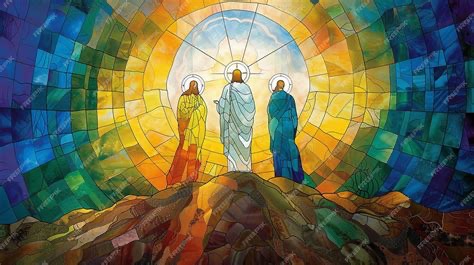
13 Then Jesus came from Galilee to John at the Jordan, to be baptized by him. 14 John would have prevented him, saying, “I need to be baptized by you, and do you come to me?” 15 But Jesus answered him, “Let it be so now; for it is proper for us in this way to fulfill all righteousness.” Then he consented. 16 And when Jesus had been baptized, just as he came up from the water, suddenly the heavens were opened to him and he saw the Spirit of God descending like a dove and alighting on him. 17 And a voice from heaven said, “This is my Son, the Beloved, with whom I am well pleased.”[2]

When we encounter John the Baptist, he’s not baptizing in Jerusalem, the religious center for the Jewish people but near Galilee. The region of the Galilee was crossroads region populated by Jews and Gentiles alike. First-century Galilee was remarkably diverse, with a population of approximately 350,000 that included 100,000 enslaved people. Scholars note that God could hardly have chosen a more multicultural context for Christ’s ministry to begin.[3]

Galilee wasn’t prestigious. Faithful Jews who lived there were viewed with suspicion precisely because they lived among so many ritually unclean Gentiles. Jesus came from this mixed region, with its blend of ethnicities and religious practices.  And it’s here amongst the hoi polloi that Christ’s public ministry begins as opposed to the gleaming temple of Jerusalem.

Imagine the scene: John stands in the water, dripping wet, having captivated the crowd with his prophetic preaching. People recognize him as the reincarnation of Elijah, that great prophet who called Israel back to faithfulness. Into this moment, Jesus arrives and asks to be baptized. John, recognizing his own cousin, protests: “I need to be baptized by you; why do you come to me?” Jesus’ response is profound: 

Let it be so now; it is proper for us to do this to fulfill all righteousness.

Now, what does it mean to “fulfill all righteousness”? It means simply this: the Son of God, the great I Am, chose to become fully human so as to completely identify with us. This echoes the Christmas story, when God became flesh. Jesus didn’t need cleansing from sin; rather, as God incarnate, he was establishing a pattern of adoption for all who would follow him.

Baptism represents adoption and a commissioning into the Christian community. It reenacts the Easter drama where those baptized die to the old life and rise out of the water to new, resurrection life. Through his baptism, Jesus was presented to the world; it was his divine debutante, if you will. But again, notice where it happens: not in society’s elite circles, but at the equivalent of a car wash on Broad and Thomas Streets. God revealed himself not to those the culture deemed worthy, but to ordinary people, the very ones society overlooked.

Before this moment, people believed God revealed himself only through priests and holy men and women. Now God in Christ had his coming-out party among everyday people like you and me. “Fulfilling all righteousness” means God chose to make his grand entrance with average folks of the first century. That Galilee serves as the location underscores that the Gospel is for everyone, Jews and Gentiles alike.

Our key verse is verse 17: 

And a voice from heaven said, ‘This is my Son, whom I love; with him I am well pleased.’

This is like the master of ceremonies at a debutante ball announcing the next young woman who is being introduced. This is the moment of revelation. But here’s my question for us: Are we listening? Are we out in the ballroom paying attention to this divine introduction and announcement, or are we distracted, metaphorically standing in the buffet line when God’s Son is being introduced?

A minister once told her congregation:

This morning I’m going to speak on the relationship between fact and faith. It’s a fact that you’re sitting here. It’s a fact that I’m standing here speaking. But it’s faith that makes me believe you might actually be listening.[4]

It’s a fact that we celebrated Christmas. It’s a fact that hundreds worshiped with us through December. But it takes faith to believe that some word, some carol, some prayer, some Scripture might have caused at least one worshiper to truly awaken and see the Christ child enabling them to have their own epiphany that makes them say, “I hear. I see. I believe.”

This same dynamic occurs at baptism. When we baptize someone in this congregation, it reminds us of that moment when we first stirred to the Holy Spirit’s movement, when we had our own spiritual “aha!” moment and grasped the profound spiritual truth of the children’s song: “Jesus loves me, this I know, for the Bible tells me so.” 

Every time someone comes to this font, we should hold our breath in anticipation, knowing God is at work in ways that will ripple through countless lives. My second-grade Sunday school teacher once told me, years later, “I never thought you’d become a pastor!” Miraculous things can happen when one comes to the font!

You see, it’s a fact that parents and baptismal candidates answer questions about faith. It’s a fact that water is placed upon them, sealing them with the Holy Spirit and adopting them into the covenant community. But it’s faith, my beloved, that makes me believe you will uphold your part of the baptismal vows when you promise to the baptized child or adult, “I will pray for you, teach you, and guide you in the faith.”

Christ’s baptism prefigures our own. Just as he came among ordinary people and was announced as God’s beloved Son, so too are we announced as children of God at baptism. God declares over each baptized person: “This is my child! Love them and bring them to spiritual maturity.”

Yes, God meets us where we are. The question is: Are we paying attention?

Let me ask you: when did you last experience an epiphany? When has God been viscerally real to you? When have you had that “aha!” moment when you knew that you knew that you knew Jesus was real and present? When has the dove of the Spirit alighted on you and quickened your heart?

As you leave today, I invite you to pause at our baptismal font. Place your hand in the water. As you do, pray that God’s grace will rest upon you, that you might regularly receive epiphanies, those revelations of God in the mundane moments of life. As you feel the cool water, remember the promises you’ve made over the years to those baptized at the font. Take a moment to remember your own baptism, your own presentation as God’s beloved child. I tell parents who bring their kids for baptism to celebrate those days every year like a birthday party. Help your kids remember their special day.  To this day, I still send cards and call my adult daughters on their baptism anniversary. I let them know how proud I am of the women they have become. Friends, once you reconnect with that baptismal moment of yours and or that of someone else, you’ll experience Christ’s debutante as though you were there.

You’ll see John walking his cousin into the Jordan. You’ll watch as he places his hand behind Jesus’ head. You’ll see Jesus fall back beneath the surface and rise up dripping. And you’ll hear the voice, that divine announcement of presentation:

“This is my Son, whom I love; with him I am well pleased.”

In the name of the Father, and of the Son, and of the Holy Spirit. Amen.

© 2026 by Patrick H. Wrisley. Sermon manuscripts are available for the edification of members and friends of First Presbyterian Church of Glens Falls and may not be altered, re-purposed, published or preached without permission.   All rights reserved.


[1] “The History of the Debutante Season,” from the San Marino Women’s Club Guild, http://www-rcf.usc.edu/~clingerm/history.html.  Accessed on 5 January 2005 

[2] The Holy Bible: New Revised Standard Version (Nashville: Thomas Nelson Publishers, 1989), Mt 3:13–17.

[3] Leonard I. Sweet in Homiletics, Listening for God, Matthew 3,13-17, 1/10/1993.  Accessed from www.homileticsonline.com on 12/28/2004.

[4] This story was shared with a colleague years ago.

Posted in Sermon | Tagged , , , , , , , , , , , , , , , | Leave a comment

Pondering, Luke 2:8-10

A Sermon Delivered on Christmas Eve 2025 by the Rev. Dr. Patrick H. Wrisley.

Luke 2:8–20

In that region there were shepherds living in the fields, keeping watch over their flock by night. Then an angel of the Lord stood before them, and the glory of the Lord shone around them, and they were terrified. 10 But the angel said to them, “Do not be afraid; for see—I am bringing you good news of great joy for all the people: 11 to you is born this day in the city of David a Savior, who is the Messiah, the Lord. 12 This will be a sign for you: you will find a child wrapped in bands of cloth and lying in a manger.” 13 And suddenly there was with the angel a multitude of the heavenly host, praising God and saying, 

14 “Glory to God in the highest heaven, and on earth peace among those whom he favors!”

15 When the angels had left them and gone into heaven, the shepherds said to one another, “Let us go now to Bethlehem and see this thing that has taken place, which the Lord has made known to us.” 16 So they went with haste and found Mary and Joseph, and the child lying in the manger. 17 When they saw this, they made known what had been told them about this child; 18 and all who heard it were amazed at what the shepherds told them. 19 But Mary treasured all these words and pondered them in her heart. 20 The shepherds returned, glorifying and praising God for all they had heard and seen, as it had been told them. (NRSV) 

The older I become, the more I realize that Christmas is a bit like a fine wine or perhaps a well‑aged bourbon. The longer it rests, the richer and smoother it becomes. With time, flavors emerge that we would not have noticed when we were younger. So it is with Christmas. Somehow, Christmas ripens and deepens with age.

That truth came home to me again this year as I spent time unpacking my Christmas ornaments and decorations. God used those simple, familiar objects as gentle messengers, almost like angels massaging my memory and inviting me to ponder Christmases past. Each ornament became a small doorway into gratitude, reminding me how those holy moments have shaped me in ways I never could have imagined at the time.

Anyone who has ever decorated a Christmas tree knows this ritual well. Each ornament is carefully unwrapped from its tissue paper covering, held for a moment, and reflected upon before being placed on the branches. On my tree there are several tatted snowflakes Ms. Nell Lewis made for my family back in 1988 at my first church. The snowflakes look like ninja stars, and every year I flip them through the air at the tree to see where they stick to the branches. There is the well‑worn paper‑plate angel my youngest daughter, Kate, made in kindergarten, which always finds its rightful place at the top of the tree. Kelly had her favorite too: a small Swarovski crystal shaped like a Hershey’s Kiss that was a gift from the preschool class she taught at Decatur Presbyterian Church. My own favorites were the playdough angels I made and painted with each of my daughters when they were little and have been reglued many times over the last thirty years.   

What many might call trinkets or tchotchkes, families know as treasures. Decorating the tree becomes an act of remembering: remembering the year an ornament was made, remembering the person who gave it, remembering the season of your life it represents. As we hold these treasures, we can’t help but look back upon all our relationships, health scares, job changes, moves, joys, and losses; we reflect on how at each turn, whether we labeled it good or difficult at the time, these events helped shape who we have become today. I cannot hold the ornaments my daughters made decades ago without pondering all that has unfolded over the years to make them the women they are today.

Beloved, this kind of pondering is exactly what we witness in our Scripture tonight. Earlier in Luke’s Gospel in chapter one, an angel appears to Mary and tells her she will bear a son who will reign on the throne of David. Now, in our story, a group of rough‑around‑the‑edges shepherds arrive from the fields, drawn by angelic song, eager to gaze upon the face of this child promised to be Messiah and Lord. As they tell their story of sudden fear at the sight of the angel, the glory they experienced and the good news that was told them, Mary quietly listens. And Luke tells us that she treasures these words and ponders them in her heart.

Mary is gathering these moments the way we gather ornaments; she holds each one as precious, each one adding depth to her understanding of who this child is. Angels. Shepherds. Strangers arriving in awe. Her understanding of God’s purpose is not fixed or finished; it is growing. It’s evolving. Over the years she will watch Jesus grow up in stature and wisdom. She will hear him teach and watch him heal and love the most vulnerable and most despised of society. And through it all, Mary ponders these things in her heart.

Luke is careful with his language here. Earlier, when Mary first hears the angel’s announcement in chapter one, Luke uses a word for pondering that suggests Mary was having this internal conversation within herself turning things over quietly in the mind. But in tonight’s passage, Luke intentionally chooses a different ancient word for the word “to ponder”. This word describes pondering as active and even strenuous endeavor. It literally means to wrestle with someone, to hold competing truths together and struggle toward understanding. Mary is no longer simply reflecting; she is grappling, wrestling with what God is revealing to her through these unfolding events.

The more Mary treasures these experiences, the deeper her wrestling becomes. God’s revelation is not static; God’s revelation is dynamic and evolves as it unfolds. And as we see, so does Mary’s faith.

Beloved, Christmas Eve is a kind of holy reset for the soul. Tonight, the world is invited to slow down, to treasure, and to ponder and truly wrestle with what God is doing through this child Jesus both in our lives and in the life of this church. Like ornaments whose meaning deepens as the years pass, our understanding of Jesus also changes, matures, and grows richer with time. Children experience Christmas differently than college students returning home on break. And those whose lives have been seasoned by decades of joy and sorrow ponder this night yet differently still. Each of us treasures Christ from exactly where we are right at this moment.

So, let me ask you: What do you treasure about Christmas? The decorations? The food? The gatherings and gifts? Or do you find yourself drifting back to an earlier time when you were wrapped in simpler wonder when the miracle of this night felt closer to the surface and real?

Has the weariness or mundanity of life dulled your sense of holy awe, turning joyful gasps into tired sighs? Or, are you still able to hear the quiet coo of the child in the manger calling you back once more to kneel, to listen, to ponder?

Tonight, God invites us to do more than remember Christmas. God invites us to wrestle with it. God invites us to carefully unwrap the gift being offered to each of us tonight. We are beckoned to treasure what has always been as well as to allow new richer meaning to be born in us again. The same power and life that entered the world in that cold manger centuries ago longs to be born in you this very night. Beloved, like Mary, let us treasure these things, ponder upon them wrestling in our hearts about this news of great joy. So let it be.


© 2025 Patrick H. Wrisley, Pastor, First Presbyterian Church of Glens Falls, 8 West Notre Dame Street, Glens Falls, New York, 12801. Sermon manuscripts are available for the edification of members and friends of First Presbyterian Church of Glens Falls and may not be altered, re-purposed, published or preached without permission. All rights reserved.

Posted in Sermon | Tagged , , , , , , , , , , , , , , , , , , | Leave a comment

When Faith Disrupts Our Plans, Matthew 1:18025

A Sermon Delivered on December 21, 2025 by the Rev. Dr. Patrick H. Wrisley.


All the little open windows on our Advent calendars are beginning to show that there are not many days left before Christmas. In just a few days, we will gather around trees, tables, and televisions. We will travel snow-covered roads, scrape windshields in the dark, and hope the weather cooperates just enough to get us where we need to go. Here in Upstate New York, Advent often arrives bundled in gray skies, early sunsets, and the steady patience required to wait out winter.

This morning, on the last Sunday of Advent, all four candles on the wreath are lit. Only the Christ Candle remains, waiting quietly in the center. The church seems to hold its breath; we are almost there.

As we turn to Matthew’s Gospel, it’s worth noticing how differently each of the four Gospels tells the story of Jesus’ birth. Mark doesn’t tell a birth story at all; he begins with an adult Jesus proclaiming the Good News in the wilderness. John’s Gospel reaches all the way back before time itself, before creation, before anything that could possibly resemble a manger. Luke gives us angels, shepherds, Mary, songs, and wonder. Matthew, however, gives us Joseph.

Matthew’s Christmas story is grounded, practical, and is quietly unsettling. It unfolds through the life of a working-class man whose plans are suddenly and irrevocably disrupted. Matthew tells us the story not from the perspective of angels or kings, but from the view of someone trying to live a decent, faithful life and who suddenly discovers that faithful obedience is going to cost him far more than he expected.

Hear now the Word of the Lord from Matthew 1:18–25.

Now the birth of Jesus the Messiah took place in this way. When his mother Mary had been engaged to Joseph, but before they lived together, she was found to be with child from the Holy Spirit. Her husband Joseph, being a righteous man and unwilling to expose her to public disgrace, planned to dismiss her quietly.

But just when he had resolved to do this, an angel of the Lord appeared to him in a dream and said, “Joseph, son of David, do not be afraid to take Mary as your wife, for the child conceived in her is from the Holy Spirit. She will bear a son, and you are to name him Jesus, for he will save his people from their sins.”

All this took place to fulfill what had been spoken by the Lord through the prophet: “Look, the virgin shall conceive and bear a son, and they shall name him Emmanuel,” which means, “God is with us.”

When Joseph awoke from sleep, he did as the angel of the Lord commanded him; he took her as his wife, but had no marital relations with her until she had borne a son; and he named him Jesus.

Matthew’s account feels believable precisely because it is so understated. There is no burst of heavenly light, no chorus of angels. God comes to Joseph quietly, in a dream. And like so many dreams, it leaves Joseph with a decision to make when he wakes up.

Joseph’s life, up until this moment, had been moving along just fine. He had done everything right. He had secured a future, paid the dowry, followed the law, and made plans. He was doing exactly what responsible people are supposed to do. And then life happened, or as John Lennon famously said, “Life is what happens to you while you’re making other plans.”[1]

Mary is pregnant. Not his child. Not his plan.

In Joseph’s world, this was not just a personal crisis; it was a public one. His reputation, his livelihood, Mary’s safety, all of it hung in the balance. Joseph holds the power to quietly walk away from it all, or he can expose Mary and protect himself. The Law allows it and the society kind of expects it.

But Matthew tells us Joseph was righteous. And righteousness, it turns out, is not about rigid rule-following, but about mercy. Joseph chooses compassion before he fully understands the full story of what’s the come.

Then comes the dream.

We don’t know how Joseph slept that night. We don’t know how convincing the dream felt. What we do know is this: when Joseph wakes up, he believes that God has spoken, and he acts obediently.

Joseph could have said no. He could have dismissed the dream as indigestion or anxiety. He could have chosen safety over faith. Instead, Joseph steps into uncertainty, trusting that God is already at work in the middle of the mess.

Faith, Matthew tells us, is not certainty. Faith is obedience in the absence of guarantees. Faith is obedience in the absence of guarantees.

That may sound familiar to us. Many of us know what it is like to have our plans interrupted whether by illness, job loss, family strain, grief, or change we did not choose. Living in this part of the world, we understand that not everything unfolds according to schedule. Snowstorms reroute us. Power outages slow us down. Long winters teach us patience we never asked for. Joseph’s story reminds us that God often does God’s deepest work precisely when our plans all fall apart.

The angel tells Joseph to name the child Jesus, “for he will save his people from their sins.” We often hear that phrase in a narrow sense of just getting into heaven; salvation is so much richer and larger.  Salvation in Scripture means healing, restoration, rescue, and wholeness. Jesus is born not just to forgive, but to make things right and to bring light into darkness, warmth into cold places, hope into weary lives.

And then Matthew gives us the name Emmanuel: God with us. It’s not God above us. It’s not God far away. Rather, it’s God right here with us, right in the midst of all our uncertainty, in our disruption, in our risk, and in our faith.

Joseph does not understand everything. He does not get answers to all his questions. But he does step out and do the next faithful, obedient thing. And that is how God’s salvation enters the world.

            Beloved, Advent reminds us that God still works this way. God’s work often passes through ordinary people making faithful choices in complicated situations. God’s purposes still move forward through quiet courage, through listening, through obedience when it would be easier to walk away.

As we stand on the threshold of Christmas, may we, like Joseph, remain open to God’s voice. May we trust that even when our plans are disrupted, Emmanuel is still with us.

In the name of the Father, and of the Son, and of the Holy Spirit. Amen. 

© 2025 Patrick H. Wrisley, Pastor, First Presbyterian Church of Glens Falls, 8 West Notre Dame Street, Glens Falls, New York, 12801. Sermon manuscripts are available for the edification of members and friends of First Presbyterian Church of Glens Falls and may not be altered, re-purposed, published or preached without permission. All rights reserved.


[1] See https://www.brainyquote.com/quotes/john_lennon_137162

Posted in Sermon | Tagged , , , , , , , , , , , , , , , , | Leave a comment

Expecting More Than We Imagined, Matthew 11:2-11

A Sermon Delivered on December 14, 2025 by the Rev. Dr. Patrick H. Wrisley.

On this third Sunday of Advent, the lectionary places us squarely in the middle of Matthew’s gospel, far away from shepherds, angel choruses, and that silent Bethlehem night. And frankly, it feels a little jarring. Where are Mary and Joseph? Where’s the manger? Where’s the warm glow that starts moving us toward Christmas? This third Sunday in Advent has us with John the Baptist in prison.

It’s helpful to remember that the first two Sundays of Advent focus on Christ’s coming at Christmas but also his coming at the culmination of time. The last two Sundays turn our attention toward Christ’s first coming—his birth. And here on this Third Sunday of Advent, Joy Sunday, the primary figure who stands before us is John the Baptist, the fiery prophet who prepares the way.

John and Jesus are more than ministry partners; they are actually cousins. They’ve known each other nearly thirty years. And John has been preaching with fiery conviction that the Messiah is on His way, and that when He arrives, judgment will come with Him. As John warned the religious officials earlier in Matthew 3:10:

The ax is already lying at the root of the trees; every tree that does not bear good fruit is cut down and thrown into the fire.

Not exactly the guy you invite to your Christmas party.

John imagined the Messiah as a strong political and spiritual liberator; the Messiah was to be a commander who would rally Israel back into holy nationhood and cleanse the world of unrighteousness. The Baptist expected separation, division, a great sorting-out of the righteous ones and everyone else. And then Matthew goes radio silence on John until today’s text in Matthew 11. —silence. Listen now for God’s Word:

Matthew 11:2–11

                  2 When John heard in prison what the Messiah was doing, he sent word by his disciplesand said to him, “Are you the one who is to come, or are we to wait for another?”Jesus answered them, “Go and tell John what you hear and see: 5 the blind receive their sight, the lame walk, the lepers are cleansed, the deaf hear, the dead are raised, and the poor have good news brought to them.And blessed is anyone who takes no offense at me.”

            As they went away, Jesus began to speak to the crowds about John: “What did you go out into the wilderness to look at? A reed shaken by the wind? What then did you go out to see? Someone dressed in soft robes? Look, those who wear soft robes are in royal palaces. What then did you go out to see? A prophet? Yes, I tell you, and more than a prophet. 10 This is the one about whom it is written, ‘See, I am sending my messenger ahead of you, who will prepare your way before you.’ 11 Truly I tell you, among those born of women no one has arisen greater than John the Baptist; yet the least in the kingdom of heaven is greater than he.

Let’s take a moment and look at expectations vs. reality. This passage is soaked through with disappointment, confusion, and unmet expectations. John the Baptist—this mighty prophet who had announced Jesus with such certainty—is now sitting in a prison cell wondering whether he got it wrong. “Are you the one, or do we wait for another?” He may feel just like Clark Griswold did finally arriving at Wally World only to find the gates chained shut; John’s voice has a tinge of disappointment to it.

John expected a cleansing fire. Instead, Jesus is healing the blind and blessing the poor.

John expected judgment. Jesus is offering mercy.

John expected power. Jesus is practicing compassion.

And John’s confusion is honest. He had preached faithfully. He had done everything God asked of him. But now, imprisoned and defeated, he wonders whether Jesus is the Messiah he thought he introduced. Or has he misread the signs? Jesus’ response to John’s disciples is gentle and pastoral; he helps John reframe the signs that have been demonstrated. He tells them, “Go tell John what you hear and see.”

Jesus doesn’t delve into theories or theology. He does not give them a sermon indicating where John was wrong.  Jesus tells them to share their personal experience. And here is the key: Jesus quotes Malachi 3:1 reminding John and his disciples that God’s vision for the Messiah has always been bigger, wider, and more beautiful than John’s expectations.

John expected exclusion; Jesus brought inclusion and expansion.

John expected the separation of sinners; Jesus brought sinners home.

John expected strict adherence to the Law of righteousness; Jesus redefined the Law of righteousness as the expression of love.

But John isn’t the only one with expectations in our Story this morning. Jesus turns to the crowd and asks, almost teasingly,

What did you expect to see out there? A flimsy reed? A man in fine clothes? A celebrity prophet?

Everyone had expectations about who John should be. Everyone had expectations about who and what the Messiah should be and do. And nothing Jesus or John did quite matched the script or Story people expected. Honestly, we’re no different. We often carry unspoken expectations of Jesus, for Jesus, and of God, into our own faith. For example, we have our own ideas and expectations on –

Who God should love and who God should judge.

On exactly how God should answer our prayers.

Why bad things happen to good people.

 What “religious people” should act and be like.

What Jesus should do for me.

On how Jesus would vote.

You see, we bring our own emotional, cultural, political, and spiritual baggage into our relationship with God and we project it onto Jesus. But our expectations, like John’s, are often too small, too narrow, too human.

So, what are your expectations this Christmas? What do you expect of Jesus as we approach the manger?

Do you expect comfort?

Do you expect anything extraordinary at all?

Do you expect the same-old, same-old holiday routine?

Do you expect Jesus to meet you in your real need?

Do you expect healing? Hope? Joy?

Or maybe, have your expectations become too small? This Advent, I invite you to reflect on three questions to help you reframe your Christmas expectations.

First, what are your expectations for Christmas?  If you don’t expect anything different to happen for you, ask yourself why.

Second, do your expectations of Jesus reflect His teachings or your personal preference?  Do they match the values of the Beatitudes or the values of FOX news, nostalgia, or fear?

Finally, ask yourself if your expectations of Jesus are too small. What is the largest, most gracious vision of Christ’s reign you can imagine in our world today? Then reflect how might God be calling you to help make that vision real right now.

Today is Joy Sunday, or Gaudet Sunday. It’s not about a feeling of giddiness and happiness; joy is more about how we see and interact with the world in hope. It’s not so much a feeling as a state of being and outlook. Joy Sunday isn’t joyful because everything goes our way. It’s joyful because God’s vision is bigger than ours. Because Christ’s mercy is wider than our imagination. Because Jesus asks us, he invites us, to expect more of Him than we ever have before.

The great Reformed theologian of the last century, Karl Barth, once prayed:

Lord, may you now let us this year once more approach the light, celebration, and joy of Christmas Day that brings us face to face with the greatest thing there is: your love, with which you so loved the world that you gave your only Son, so that all of us may believe in Him and therefore not be lost, but may have eternal life.[1]

Make it so, dear Lord. Make it so. In the Name of the Father, Son, and Holy Spirit. Amen.

© 2025 Patrick H. Wrisley, Pastor, First Presbyterian Church of Glens Falls, 8 West Notre Dame Street, Glens Falls, New York, 12801. Sermon manuscripts are available for the edification of members and friends of First Presbyterian Church of Glens Falls and may not be altered, re-purposed, published or preached without permission. All rights reserved.


[1] Fifty Prayers by Karl Barth, https://a.co/cQ9Uiz9.

Posted in Sermon | Tagged , , , , , , , , , , , , , , , , | Leave a comment

Reclaiming Christmas: Moving from the Holidays to the Holy Days, Matthew 3:1–12

A Sermon Delivered on December 7, 2025 by the Rev. Dr. Patrick H. Wrisley.

Matthew 3:1-11

         3.1 In those days John the Baptist appeared in the wilderness of Judea, proclaiming, “Repent, for the kingdom of heaven has come near.” This is the one of whom the prophet Isaiah spoke when he said, 

“The voice of one crying out in the wilderness: 

‘Prepare the way of the Lord, make his paths straight.’ ” 

Now John wore clothing of camel’s hair with a leather belt around his waist, and his food was locusts and wild honey. Then the people of Jerusalem and all Judea were going out to him, and all the region along the Jordan, and they were baptized by him in the river Jordan, confessing their sins. 

But when he saw many Pharisees and Sadducees coming for baptism, he said to them, “You brood of vipers! Who warned you to flee from the wrath to come? Bear fruit worthy of repentance. Do not presume to say to yourselves, ‘We have Abraham as our ancestor’; for I tell you, God is able from these stones to raise up children to Abraham. 10 Even now the ax is lying at the root of the trees; every tree therefore that does not bear good fruit is cut down and thrown into the fire. 

11 “I baptize you with water for repentance, but one who is more powerful than I is coming after me; I am not worthy to carry his sandals. He will baptize you with the Holy Spirit and fire. 12 His winnowing fork is in his hand, and he will clear his threshing floor and will gather his wheat into the granary; but the chaff he will burn with unquenchable fire.”  (Matthew 3:1–12, NRSV)

I’ve been looking around for examples of Christmas-spirit killers and honestly, it’s like trying to pick a snowflake out of a blizzard. There are plenty to choose from. Years ago, I found an article from Australia that made me chuckle. It said that Santas in Sydney were asked to stop saying “ho, ho, ho” because it might frighten children or be construed as derogatory to women. Apparently several Santa trainees quit over the new directive.[i] Things aren’t the way they used to be, are they? Years ago, when I lived in Tacoma, Washington, I remember the kerfuffle when the Seattle airport removed its Christmas trees from the terminals. Christmas trees, of all things were now suddenly considered offensive. 

Sisters and brothers, our culture has vivisected Christ right out of Christmas, and there’s plenty of blame to go around. On one hand, we’ve become so litigious and cautious that we’re afraid to offend anyone. On the other hand, we the people in the Church have gone along for the ride. We’ve allowed Christmas to be swallowed up by consumerism, stress, and the tyranny of the urgent. So, it’s fair to ask: Is Jesus still the reason for the season…or is Christmas just the reason for the latest season’s sales on Black Friday, Shop Local Saturday, or Cyber Monday?

On this second Sunday of Advent, I want to encourage us to reframe these days we are in the middle of at the moment. I propose we make the shift from observing the holidays and move to reclaim the holy days of Advent and Christmas.  

Let me provide a brief history of Advent. In the fourth century, before Christmas was widely celebrated, the early Church practiced a forty-day period of fasting, prayer, and spiritual examination from early November through Epiphany. It was a “winter Lent,” preparing people for the baptisms that took place on Epiphany, the day the Church remembers Jesus’ baptism.

Two hundred years later, when the Church began celebrating Christ’s birth, those forty days were shortened to four weeks. The season became known as Advent, which literally means “coming toward.” The color was (and still is) purple, a sign of preparation and repentance.

But repentance doesn’t exactly sound like the stuff of office parties and cookie exchanges does it? Who throws a Penance Party? We’d rather rush into the holiday glow than pause for deep soul work. Personally, I think it is high time we reframe our term for the holidays.  

One of my theological mentors, Leonard Sweet, describes it well. Preparing for a holiday is really just preparing for time off; it’s a time of disrupting our routines to do what we want. Holidays tend to compartmentalize our lives and often contribute to their secularization.

But holy days are different. Holy days re-integrate our lives. They remind us who we are and whose we are. Holy days invite us to align our whole selves with the God who comes to us in Jesus Christ.

As Sweet puts it, “The power and grace of a holy day spills out over everything and everyone we encounter.” If we truly prepare for Christ’s birth, the people we surround ourselves with ought to notice something different about us.[ii]

So, my friends, how are your holy day preparations coming along? I know we are only two weeks into Advent but it’s a good to pause and ask ourselves: Am I majoring in the minors and minoring in the majors? In other words, am I focused on what really does not ultimately matter, or, am I preparing the tender soil in my hearts to receive Christ again?

Now enter John the Baptist. This morning’s scripture is meddlesome. In Matthew 3, John the Baptist steps onto the scene with his camel-hair coat and diet of locusts and wild honey. He does not exactly embody cozy, fireside Christmas vibes. Yet, while we tend to rush to John’s fiery call to repentance, we miss his opening words from Isaiah:

            Prepare the way of the Lord.

To a first-century Jewish audience living under Roman military occupation, John’s words are exciting words of liberation, not condemnation. “Prepare the way” meant: God sees our oppression. God is coming. Messiah is drawing near.

Repentance wasn’t heard as punishment; rather, repentance was heard as an invitation. It was as if John were saying, “Stop where you are and turn around! The God who once freed our ancestors is coming to free us again. Let’s get the King’s Highway ready.”

So, beloved: Are you preparing for the holy days or holidays? 

Maybe John’s call to repent means reevaluating how we spend these weeks leading up to Christmas.

Maybe it means rethinking commercialized gift-giving, especially when if it’s driven more by obligation than love.

Maybe it means resisting the frantic pressure to buy what we don’t need and instead invest in ministry that brings healing.

Maybe it means admitting honestly to God: “I’ve turned your holy day into just another holiday. Forgive me.  Help me reclaim its sacredness.”

Years ago, I walked through a high-end mall in Atlanta called Phipps Plaza with the former Moderator of the Church of Scotland, the Very Reverend Dr. Stuart McWilliams. Phipps is a beautiful place; it boasts of rosewood railings, glass everywhere, and real plush leather seating. As we strolled, McWilliams paused, ran his hand along the railing, and said, 

            You know, you Americans build your malls like we in Scotland build our churches.

We have been indicted.

Dr. McWilliams words are an alarm clock to wake up. We have allowed the mall to become our cathedral and consumerism to become our liturgy.

Remember, John’s call to repentance is not meant to shame us; it is meant to bring us back home. It’s a call to return to what matters and that is to reclaim Advent and Christmas as holy days, not just holidays. It’s a call to turn our faces again toward the Child born in Bethlehem—God’s great “I’m here” to a weary world.

So, my beloved, How are your holy day preparations coming along?

Are we smoothing out the path so that Christ may come more fully into our hearts, our homes, and our world?

As we journey through this Advent season, may we move away from the spirit-killing holidays toward the life-giving holy days—where, with wonder and awe, we kneel at the manger and whisper, “Lord, I’m back.” Amen.

© 2025 by Patrick H. Wrisley. Sermon manuscripts are available for the edification of members and friends of First Presbyterian Church of Glens Falls and may not be altered, re-purposed, published or preached without permission.   All rights reserved.


[i] Santa Claus outraged by ‘ho ho ho’ ban, by Janet Fyfe-Yeomans and Amanda Grant. Article originally from: (http://www.news.com.au/dailytelegraph/).  Accessed 11/15/2007.

[ii] O Holy Nightmare, November 29, 1992. Accessed from HomileticsOnline on December 3, 2007 at http://www.homileticsonline.com/subscriber/btl_display.asp?installment_id=2885 .

Posted in Sermon | Tagged , , , , , , , , , , , , , , | Leave a comment