
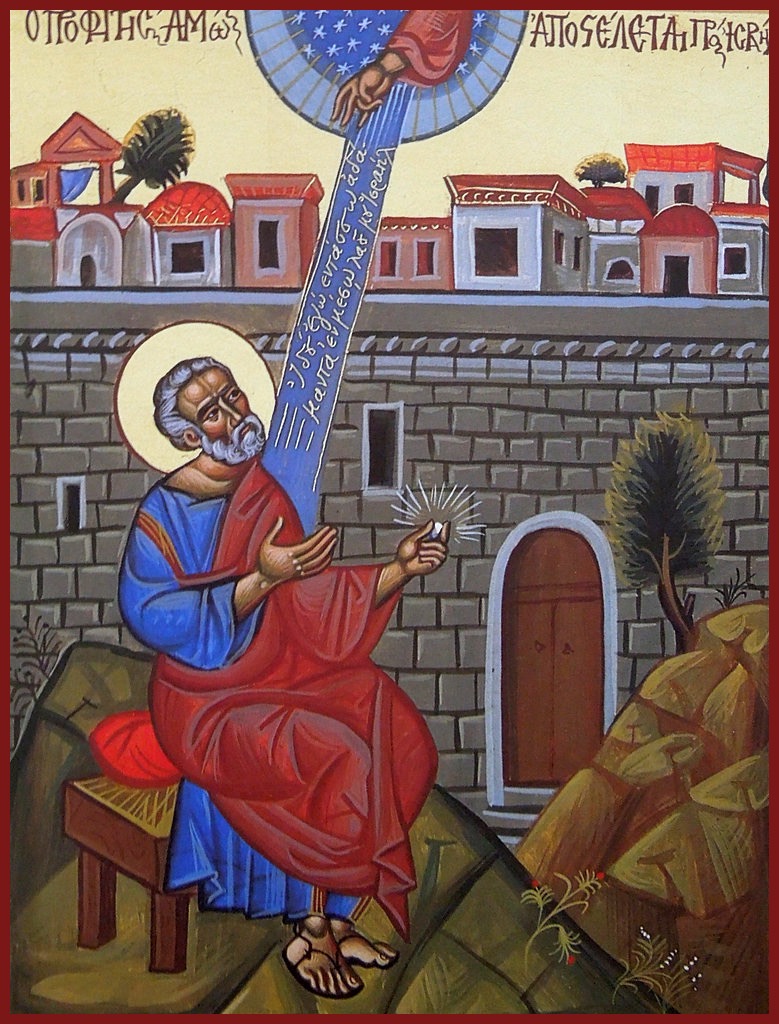
A sermon delivered by the Rev. Dr. Patrick H. Wrisley on July 20, 2025.
The lectionary this week gives us two very different types of scripture. On one hand, we have the well-known story of Mary and Martha hosting Jesus in their home—a gentle, intimate portrait of discipleship. On the other hand, we hear from Amos, a blunt, unsettling voice from the south sent to call out the sins of the northern nation of Israel.
It would have been easier—more comfortable, certainly—to stay with Mary sitting at Jesus’ feet and talk about the posture of the faithful disciple. But the Spirit nudged me toward the meddlesome voice of Amos.
Amos wasn’t a professional prophet. He was a shepherd and a groundskeeper—someone who took care of sycamore and fig trees. But God called him as a prophet anyway and sent him north to Israel with a message that would make people squirm a bit.
A prophet’s message usually does one of three things:
- It tells what is coming; it’s future telling.
- It reminds people of the truth they have forgotten; it’s truth telling.
- Then again, sometimes, it does both.
This morning’s text from Amos does both. He’s describing an impending exile on the near horizon—and at the same time, he’s holding up a mirror to show the people how far they’ve drifted from their calling as living as God’s people.
Before we hear Amos’s words, let me add a quick note: the prophet is using hyperbole—strong, exaggerated imagery—to drive the point home. It is the biblical and rhetorical version of shock and awe. Listen for the underlying message.
Amos 8:1-12
8.1This is what the Lord God showed me—a basket of summer fruit. 2He said, “Amos, what do you see?” And I said, “A basket of summer fruit.” Then the Lord said to me, The end has come upon my people Israel; I will never again pass them by. 3The songs of the temple shall become wailings in that day,” says the Lord God; “the dead bodies shall be many, cast out in every place. Be silent!”
4Hear this, you that trample on the needy, and bring to ruin the poor of the land, 5saying, “When will the new moon be over so that we may sell grain; and the sabbath, so that we may offer wheat for sale? We will make the ephah small and the shekel great, and practice deceit with false balances, 6buying the poor for silver and the needy for a pair of sandals, and selling the sweepings of the wheat.” 7The Lord has sworn by the pride of Jacob: Surely I will never forget any of their deeds. 8Shall not the land tremble on this account, and everyone mourn who lives in it, and all of it rise like the Nile, and be tossed about and sink again, like the Nile of Egypt? 9On that day, says the Lord God, I will make the sun go down at noon, and darken the earth in broad daylight. 10I will turn your feasts into mourning, and all your songs into lamentation; I will bring sackcloth on all loins, and baldness on every head; I will make it like the mourning for an only son, and the end of it like a bitter day.
11The time is surely coming, says the Lord God, when I will send a famine on the land; not a famine of bread, or a thirst for water, but of hearing the words of the Lord. 12They shall wander from sea to sea, and from north to east; they shall run to and fro, seeking the word of the Lord, but they shall not find it.[1]
So, what’s the message?
Amos is saying the people of Israel have lost their spiritual and moral compass. Yes, they’re keeping the Sabbath, they’re attending worship—but their hearts aren’t in it. In fact, they’re sitting in the proverbial pews scheming about how to cheat their neighbors as soon as the service ends.
Amos doesn’t pull any punches. He says that when we claim to follow God but then do not live a life that reflects God’s justice and compassion, we’ve lost our integrity. And when a people lose their integrity—when the gap between what they profess and how they live becomes too wide—the whole society begins to unravel around itself.
That word — integrity — is at the heart of this text today. To live with integrity means a person’s inner life and their reflected outer life match and are in synchronicity. Our spirituality, our values, our sense of ethics — those interior-birthed concepts and assumptions should be the drivers as how we treat others, how we work, how we vote, how we spend our money, how we speak. If they don’t, Amos says, then something is off. There is a lack of integrity.
Amos the prophet bluntly tells the Israelites they had become people of God in name only. They had the label, but not the life. They went through the motions, but they had left far behind the heart of the faith and what it means to be a Jew. They had become, as the old sayings go: They were all driveshaft and no engine. They were all tall hat but no saddle.
The Law of Moses makes it clear: to be God’s people means to live with compassion, justice, and fairness. It means taking care of the poor, protecting the widow, welcoming the outsider, insert Immigrant. It means using honest scales in the marketplace and feeding people real food — not scraps or substitutes.
This is why God pulls Amos away from the flocks and sends him north to Israel. Amos looks around and sees a community that has forgotten its identity. He sees a people more concerned with profit than with their neighbor. He sees a people whose worship no longer lines up with their publicly declared way of life as God’s chosen people. God sends Amos to tell them: if you keep moving in the direction you are taking this, everything will fall apart — your joyful songs will become songs of mourning and dirge, your festivals will become funerals. Worst of all, Amos tells them, you will lose the ability to hear God at all. You’ll suffer a famine — not of bread or water, but a drought the Word of the Lord.
Now that was roughly 3,000 years ago; what does it have to do with any of us?
Friends, in the person Jesus, God has given us a new prophet—one who not only tells the truth but is the truth. Jesus, too, calls us to a life of integrity: a life where our worship and our weekday behavior match. A life where we don’t just say we follow Jesus, but live it—in our homes, in our workplaces, in how we treat the stranger, the poor, the marginalized.
Amos forces us to ask: Does what I say about what I hold true about Jesus line up with how I live my daily life? Do my personal ethics express themselves through our public policies to reflect the love of God to my neighbor? Let me make it Crayola, simple to understand: If we say we love our neighbor, but — then we’ve still got spiritual homework to do. Love doesn’t come with qualifiers like if, ands, ors, or buts.
Amos’ message speaks directly to our own personal, social, and national predicament we find ourselves in today. Today’s text from Amos is a call to perform a self-diagnostic check to determine if what we say we believe about Jesus and his way of life is consonant with how we are living and expressing those values in all we do as a Christian citizen. Amos’ words are a call to check whether our beliefs are being lived out in real time. In Reformed terms: our orthodoxy — what we rightly believe — demands orthopraxy — how we rightly live.
Years ago, I heard a presentation given by business leader and author Ken Blanchard who wrote, The One Minute Manager. He spoke about his “gap rule.” The gap rule he used in his companies was this: If at any time someone in the company — whether it was an executive vice-president or the custodian cleaning the toilets — felt that Blanchard as the President and CEO was not living into his expressed values of servant leadership, they had the authority to walk into his office and call “Gap.” If at any time someone felt that Blanchard’s expressed core values and beliefs did not align with his behavior or expressing those values and beliefs, they could call, “Gap.”
Mr. Blanchard, there is a gap between what you say is important and what you are doing. I am calling you on that.
In other words, they are telling him his orthopraxy – what he does — does not match his orthodoxy – what he believes.
Amos’s message is not easy to hear—but it’s vital. As the preacher Will Willimon says, “One way you can tell the difference between a true and living God and a fake god is that the fake god never tells you anything that makes you uncomfortable.”[2]
My hope is the Holy Spirit will make us just a little uncomfortable this morning, or as I like to say, (w)Holy uncomfortable. I want the Spirit to nudge us to examine the state of our integrity — whether it’s personally, spiritually, ethically, and even nationally — and then convict us if there is a gap between what we say we believe and how we really live out our lives.
In the name of the Father, the Son, and the Holy Spirit. Amen.
© 2025 Patrick H. Wrisley. Sermon manuscripts are available for the edification of members and friends of First Presbyterian Church of Glens Falls, 8 West Notre Dame Street, Glens Falls, NY 12801 and shall not be altered, re-purposed, published or preached without permission. All rights reserved.
[1] New Revised Standard Version Bible: Anglicized Edition, copyright © 1989, 1995 National Council of the Churches of Christ in the United States of America. Used by permission. All rights reserved worldwide. http://nrsvbibles.org
[2] Bartlett, David L.; Barbara Brown Taylor. Feasting on the Word: Year C, Volume 3: Pentecost and Season after Pentecost 1 (Propers 3-16). Presbyterian Publishing Corporation. Kindle Edition.


 patrick h wrisley